
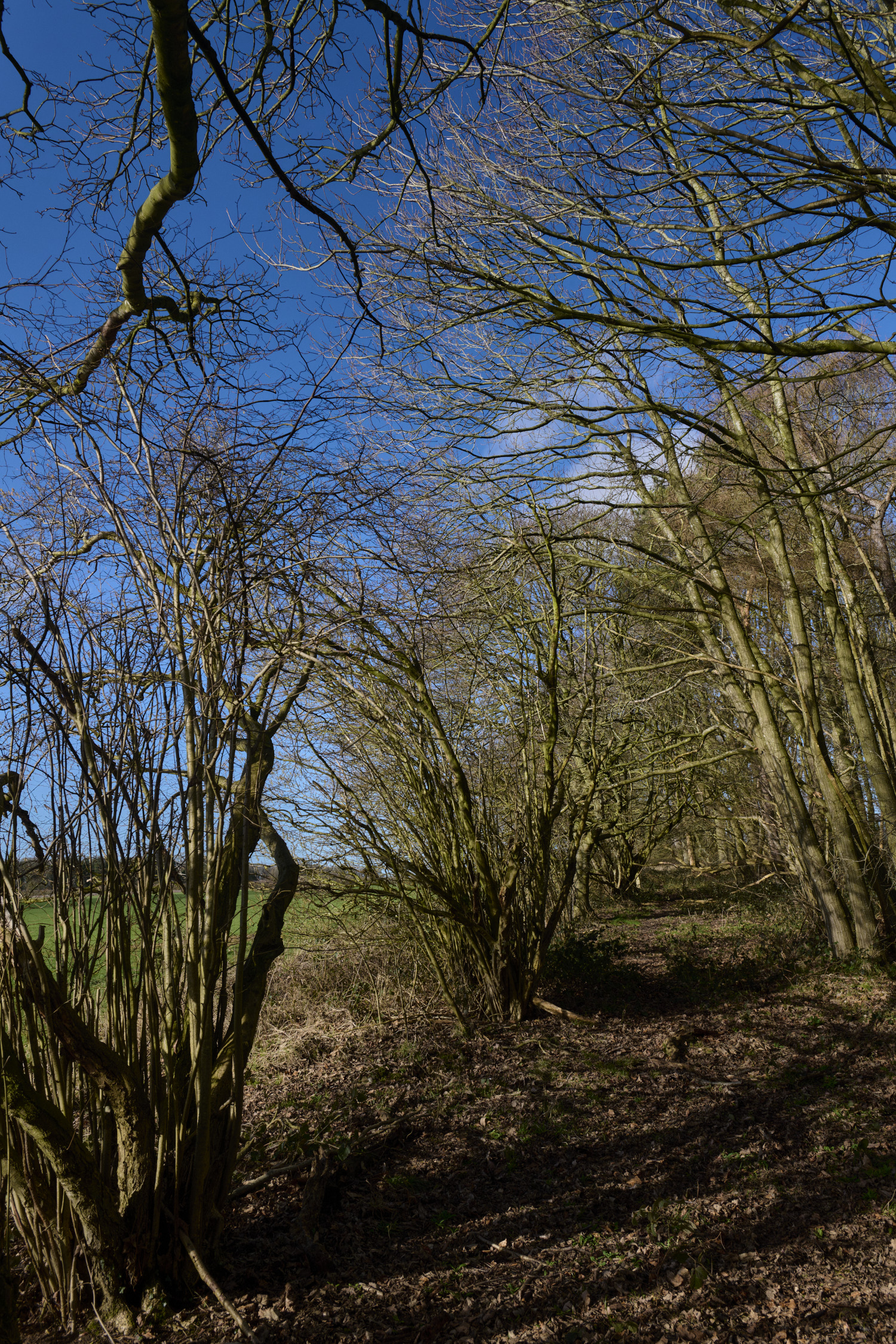
Alderford Common
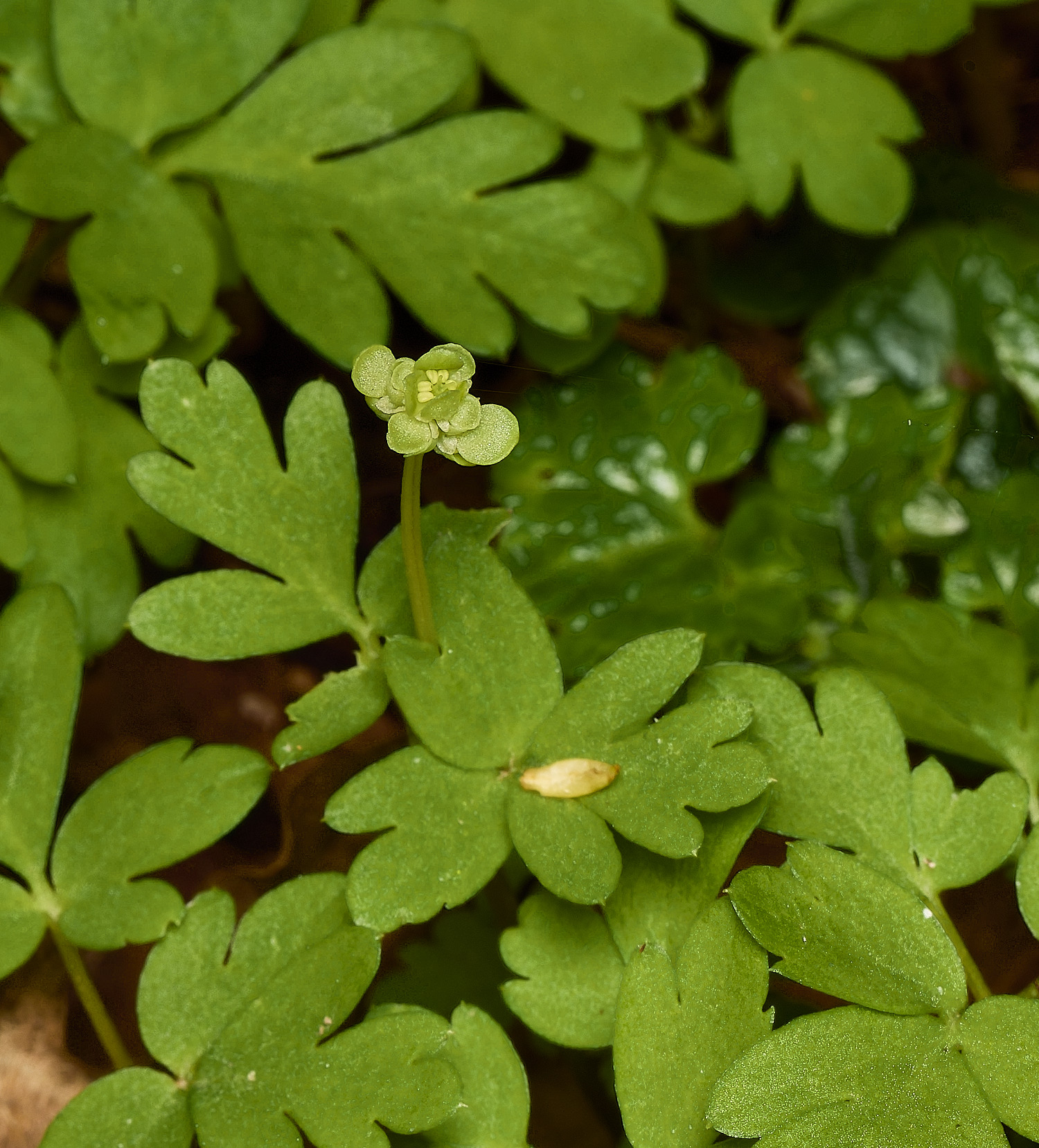
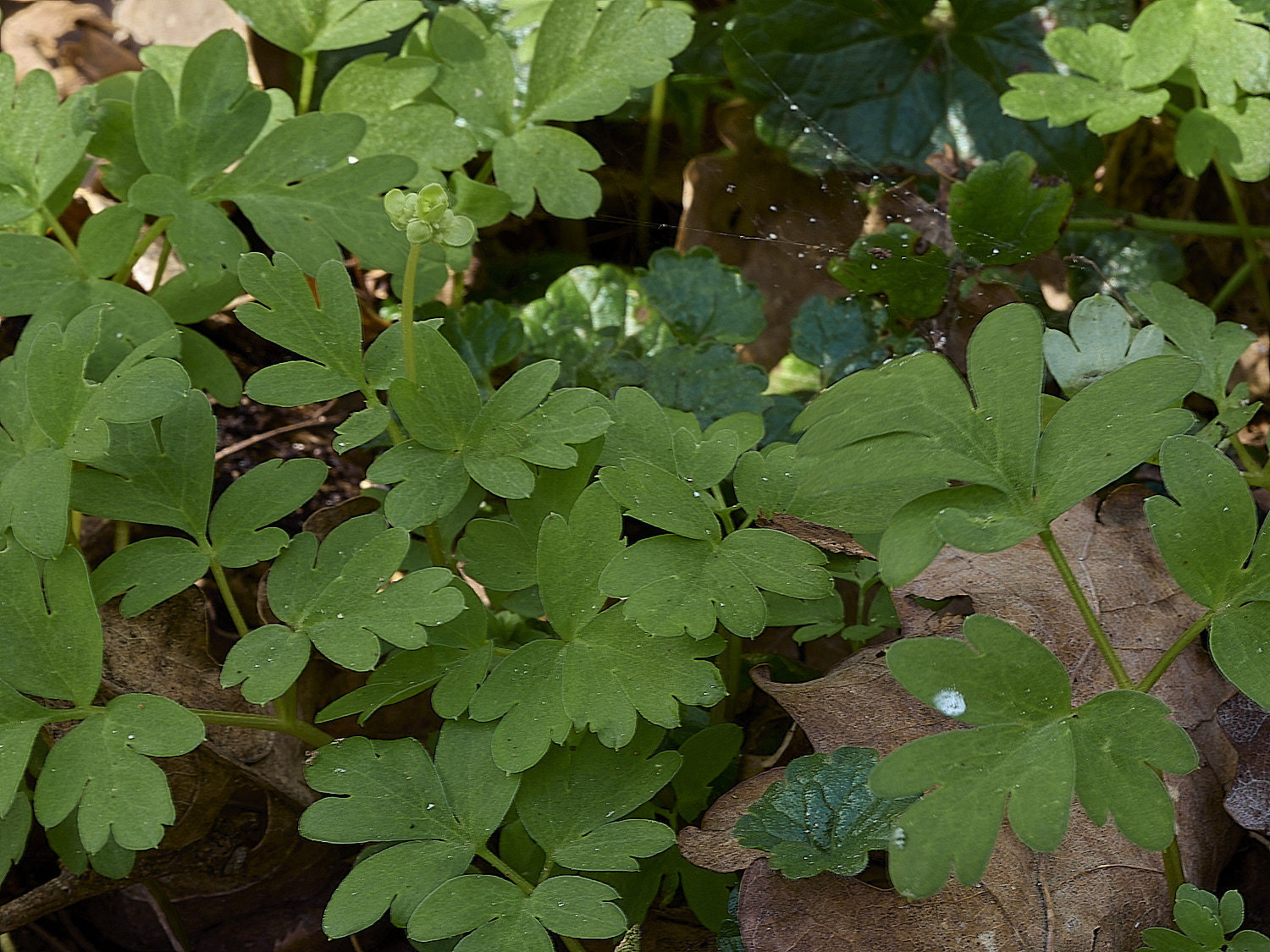
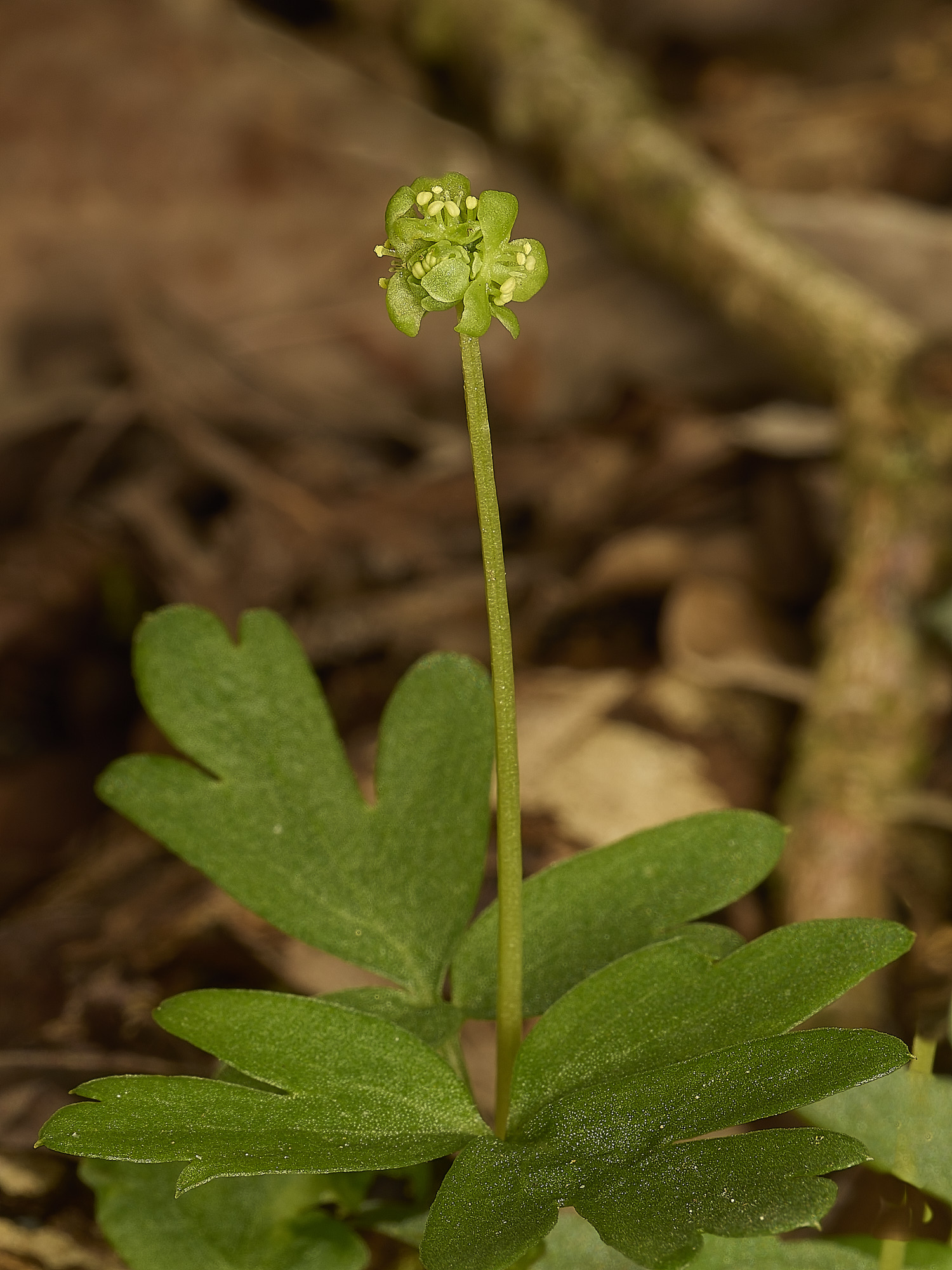
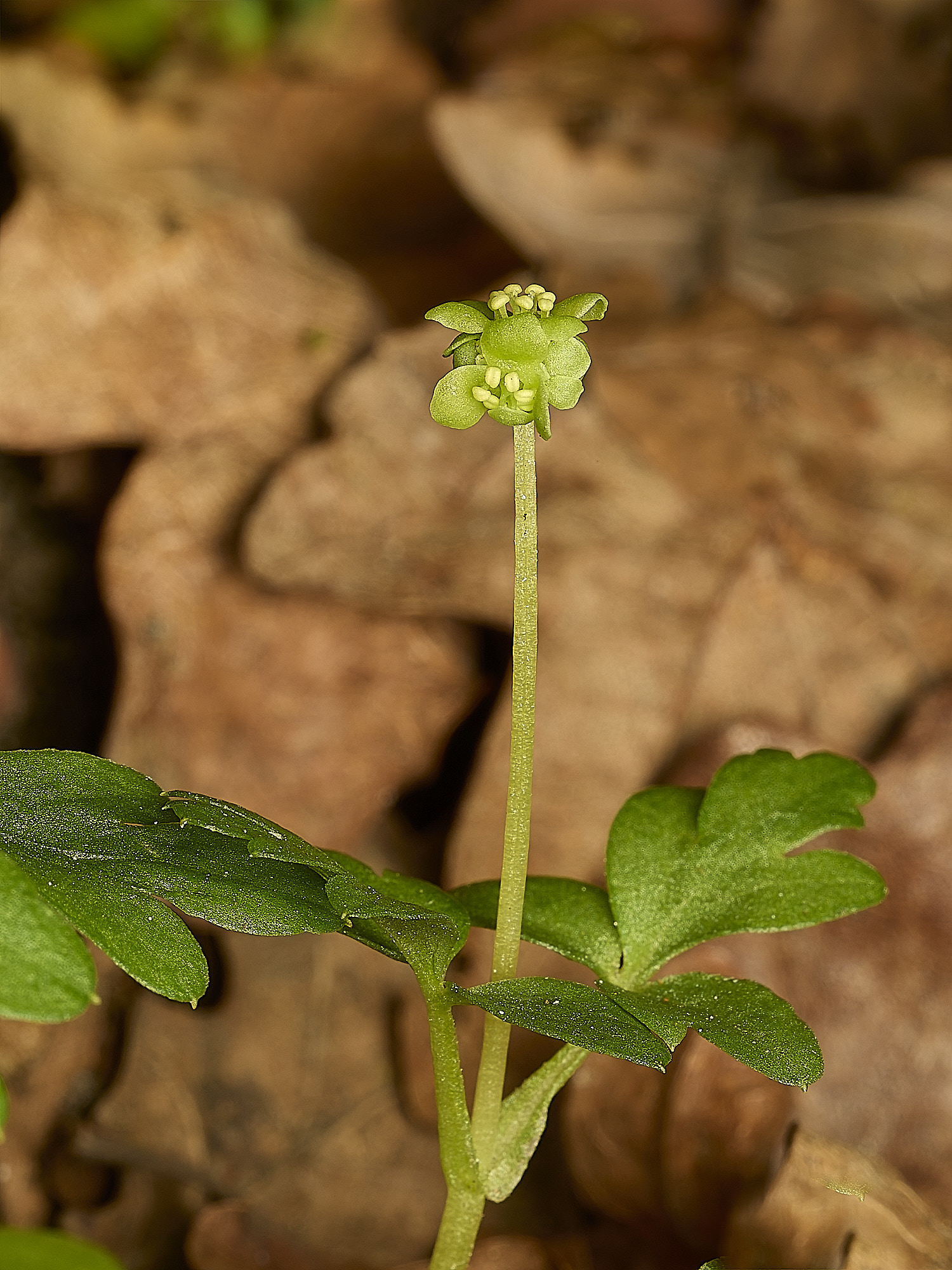
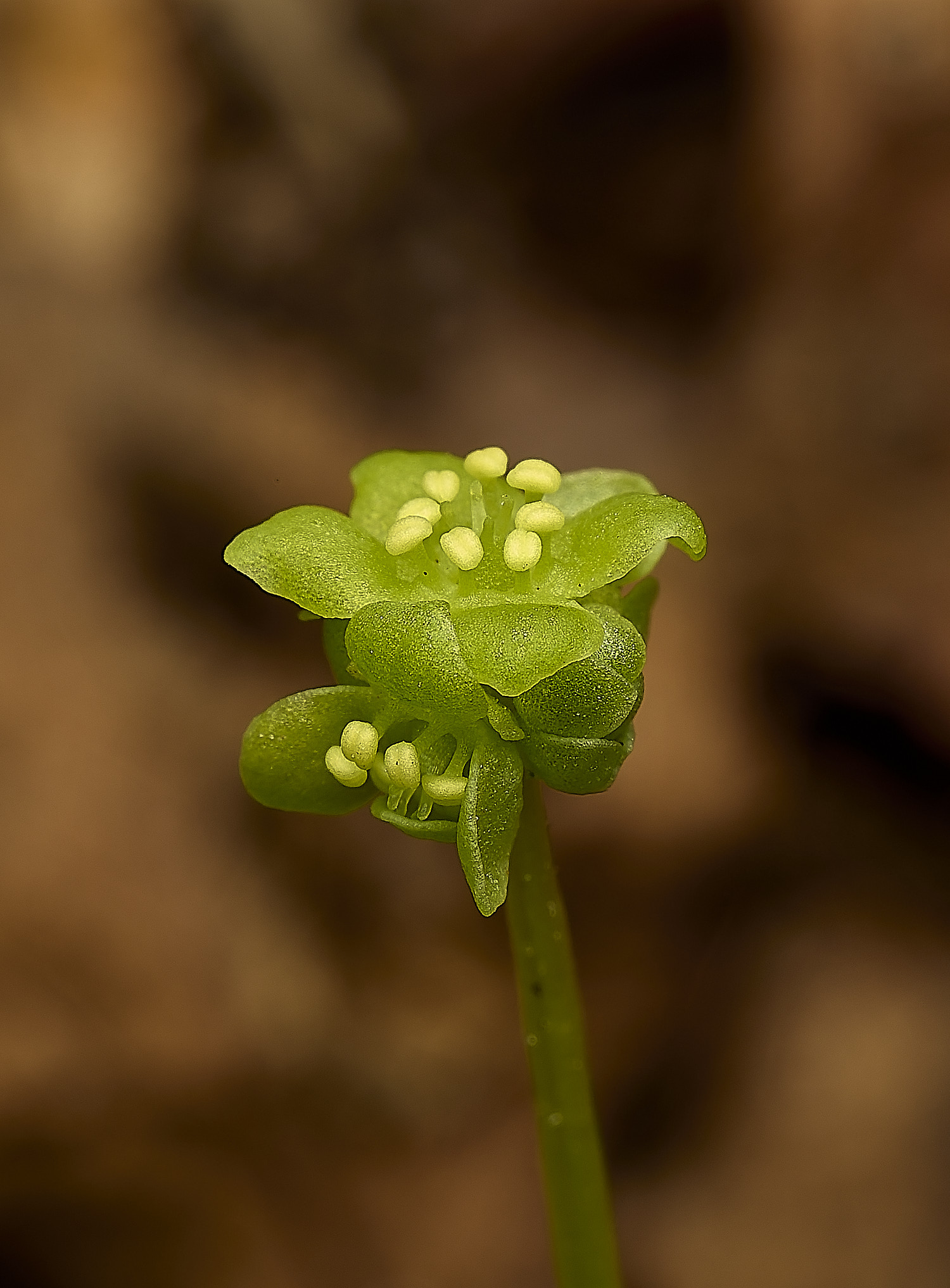
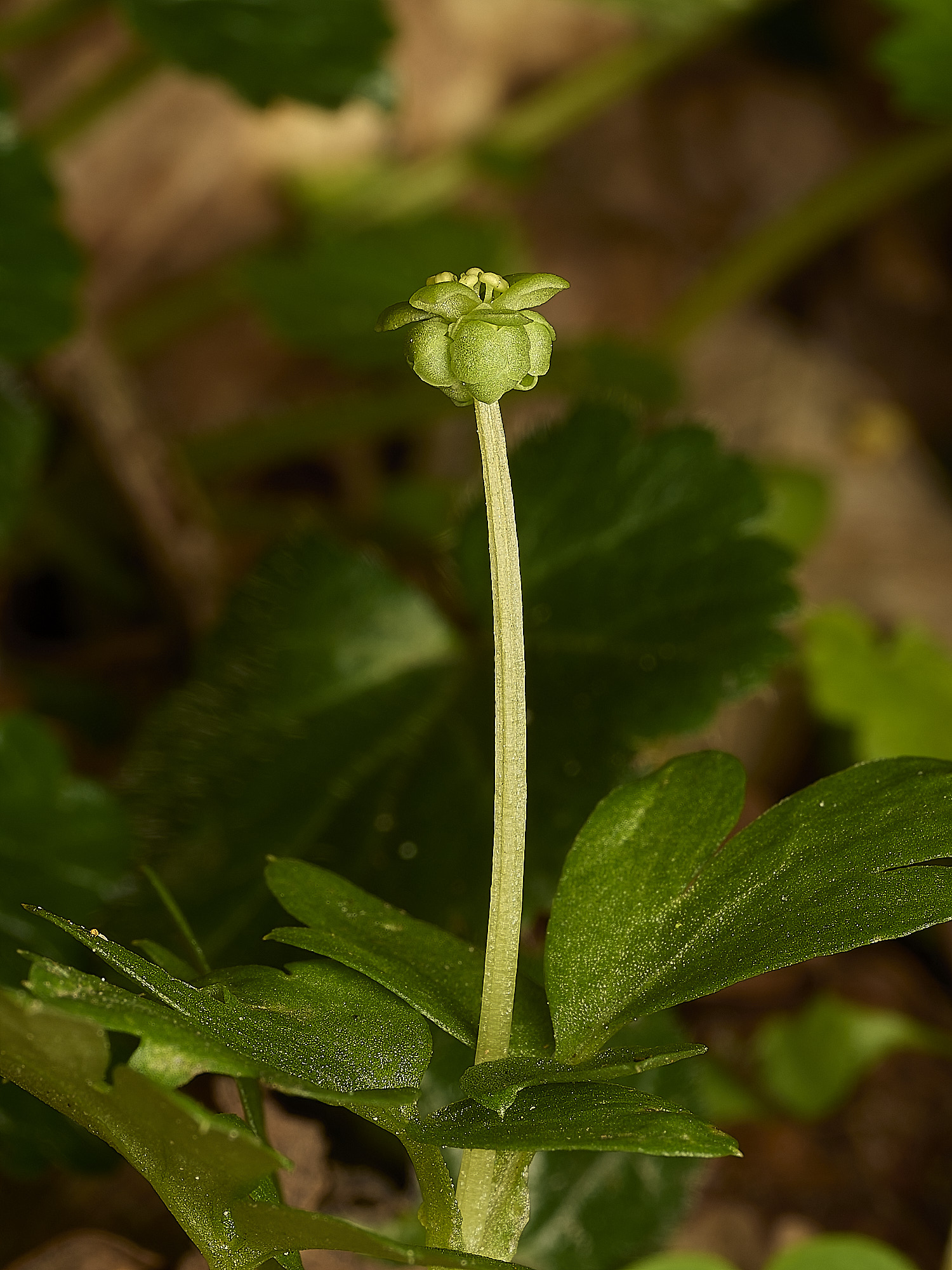
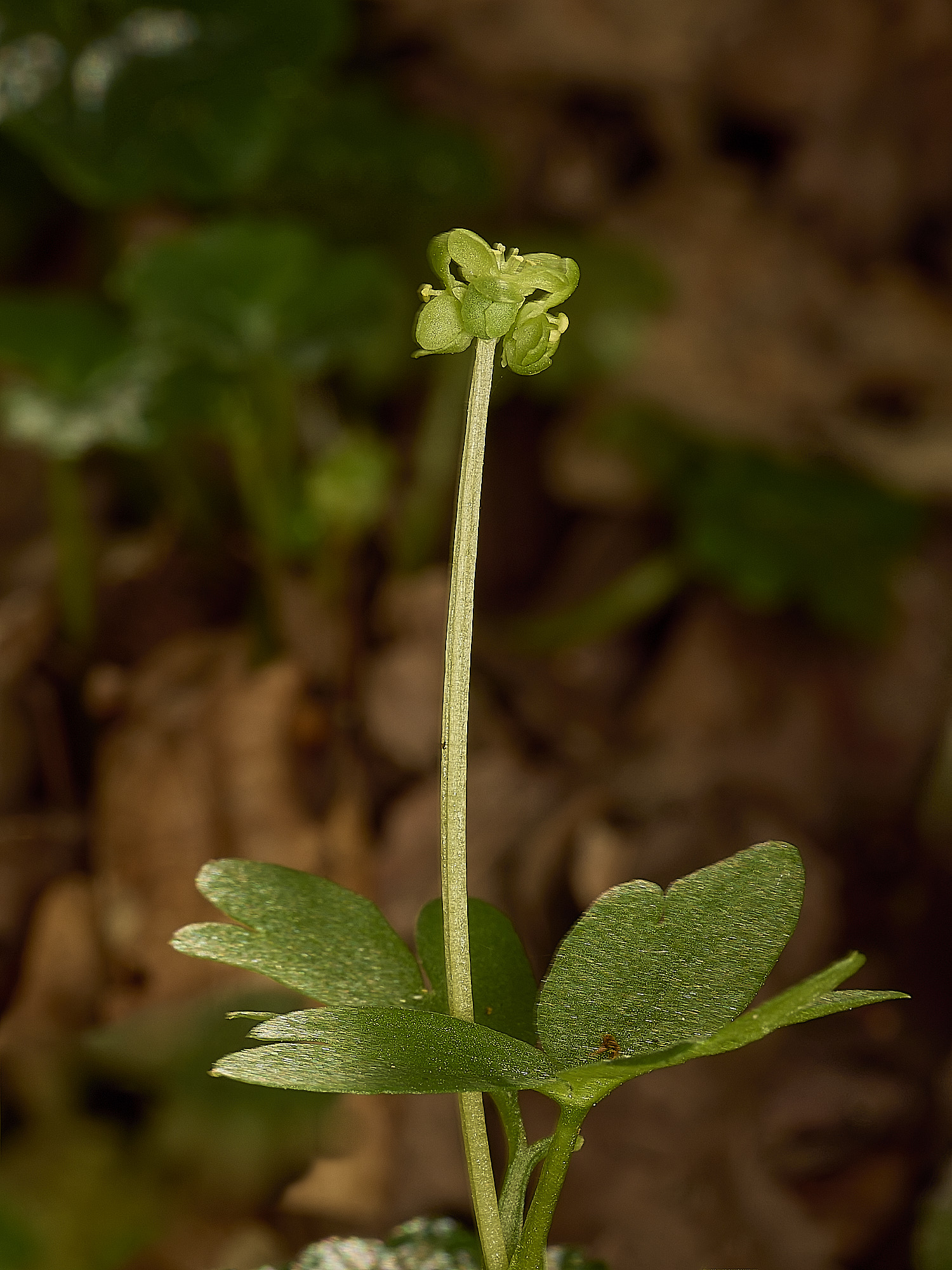
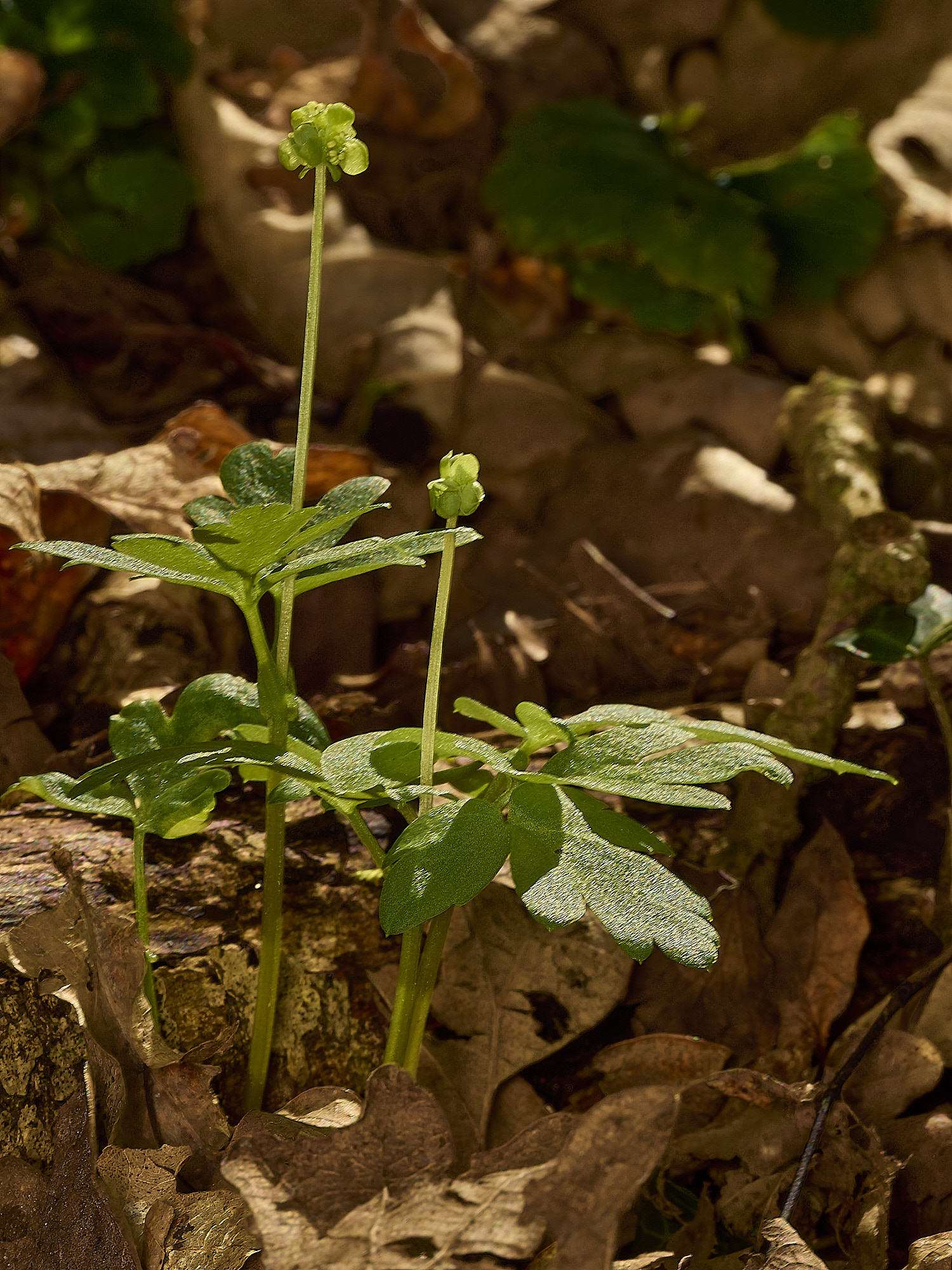
Town Hall Clock (Adoxa moschatellina)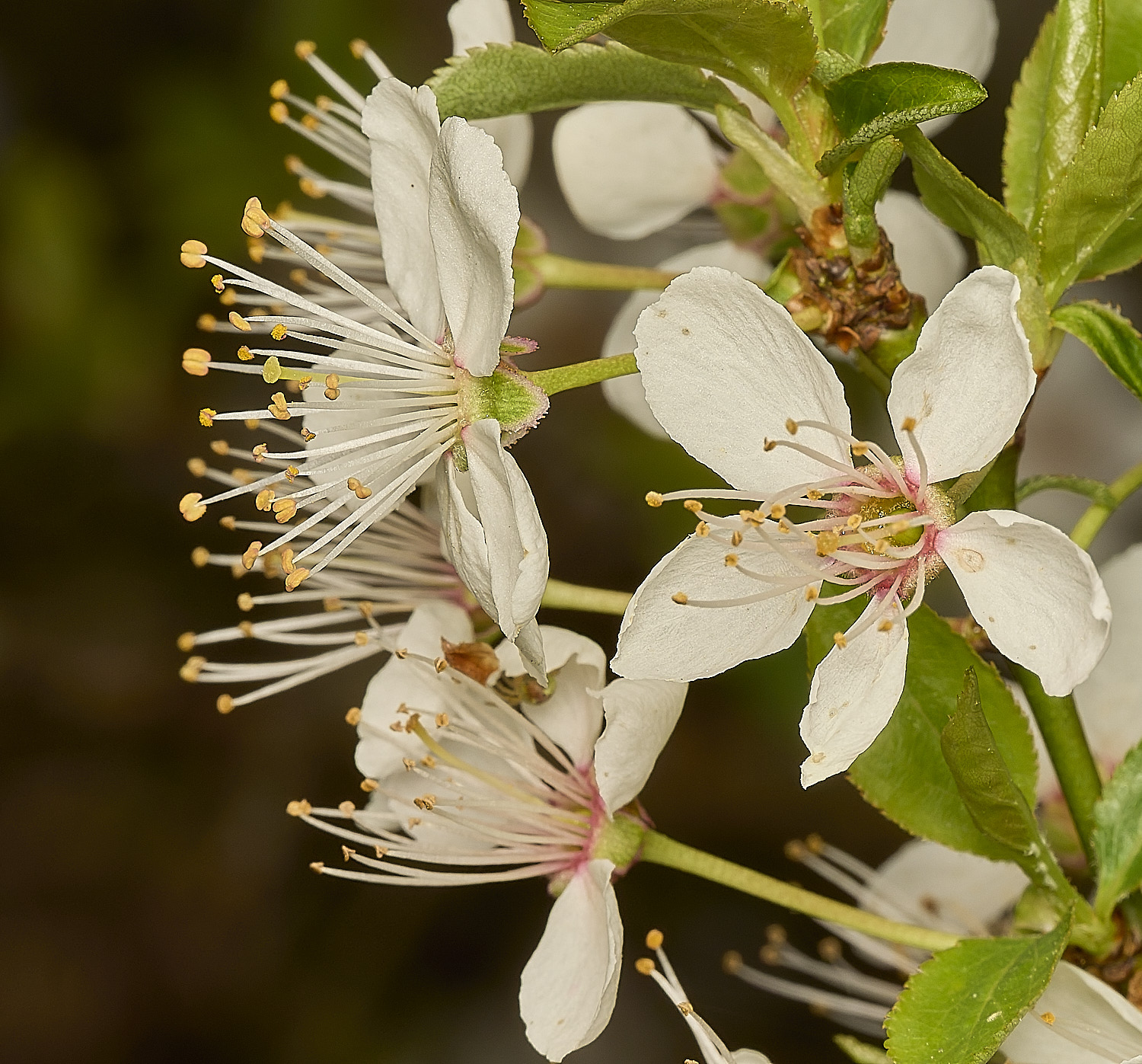
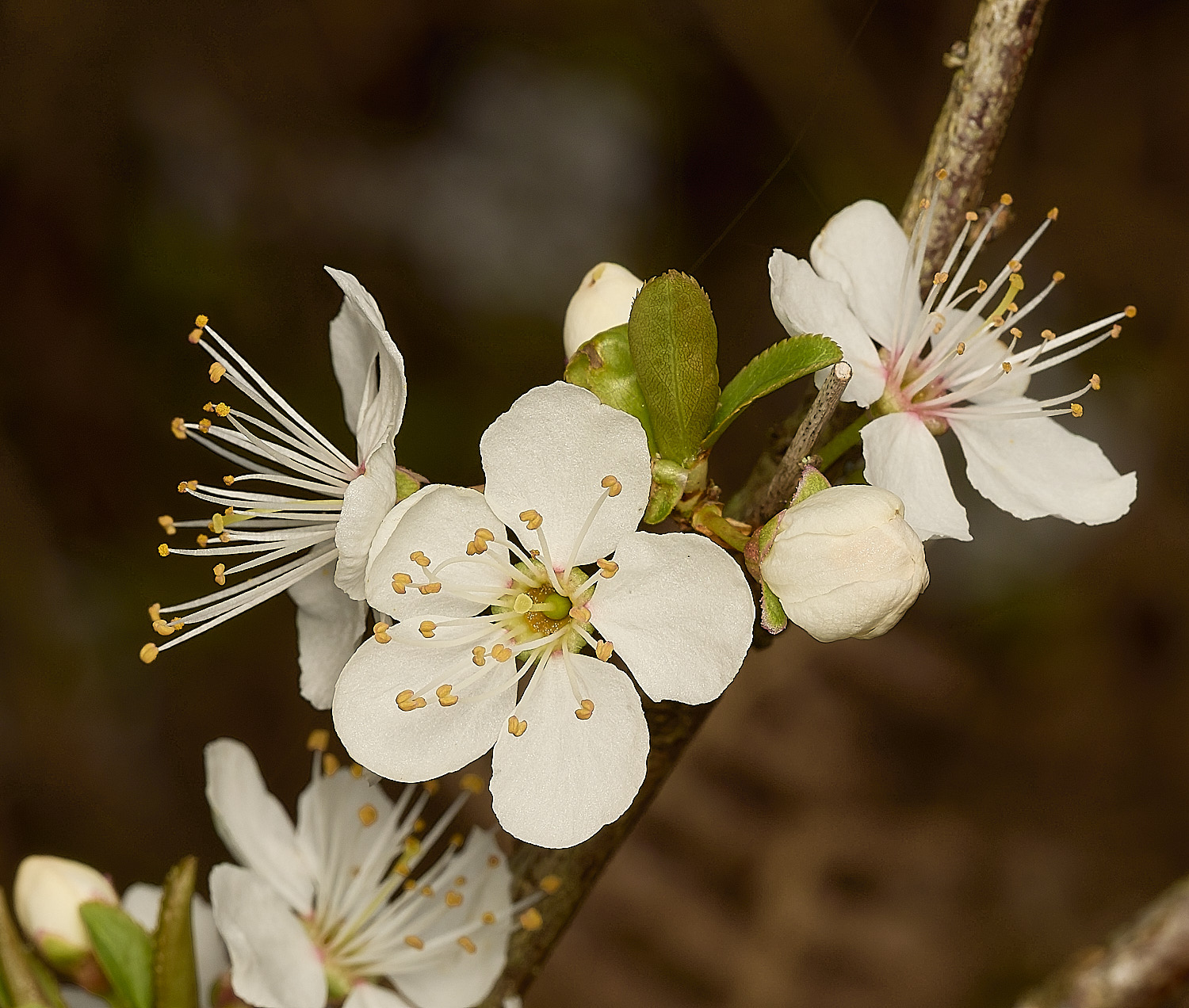
Bird Cherry (Prunus padus)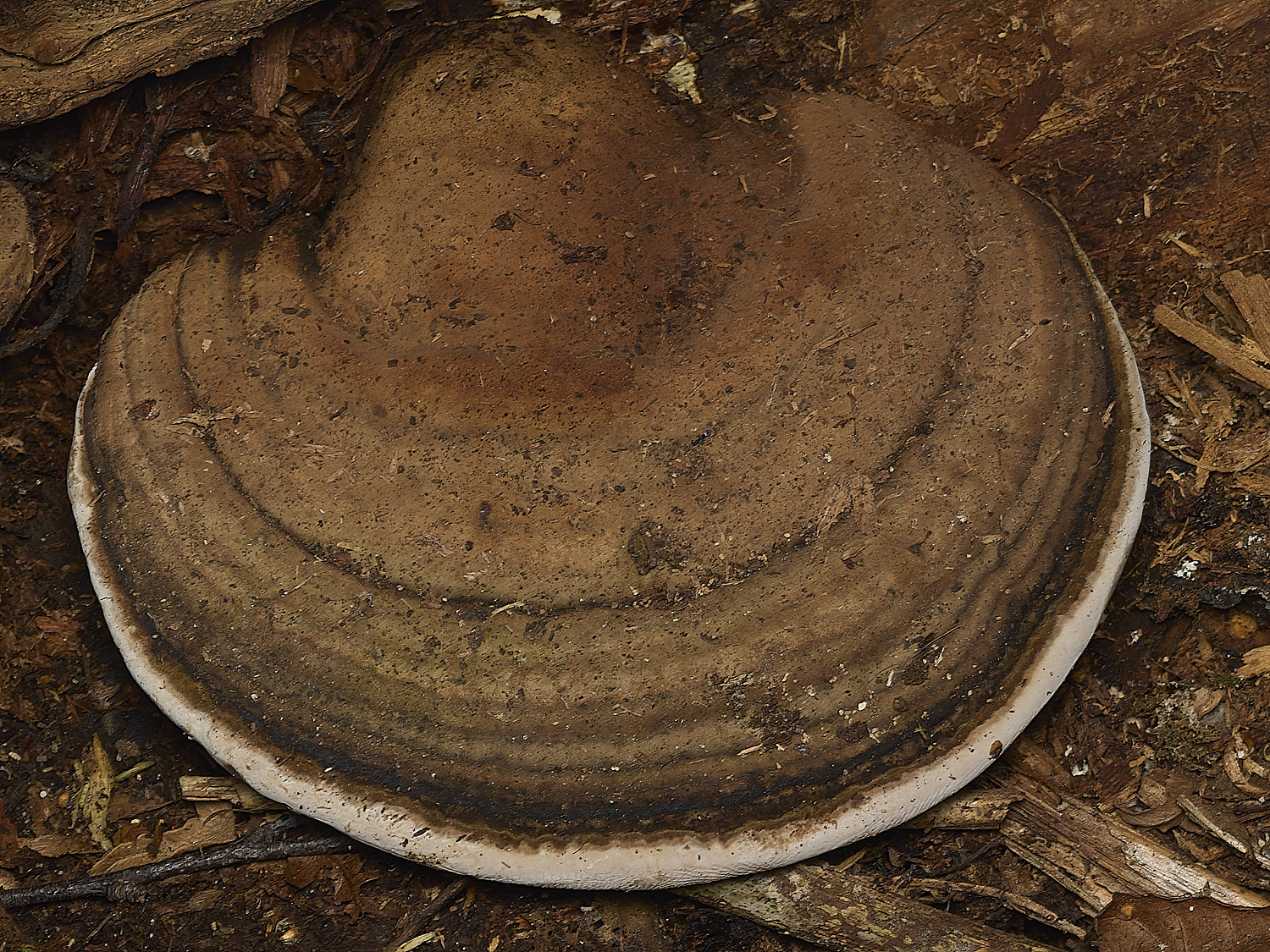
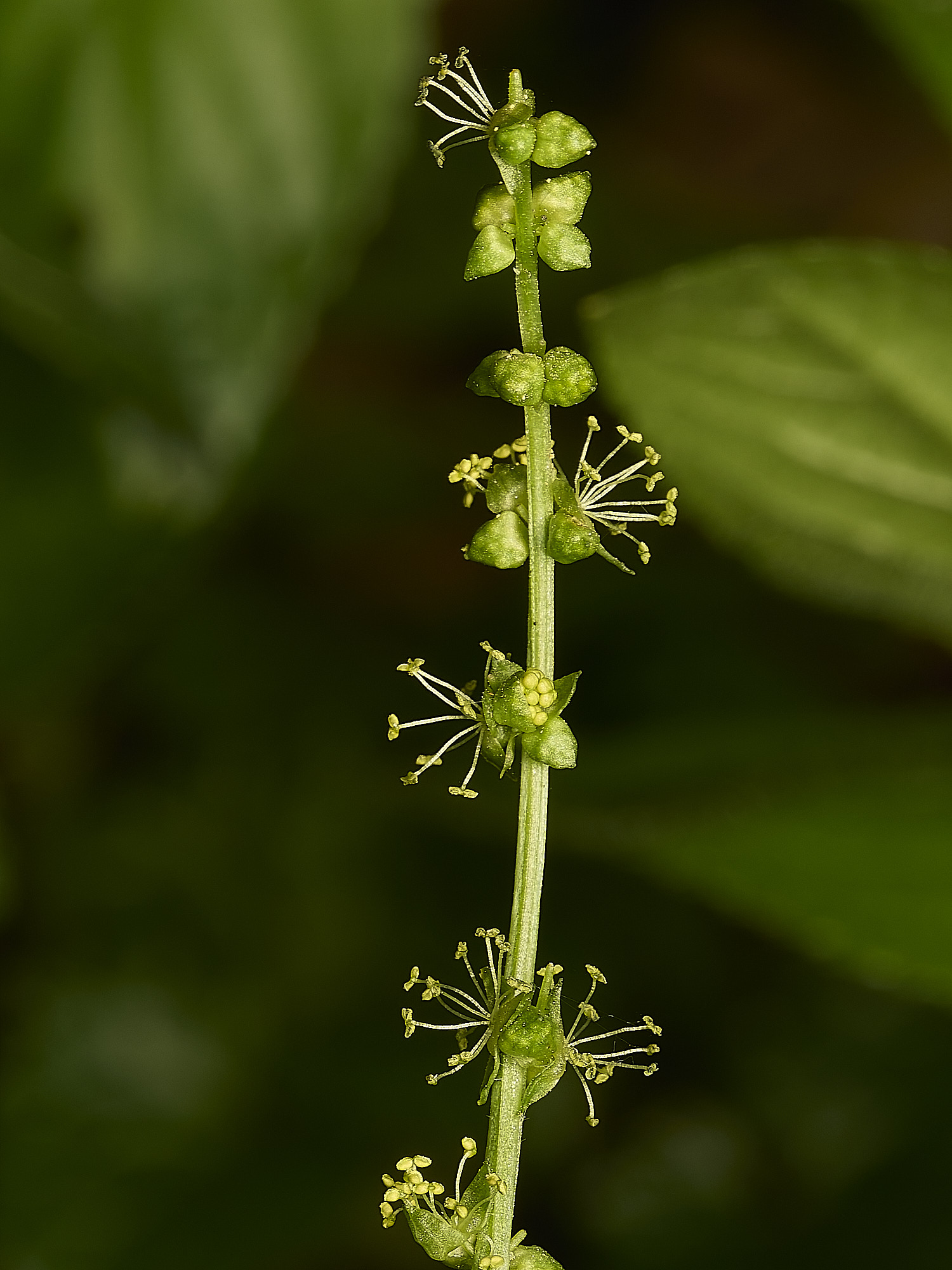
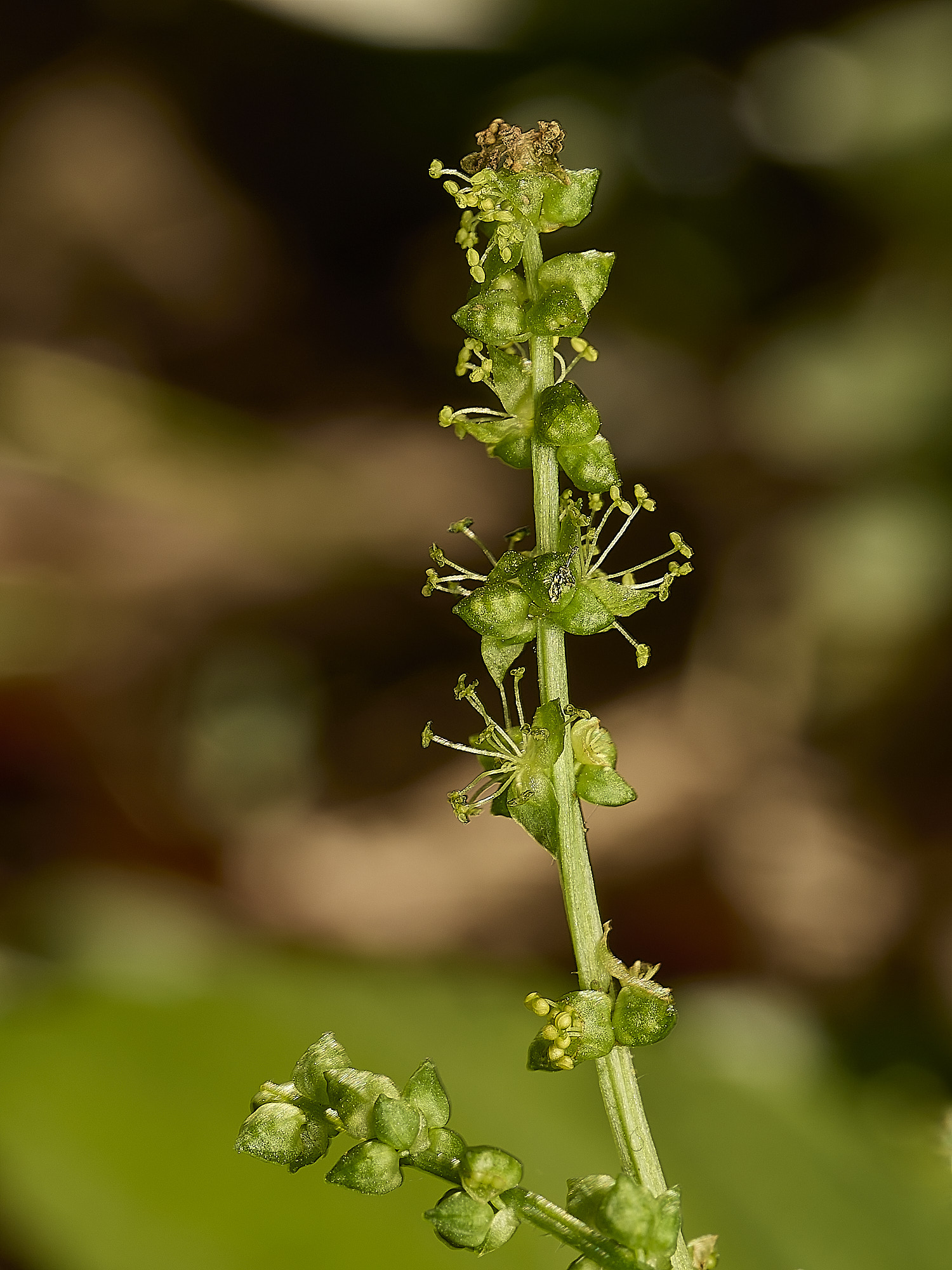
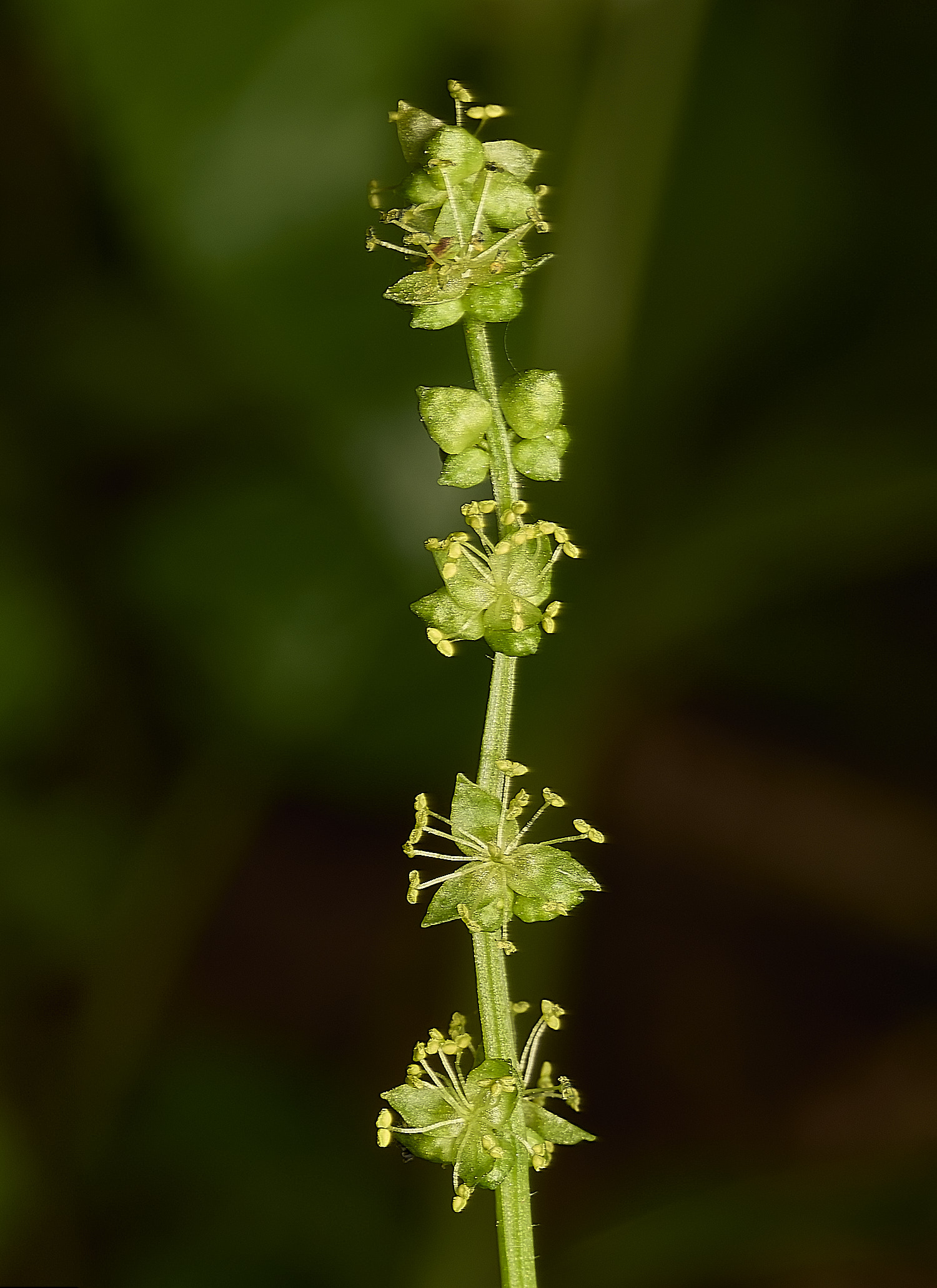
Dog's mercury ( Mercurialis perennis)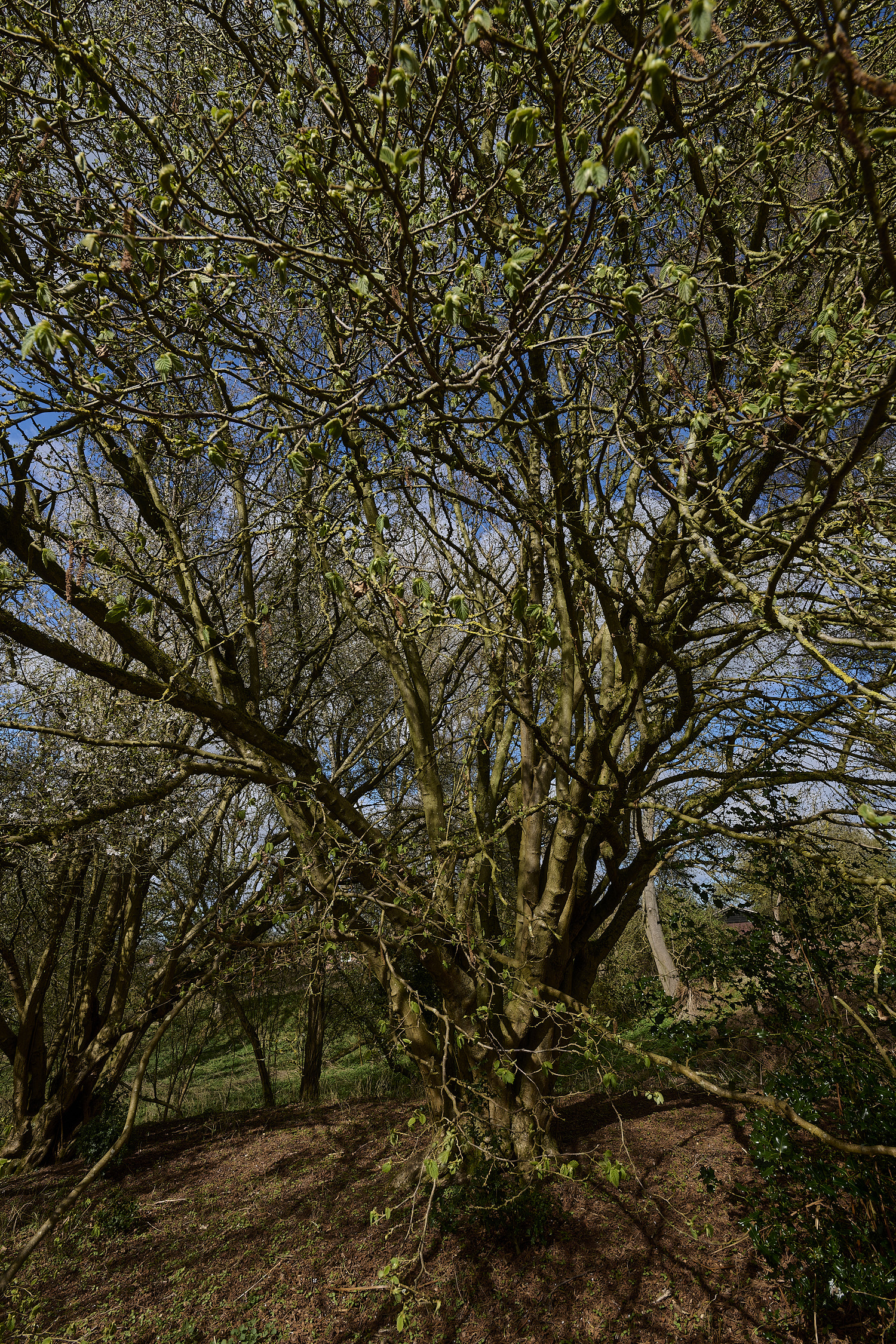
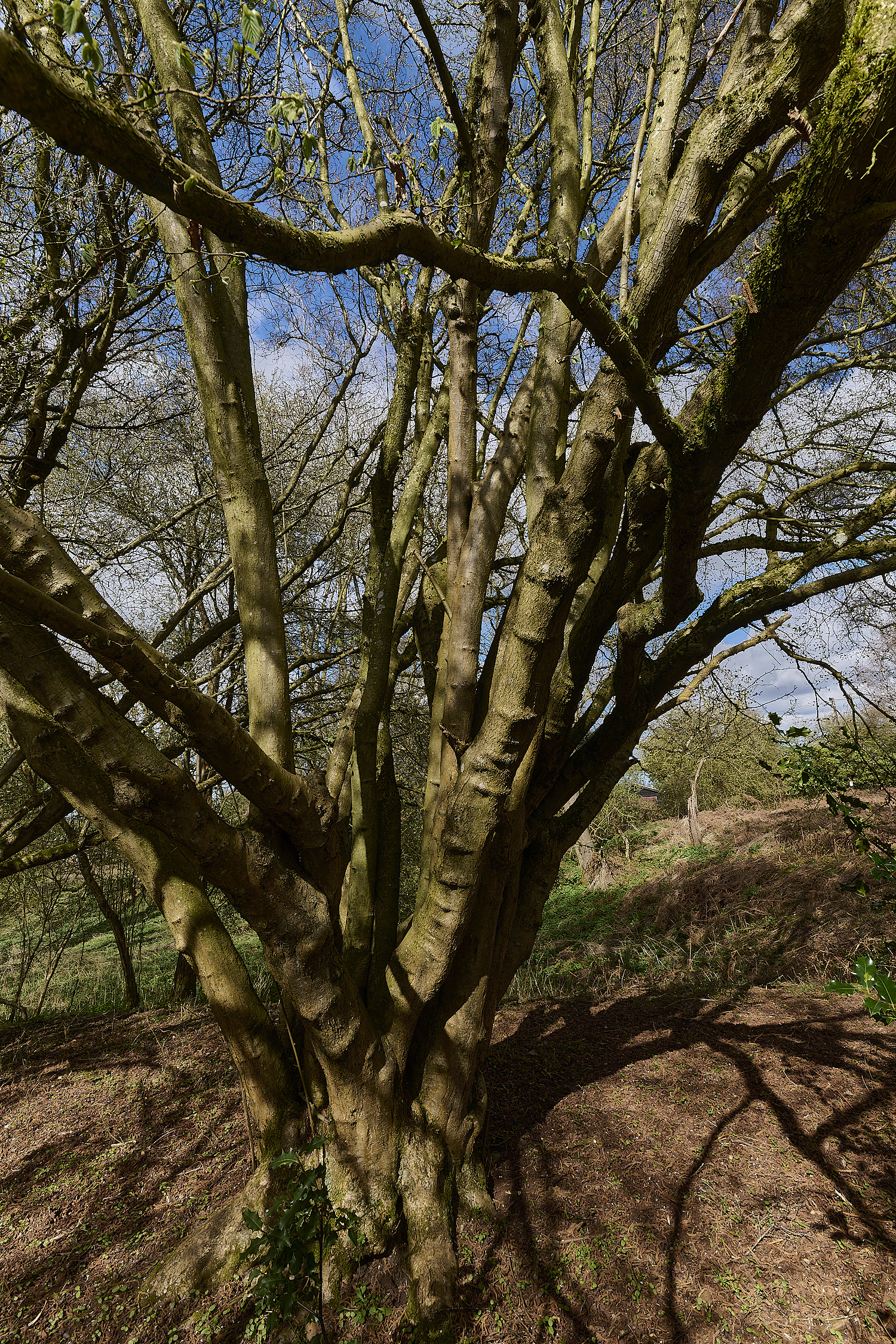
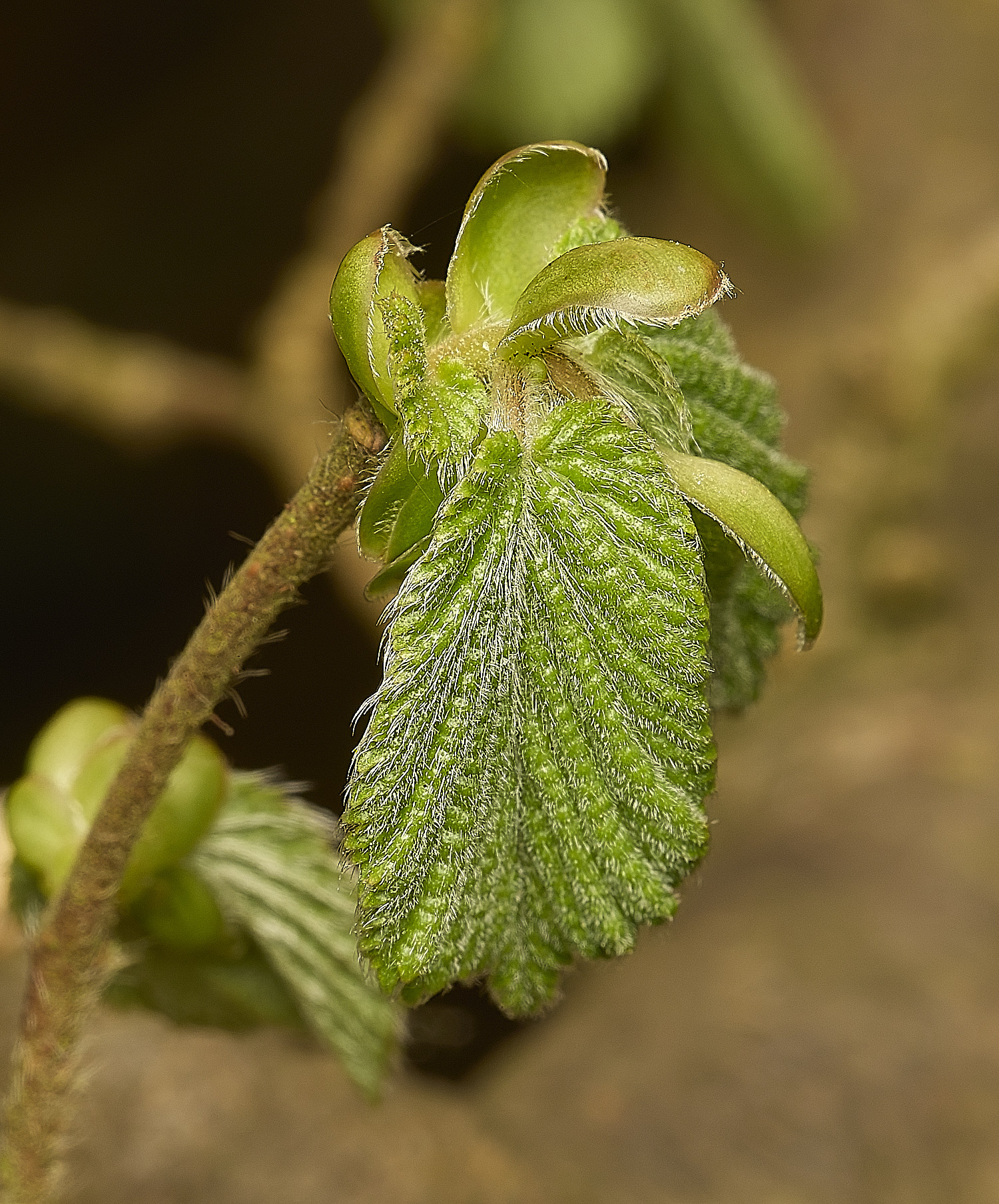
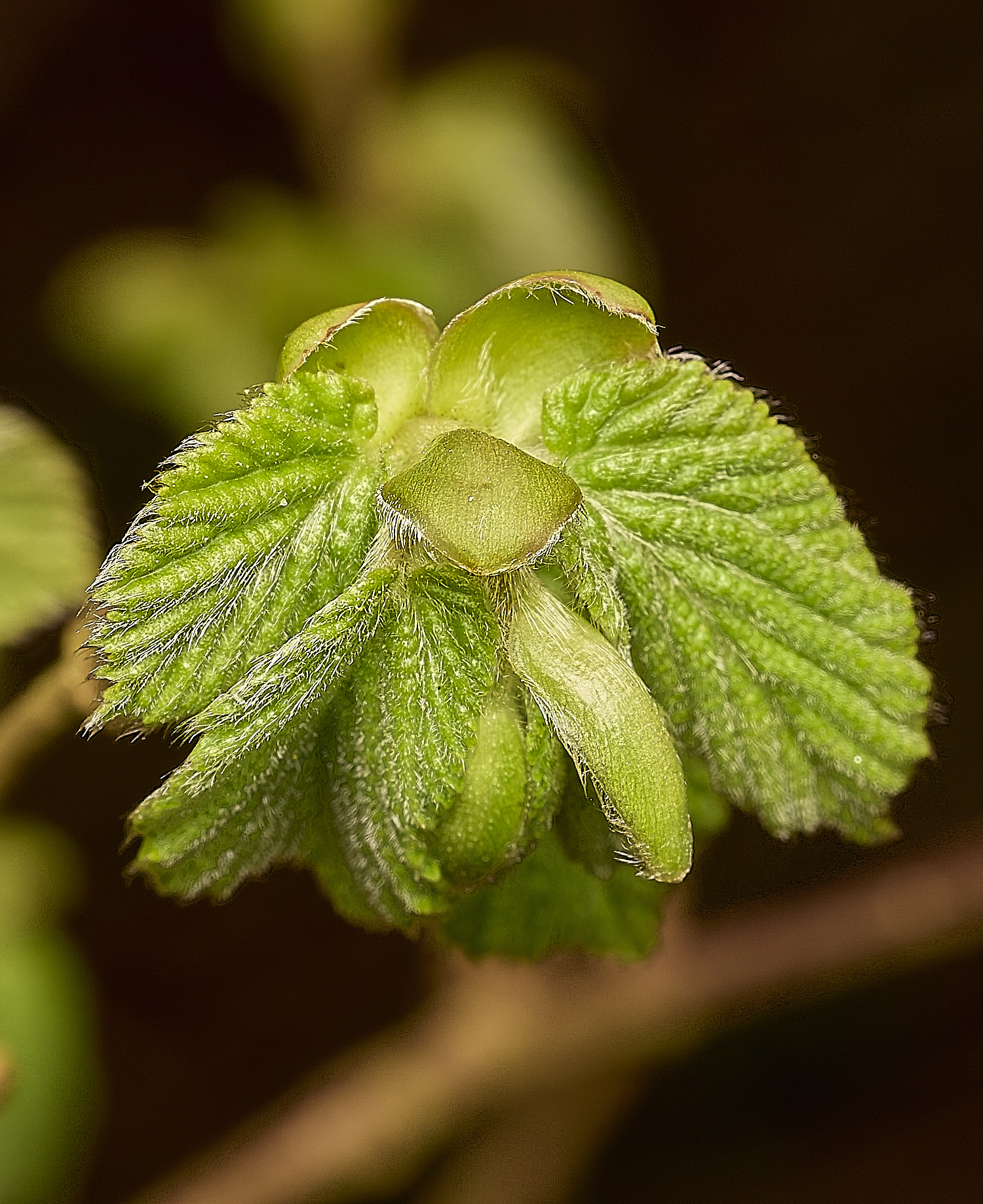
Hazel (Corylus avellana)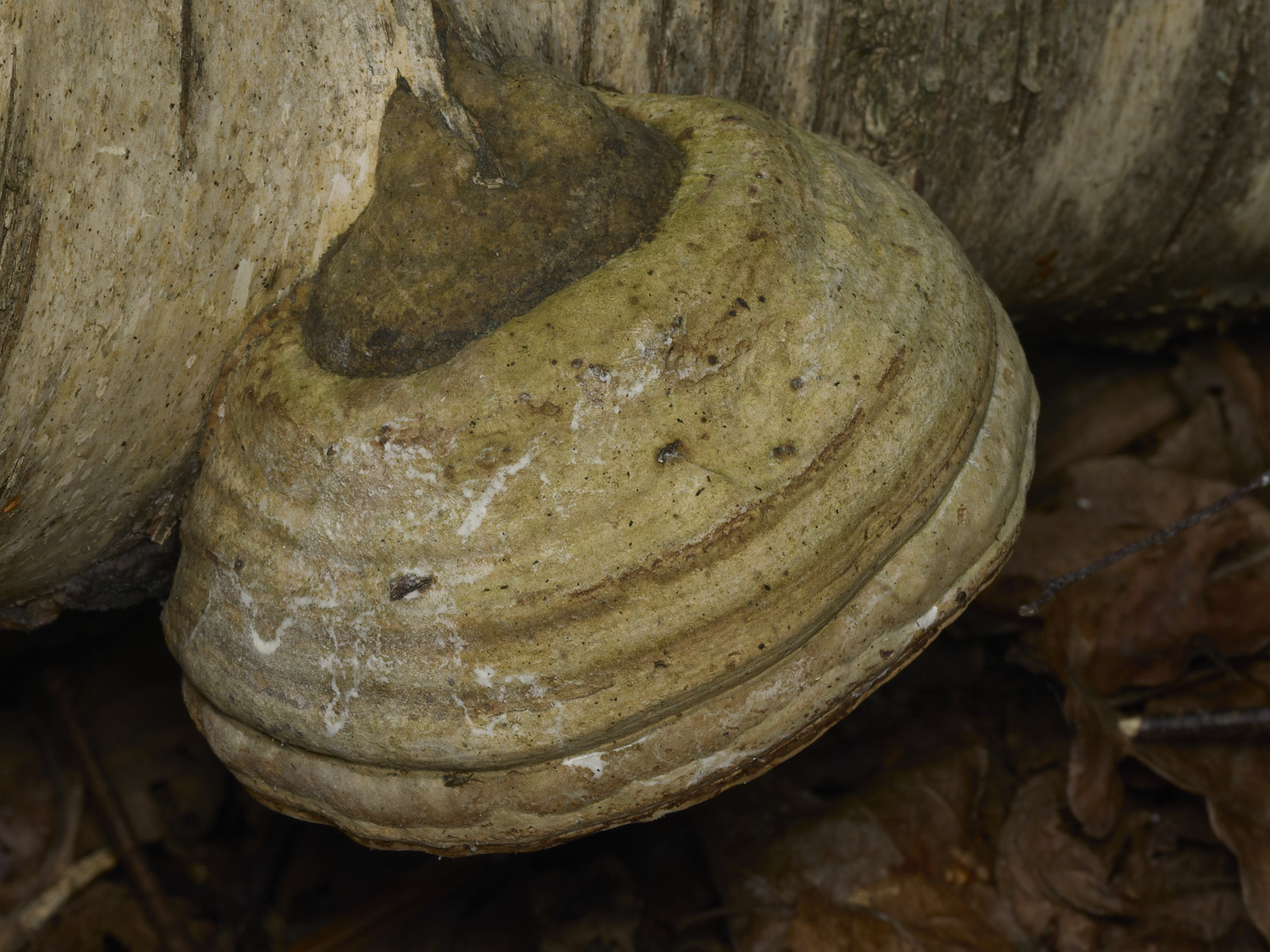
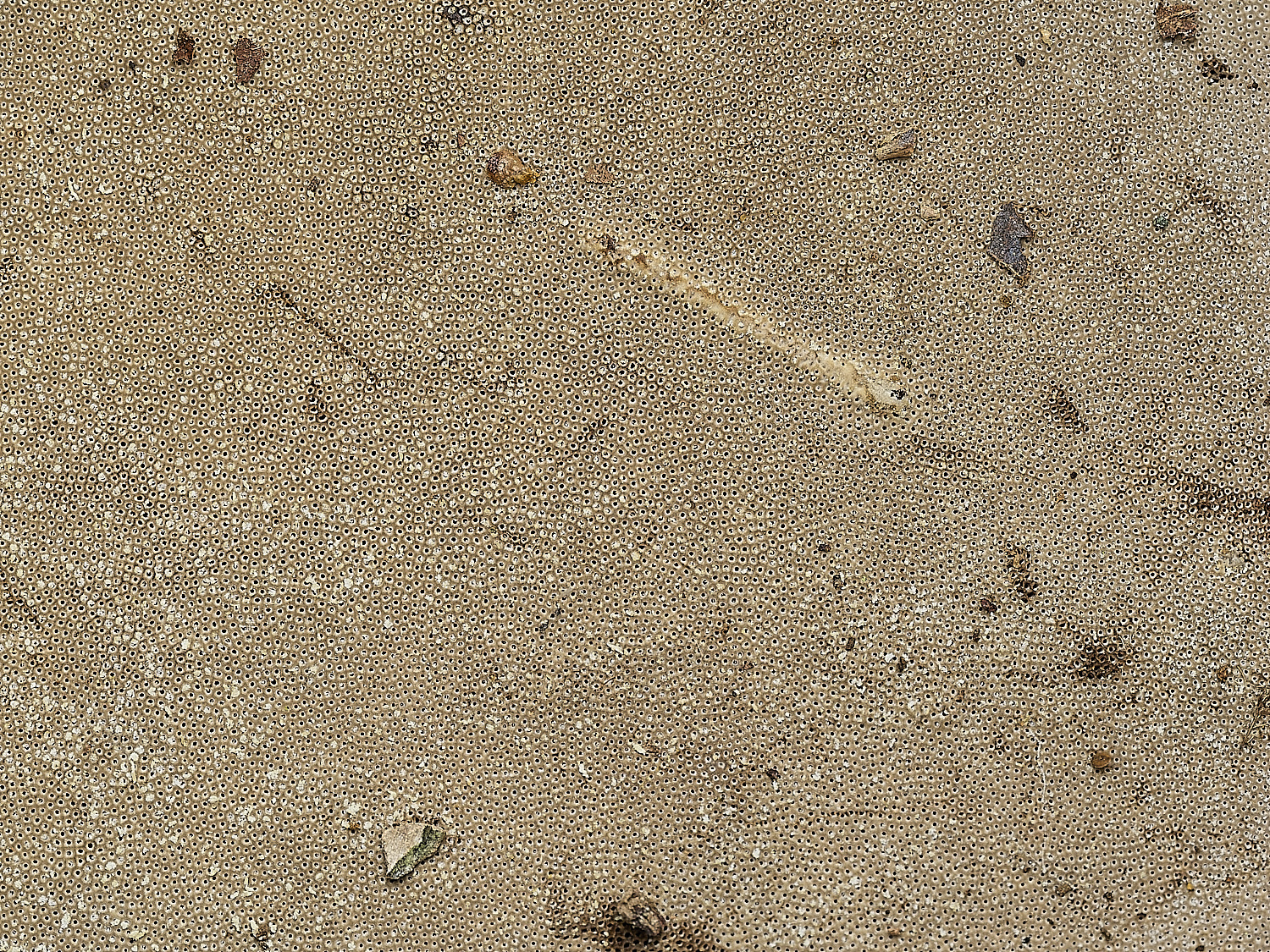
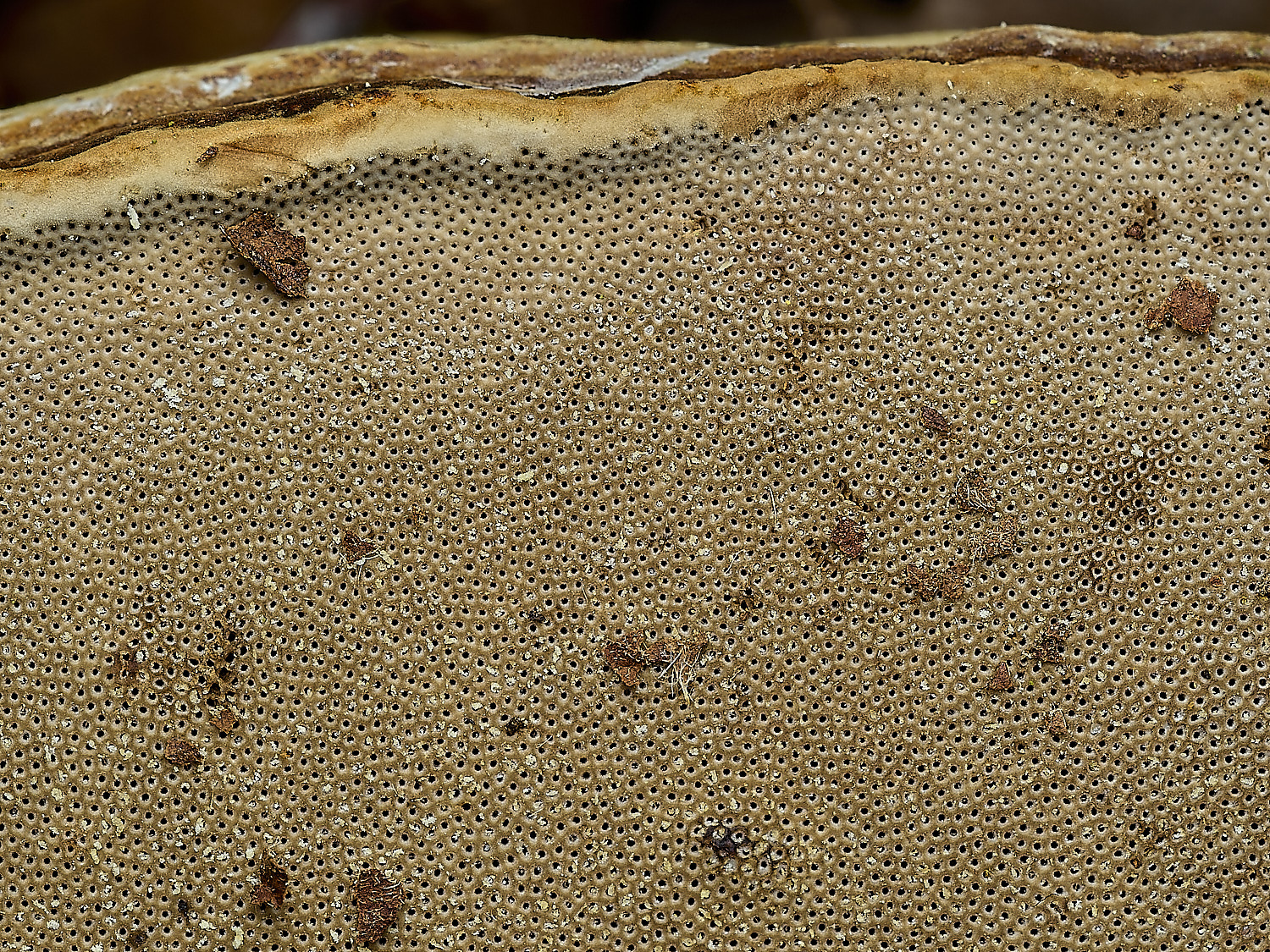
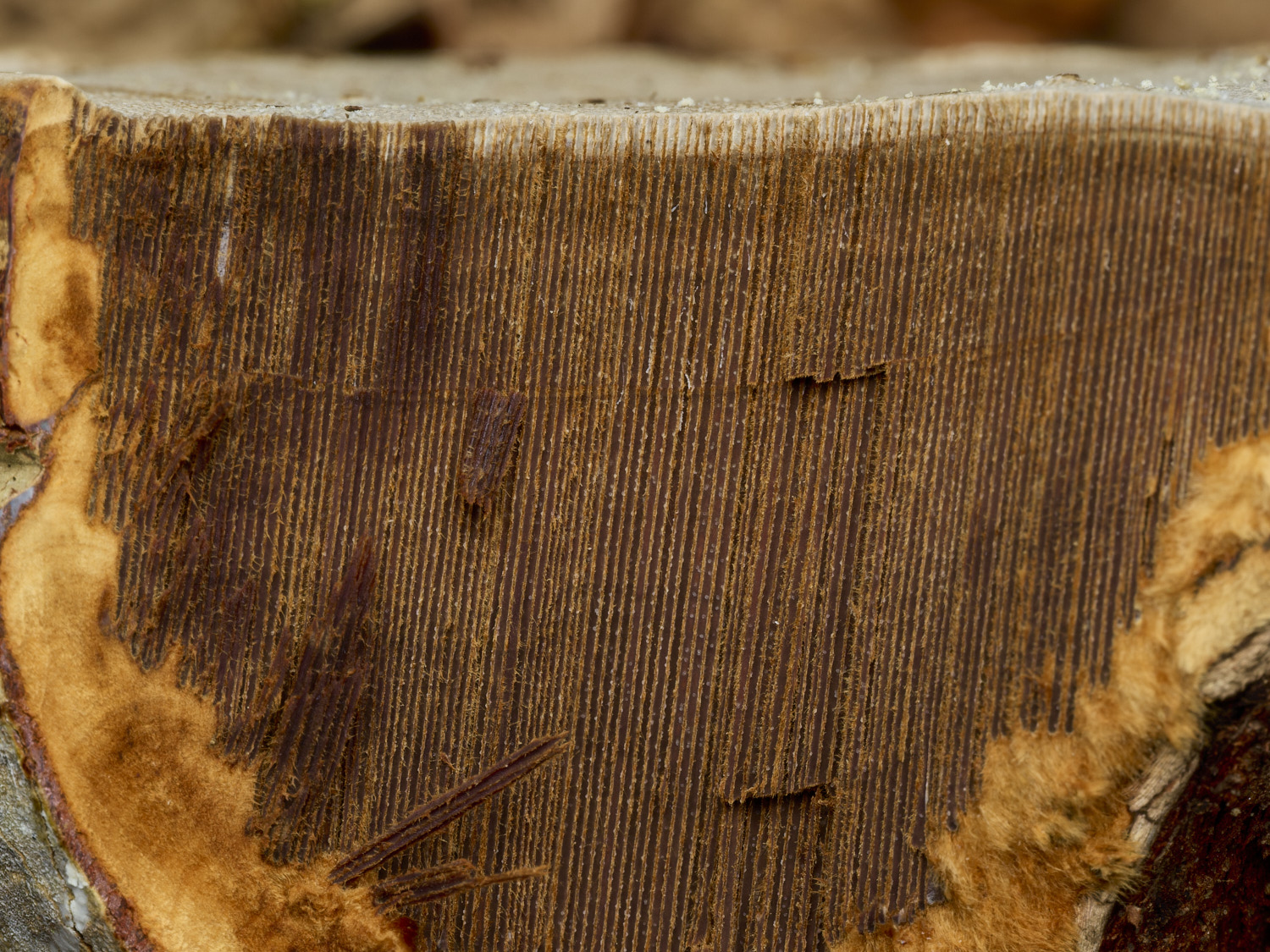
Hoof Fungus (Fomes fomentarius)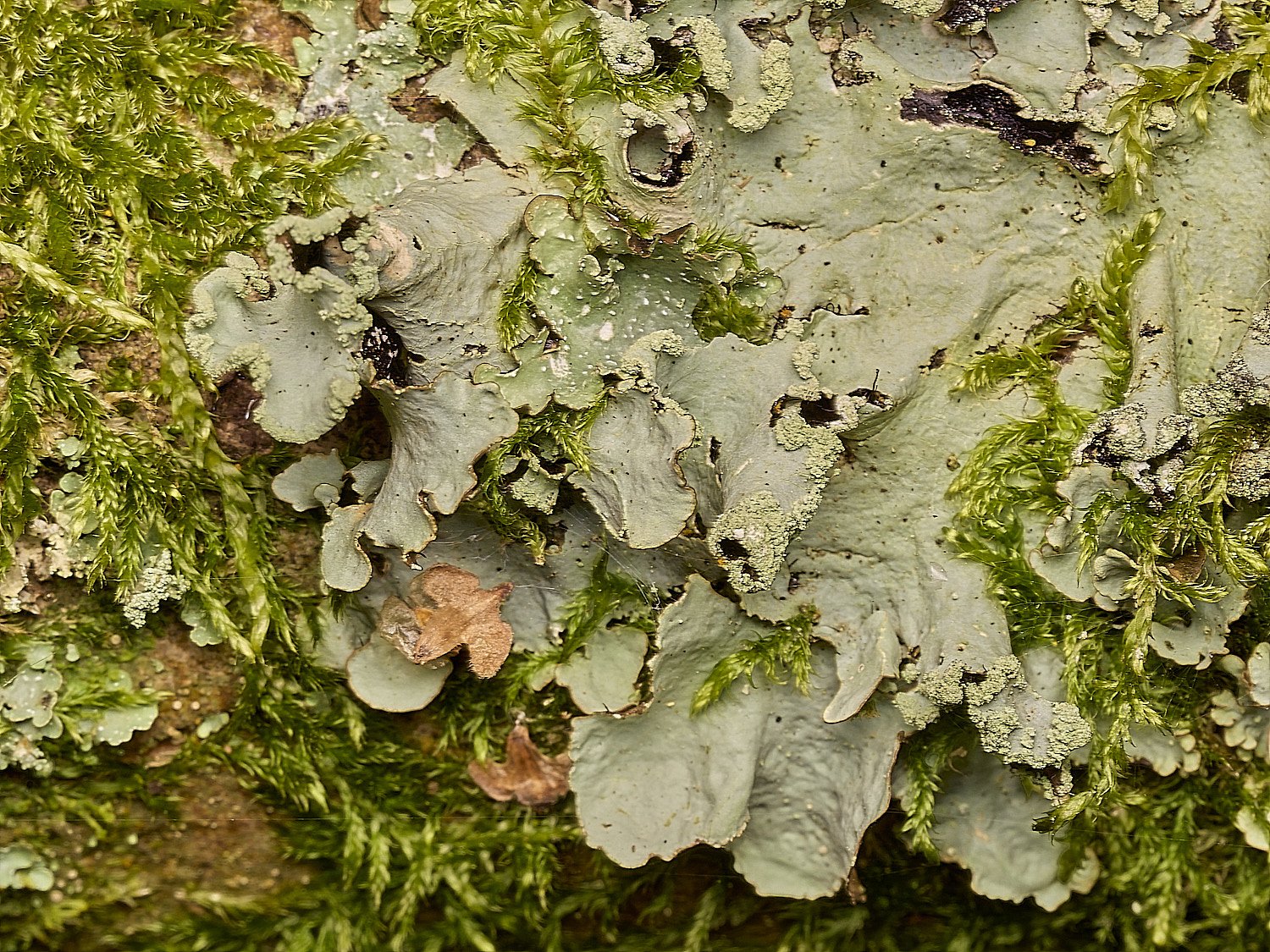
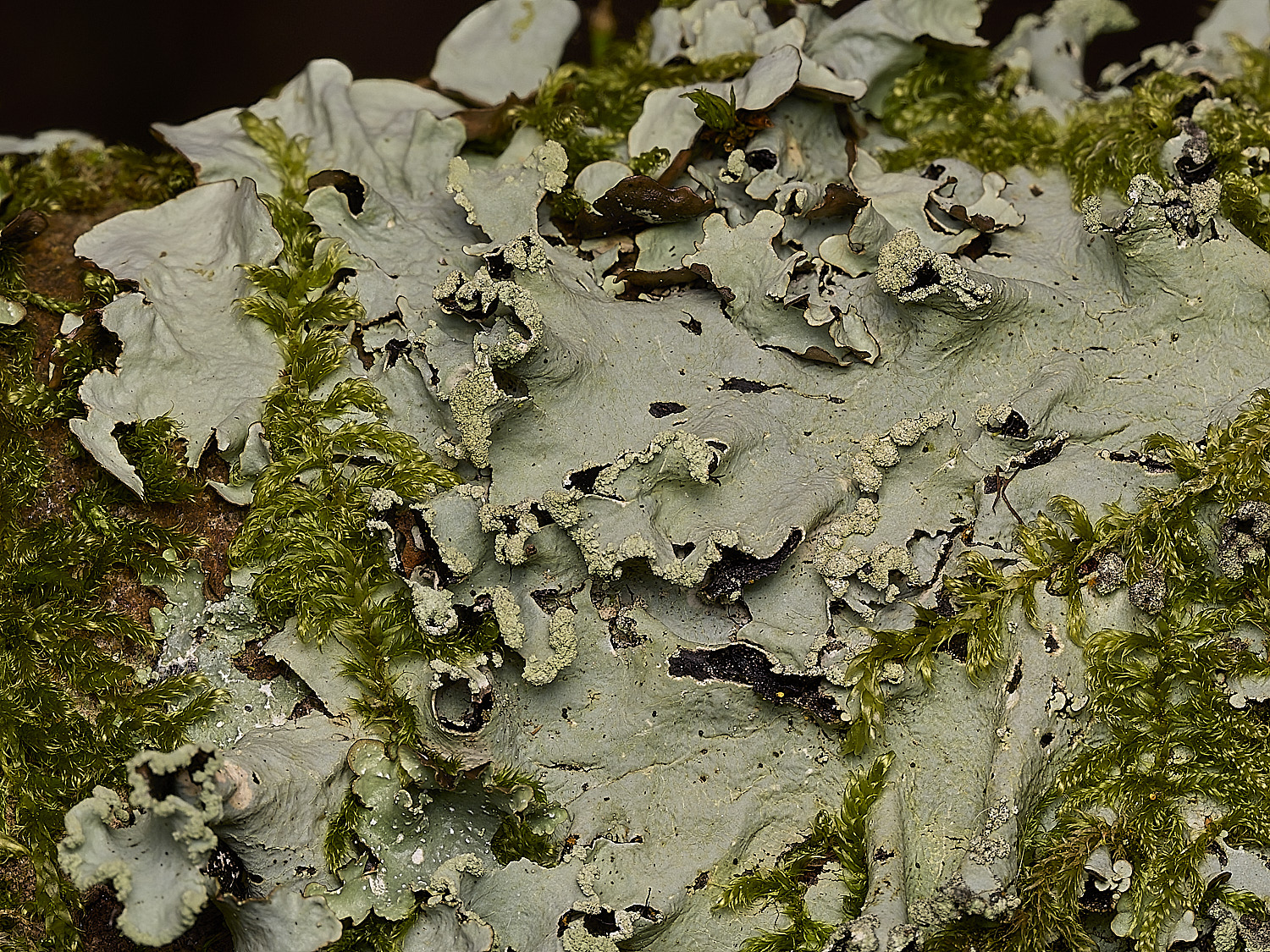
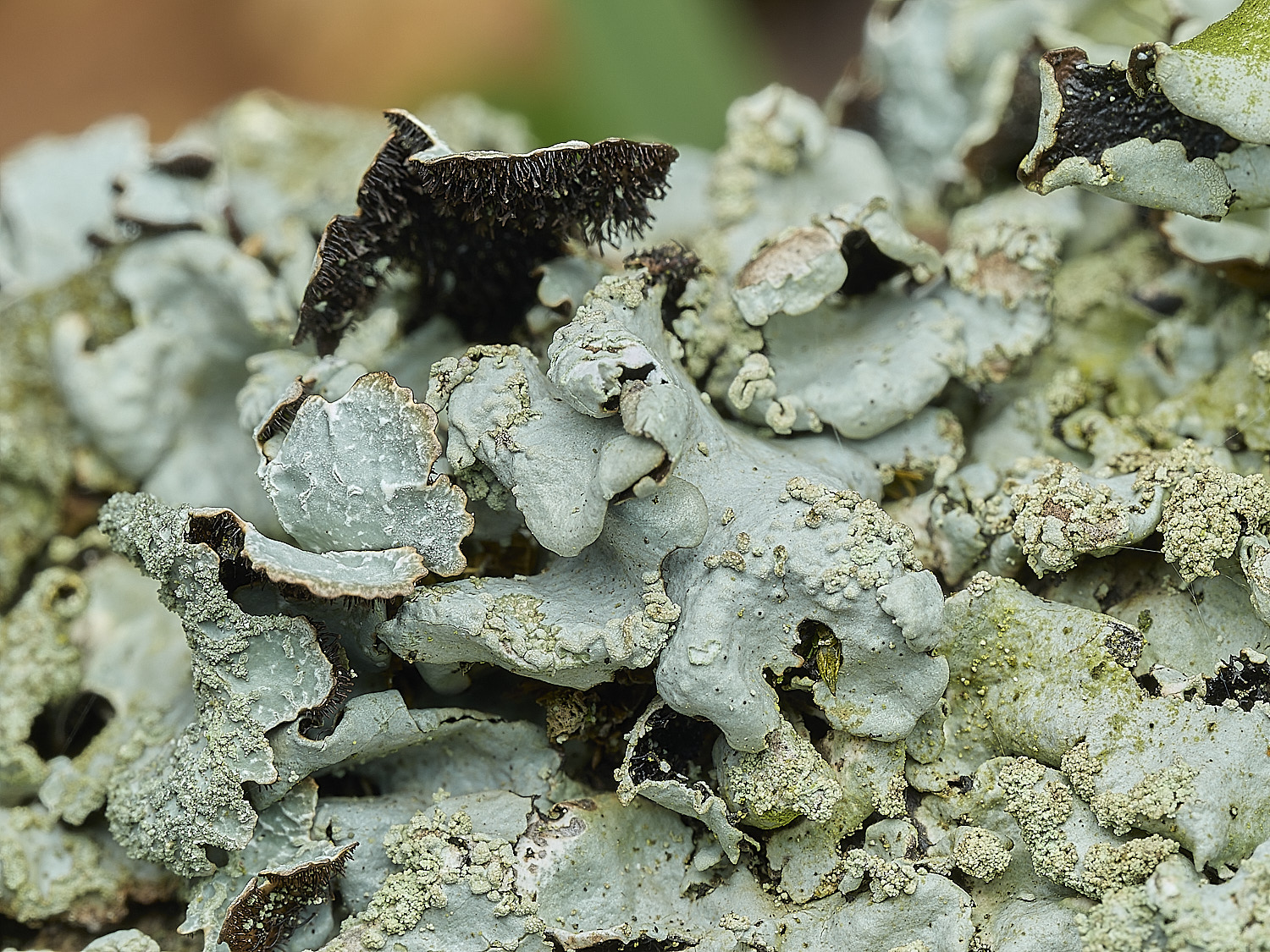
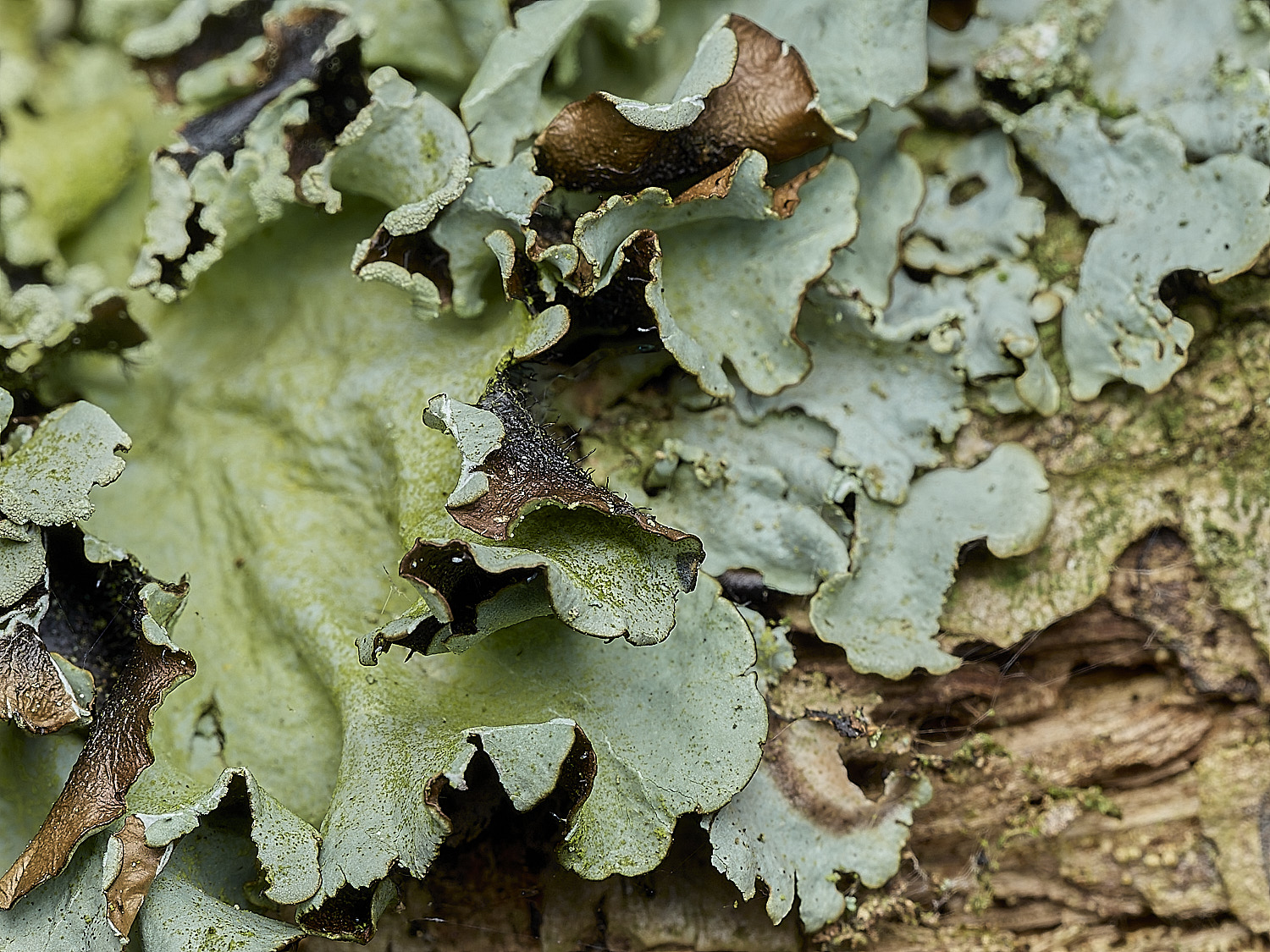
Lichen Sp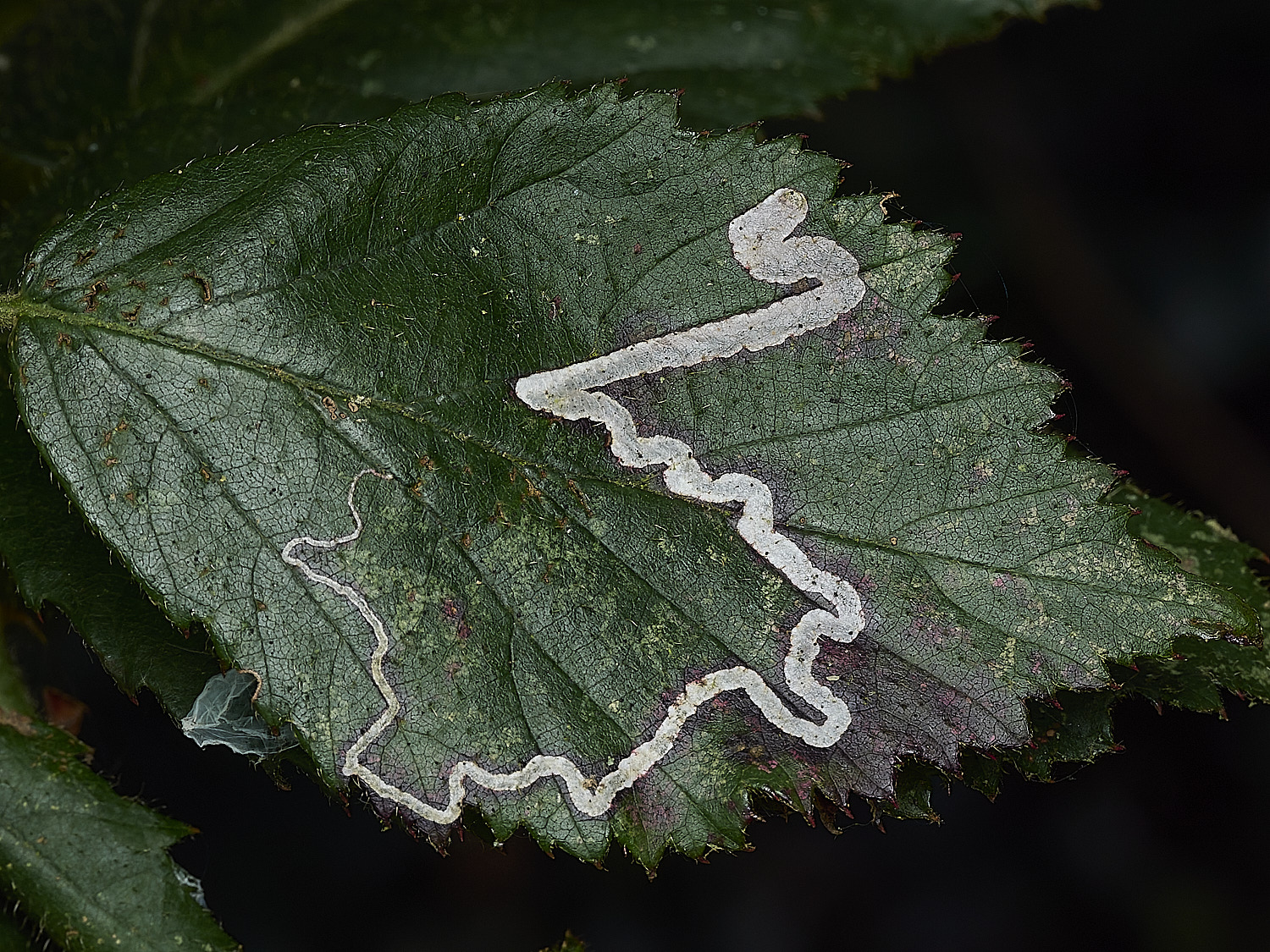
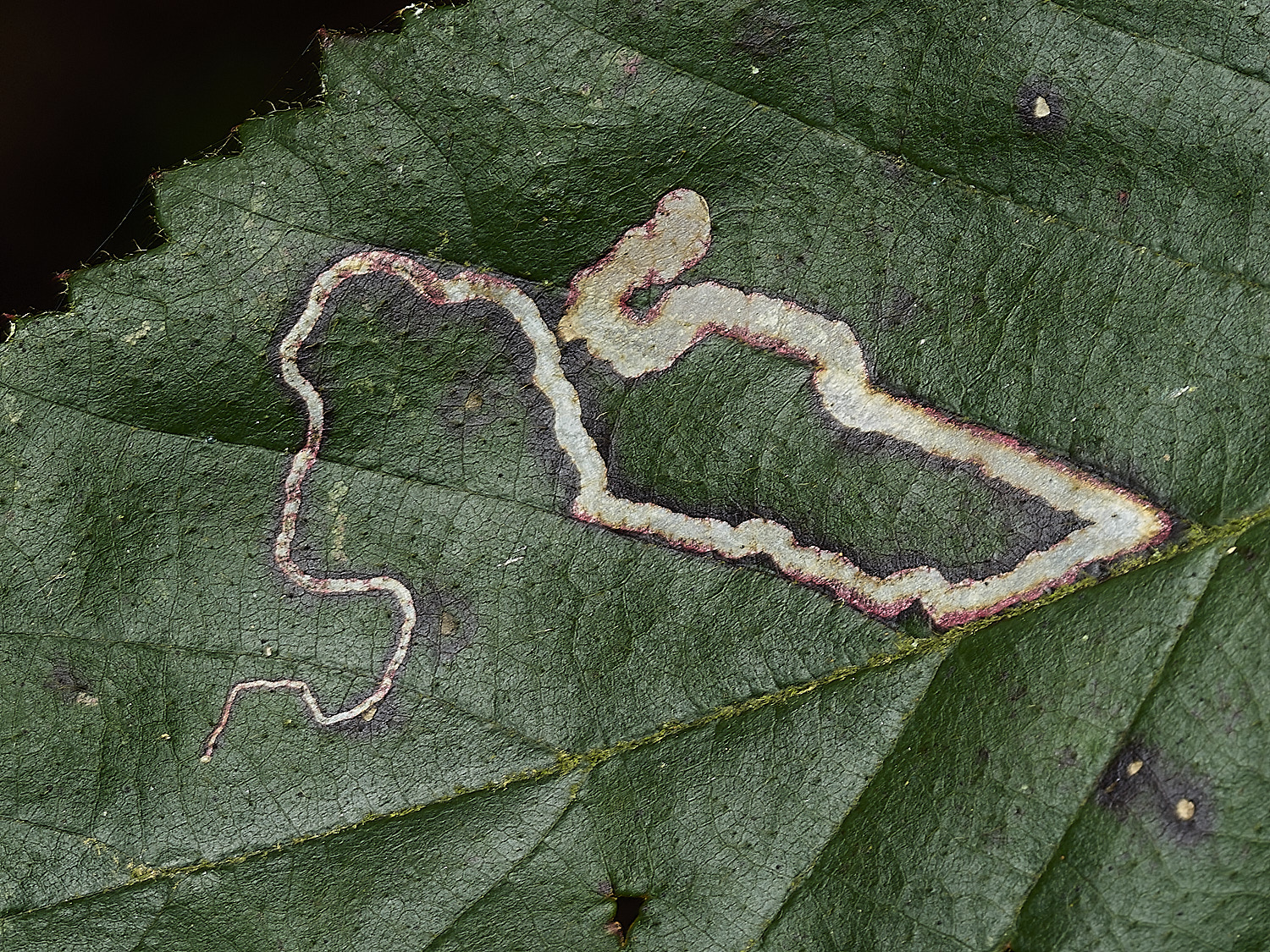
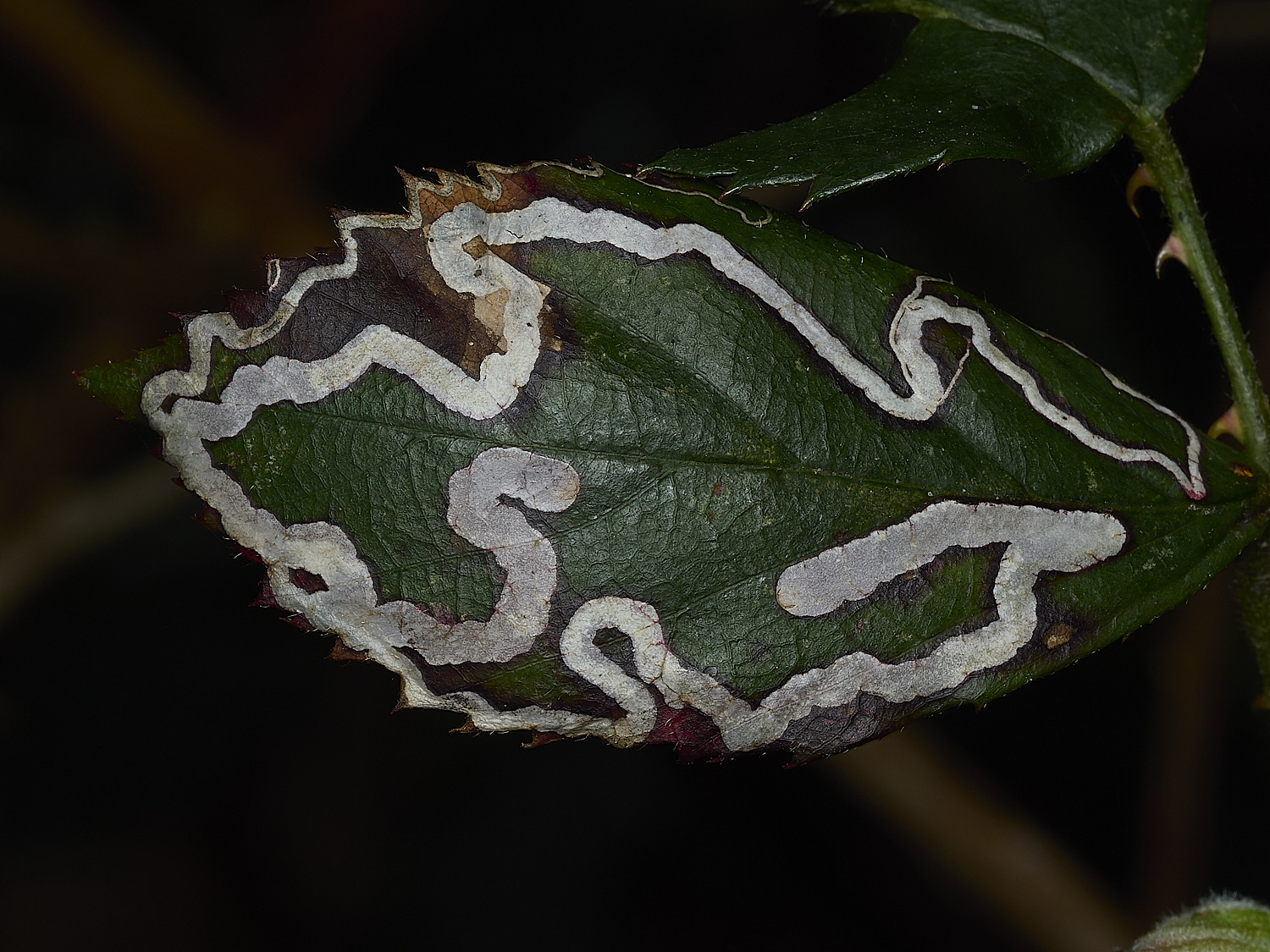
Mine on bramble leaves. This is likely to be Golden Pygmy Moth (Stigmella aurella)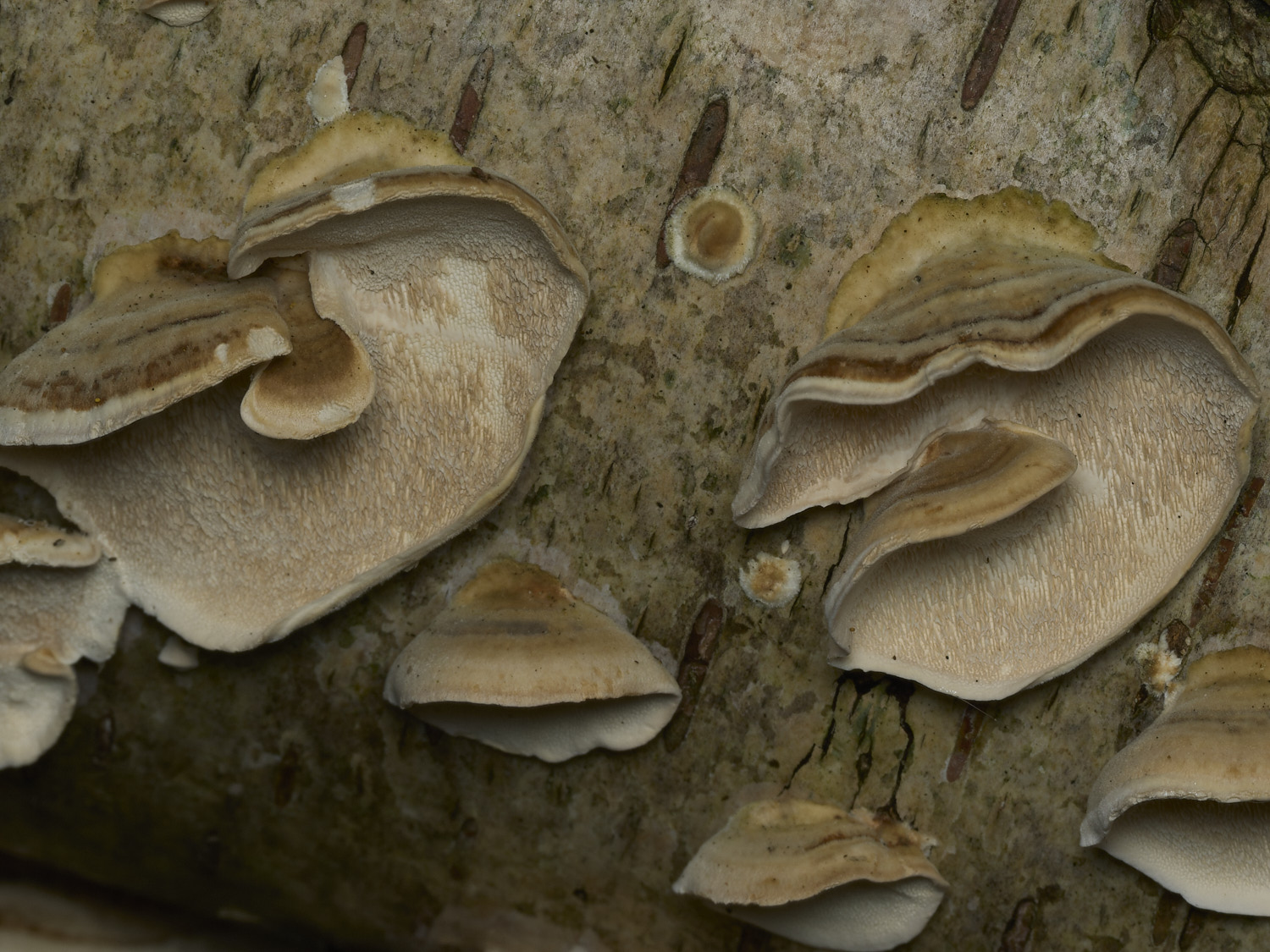
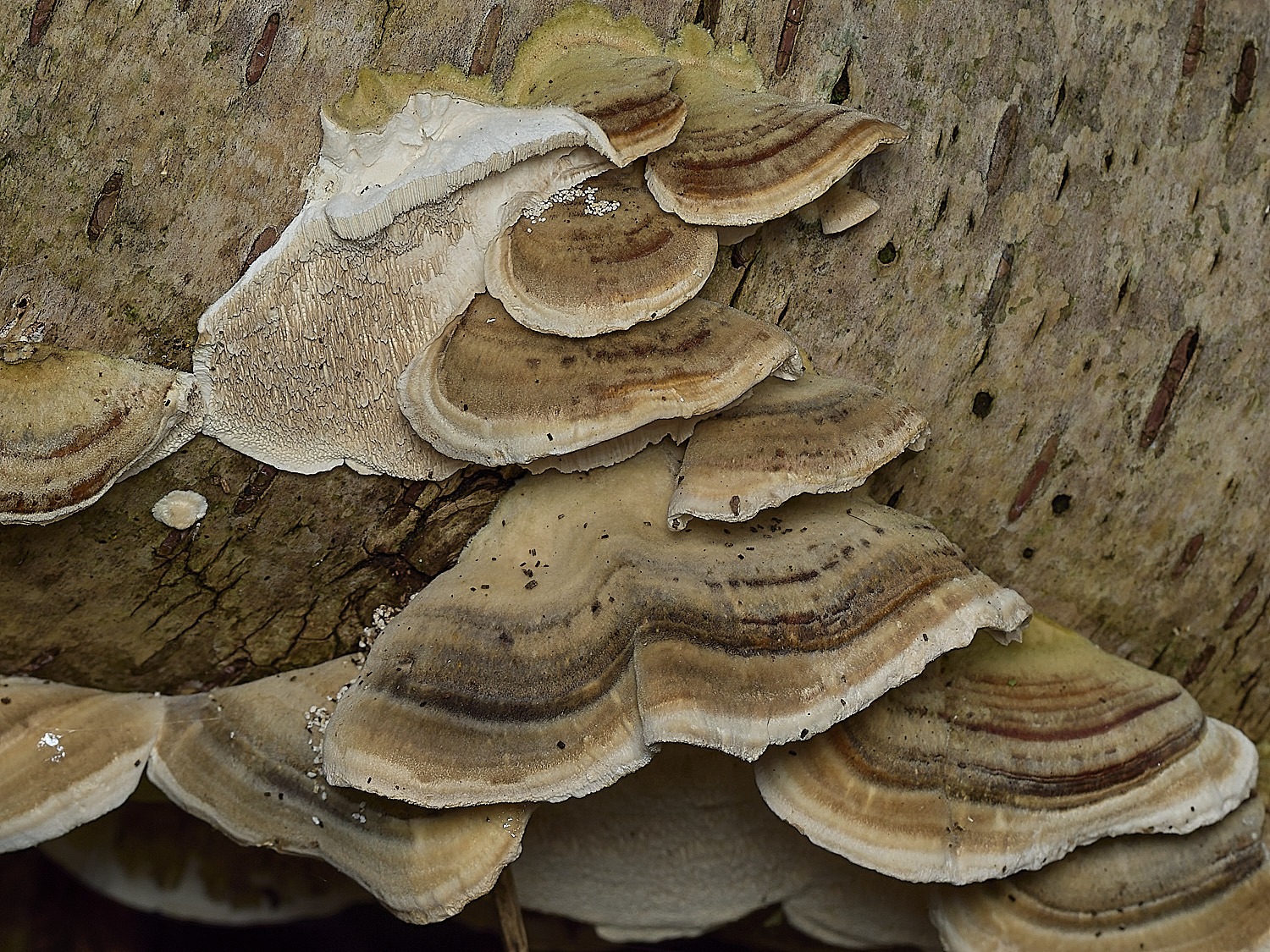
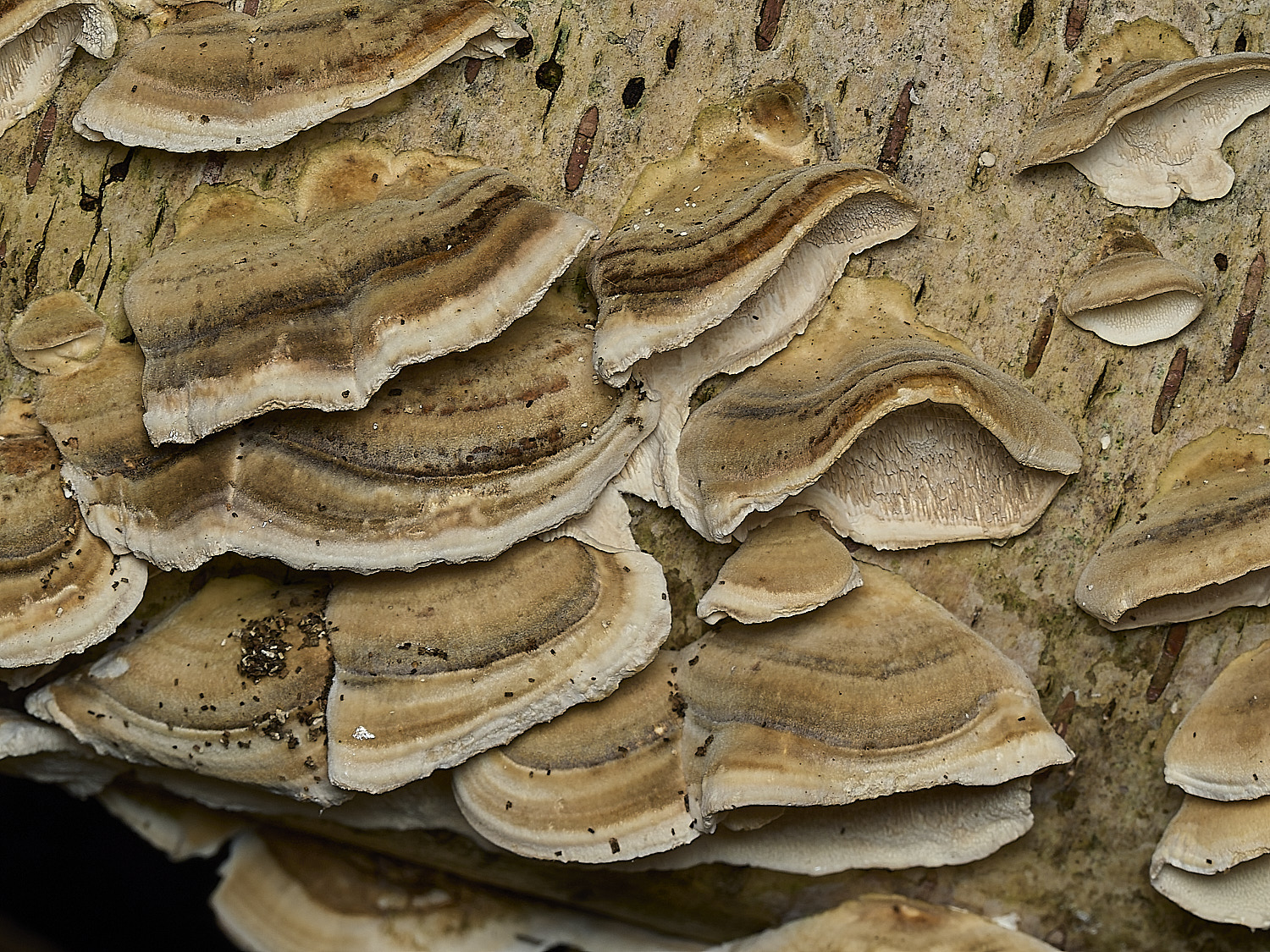
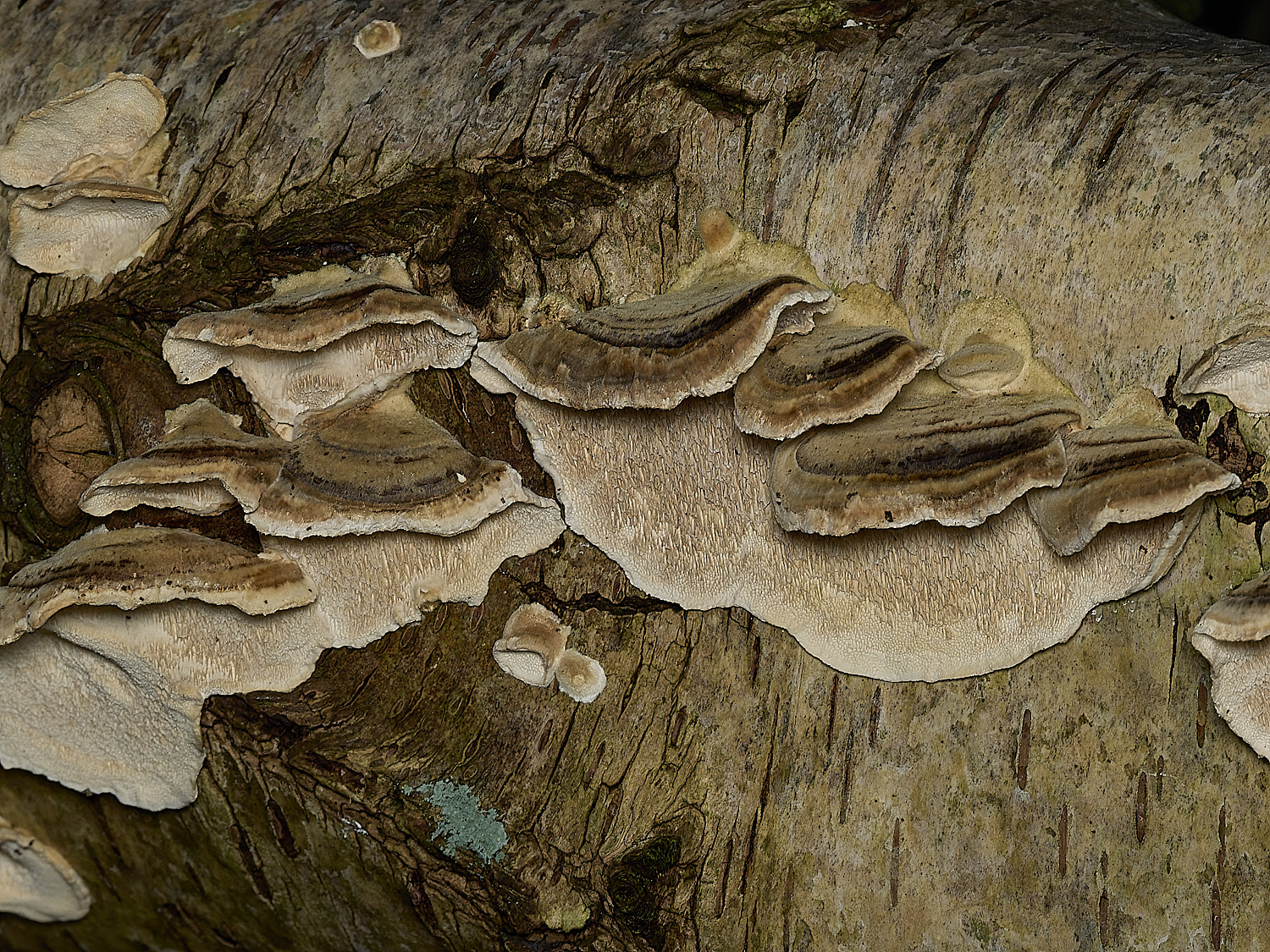
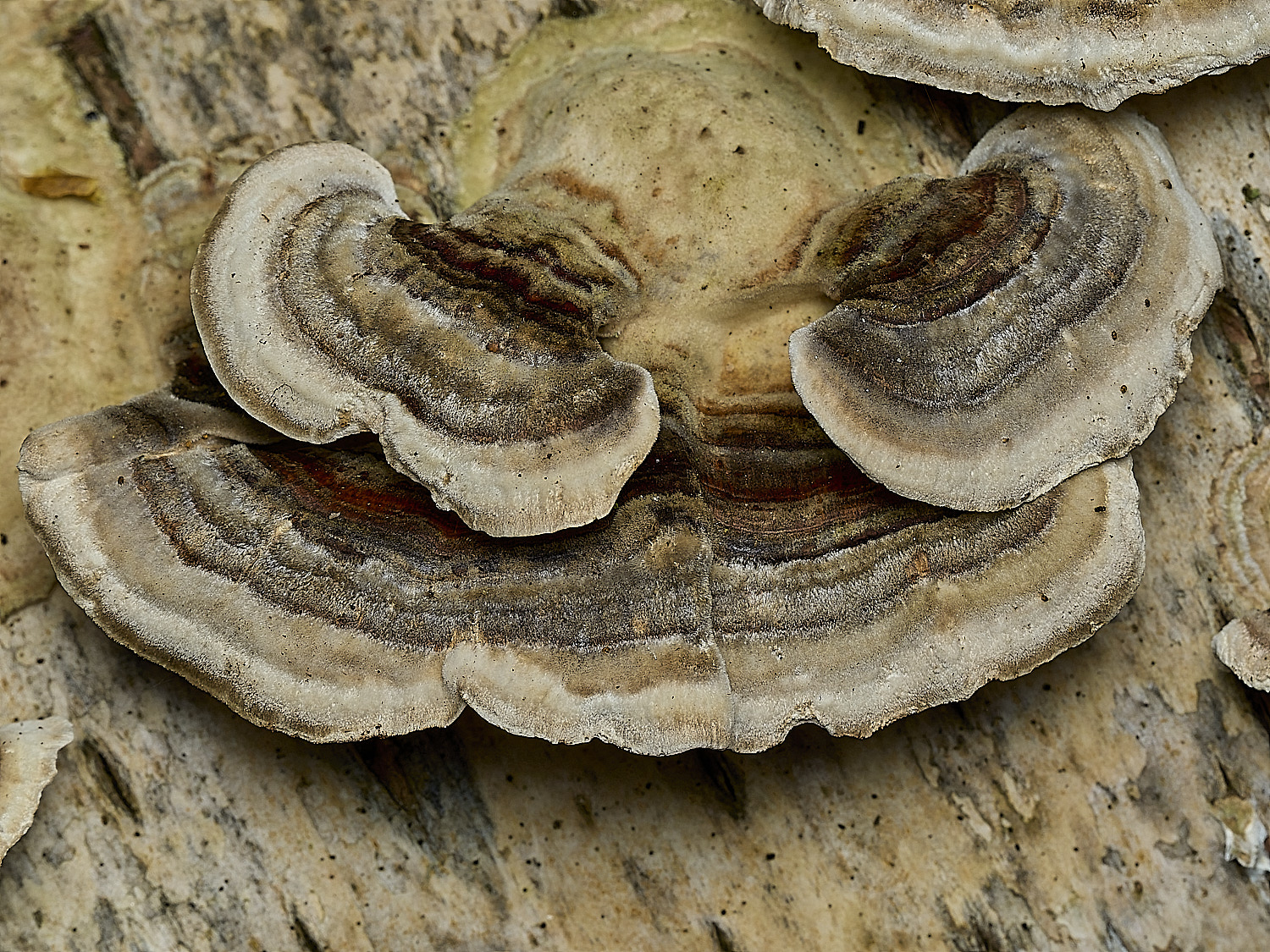
Turkey Tail (Trametes versicolor)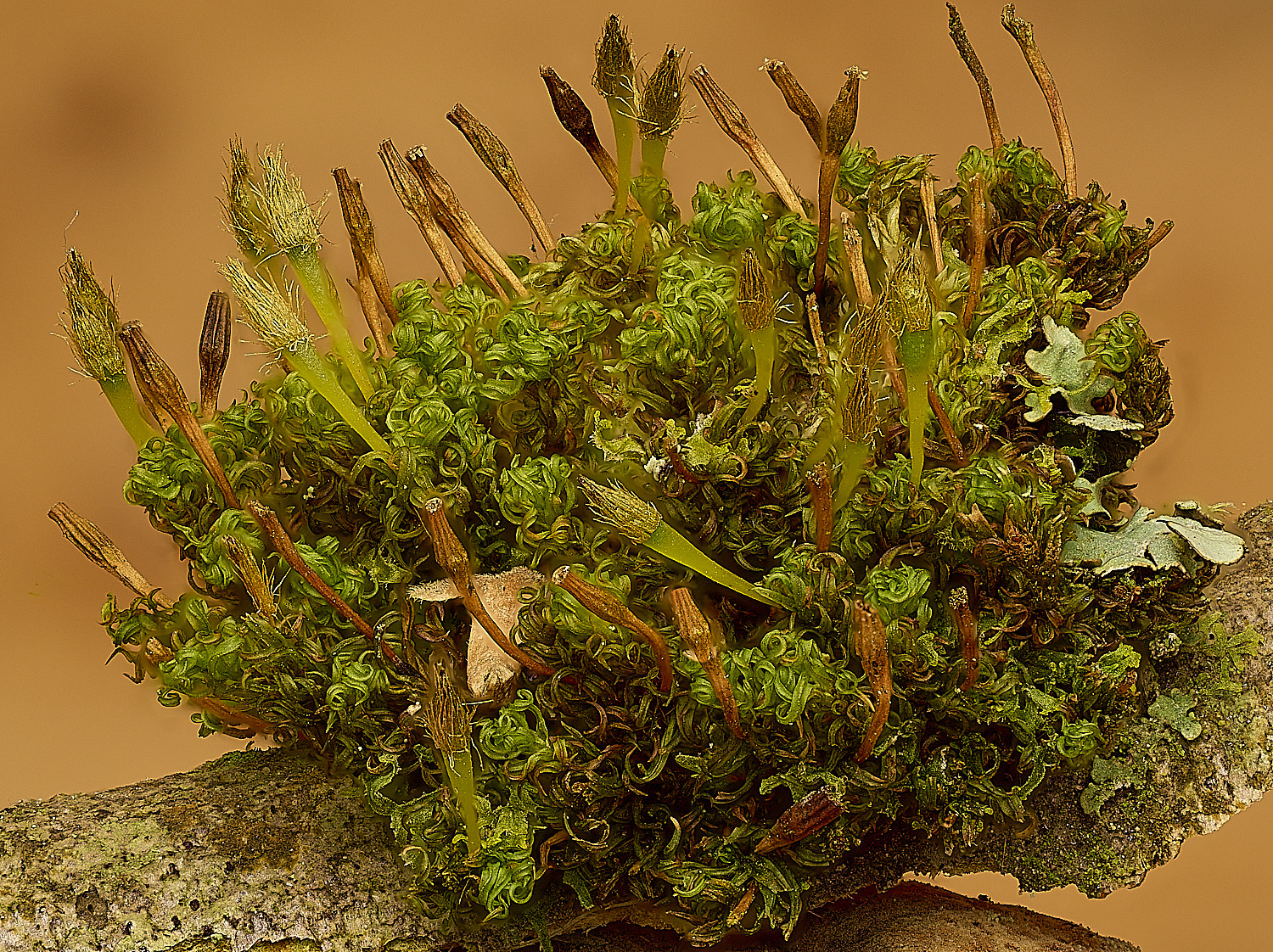
Ulotta Sp (dry)
The dried old capsules taper below the capsule mouth making this Crisped Pincushion (Ulotta crispa)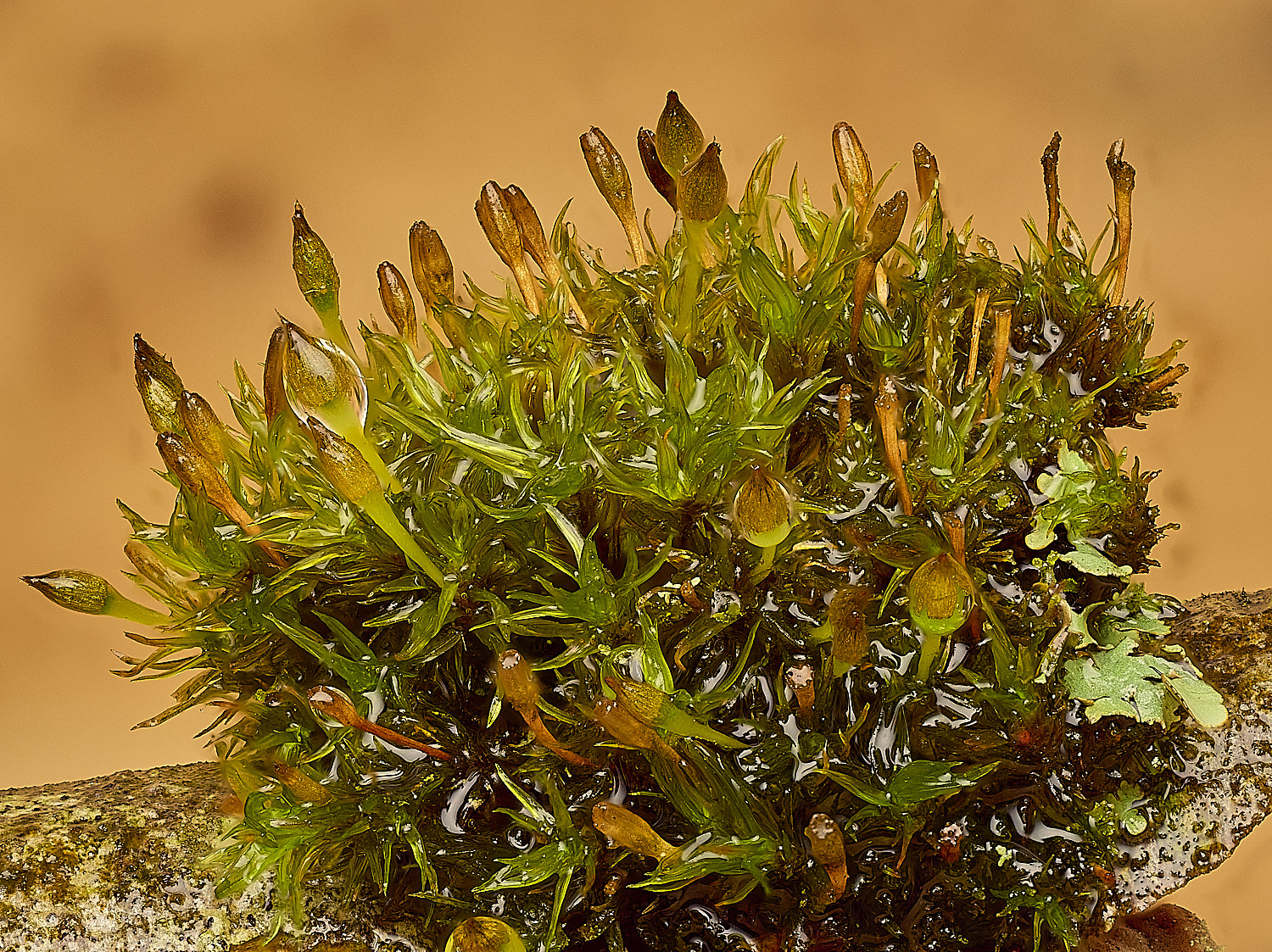
Ulotta Sp (wet)
As you can see in the image above it would be impossible to identify this specimen when wet as the shape of the capsule is indistinct.
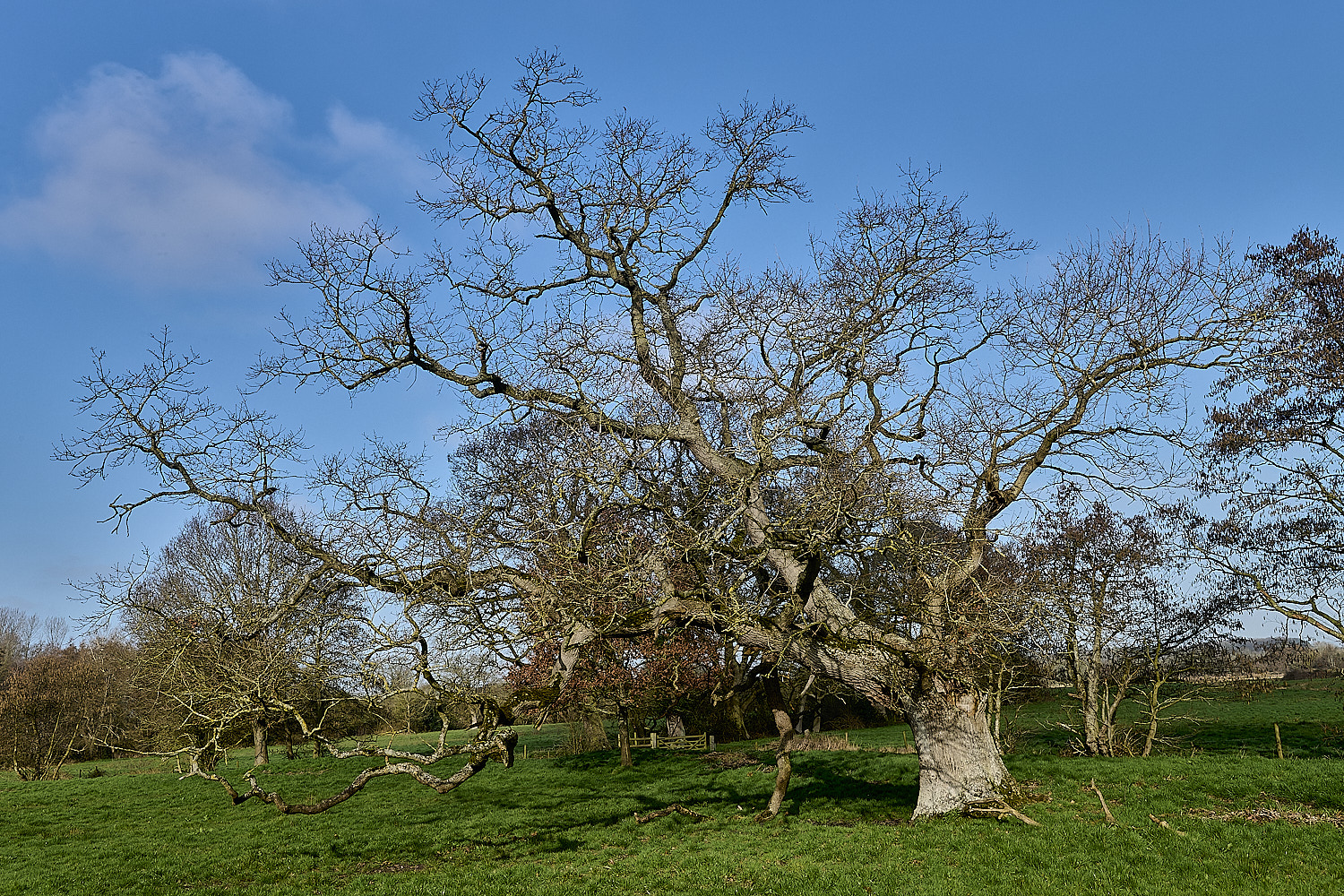
Blickling
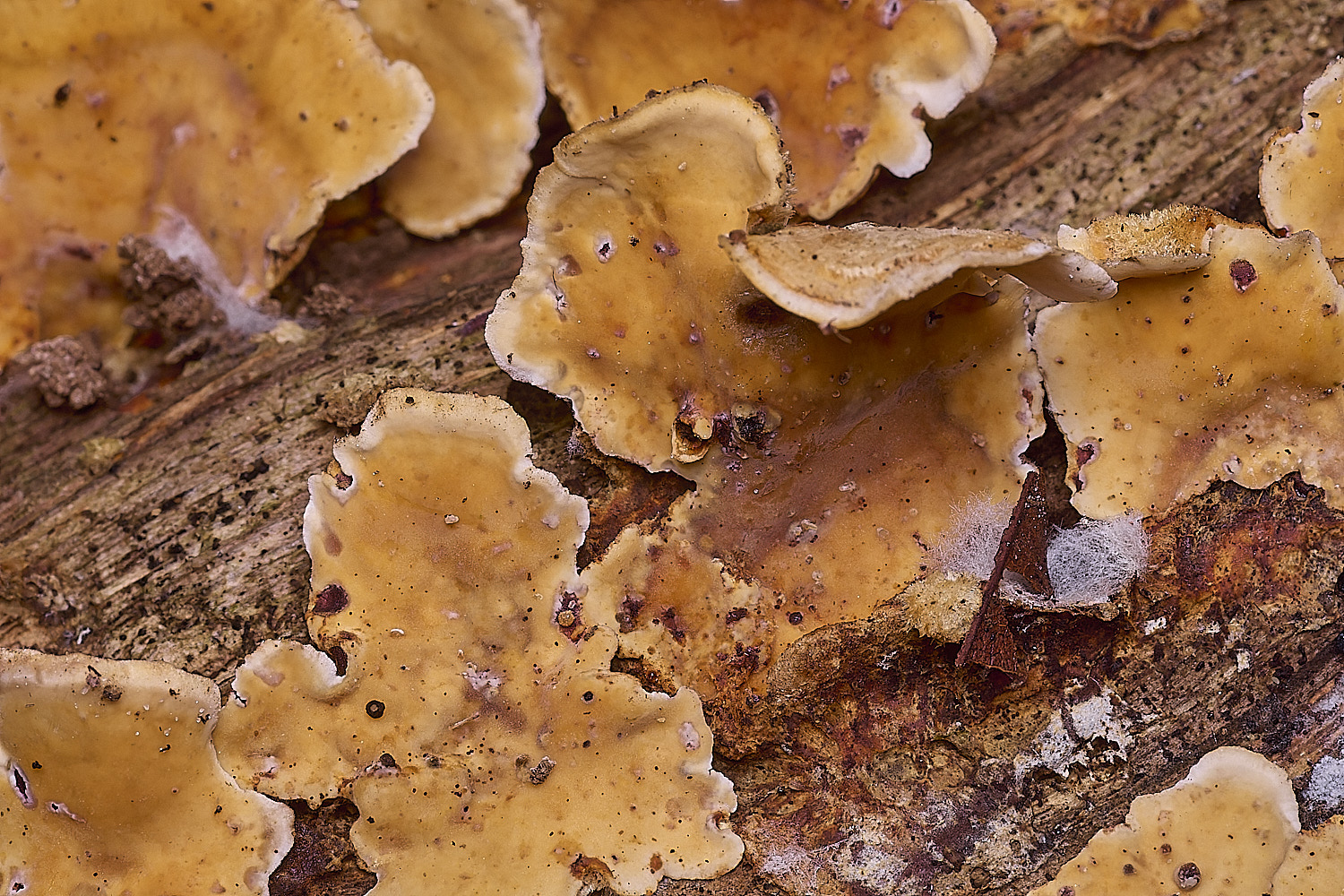
Hairy Curtain Crust (Stereum hirsutum)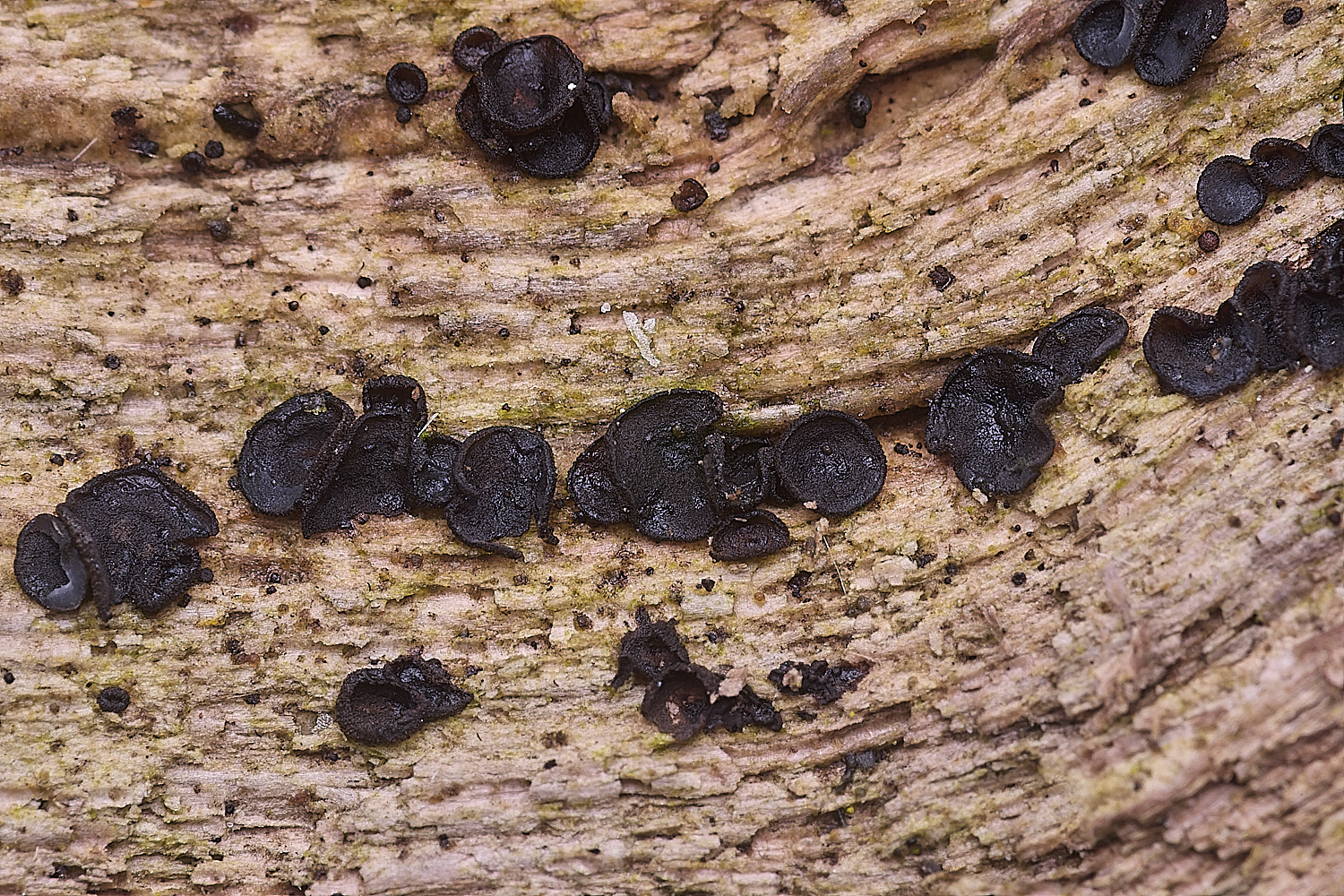
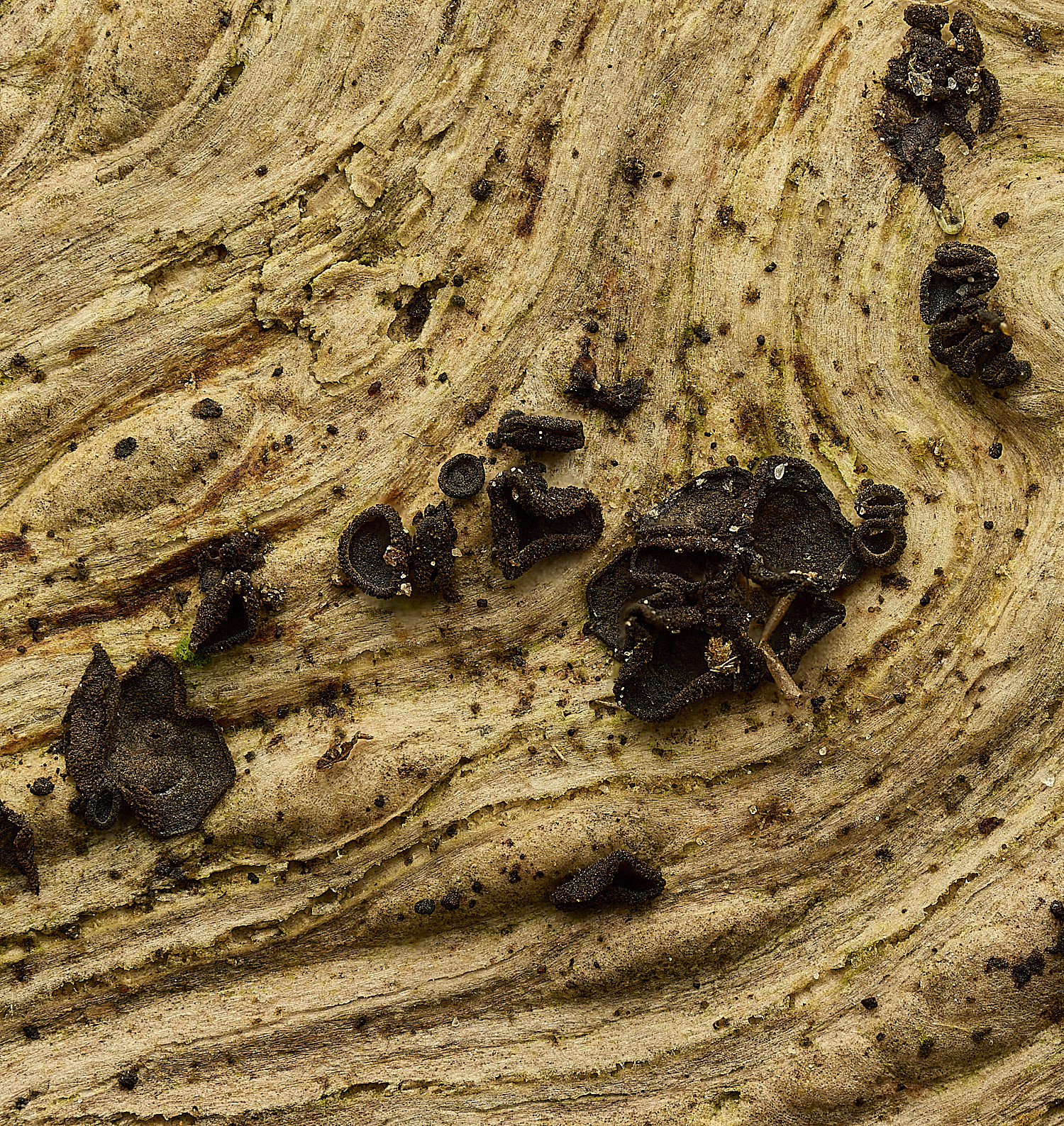
Mollisia ligni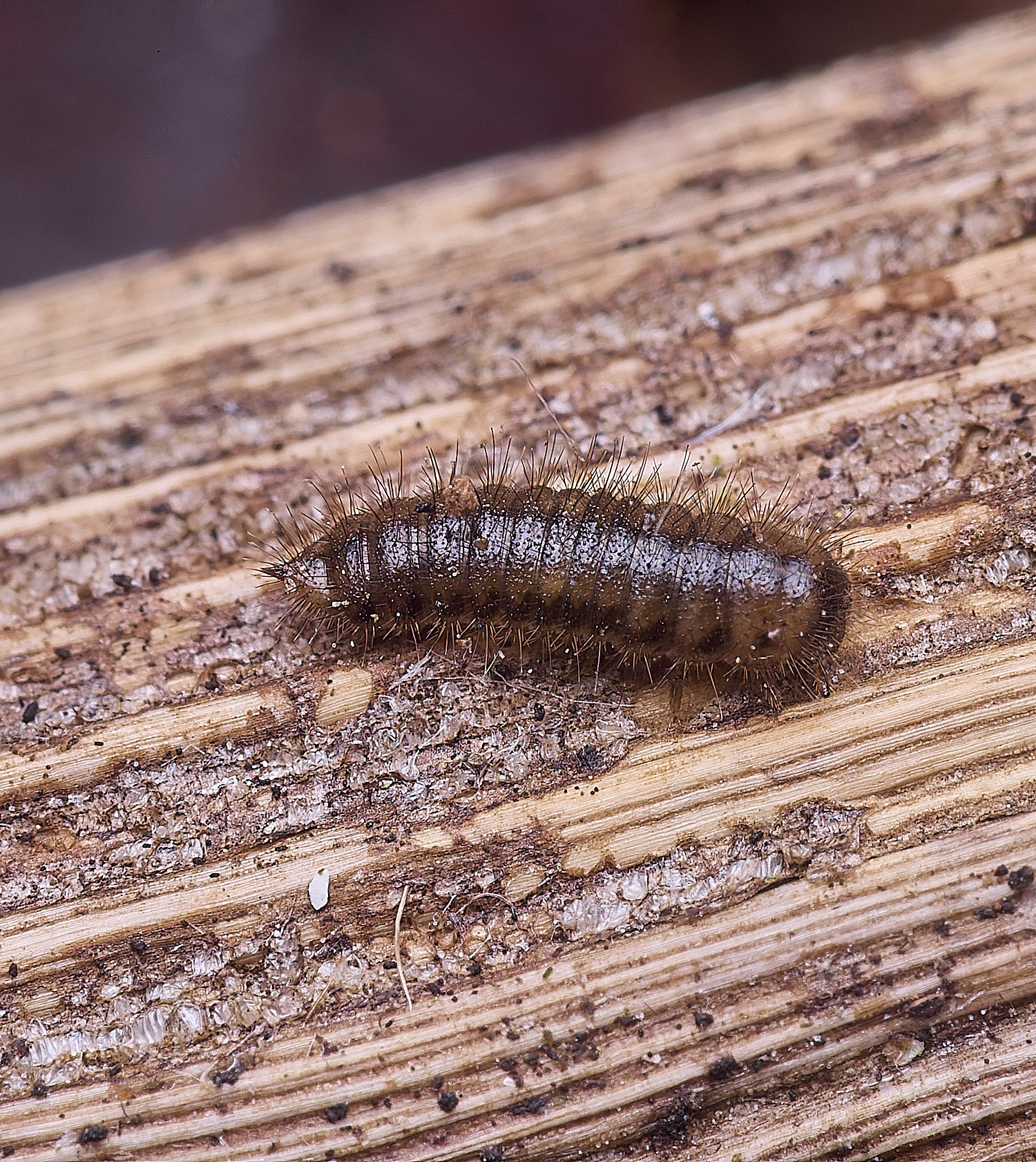
?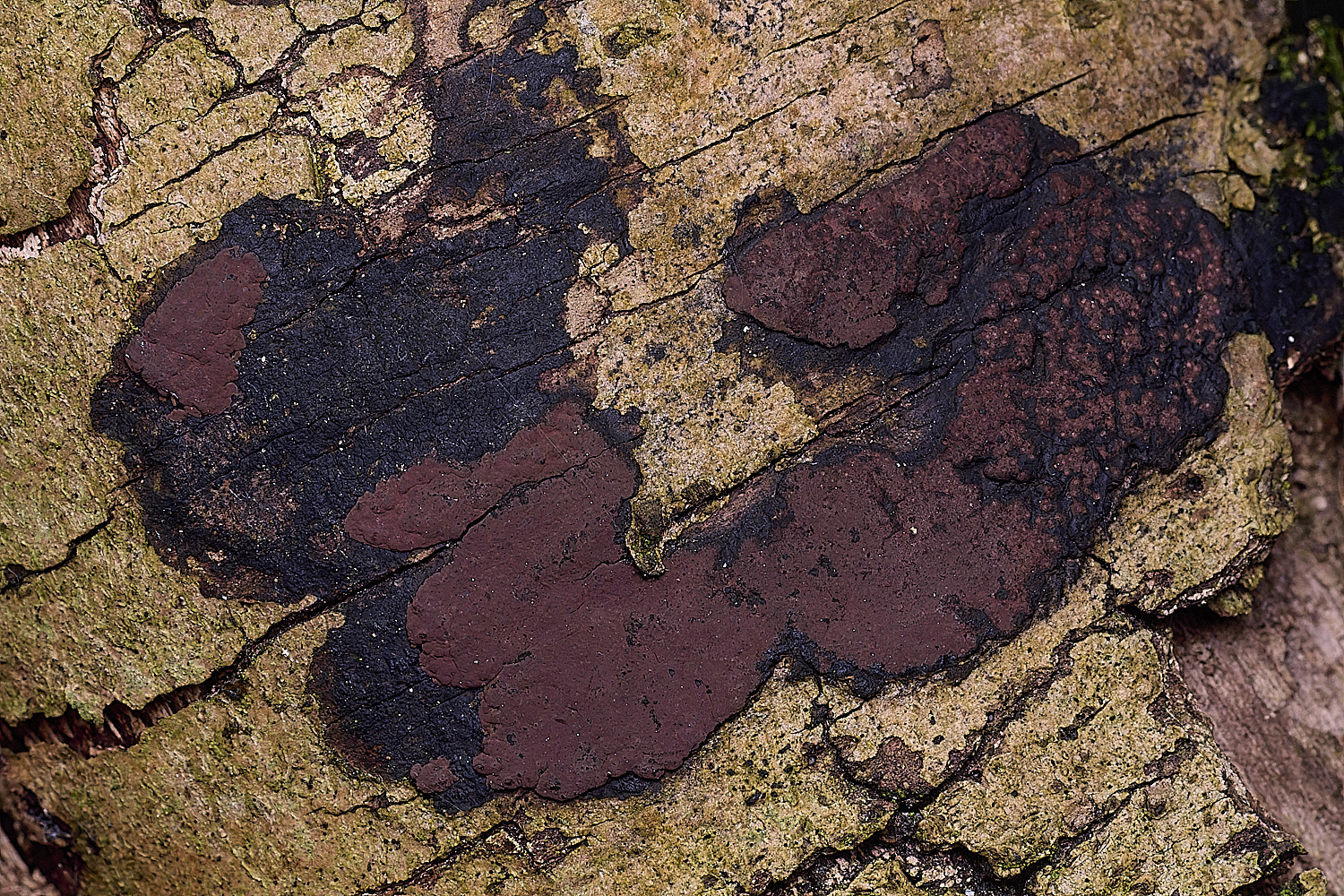
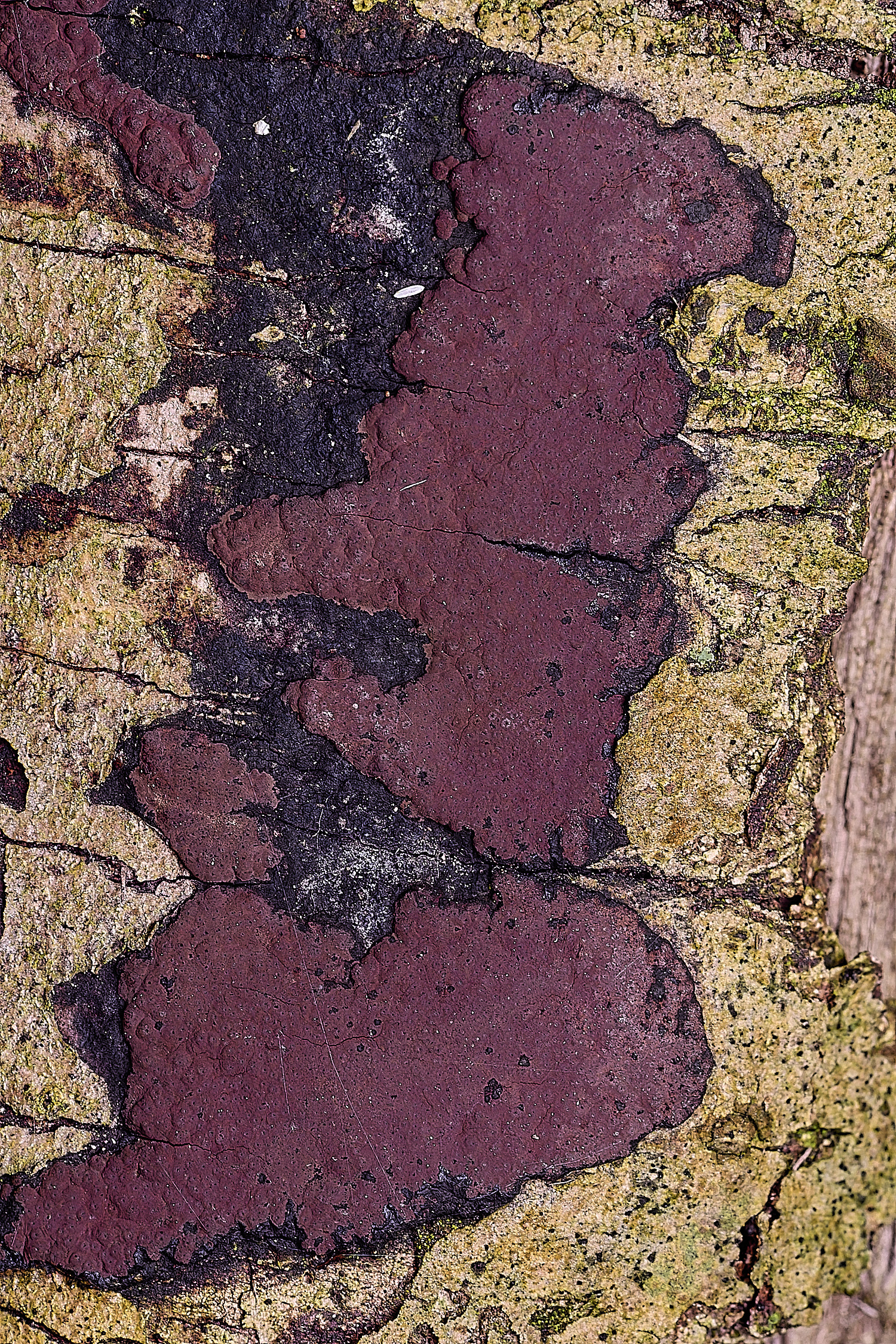
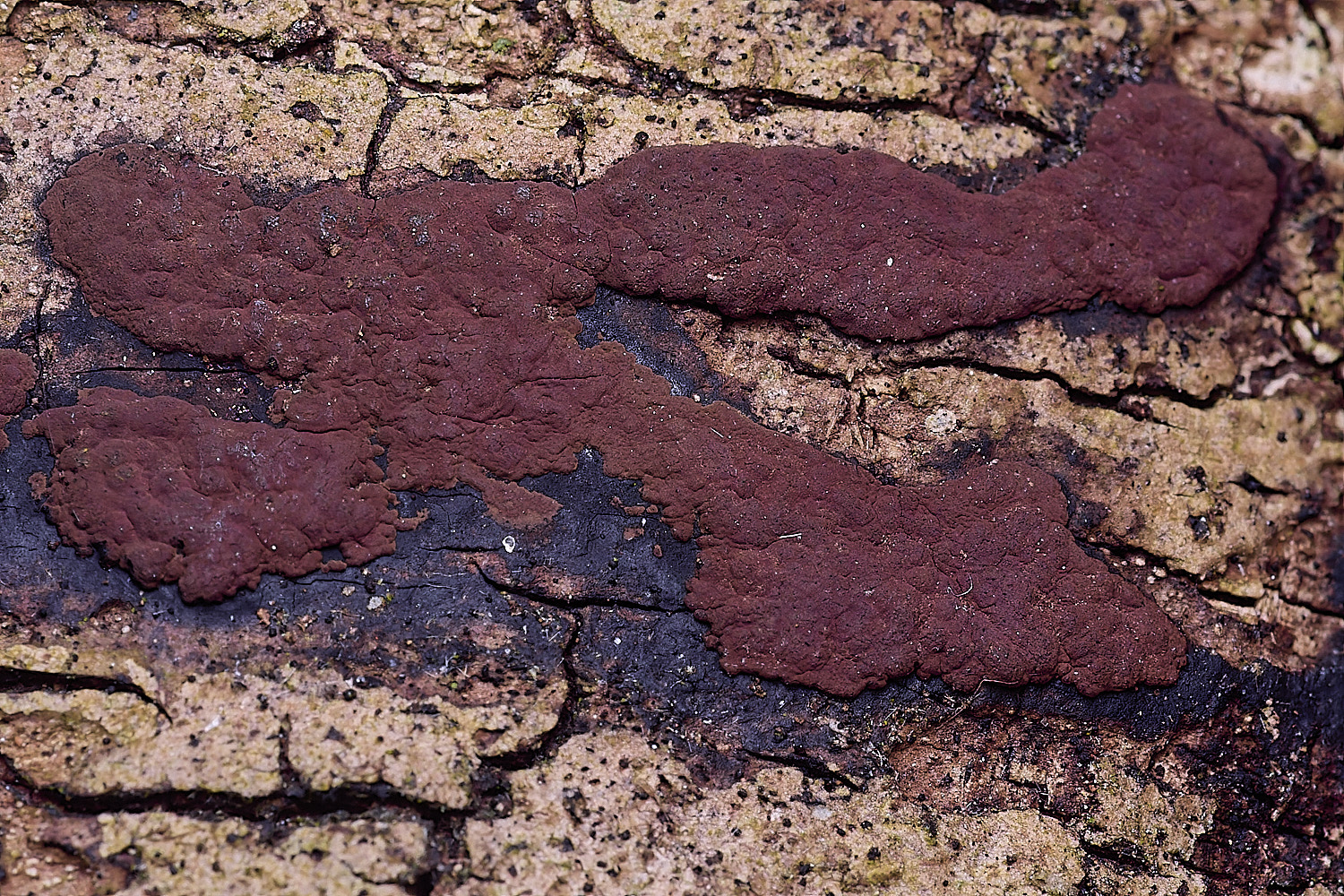
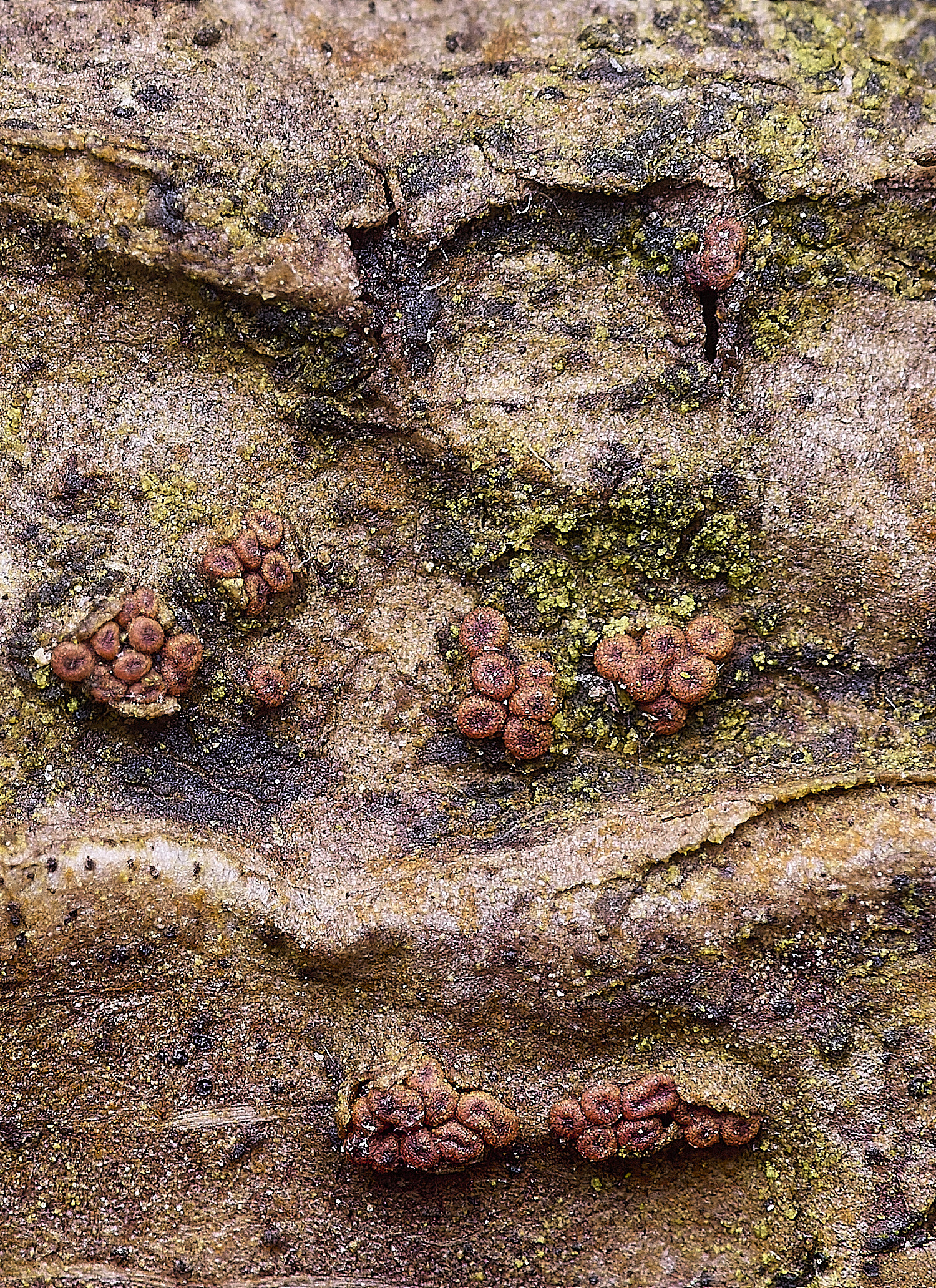
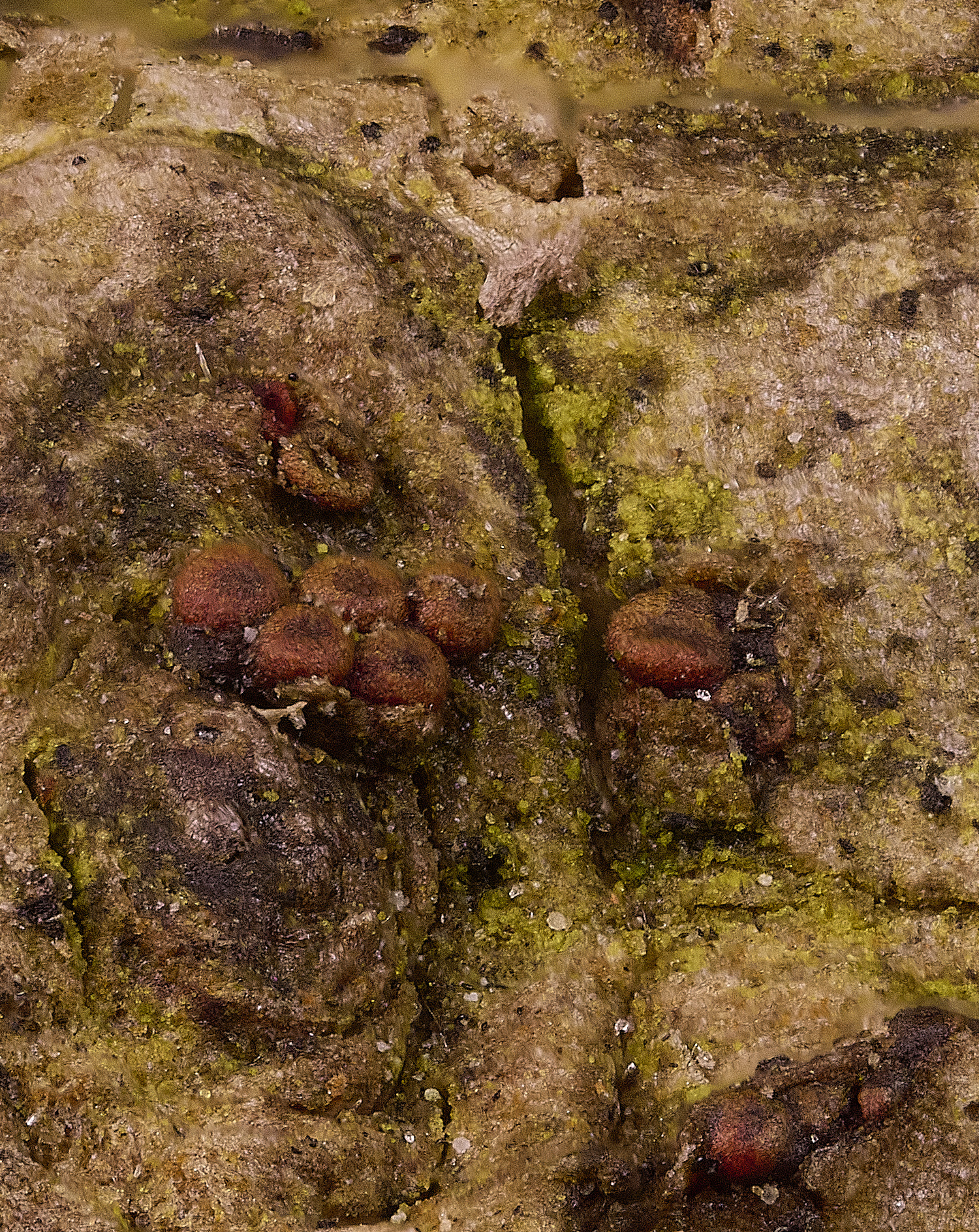
Common Tar Crust (Diatrype stigma)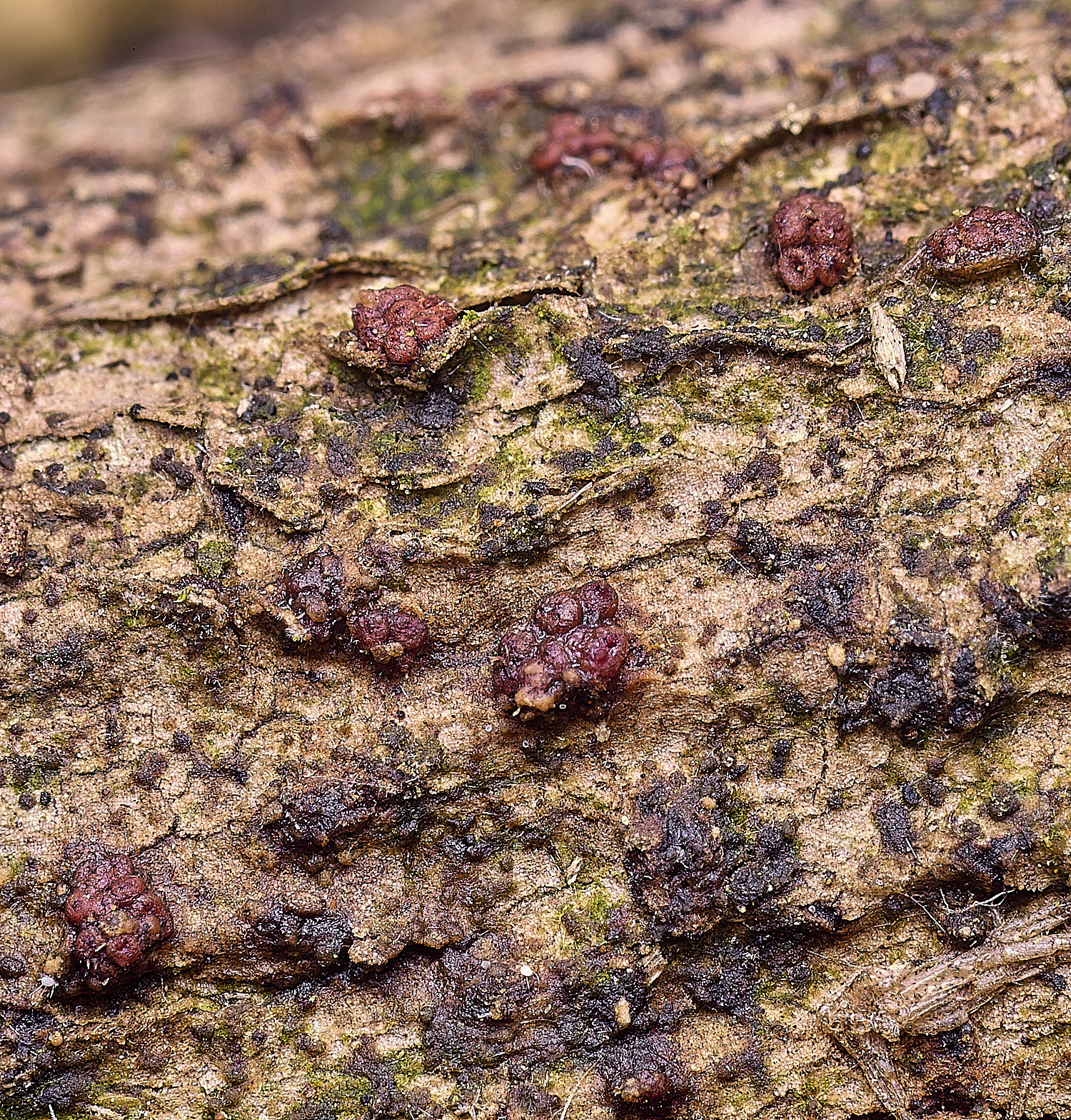
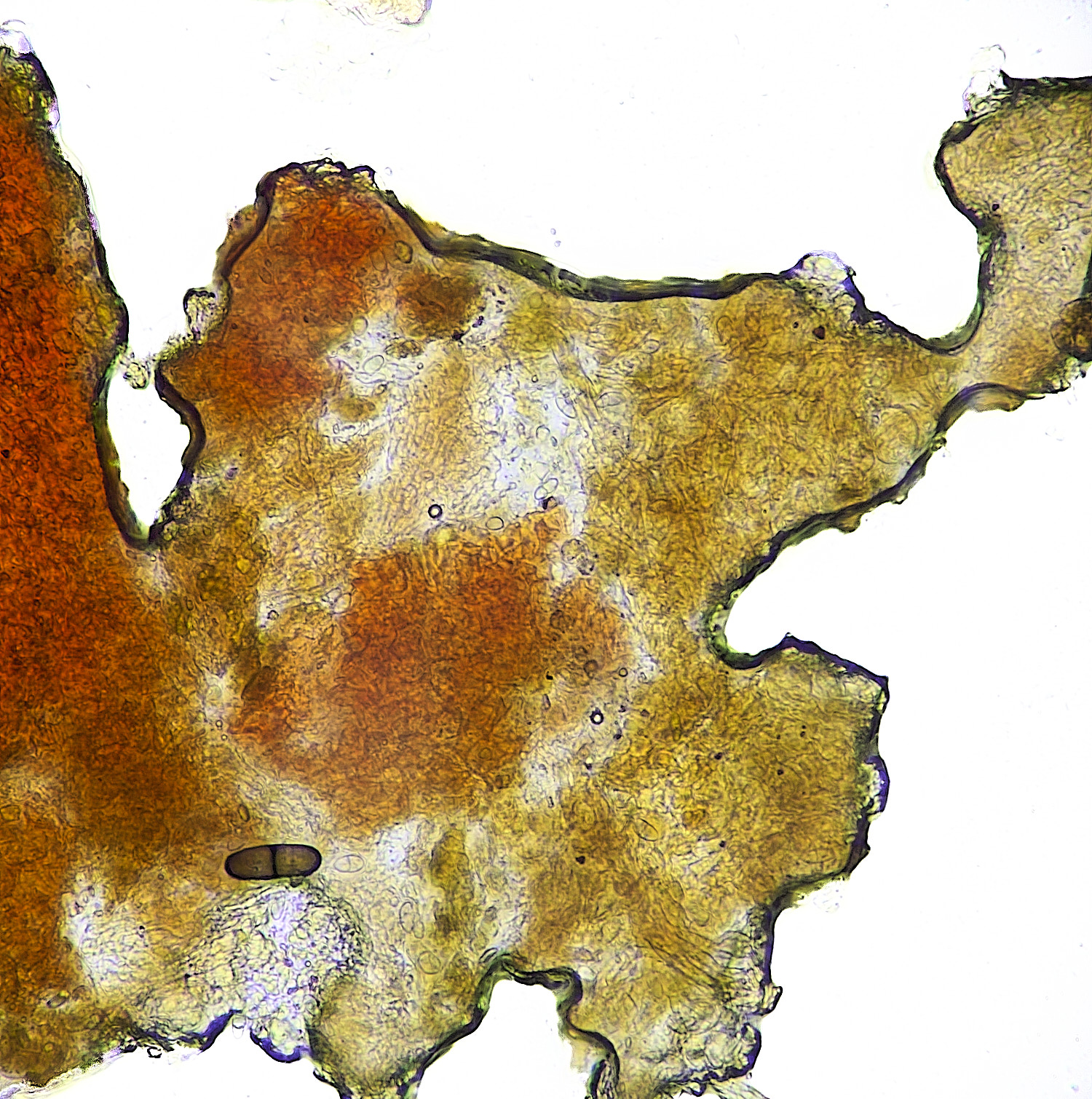
X400
Spore 29.88 µm x 9.96 µm
from AW
The Nectria found on Ivy close to the start was Thyronectria sinopic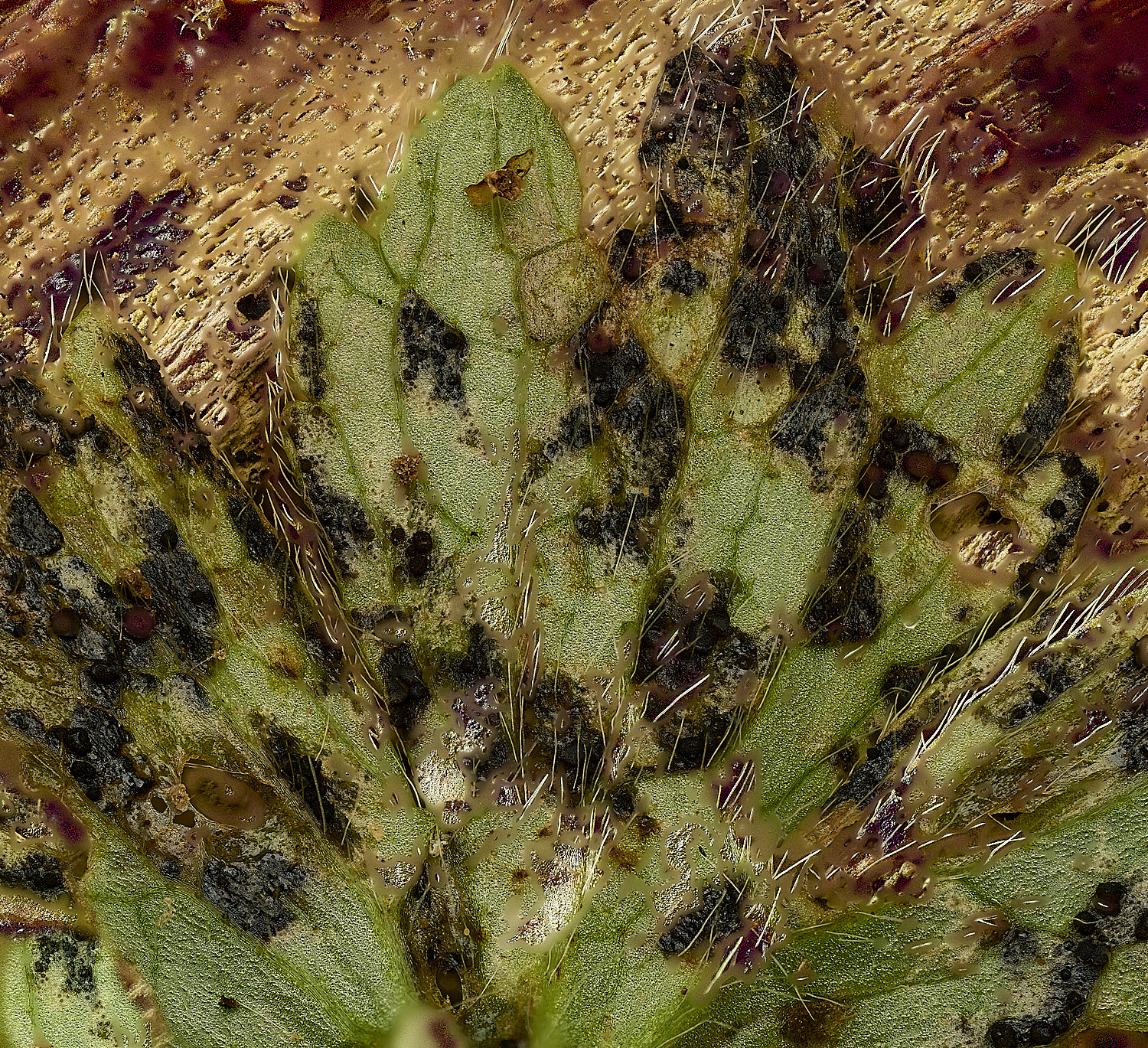
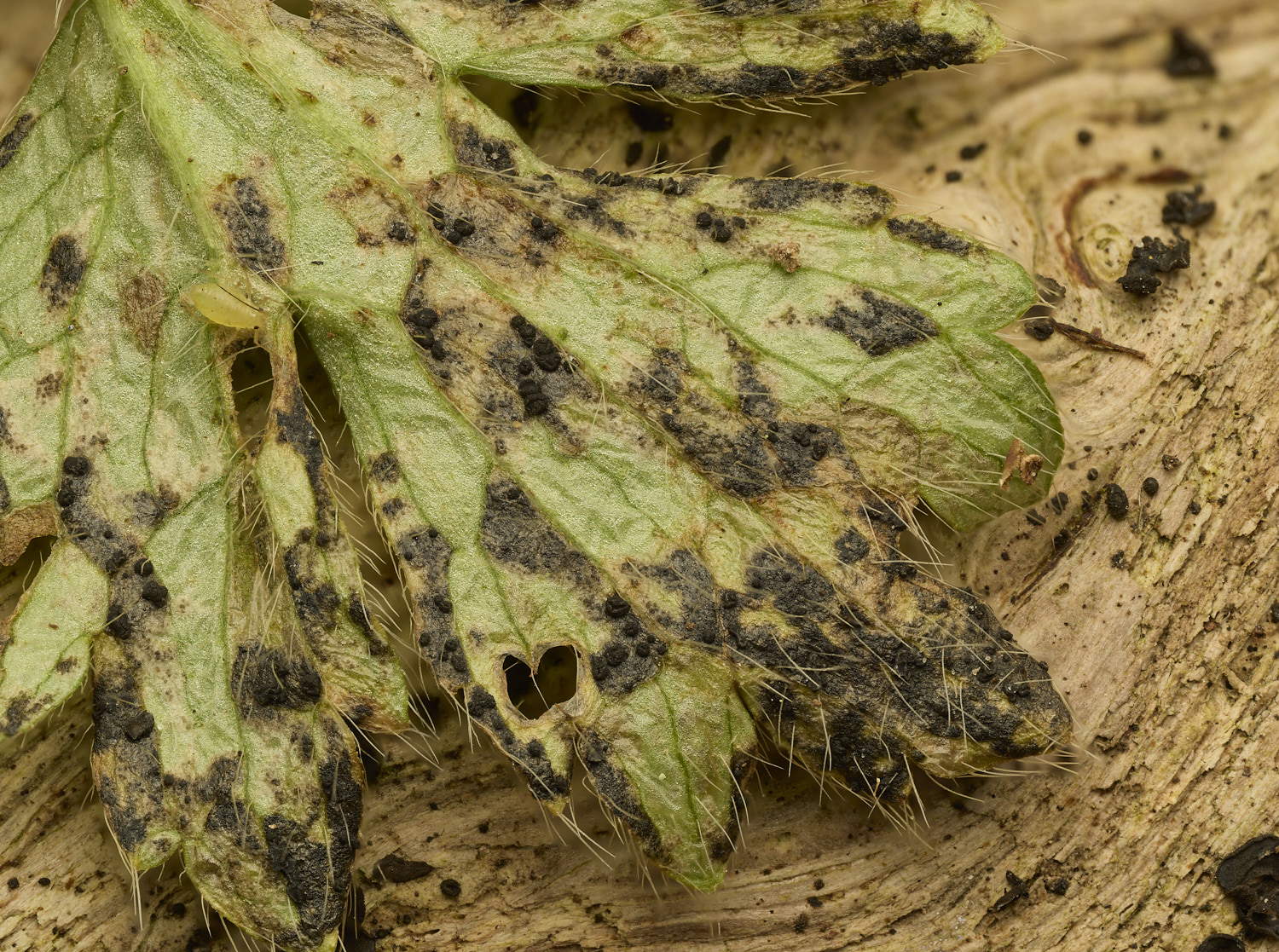
Leptotrochila ranunculi on Creeping Buttercup (Ranunculus repens)
Small black ascos on the leaf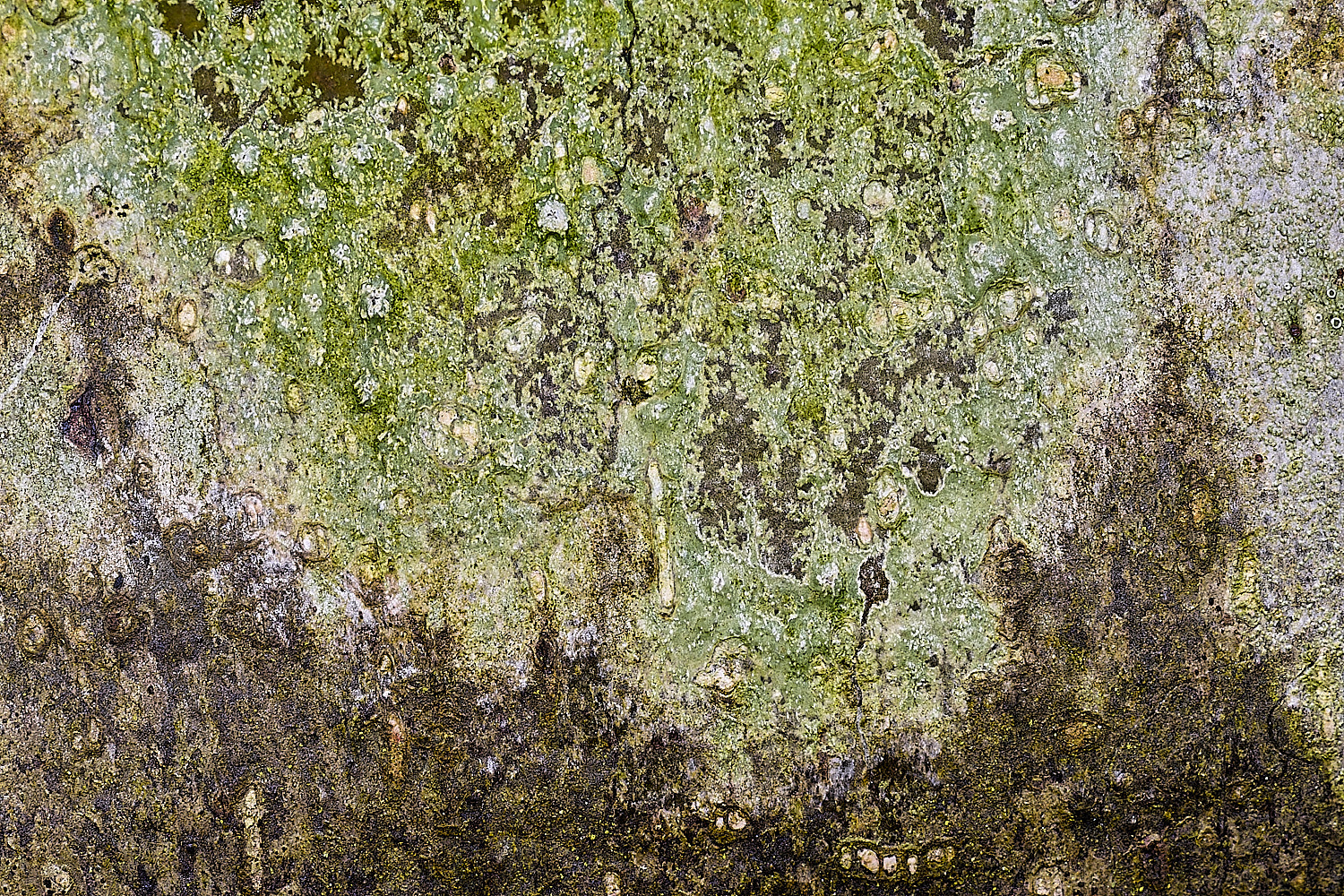
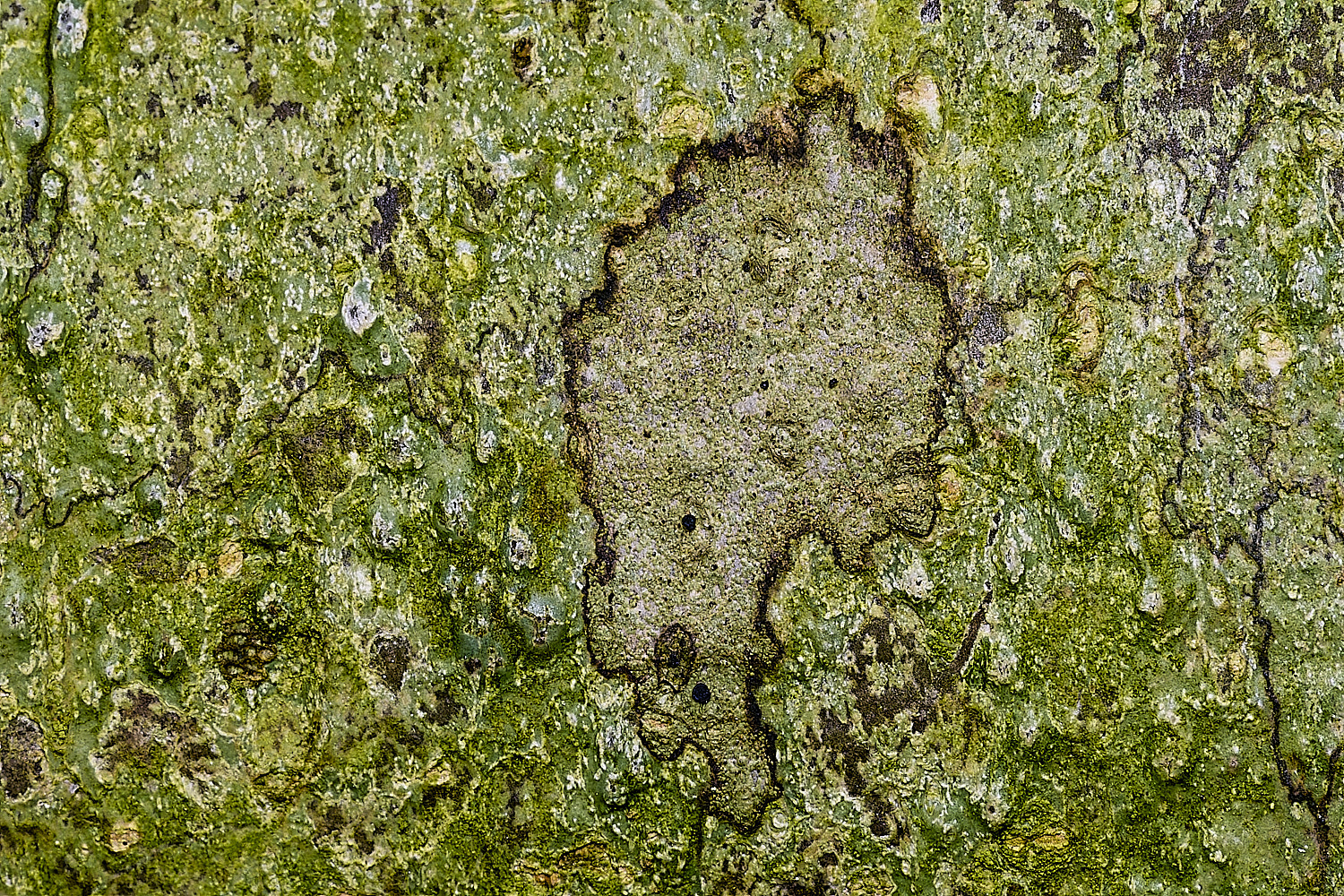
Lichen Sp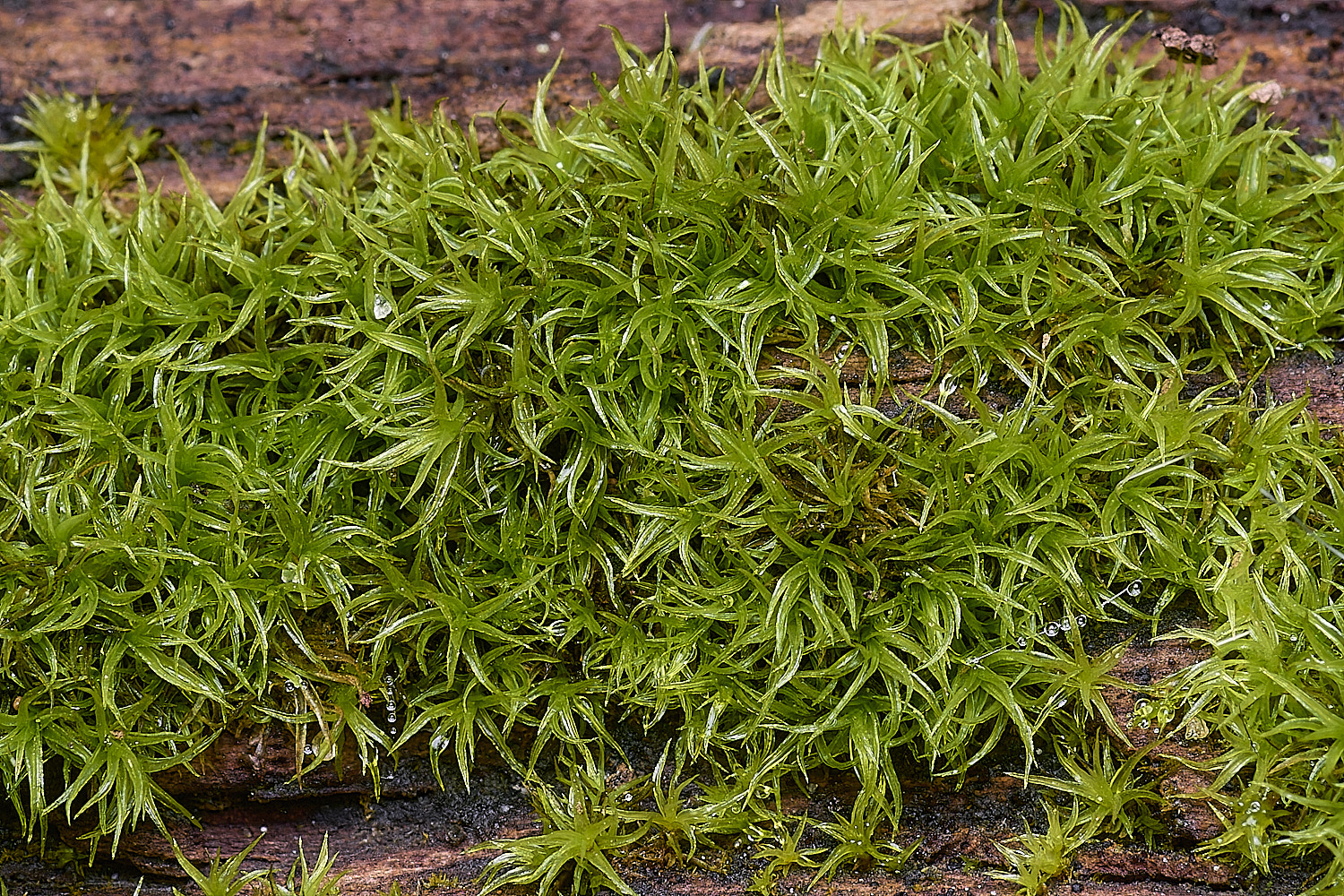
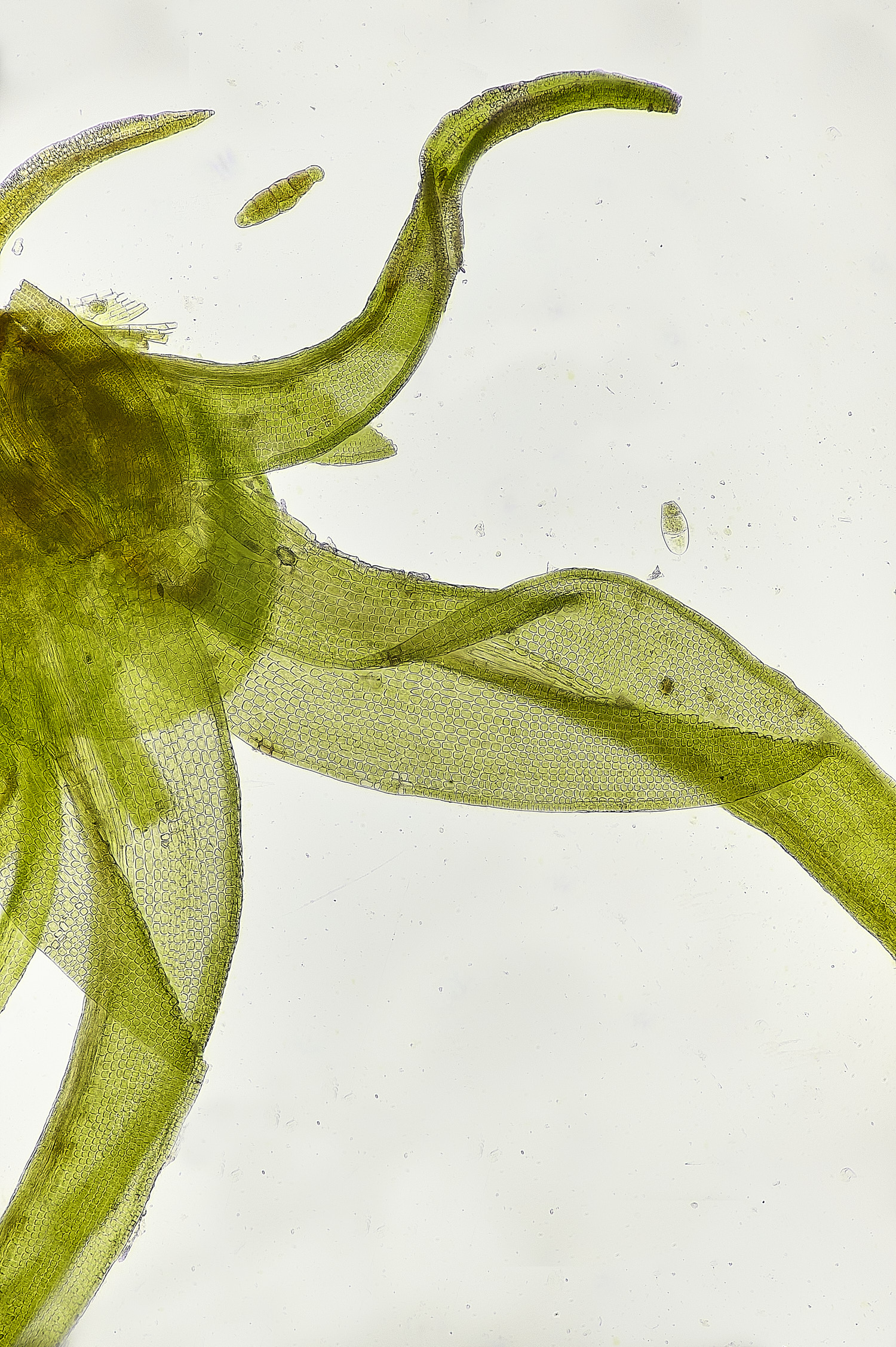
Unusually with leaf gemmae
Cylindric Beard-moss (Didymodon insulanus)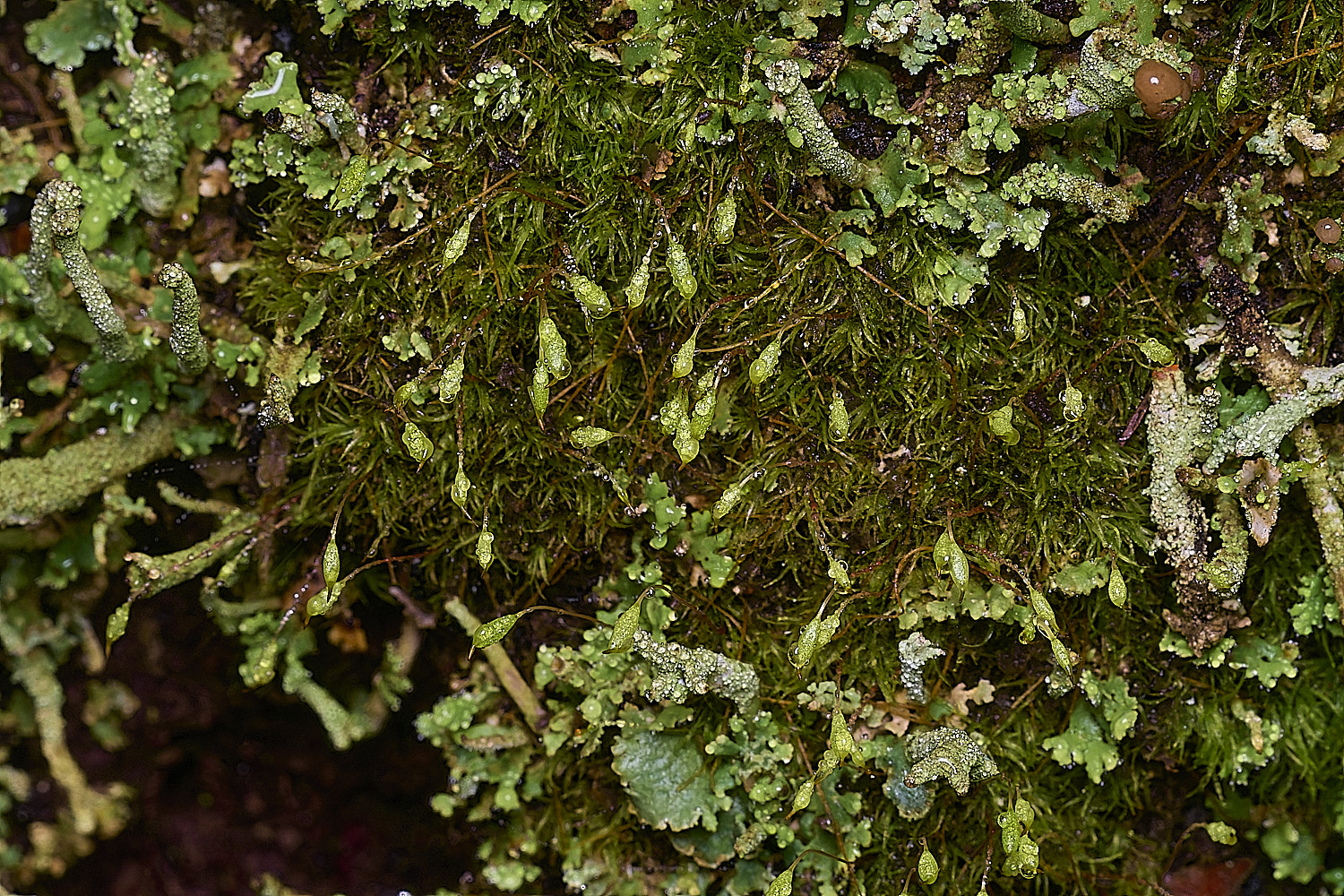
Cape thread-moss (Orthdontium lineare)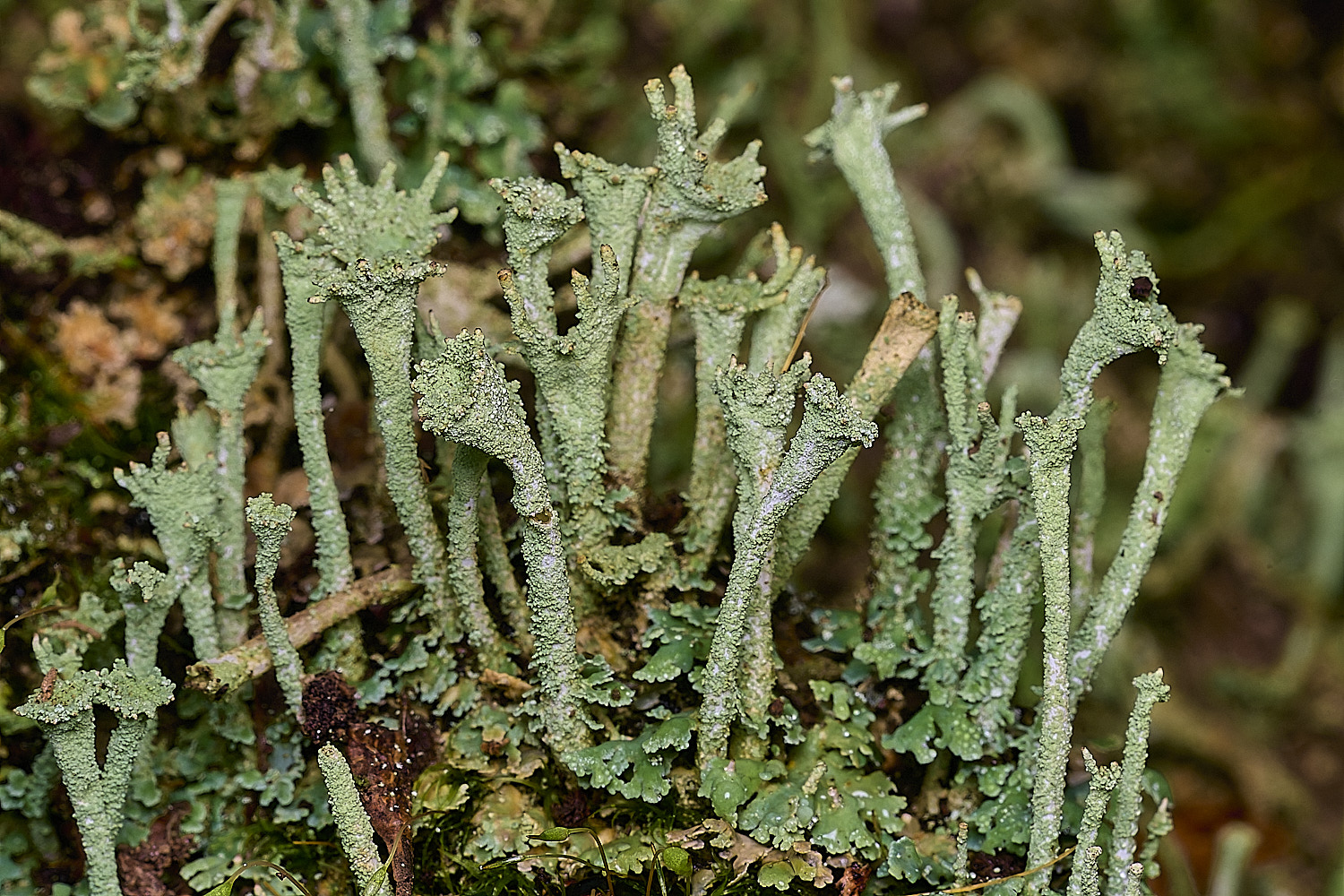
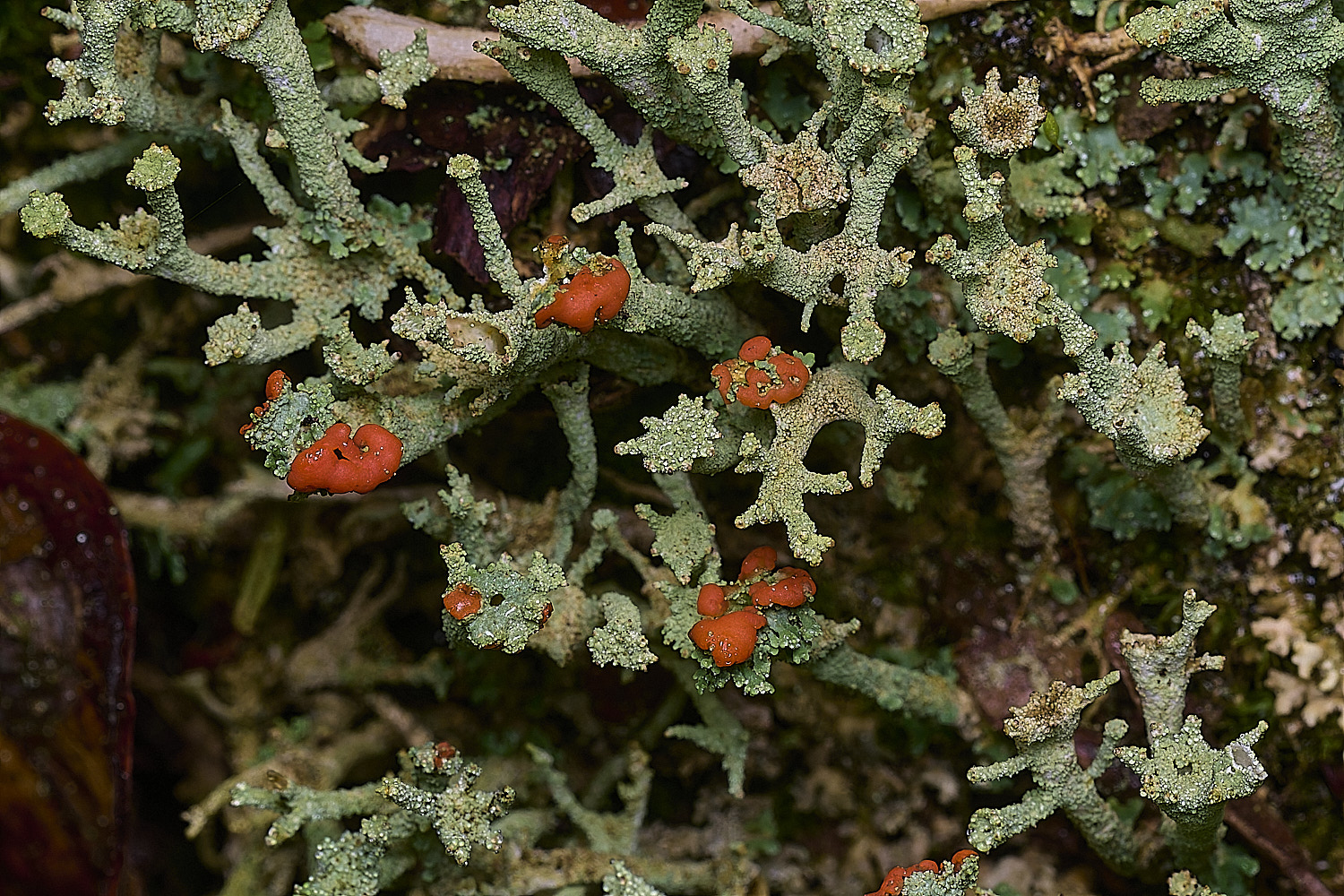
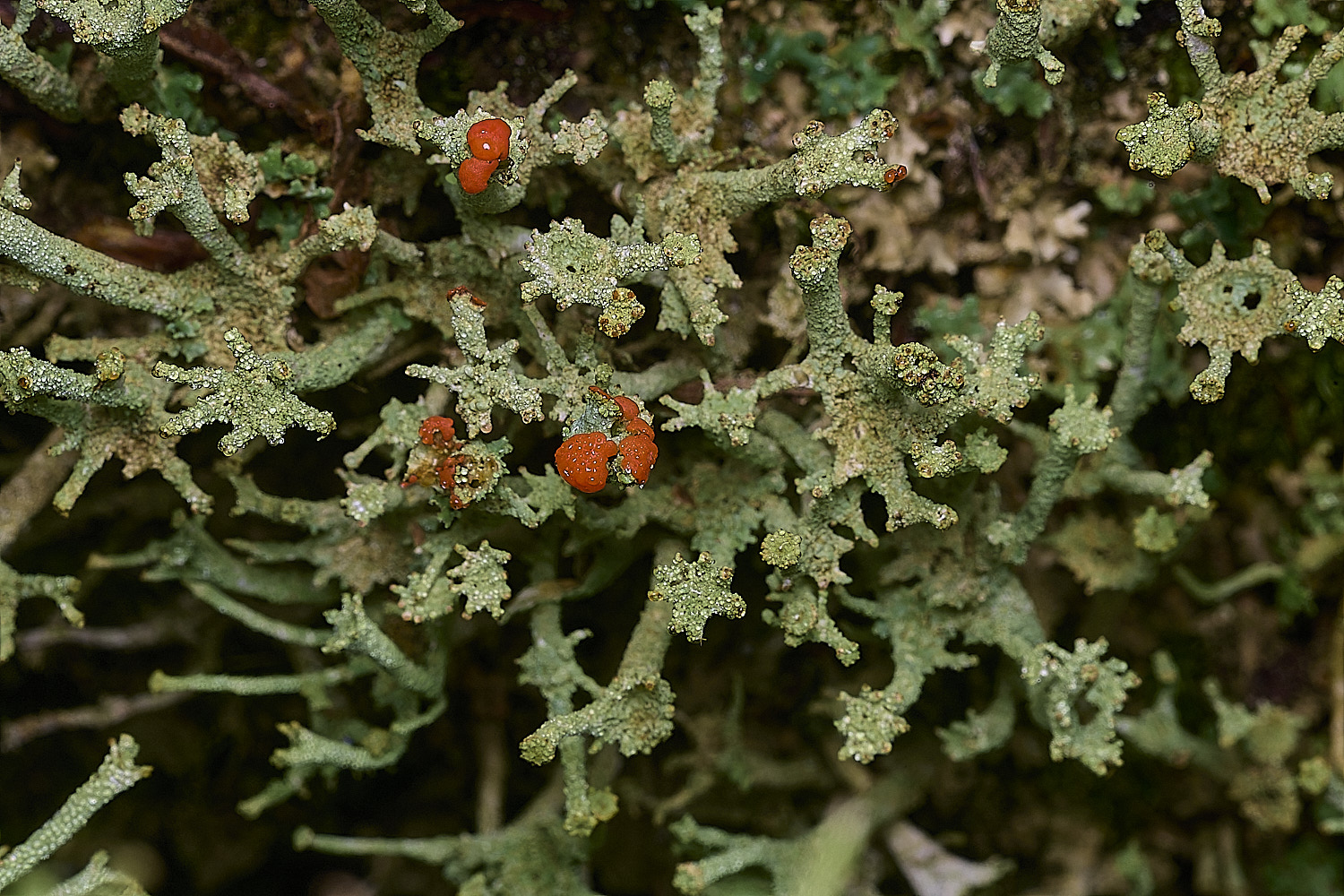
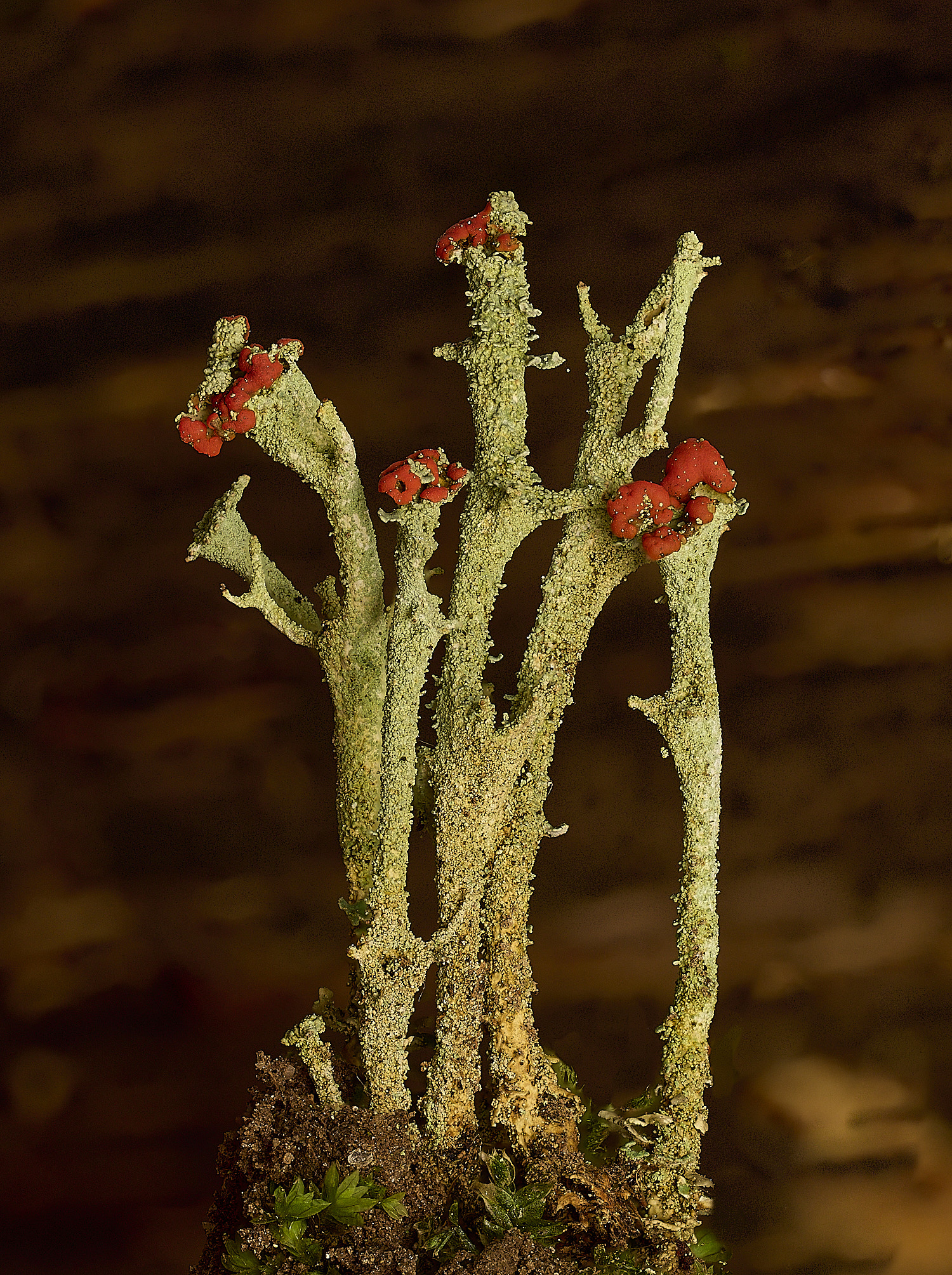
Cladonia Sp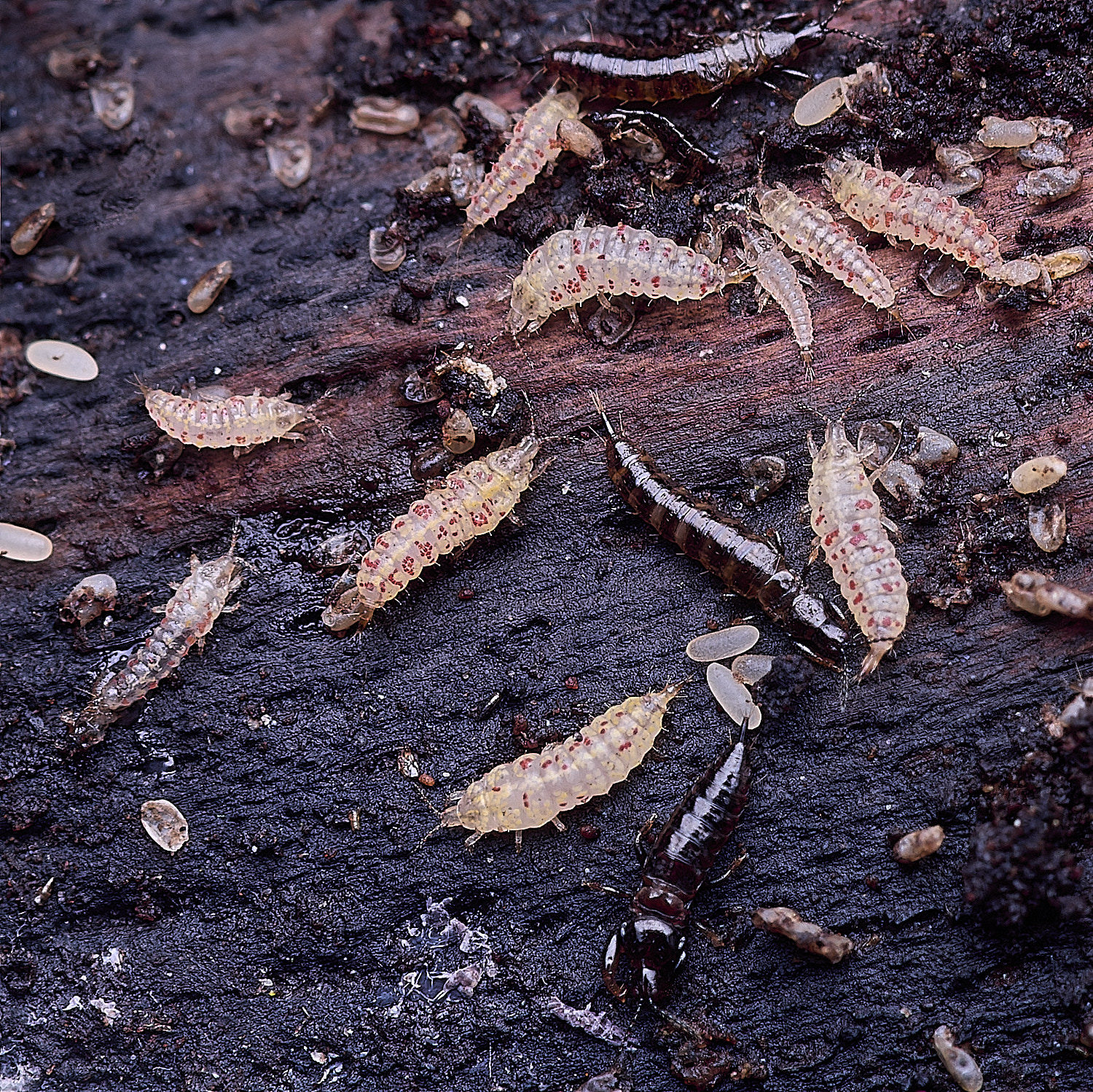
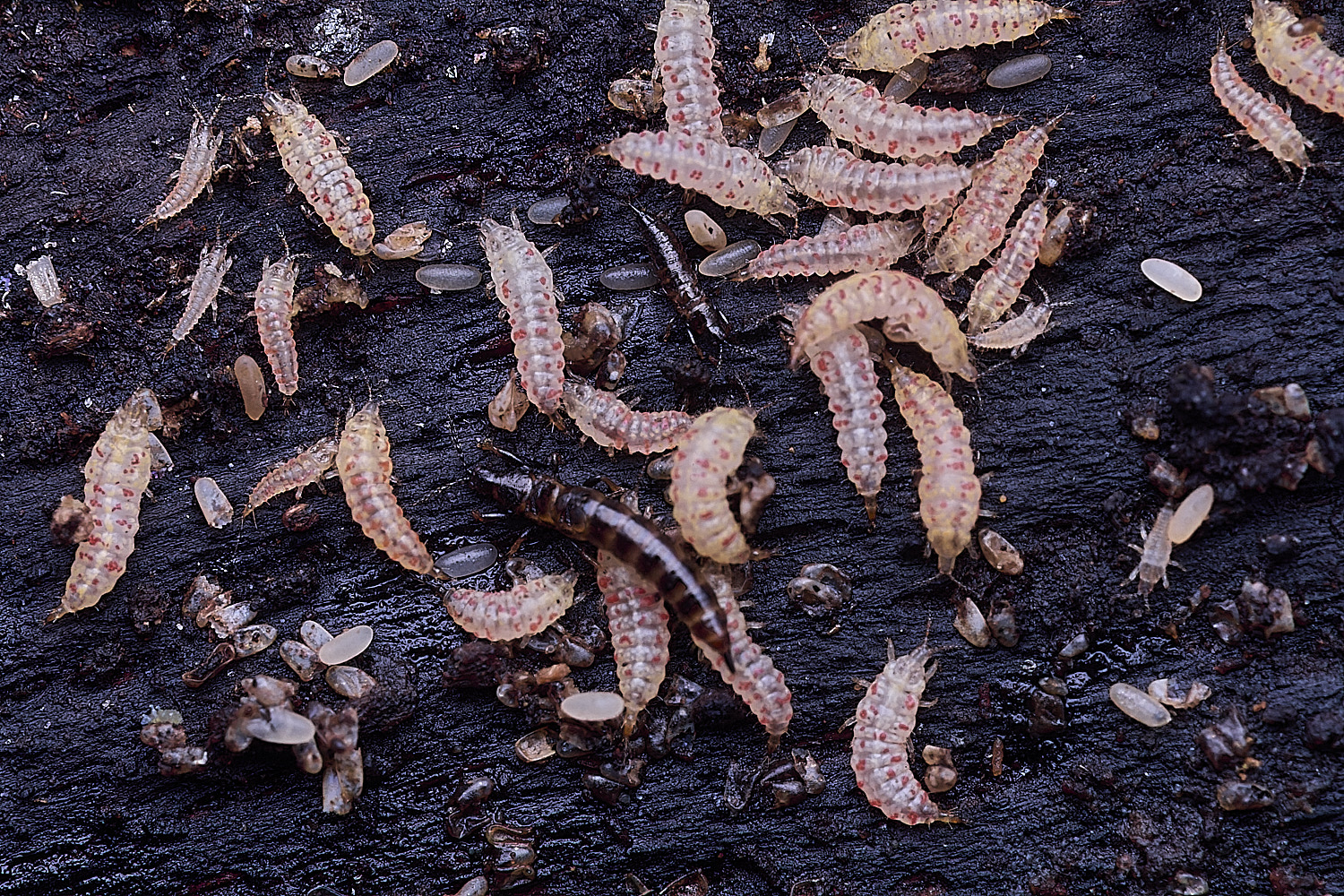
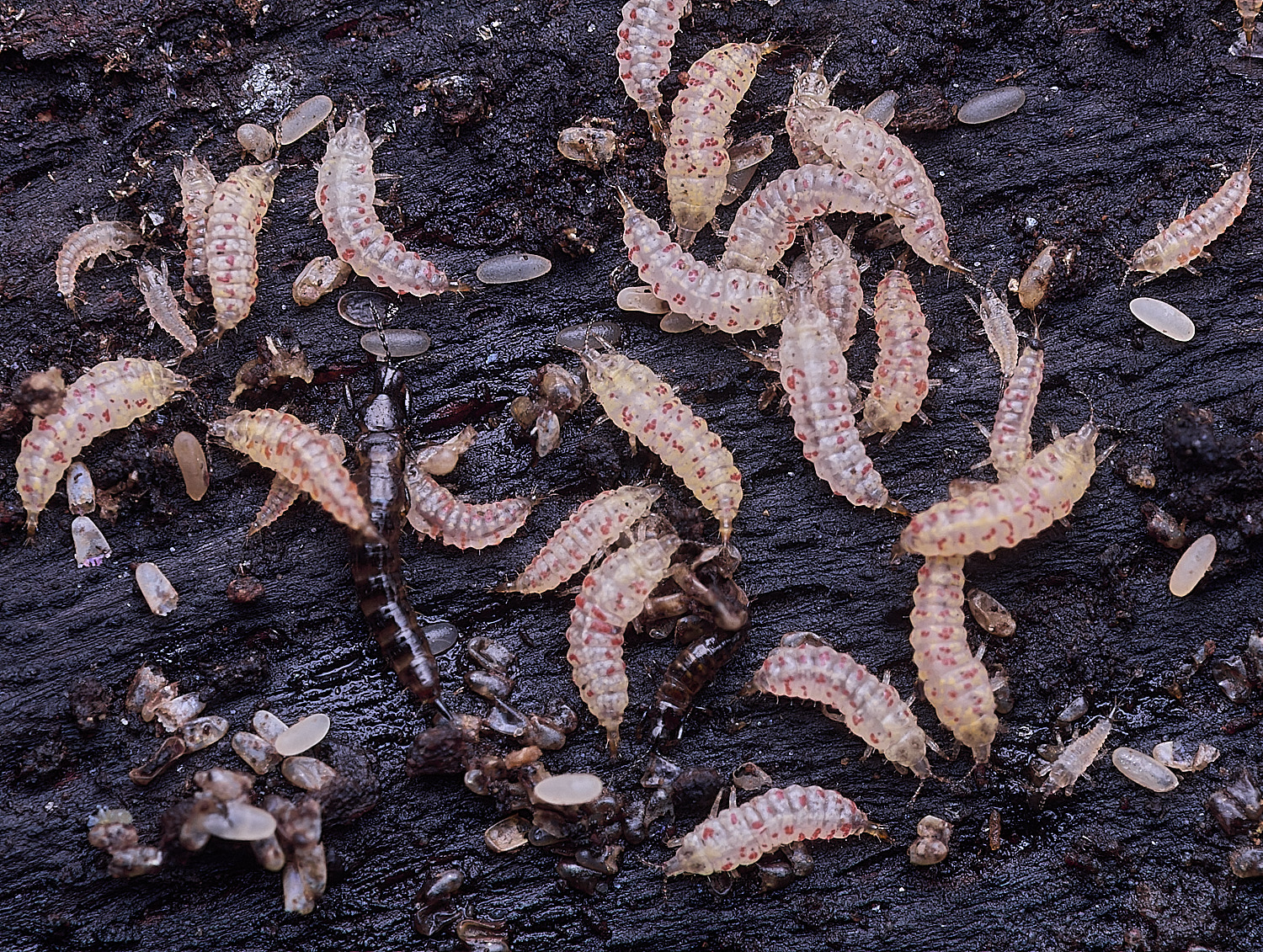
Larvae?
From JE
These are Thrips, subfamily Phlaeothripidae, which mostly feed on fungi. Can be identified by the larvae but only by experienced observers.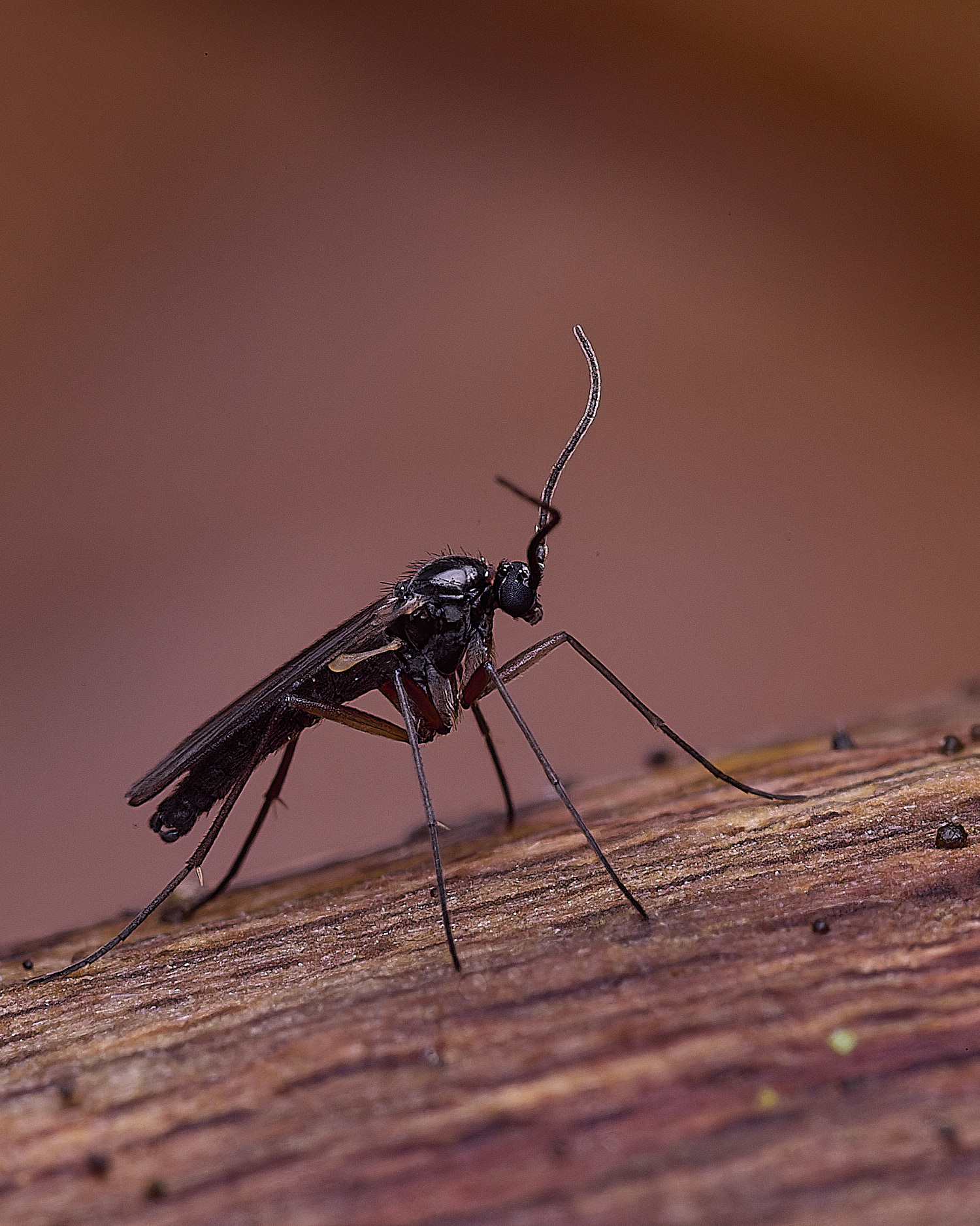
Fly Sp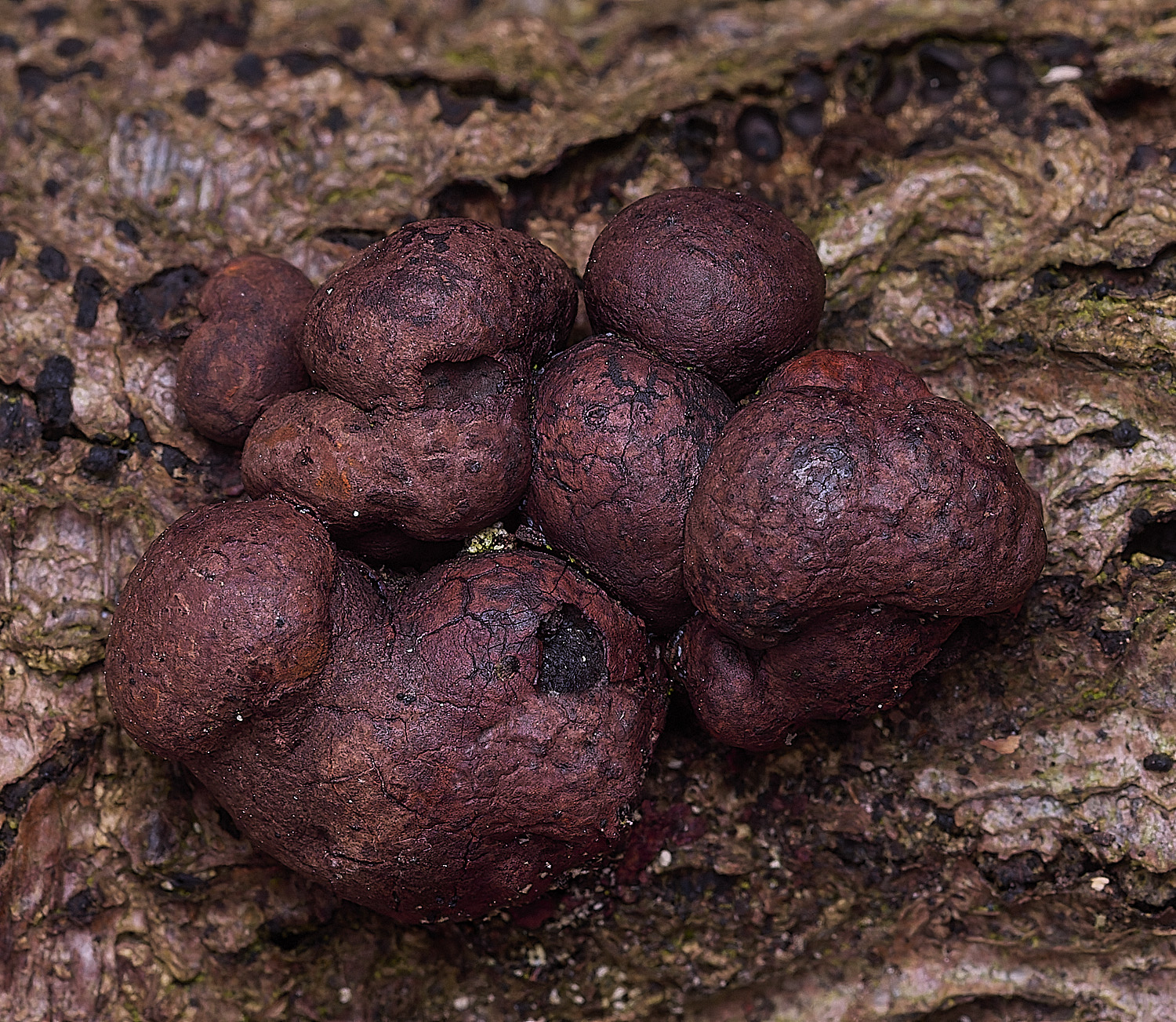
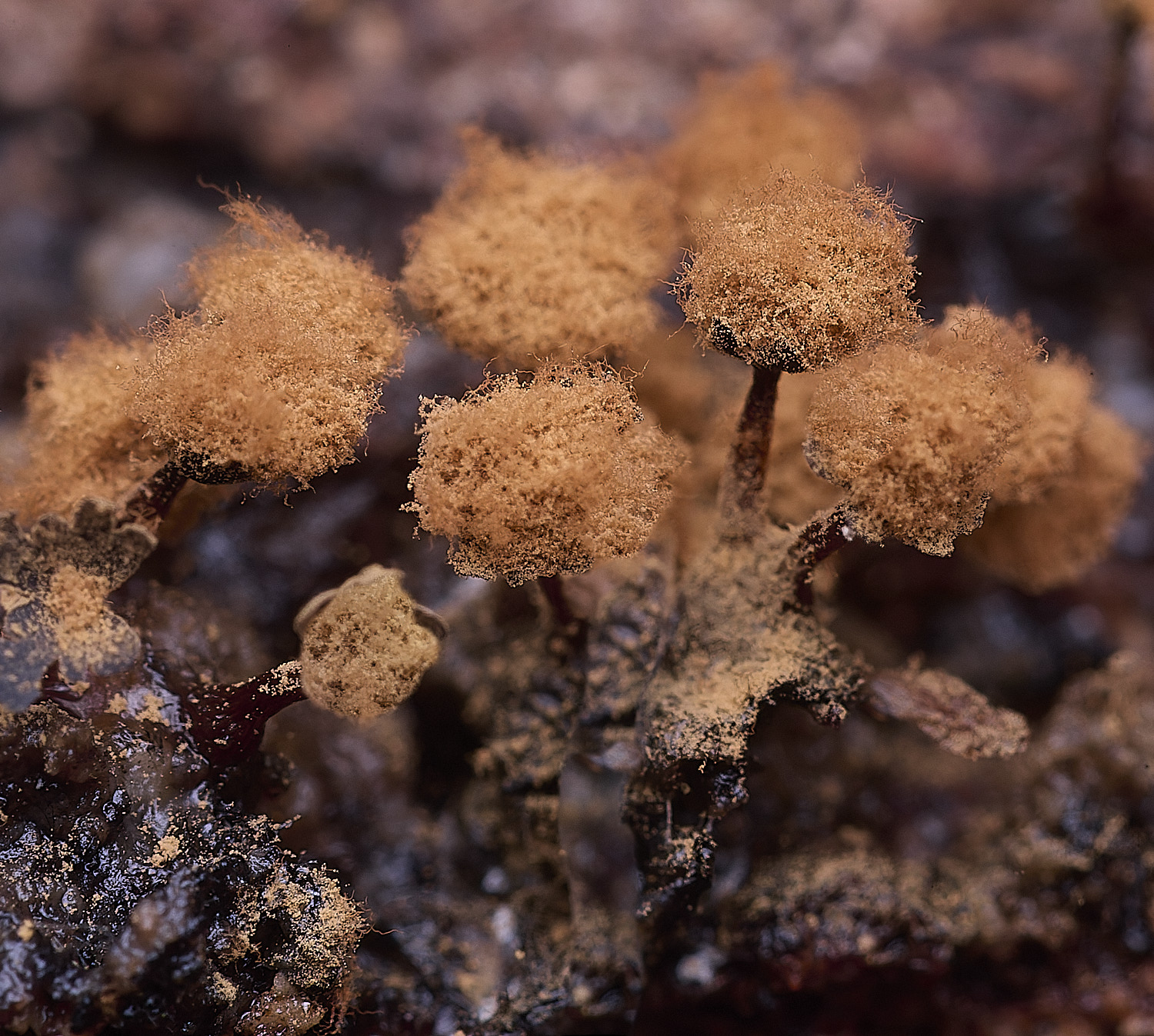
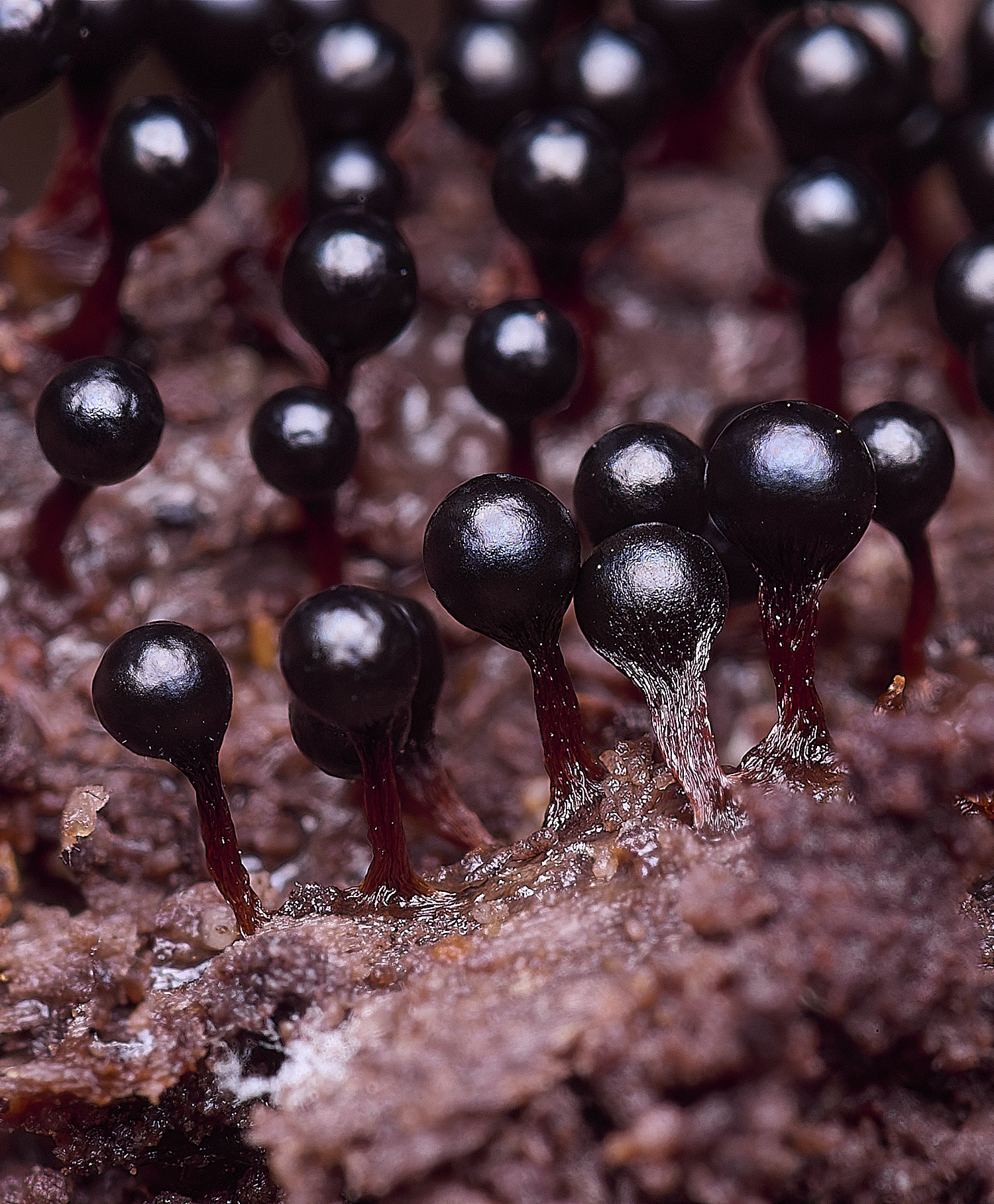
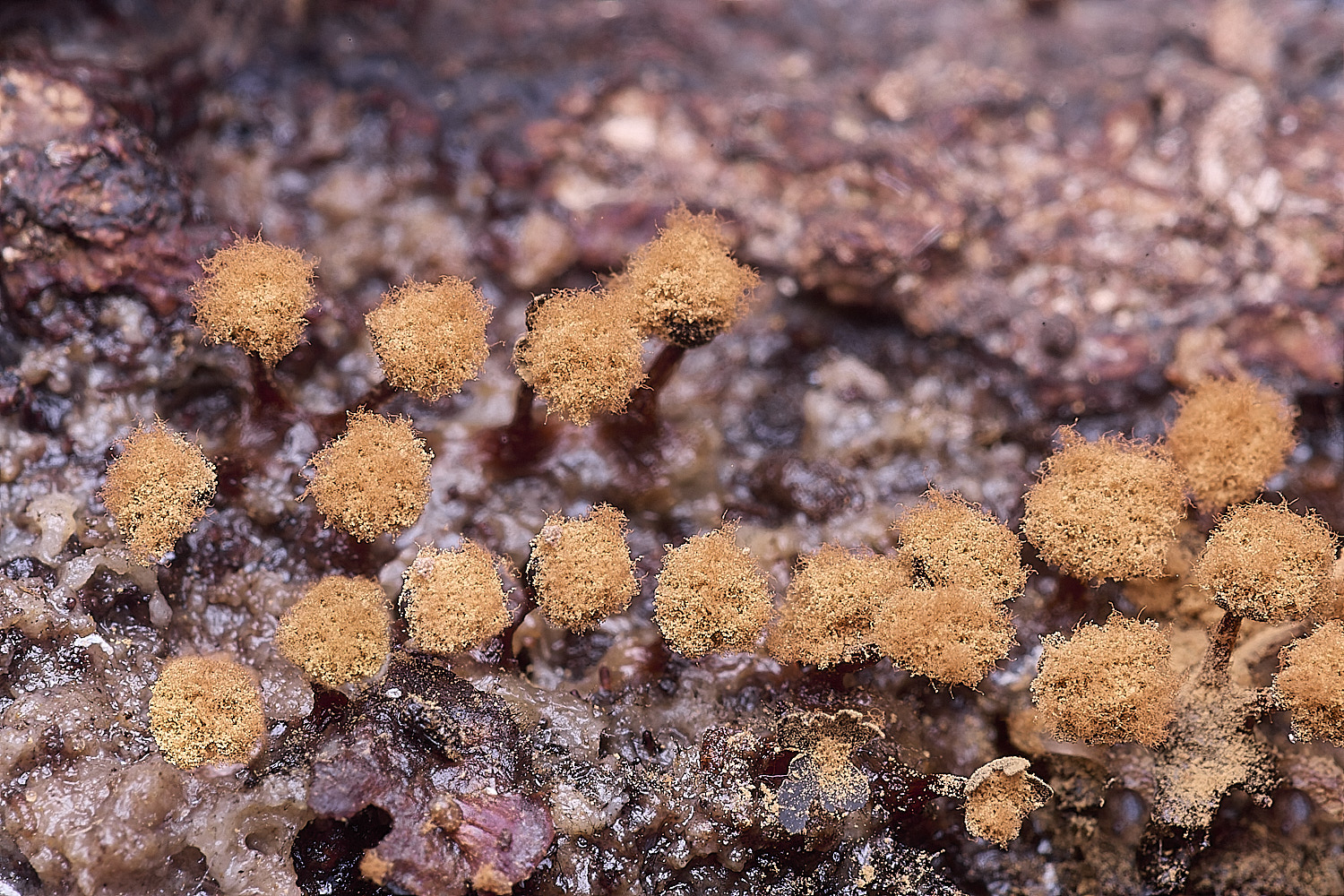
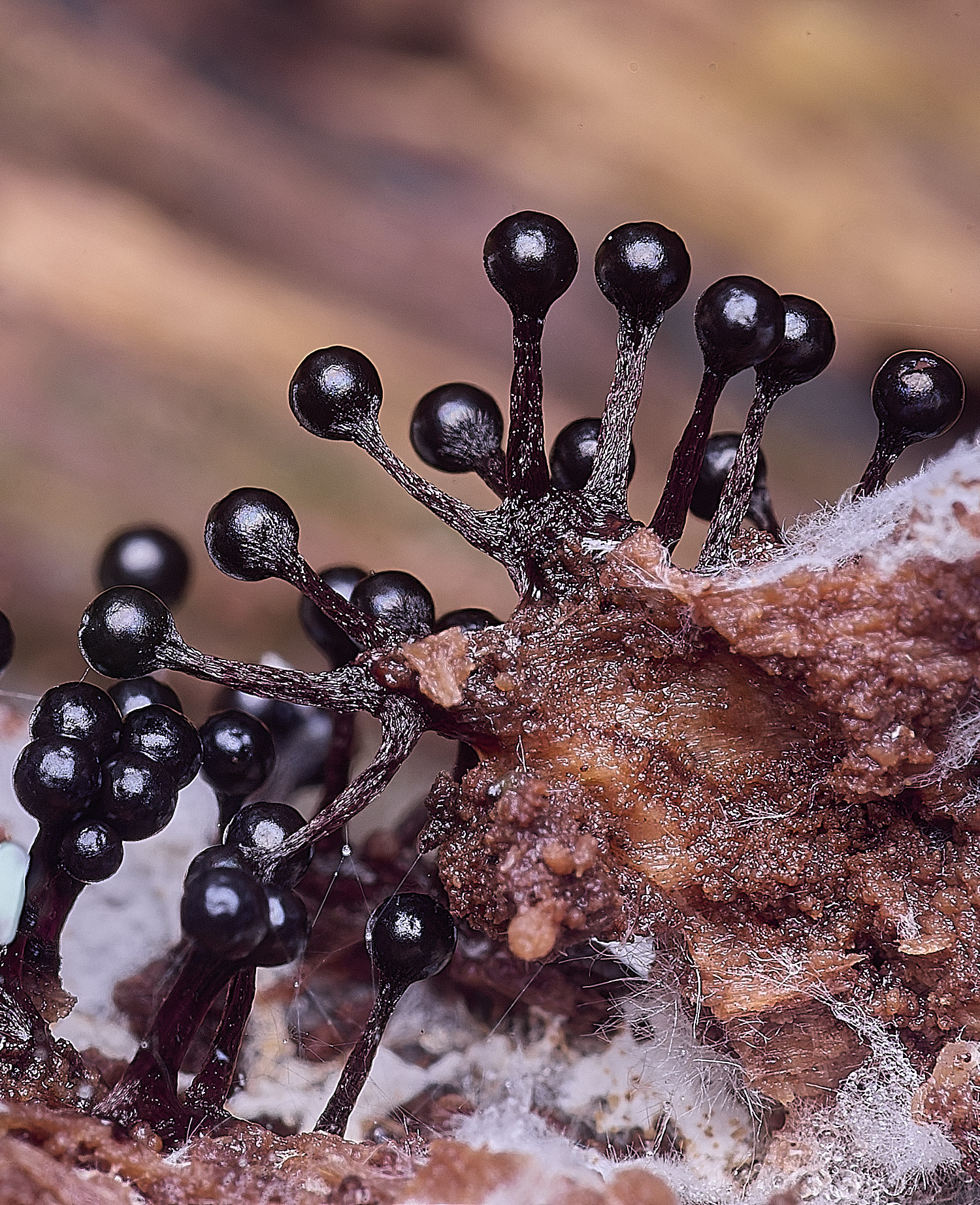
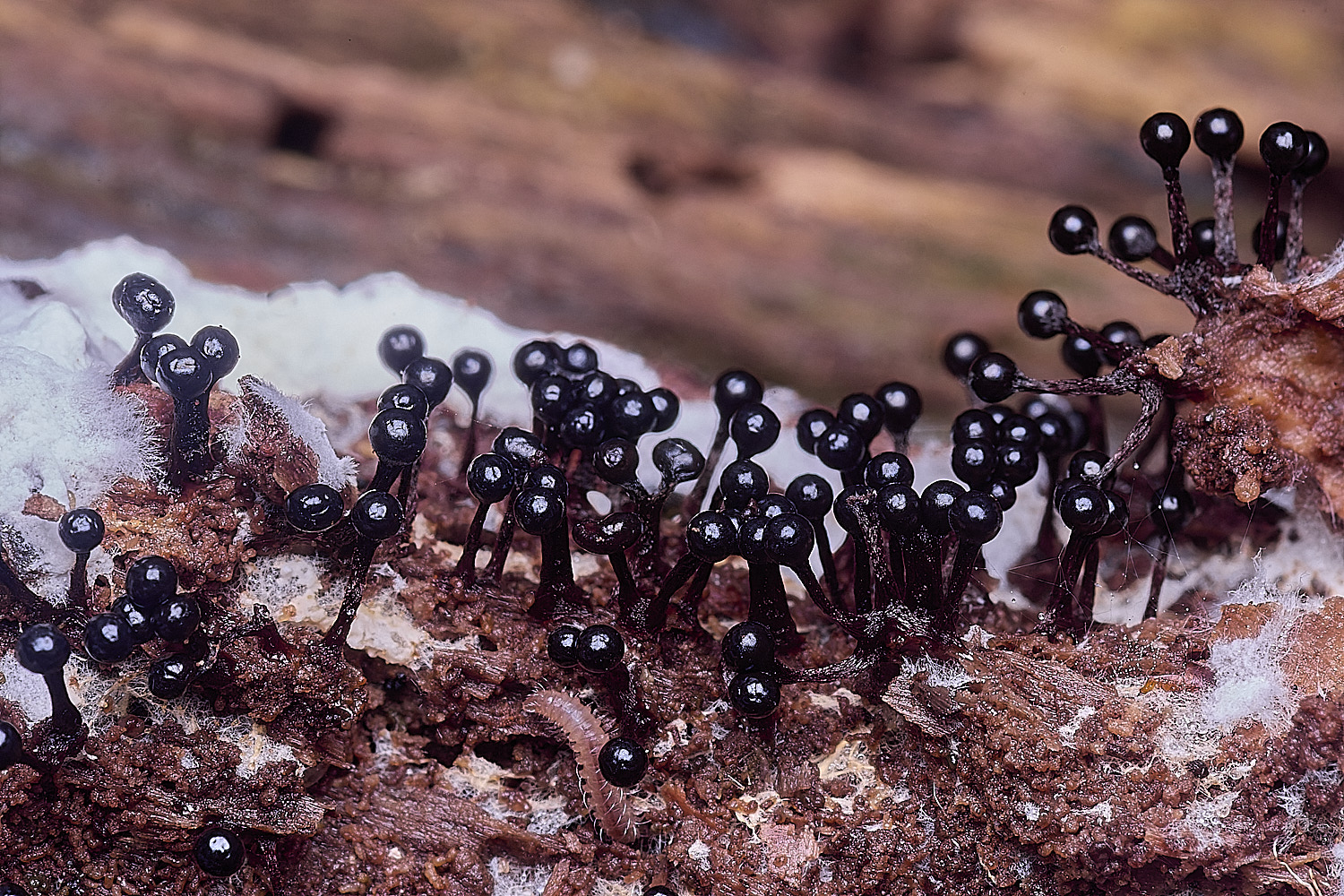
Slime Mold Sp
From AW
The shiney black slime mold with orange spores was Metatrichia floriformis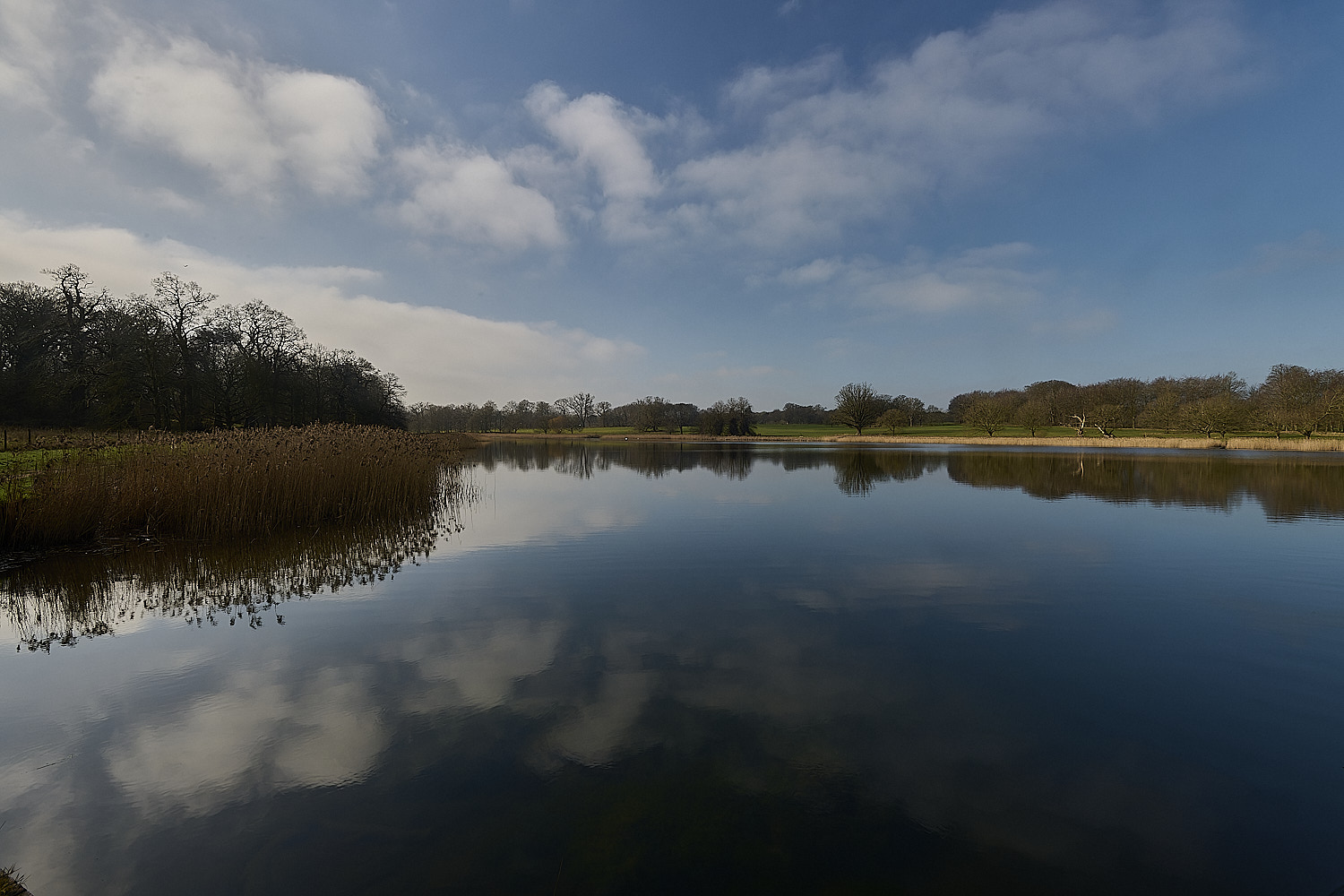
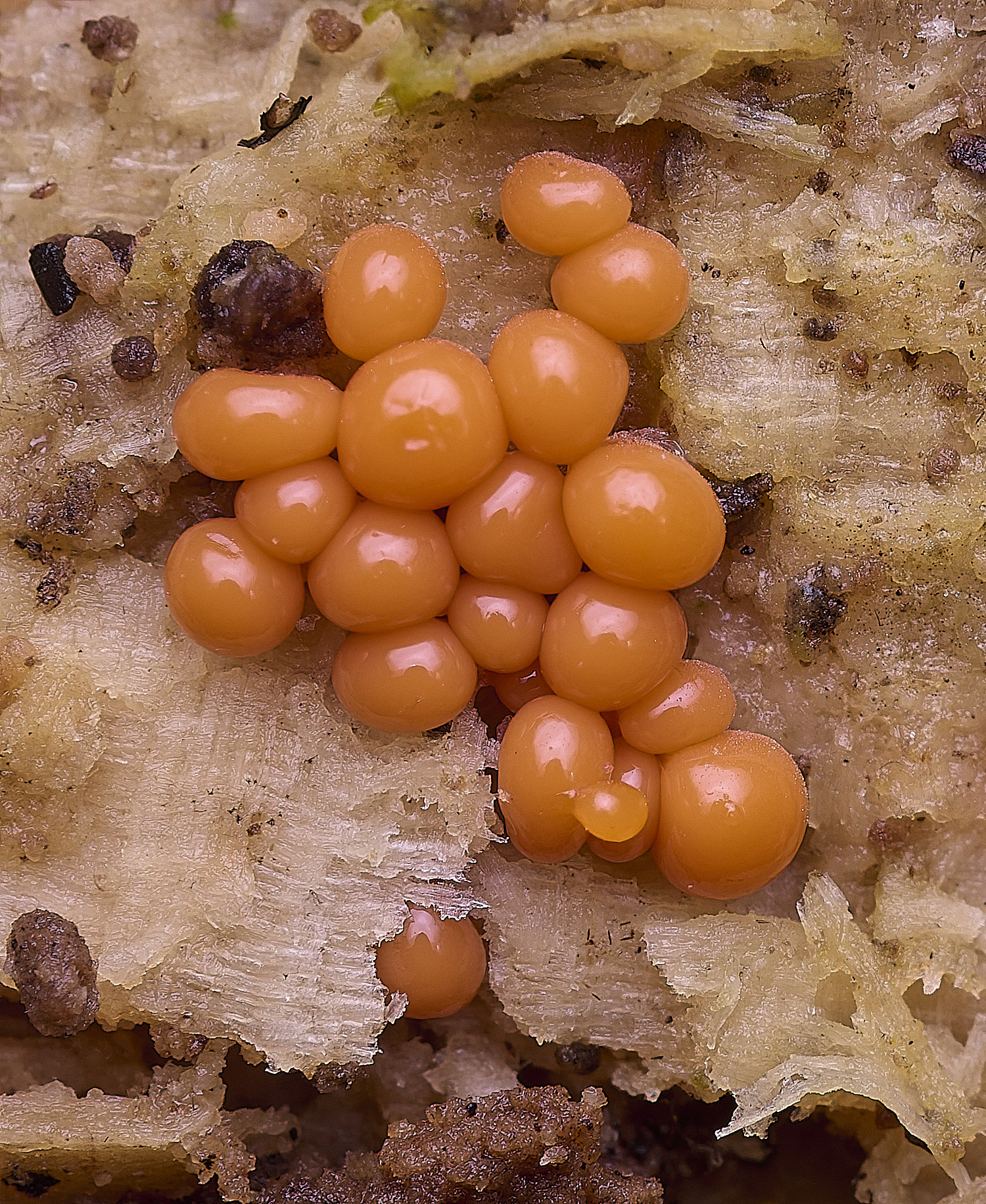
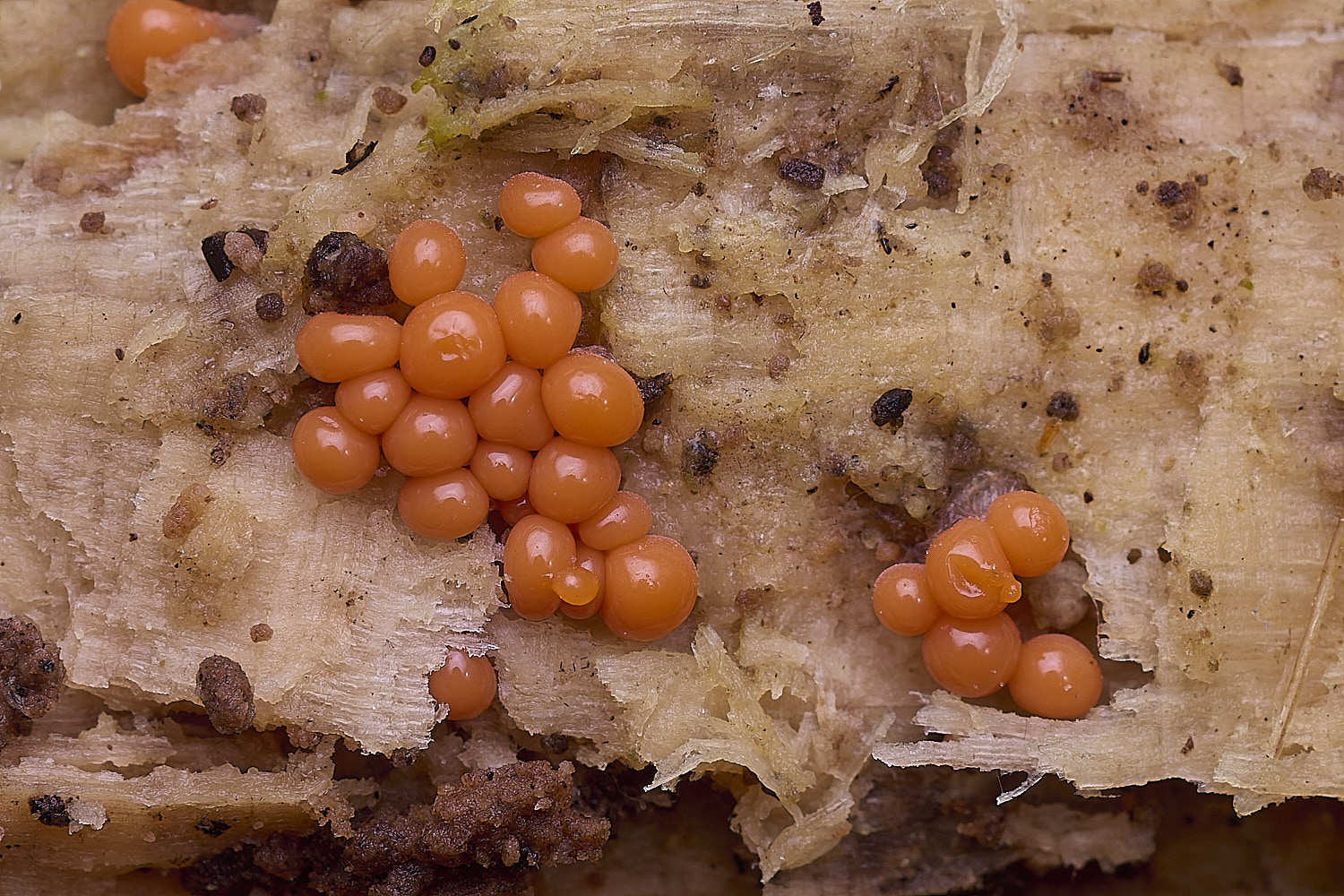
Slime Mold Sp
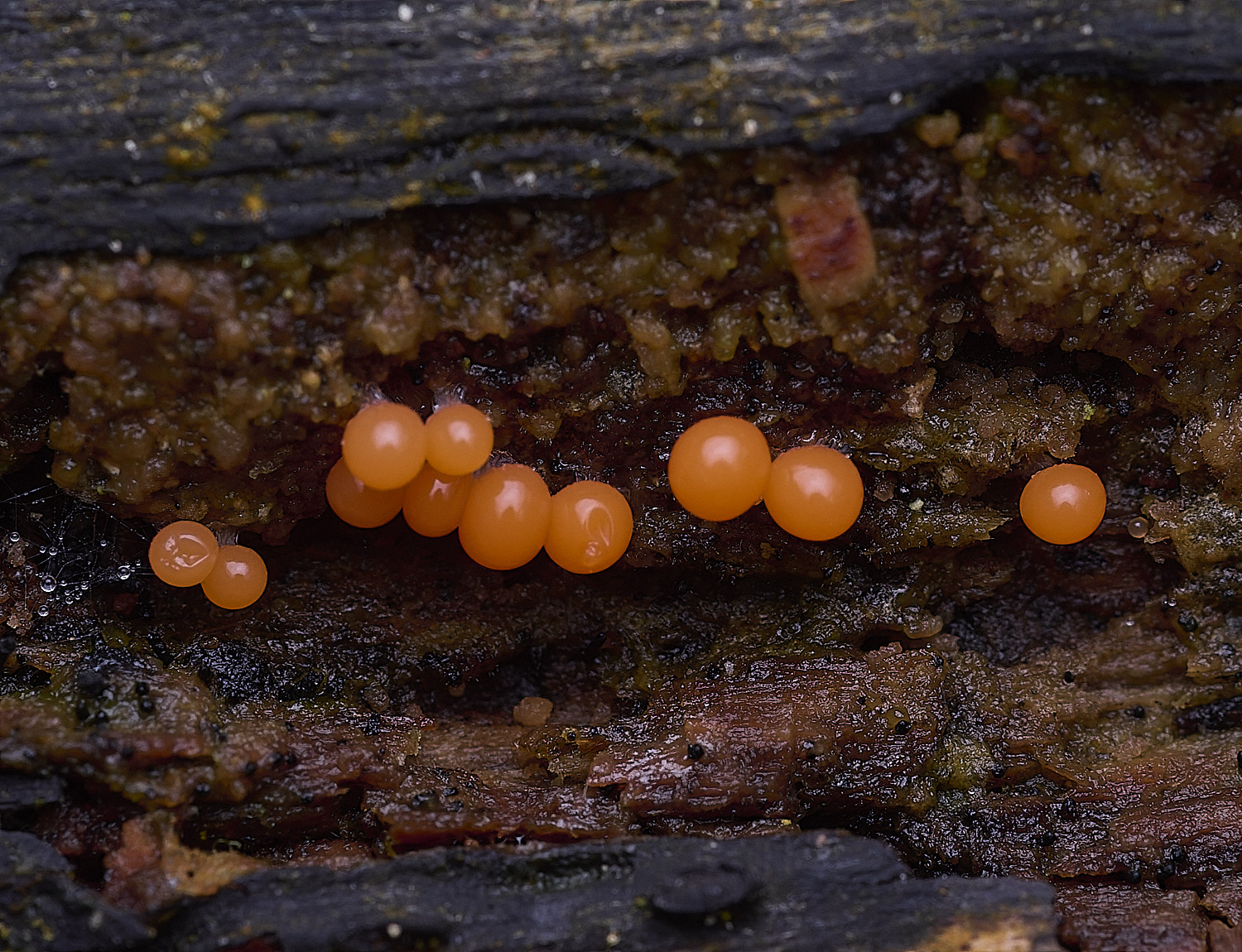
Arcyria ferruginea?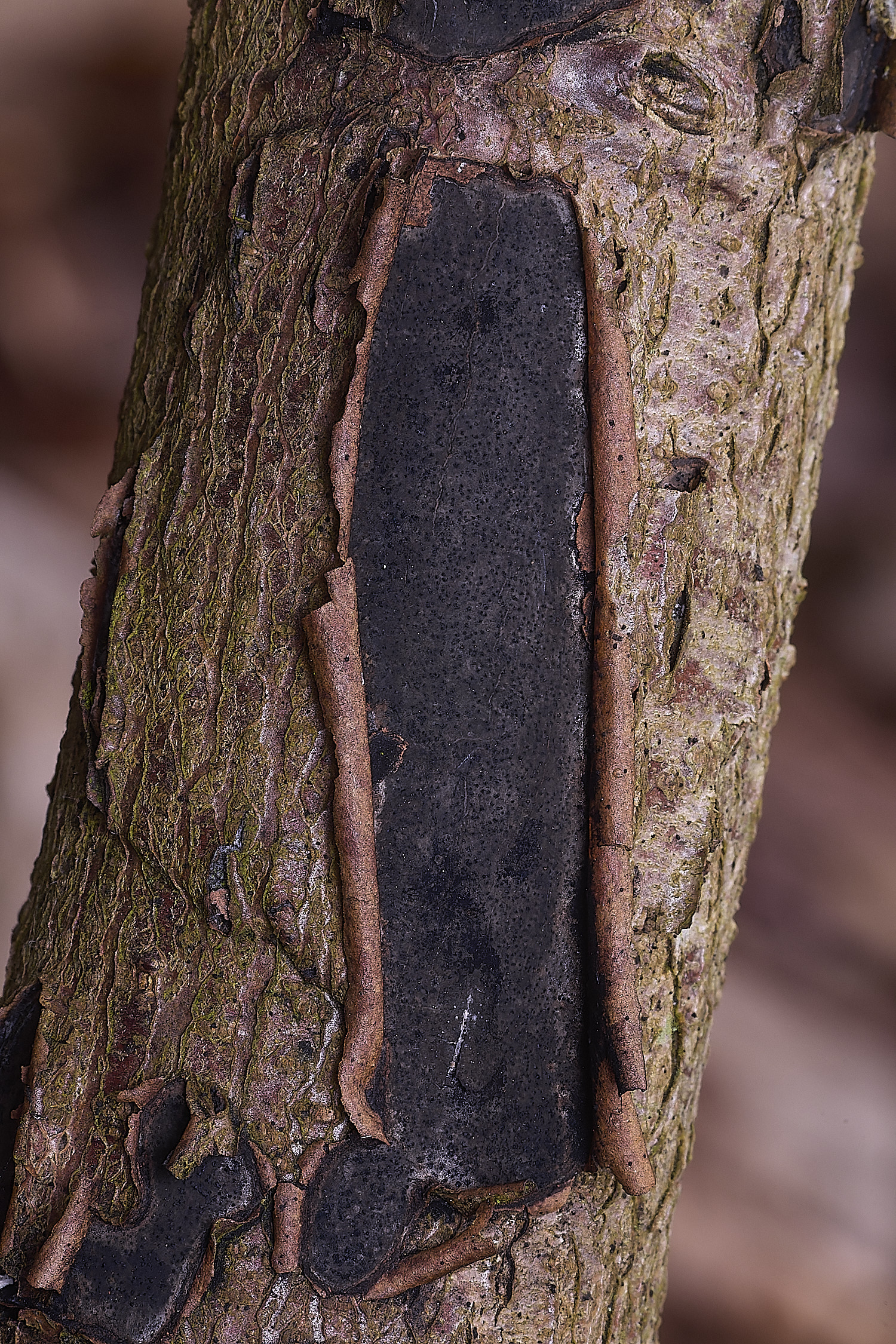
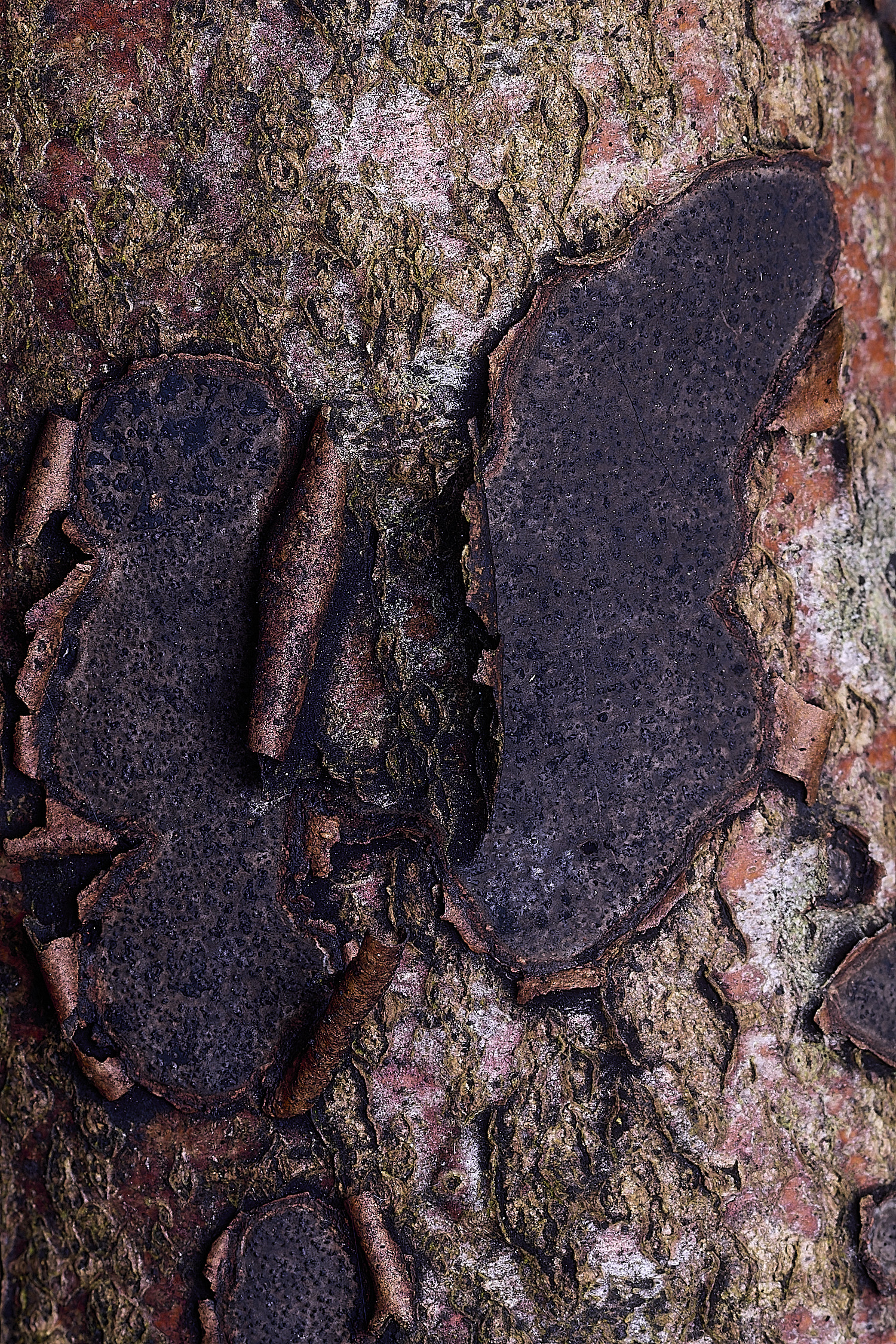
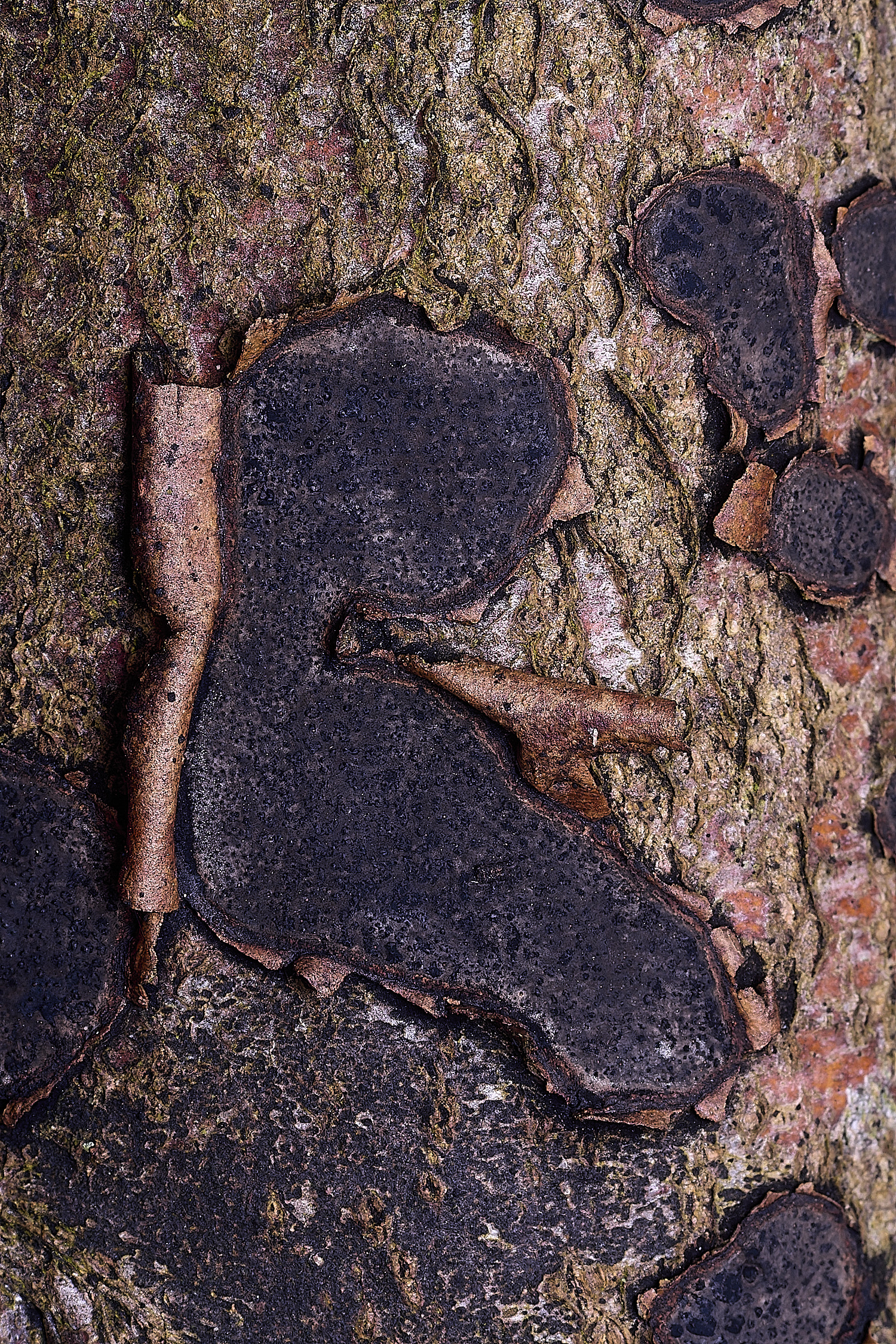
Common Tar Crust (Diatrype stigma) on Beech (Fagus sylvatica)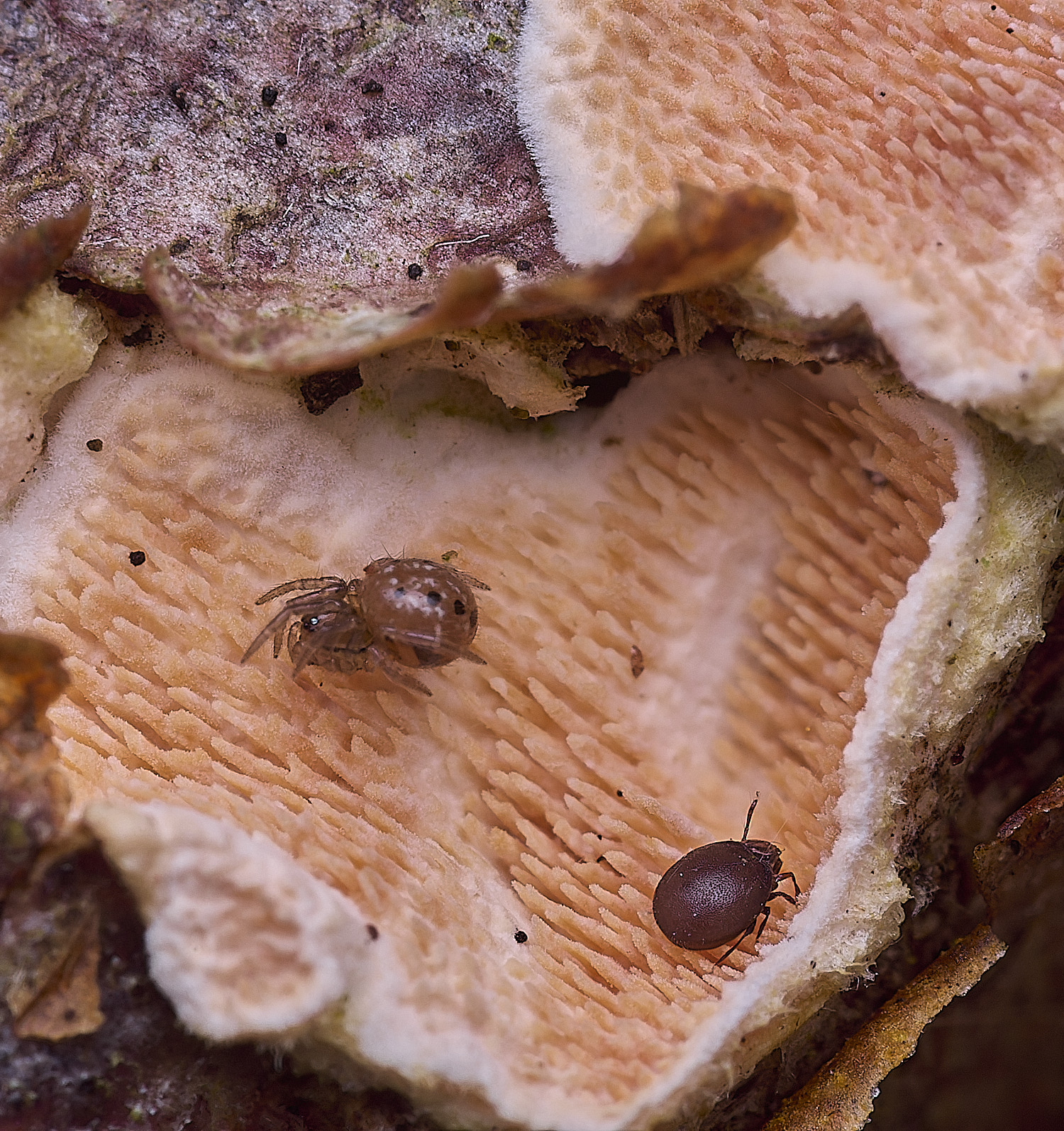
SPider Sp & Mite Sp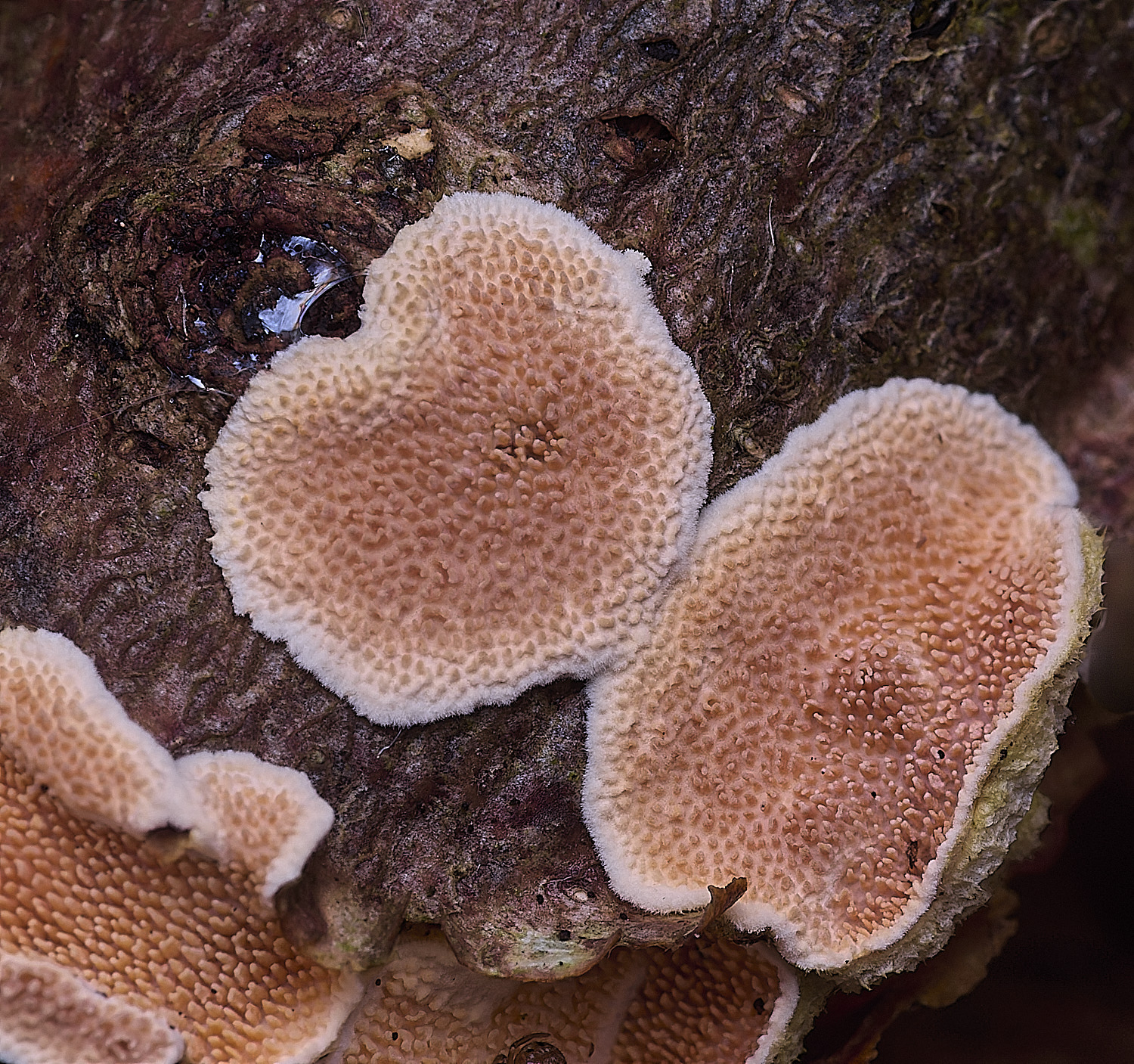
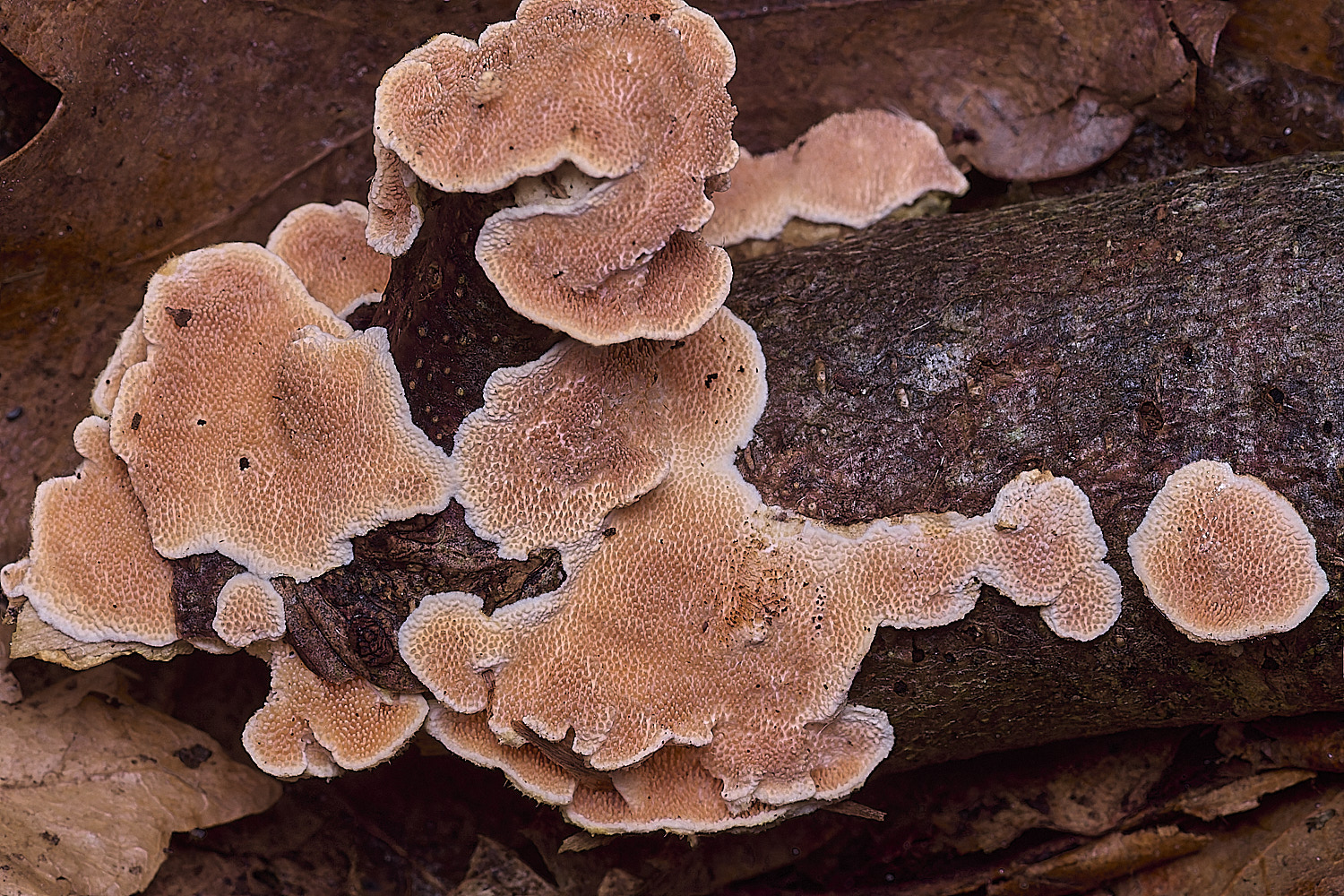
Ochre Spreading Tooth (Stecherinum ochraceum)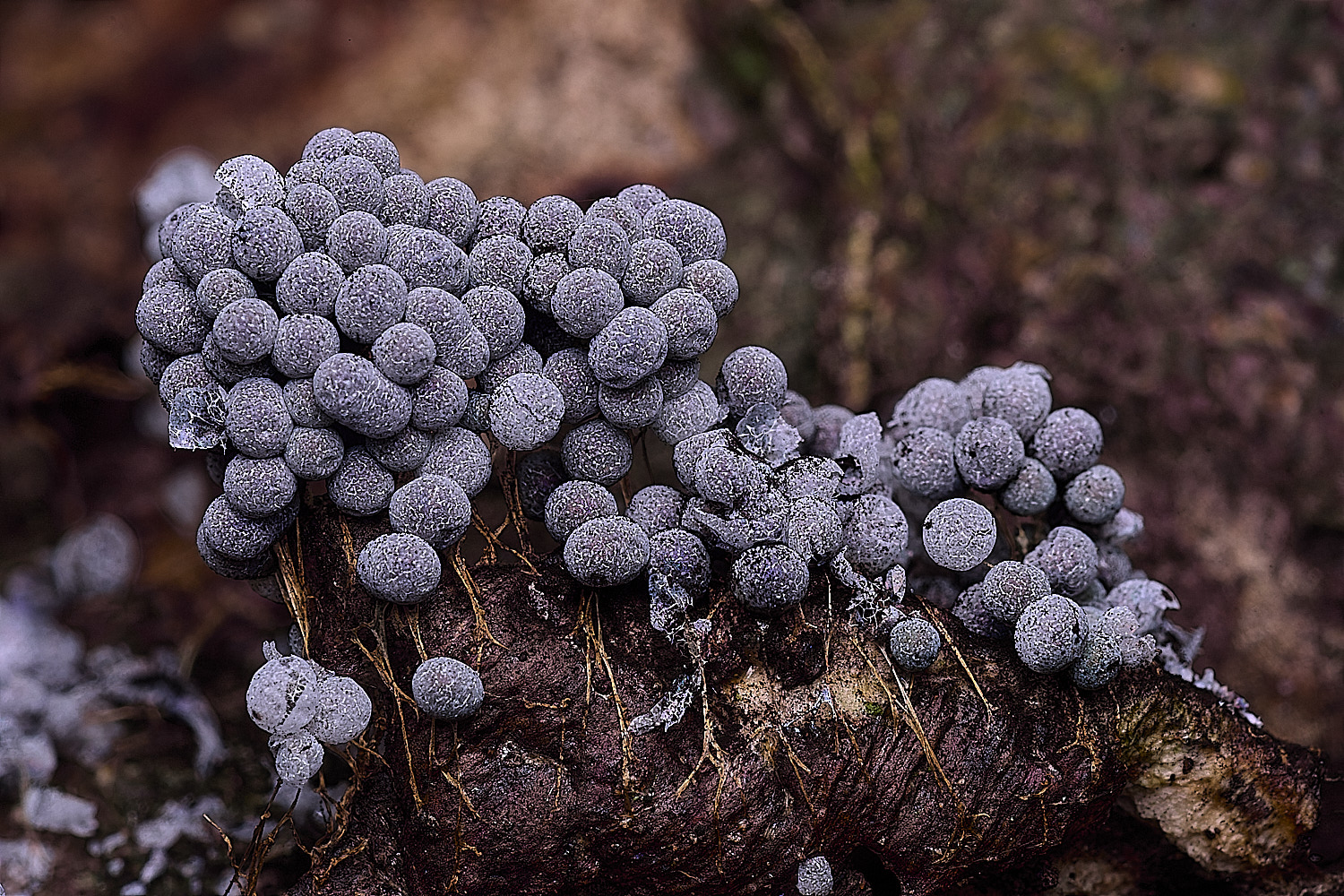
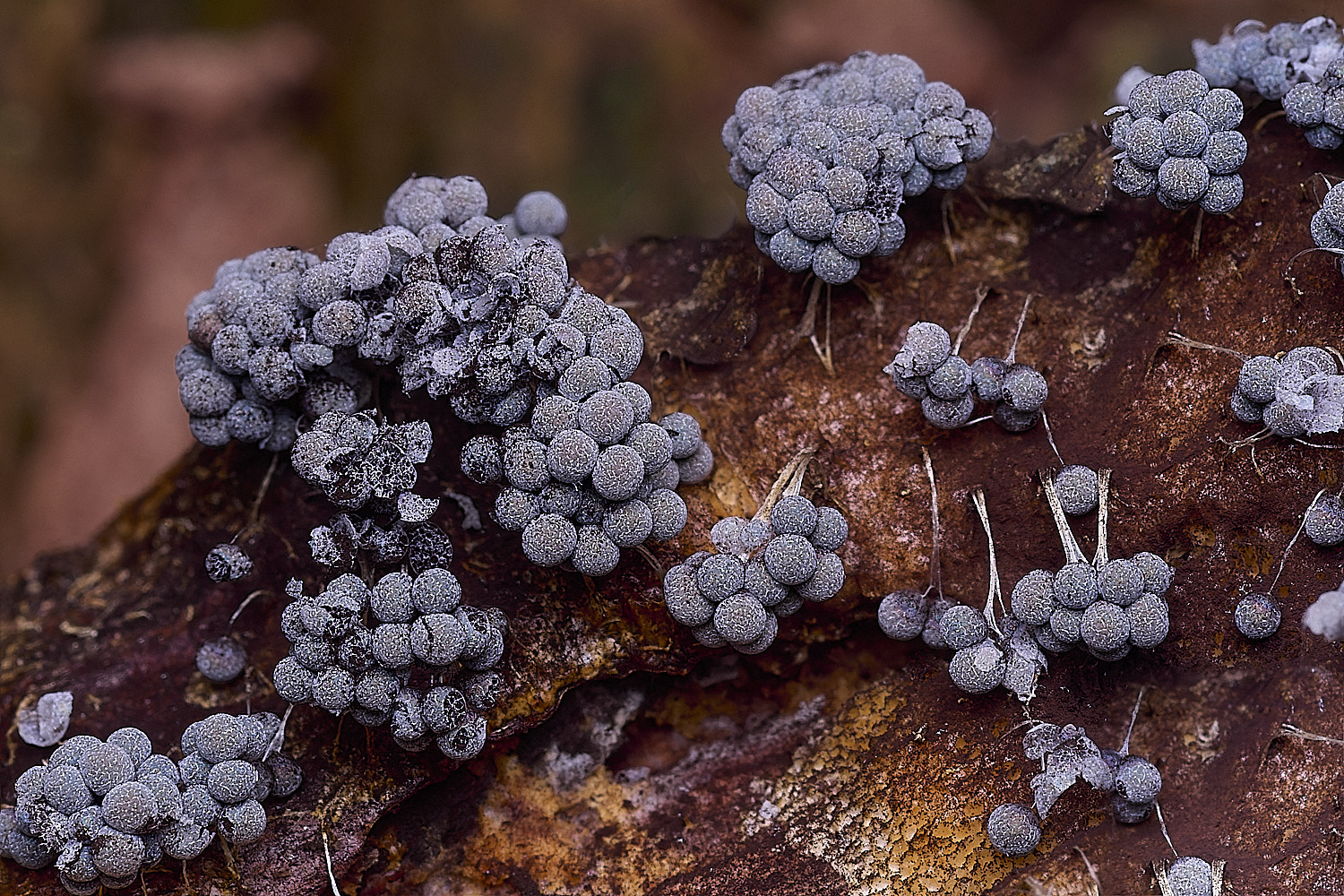
Badhamis untricularis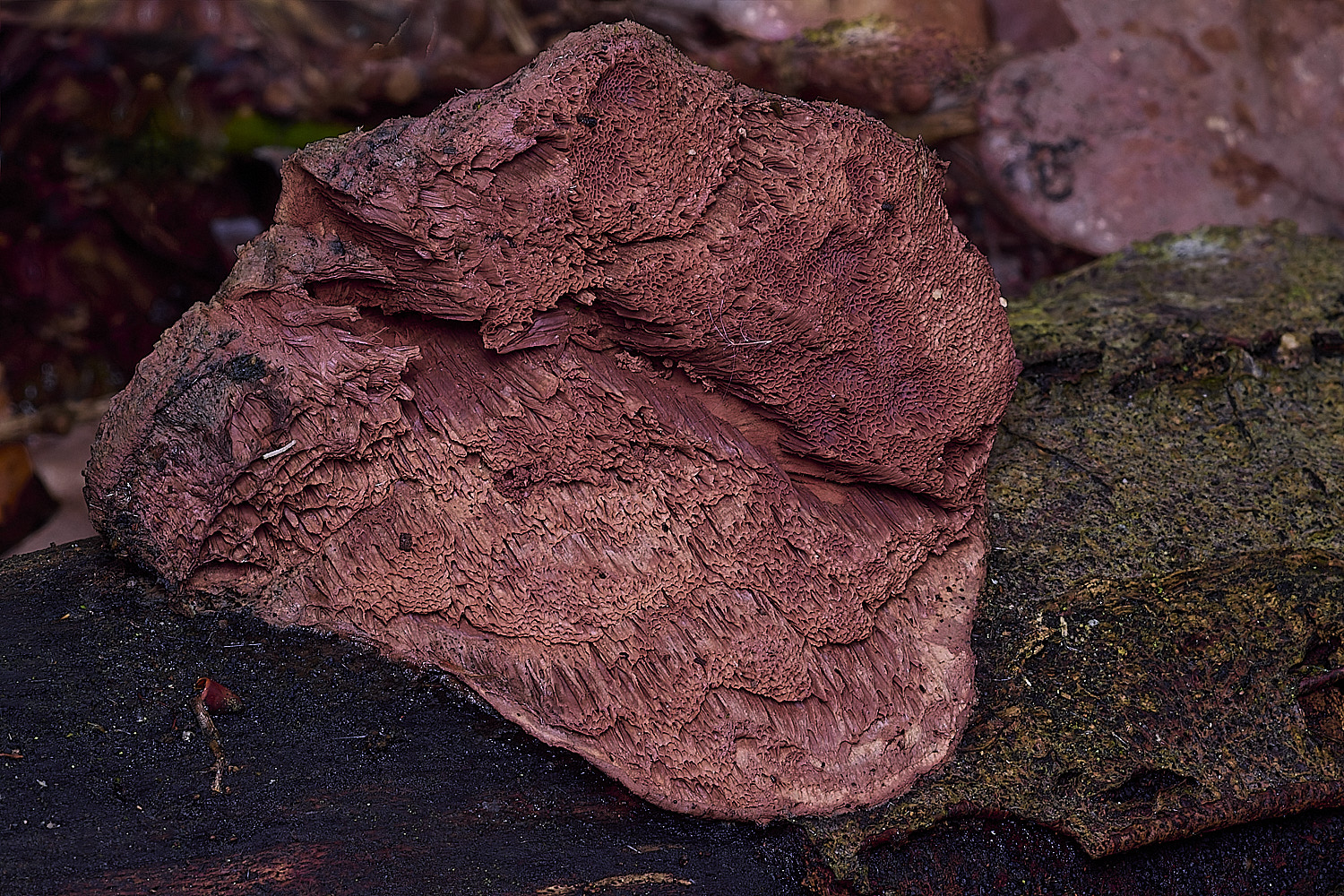
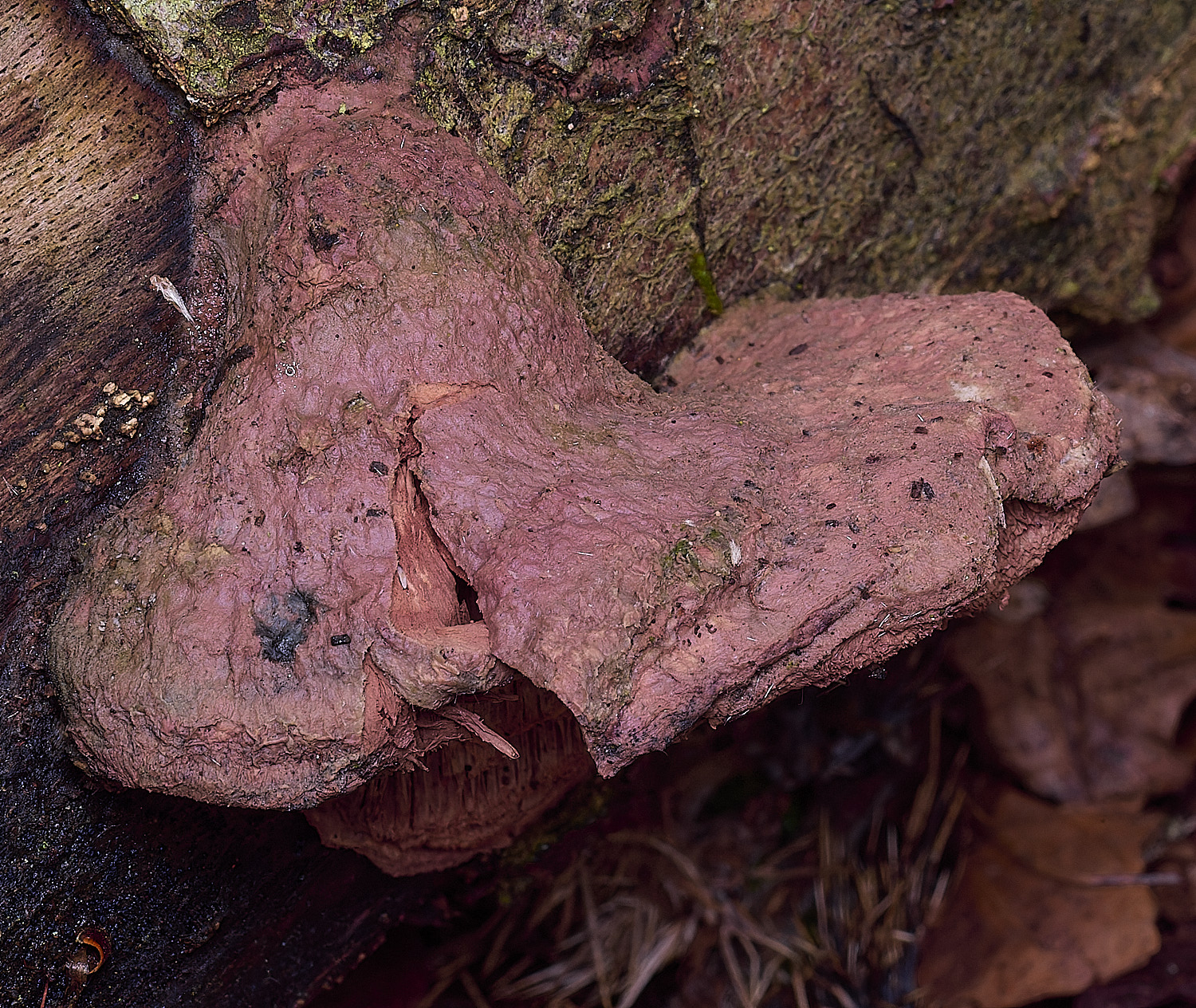
Cinnamon Bracket (Hapilopilus nidulans)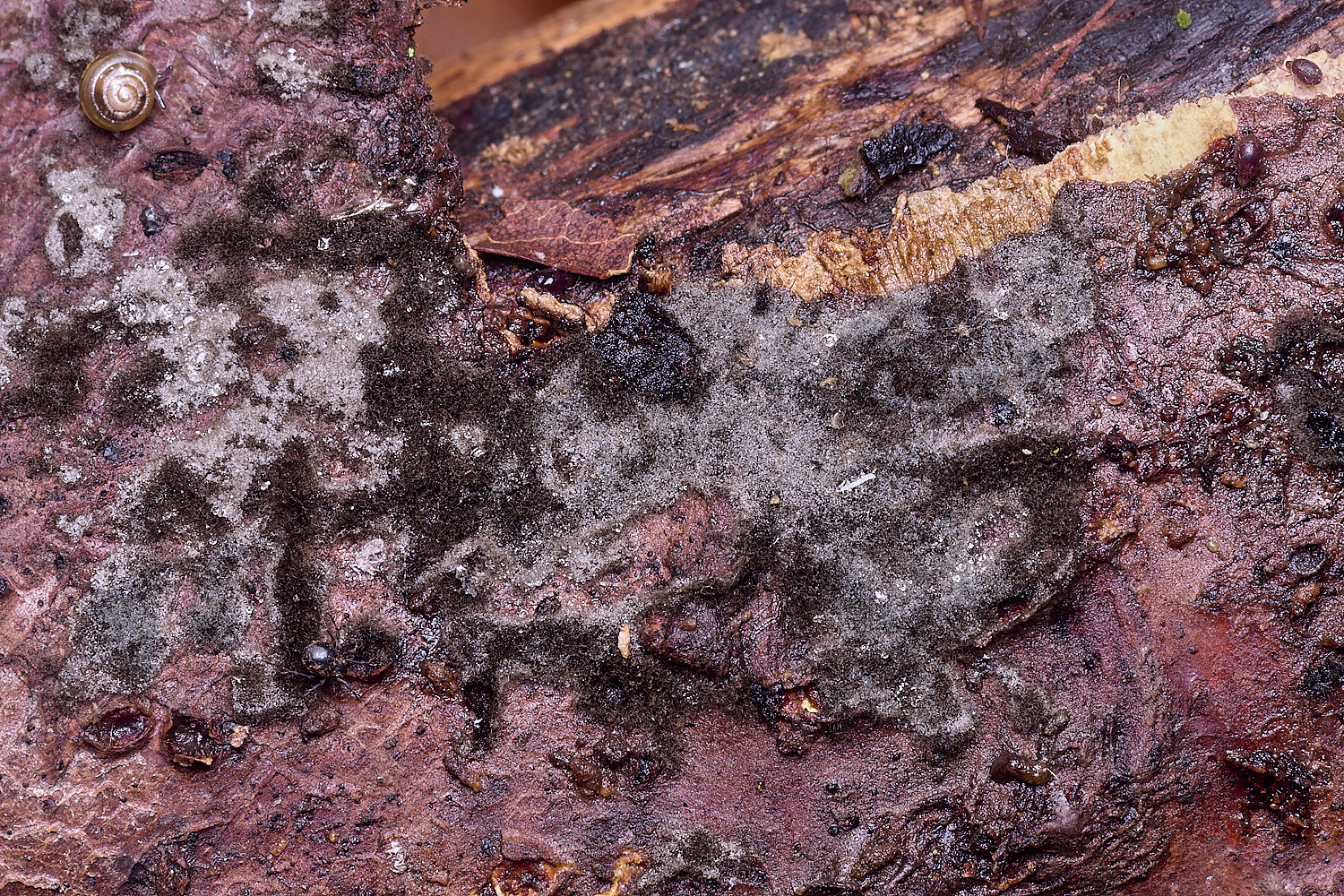
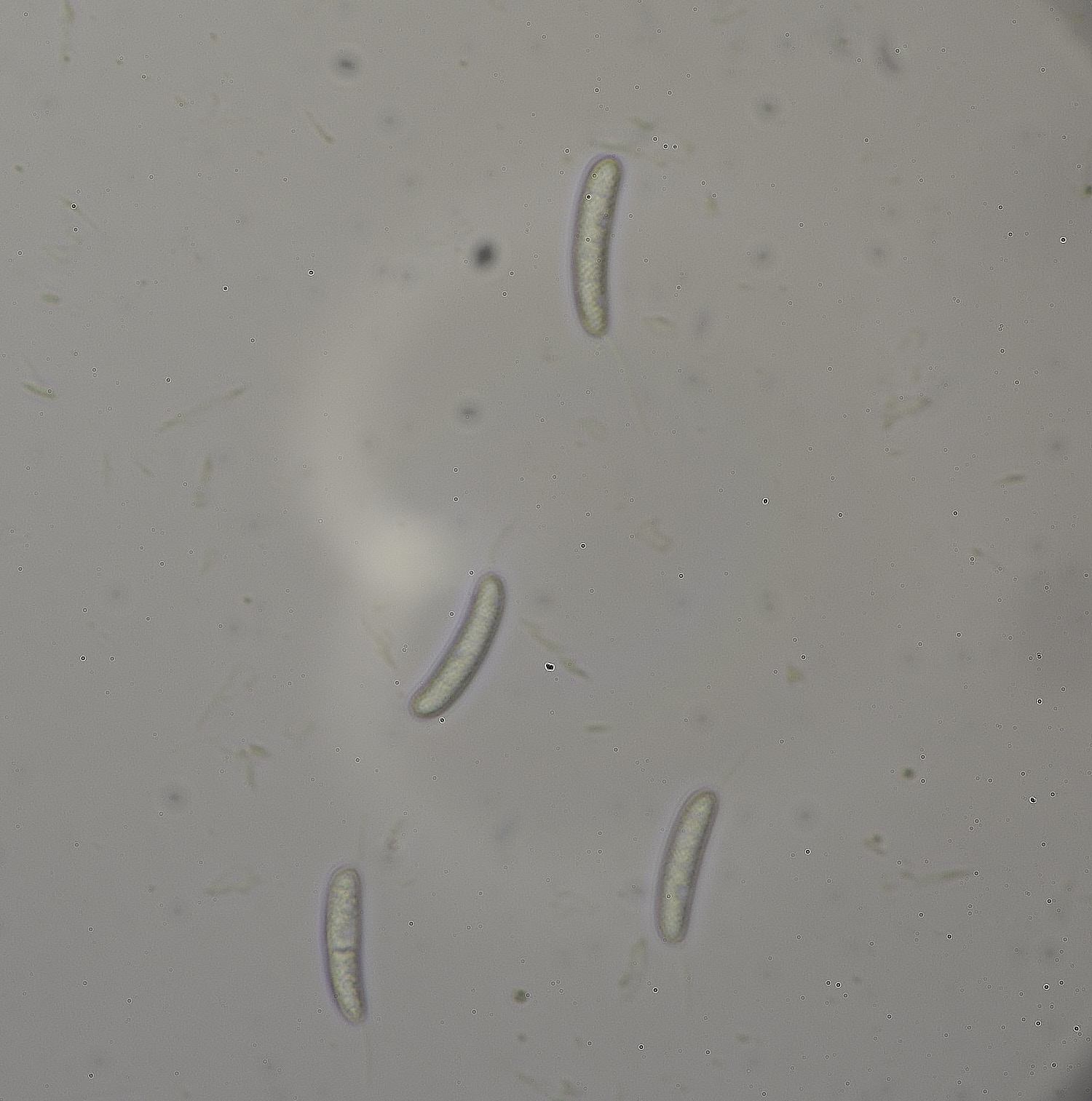
Cacumisporium capitulatum
Spore 23 x 4 µm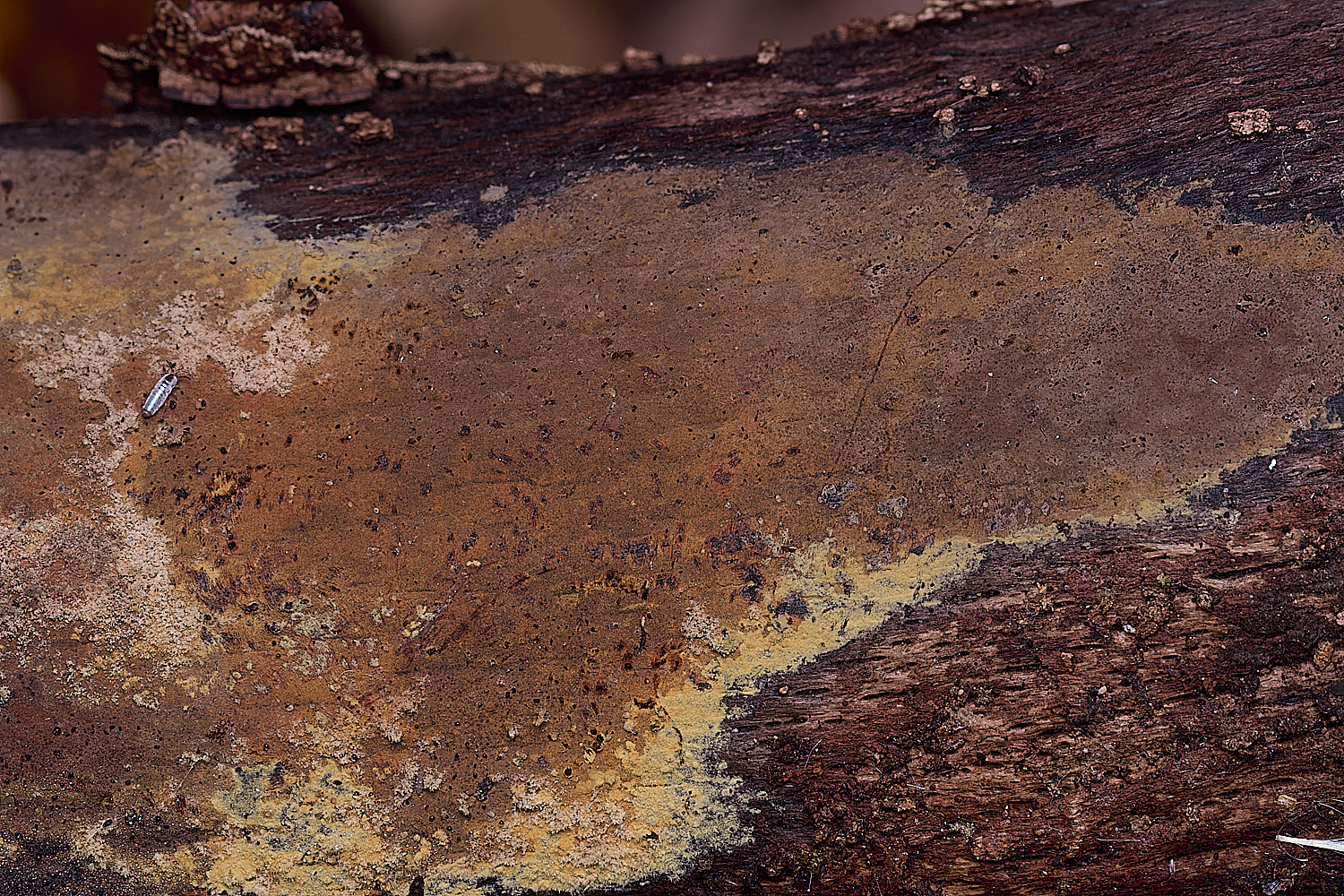
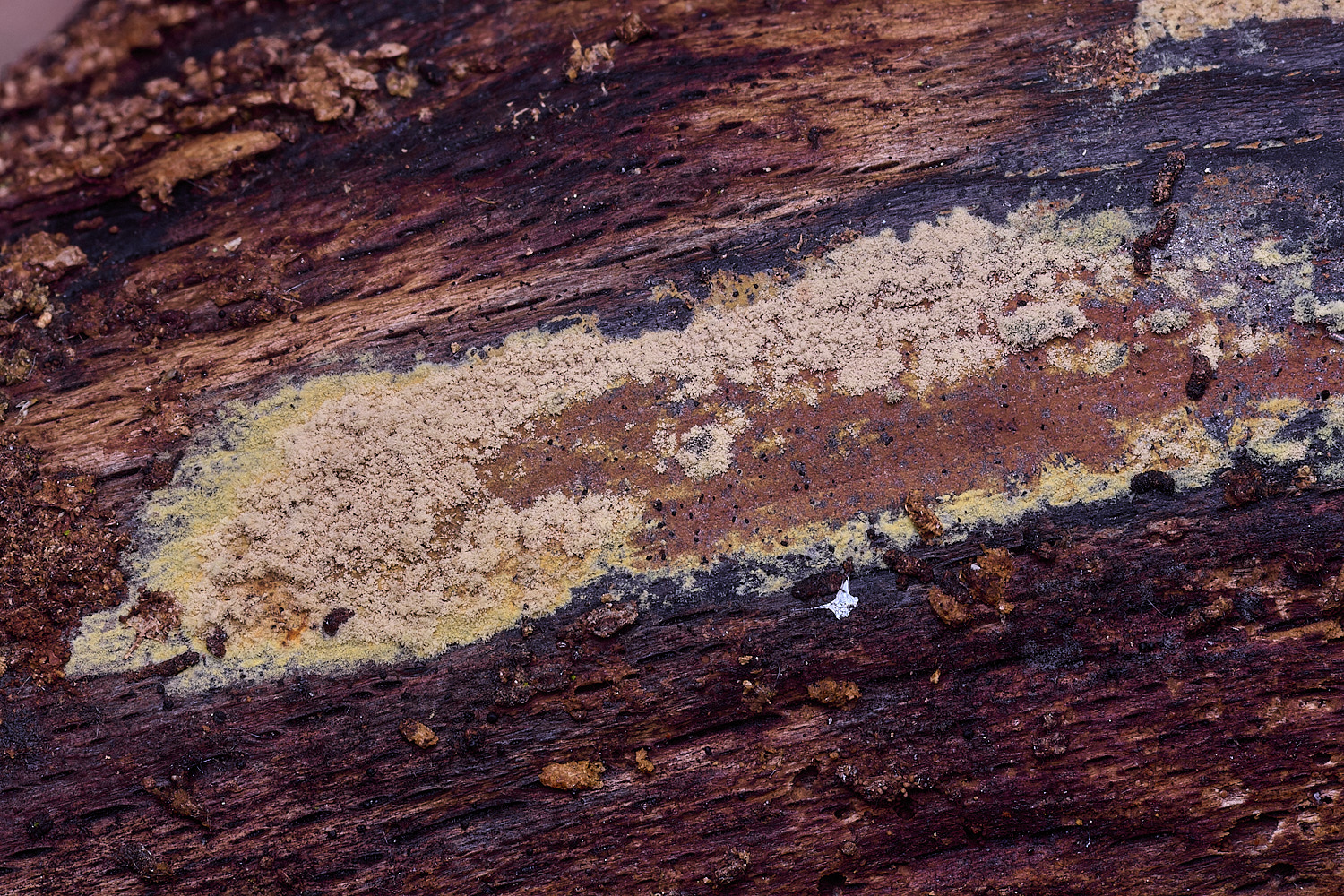
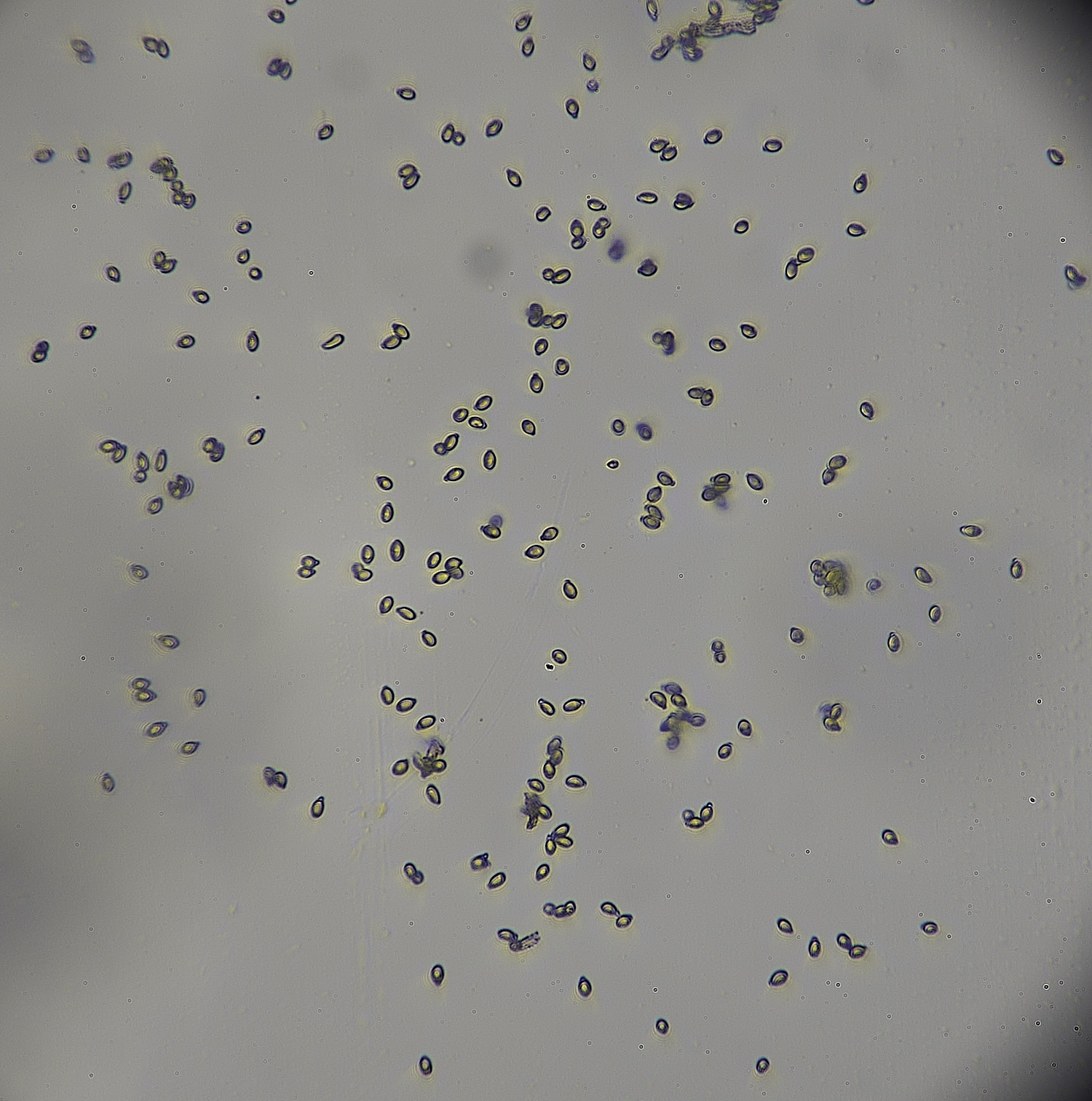
Spore 2 x 1.5 µm
From AW
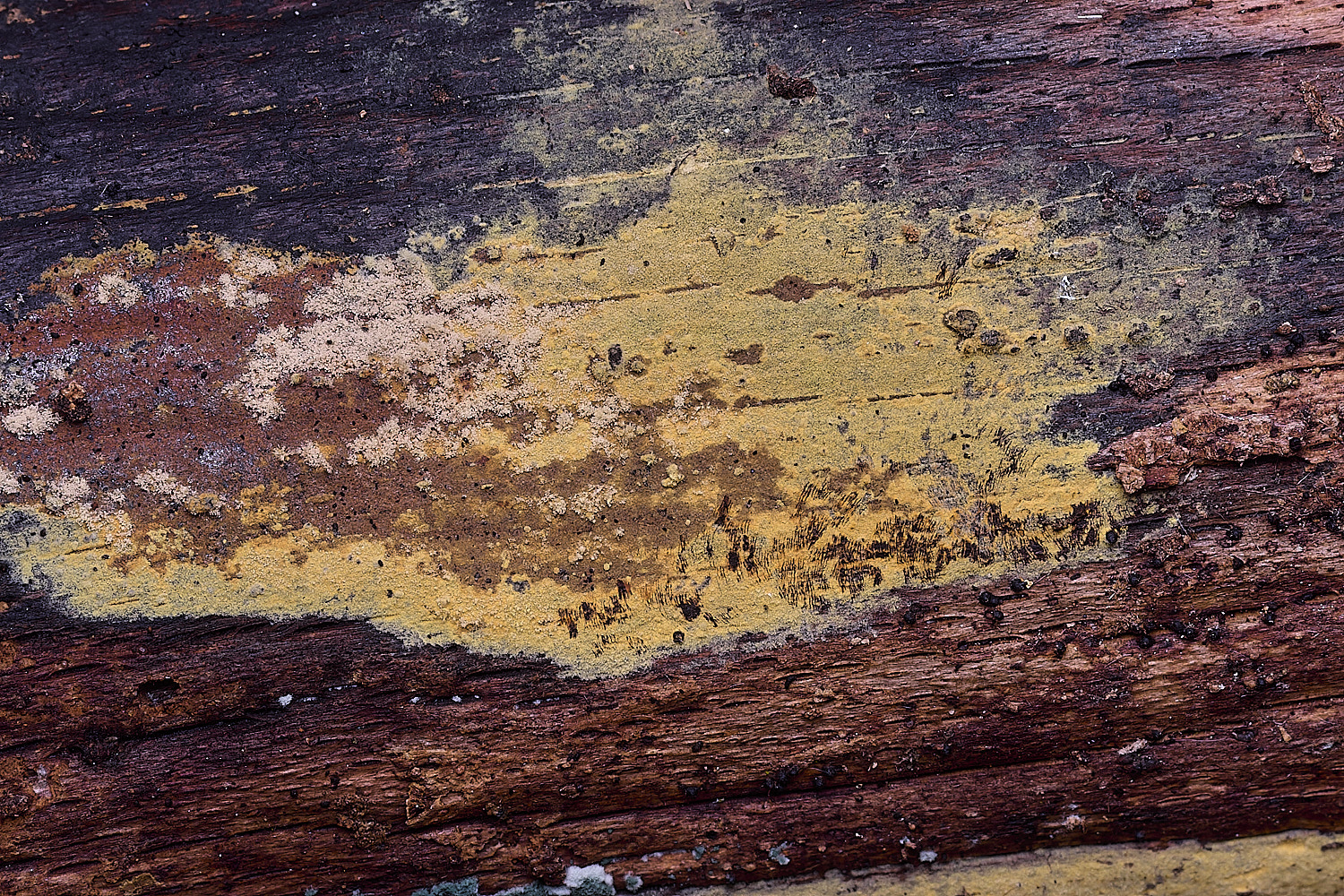
The 'Tequila sunrise' resupinate was Tomentella crinalis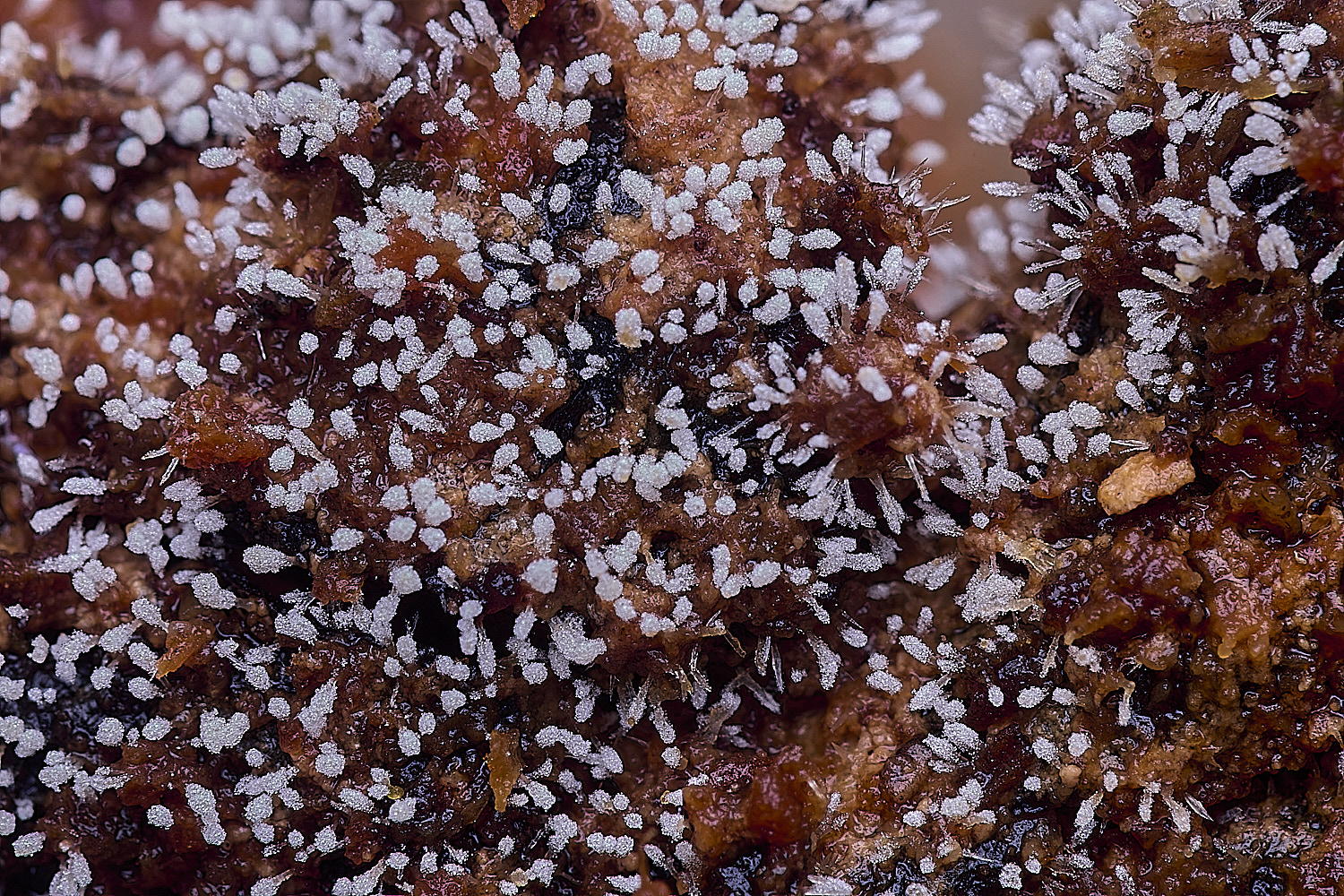
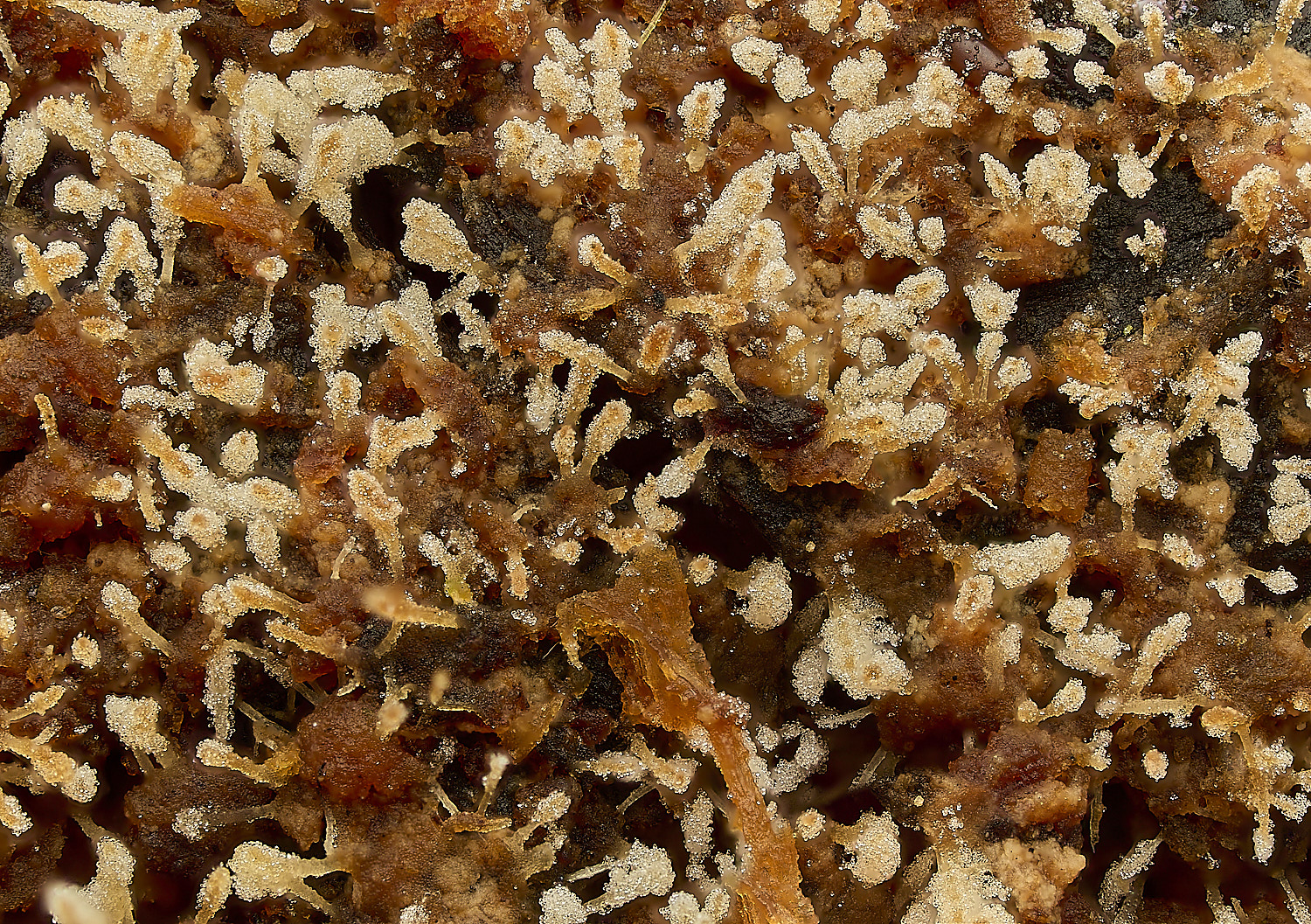
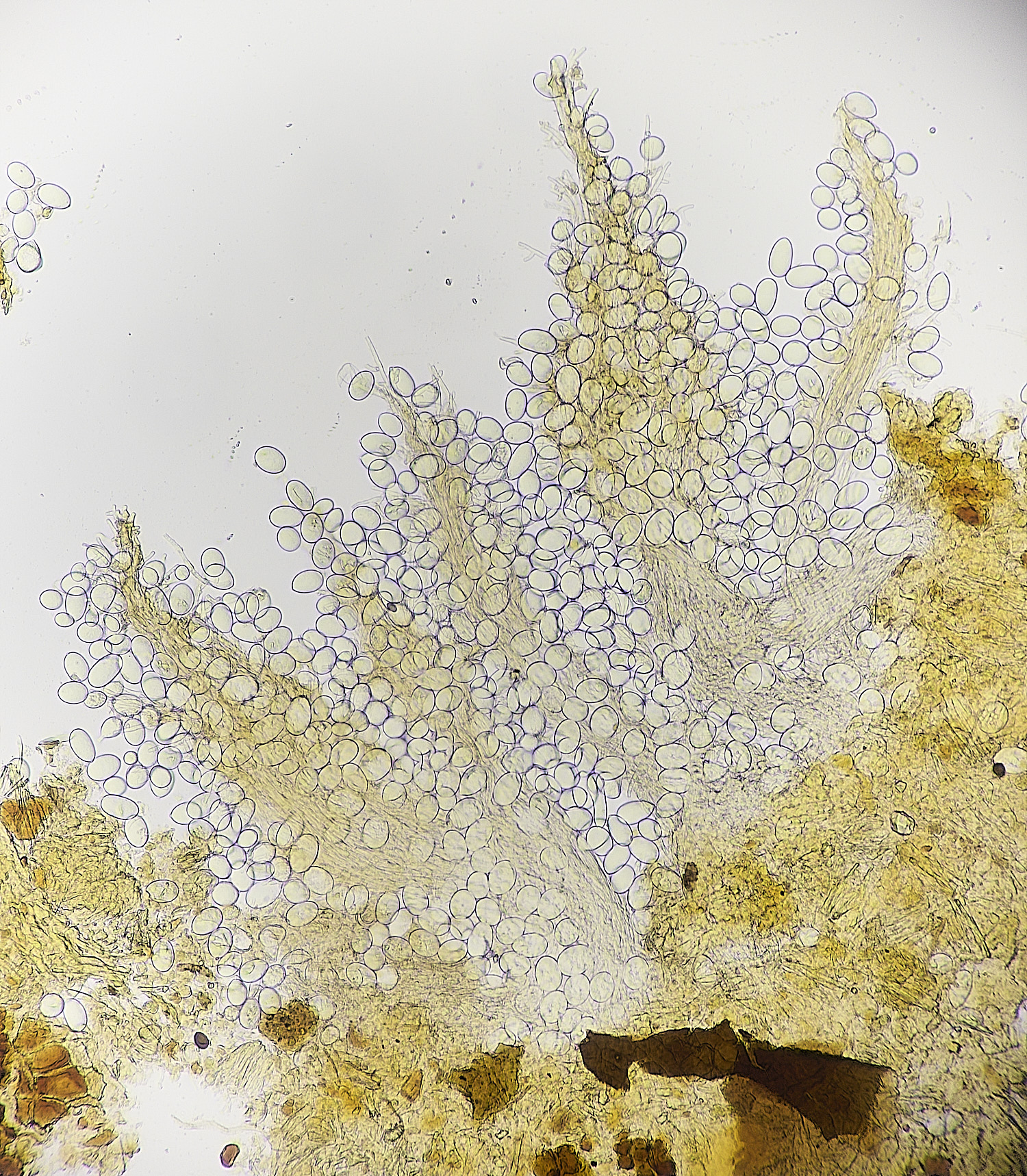
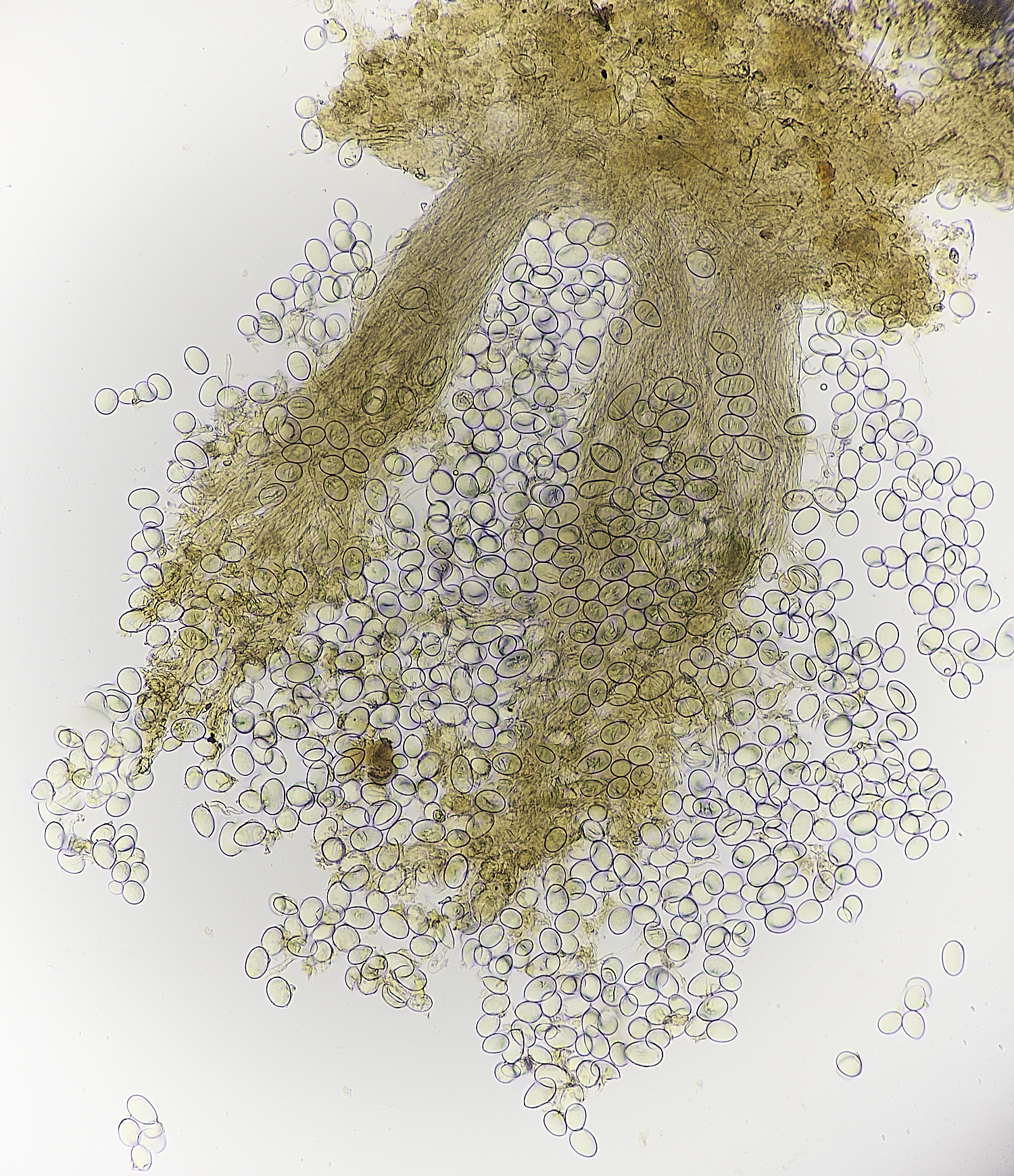
X 200
Spore 38.35 µm x 17.7 µm
From AW
The pale synnemata on the rotten wood were Phaeoisaria clematidis - this is meant to be common according to Ellis & Ellis, but there is only one record on the Mycota dating back to 1946
Synnamata - specilaized, upright asexual reproducitve structures produced by certain fungi where numerous conidiohores fuse to form a stalk-like, often branched, bundle.
This can be clearly seen in the images above.
Phaeoisaria clematidis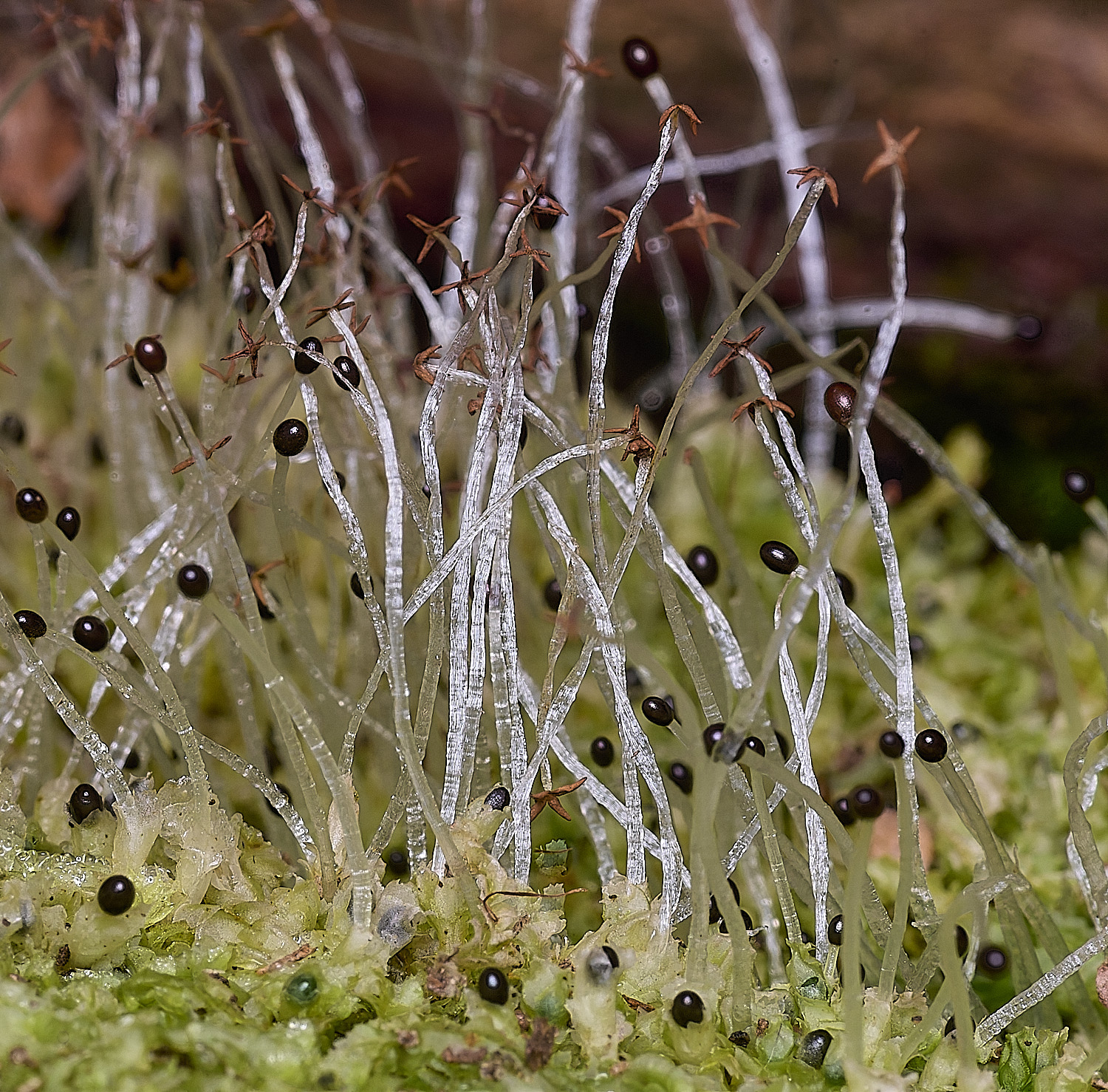
Bifid Crestwort (Lophocolea bidentata) fruiting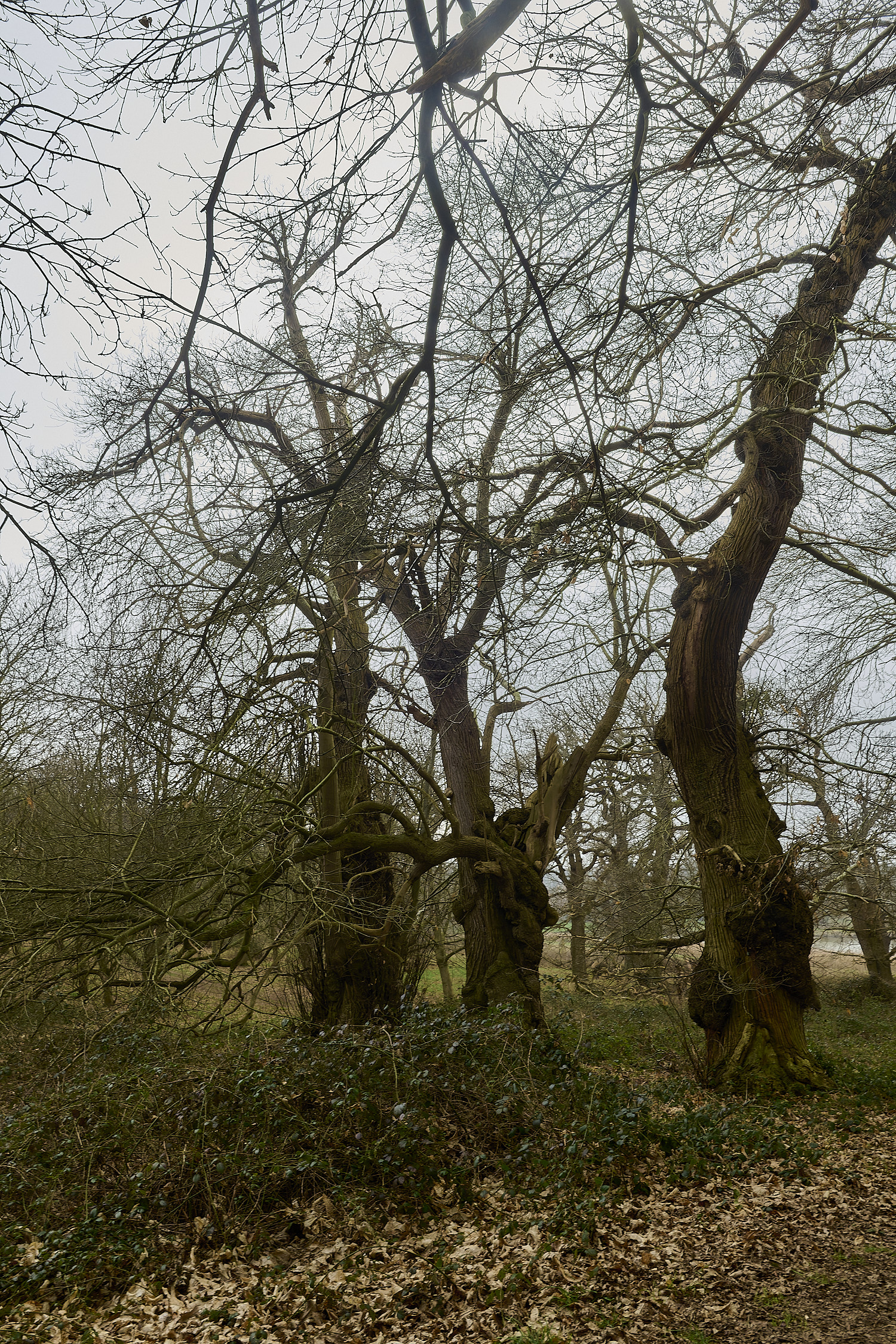
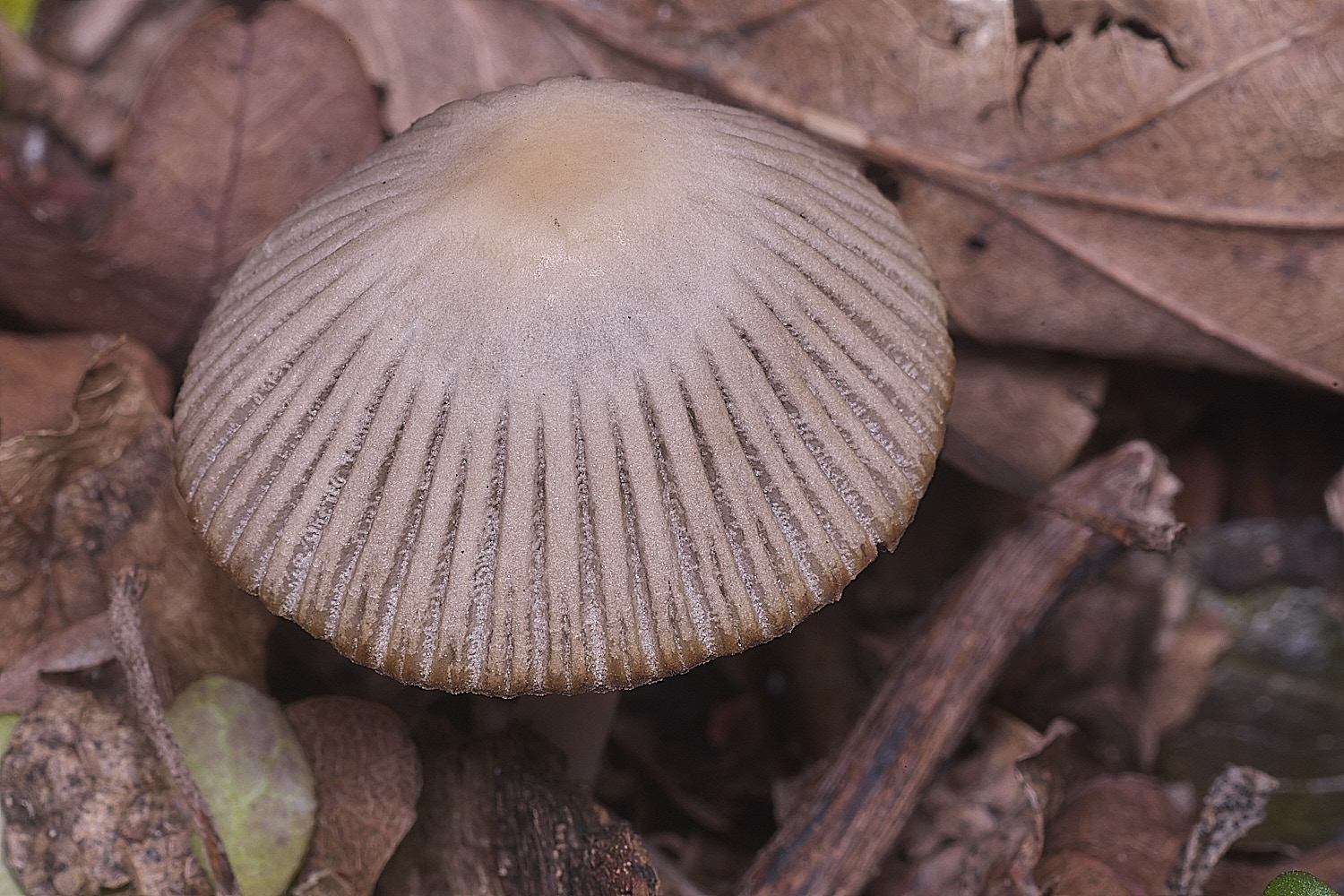
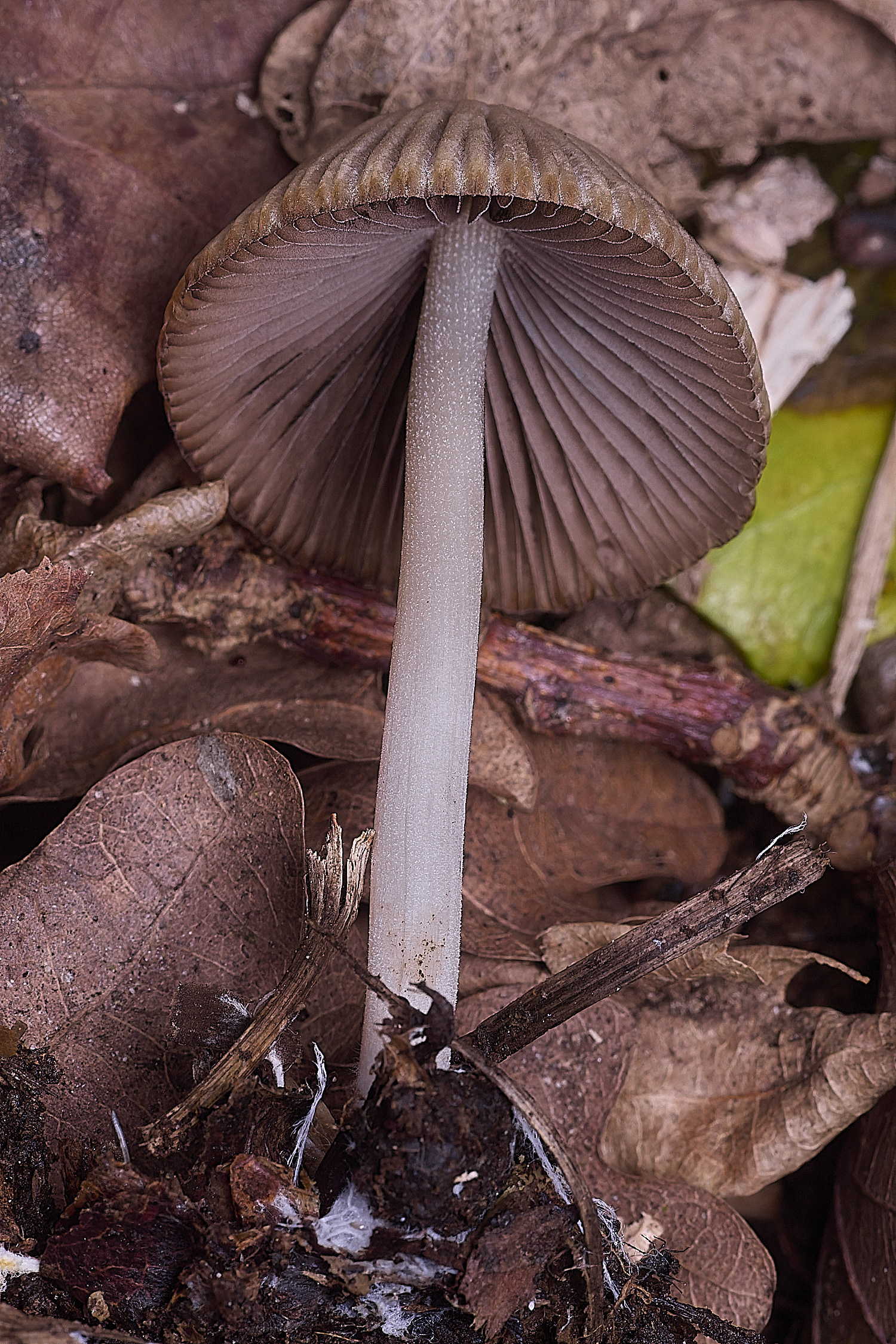
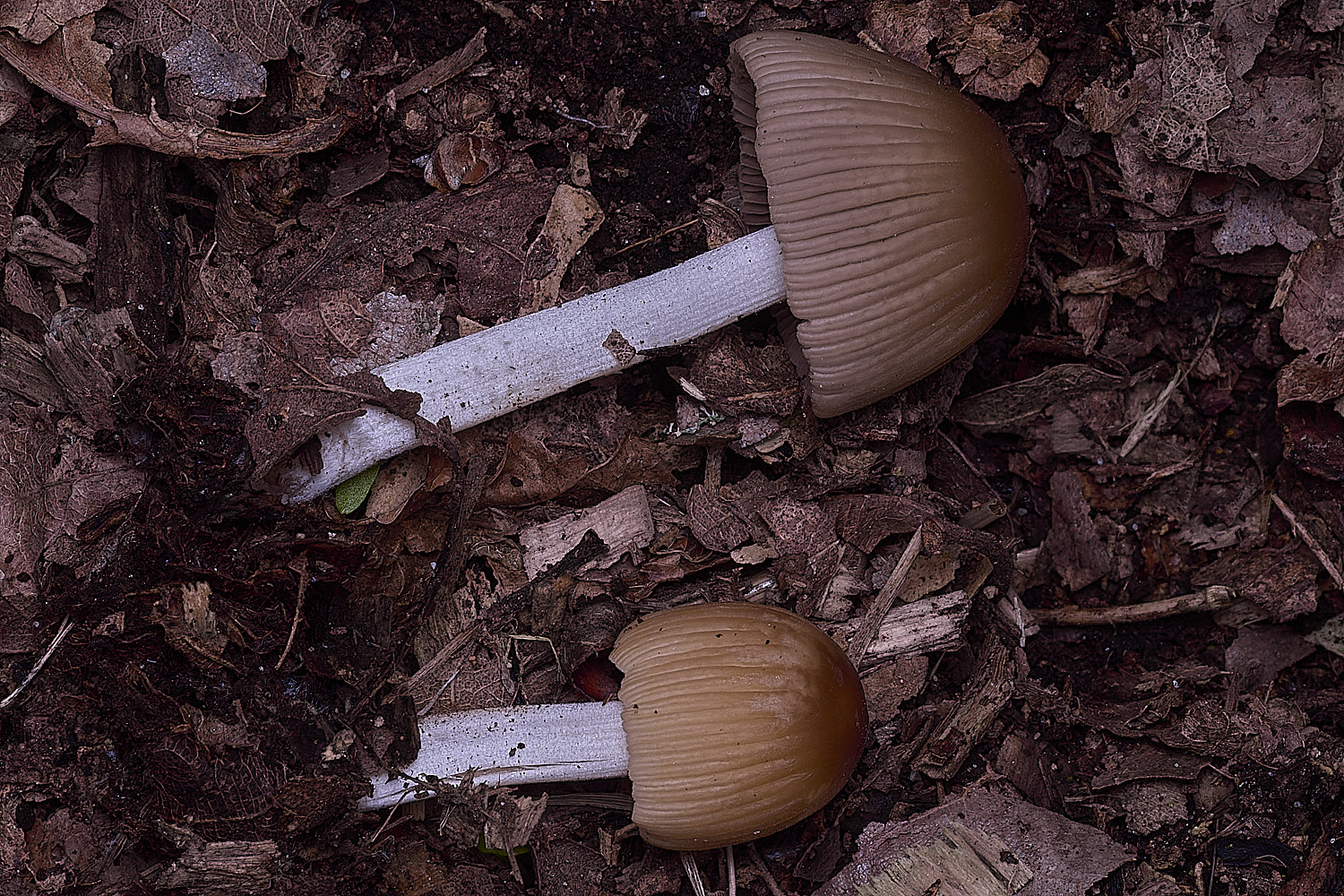
Coprinellus (tulosesus) impatiens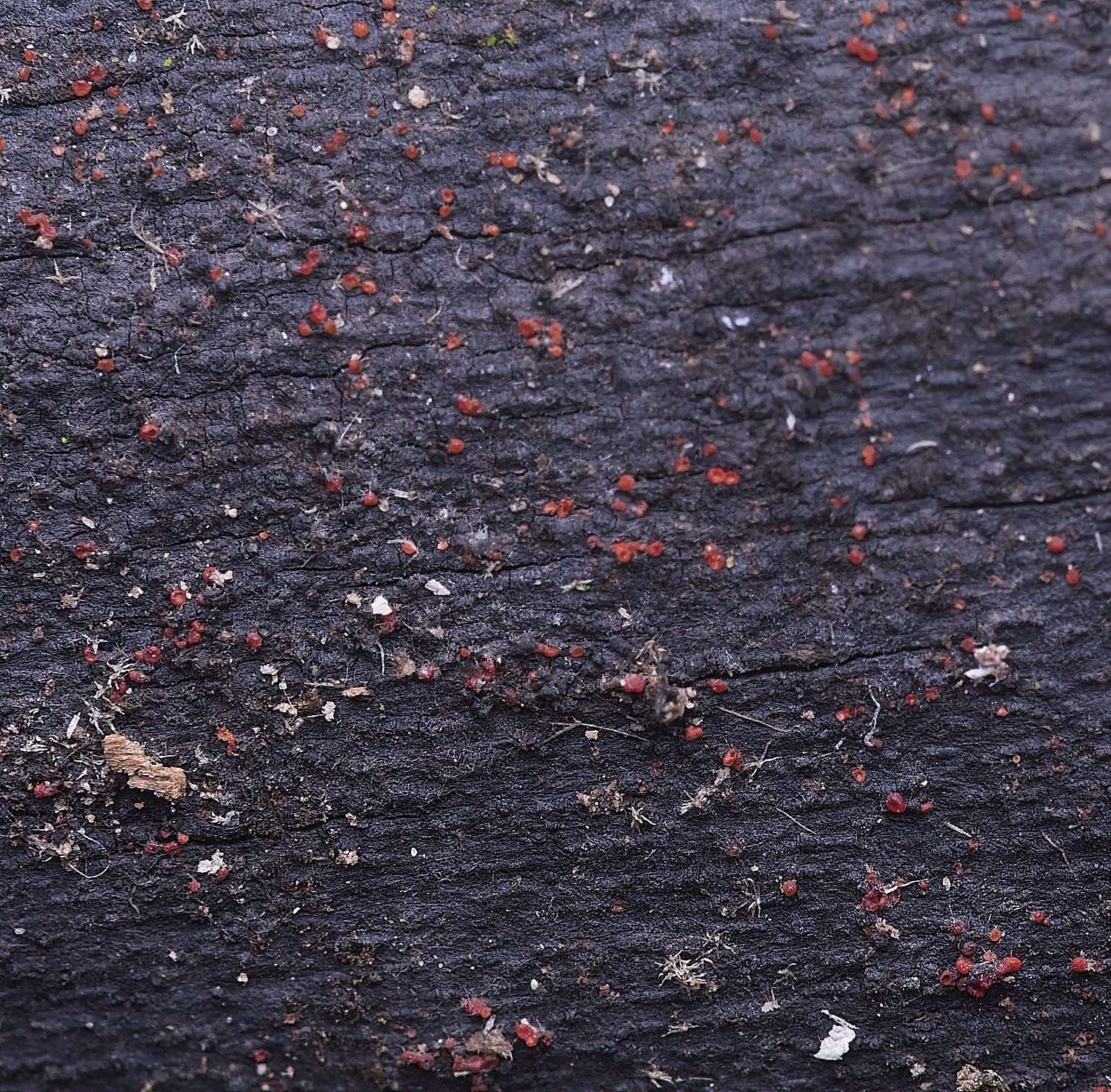
Nectria Sp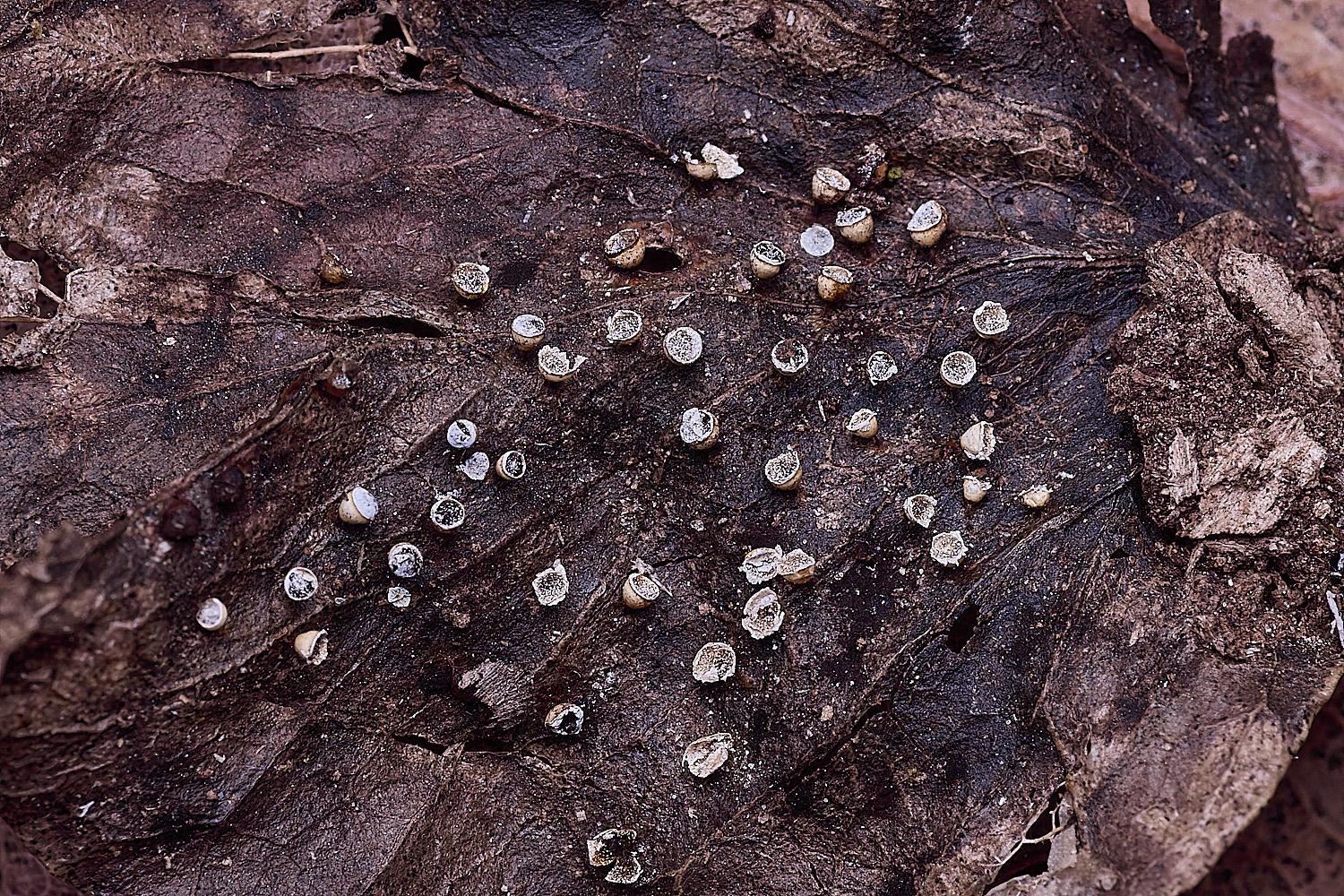
Craterium minutum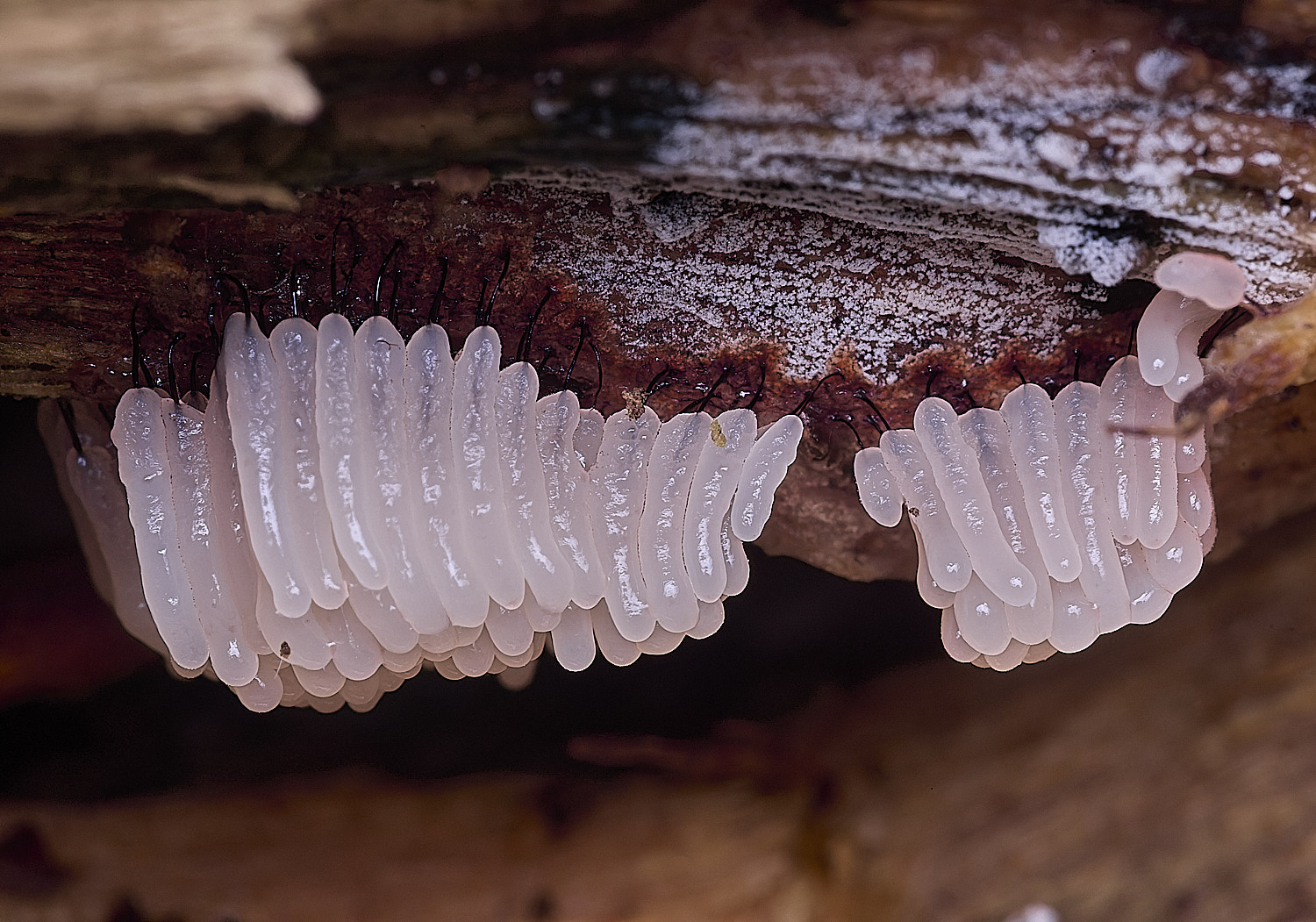
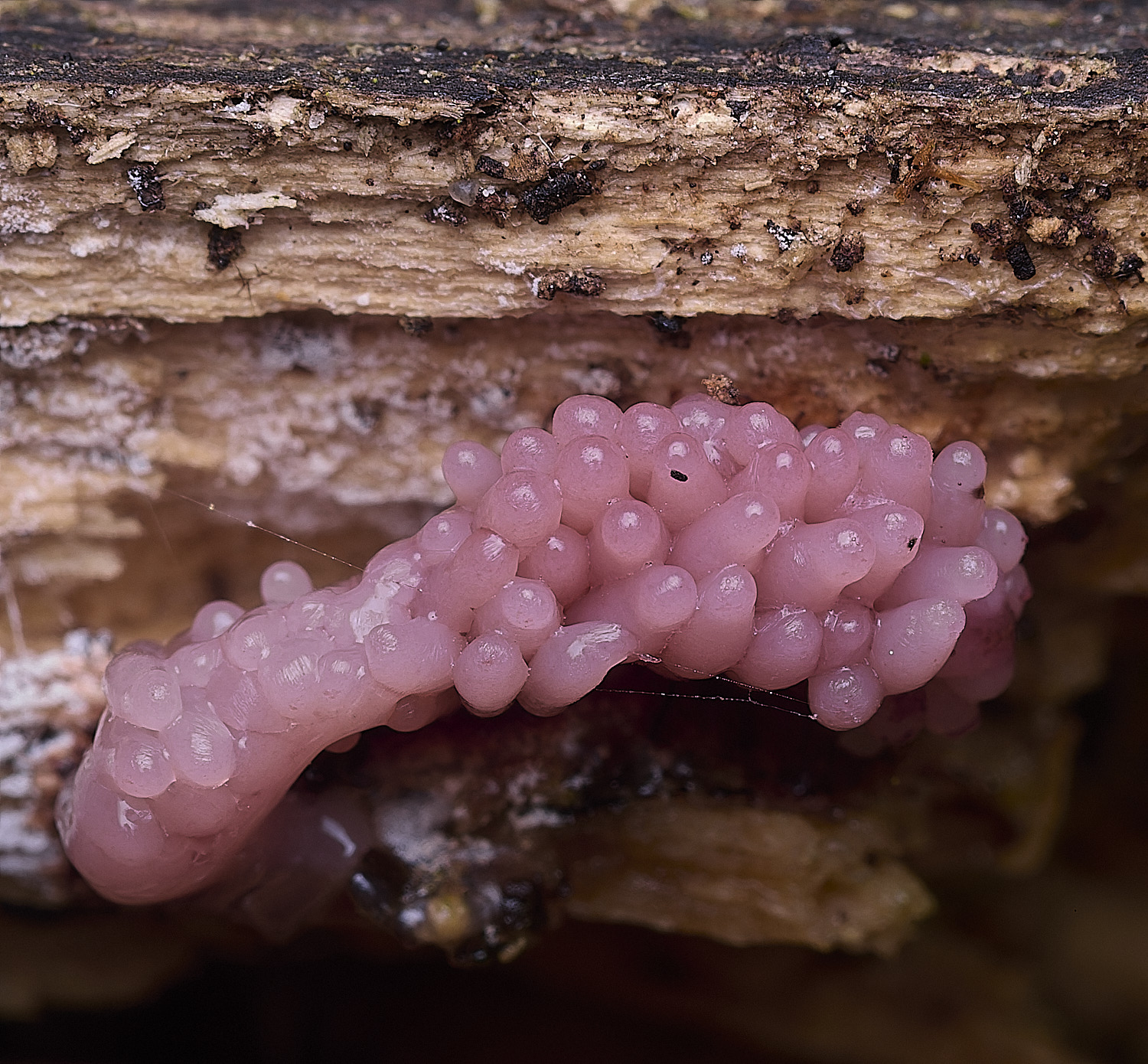
Slime Mold Sp
Stemonitis Sp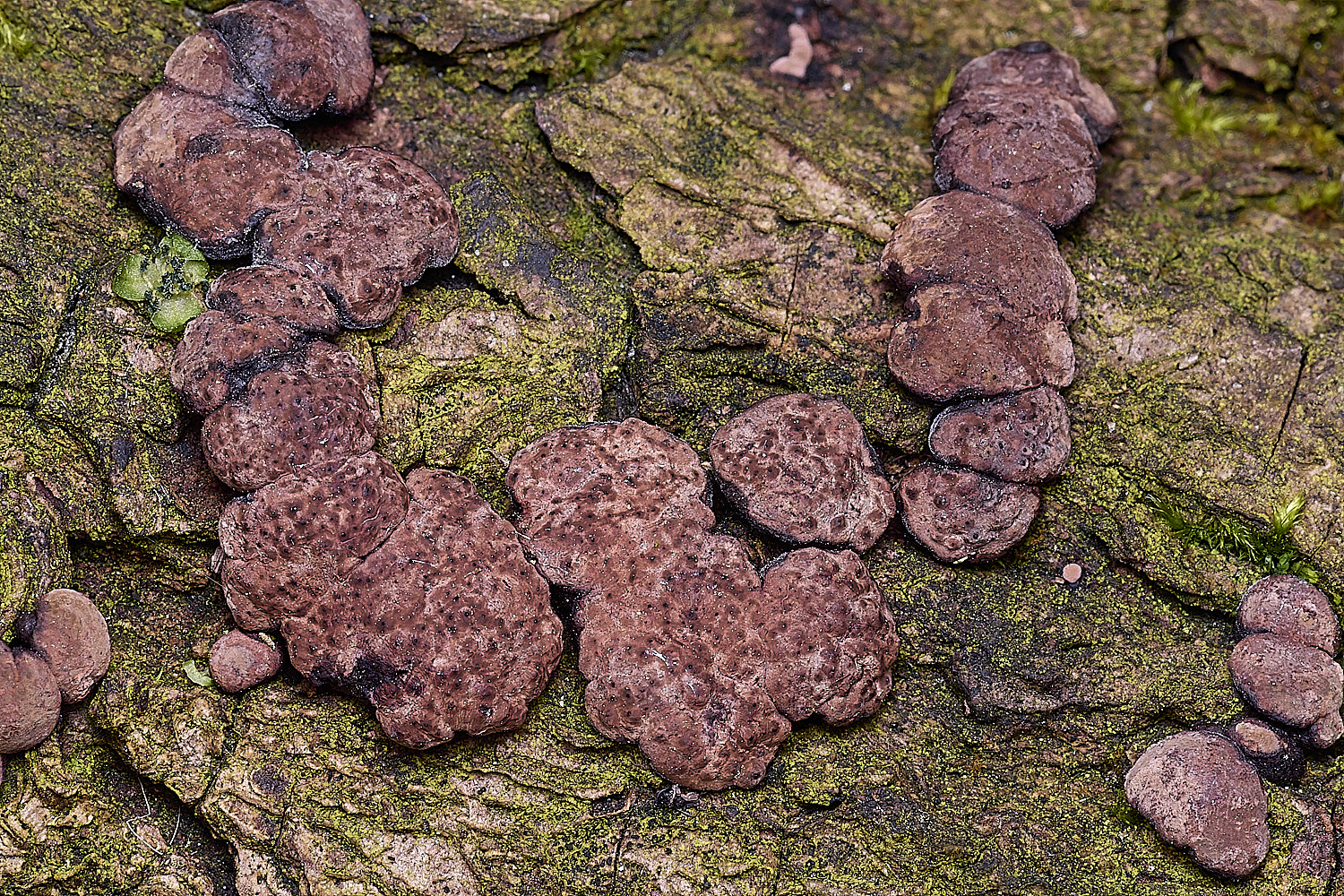
Hypoxylon minutum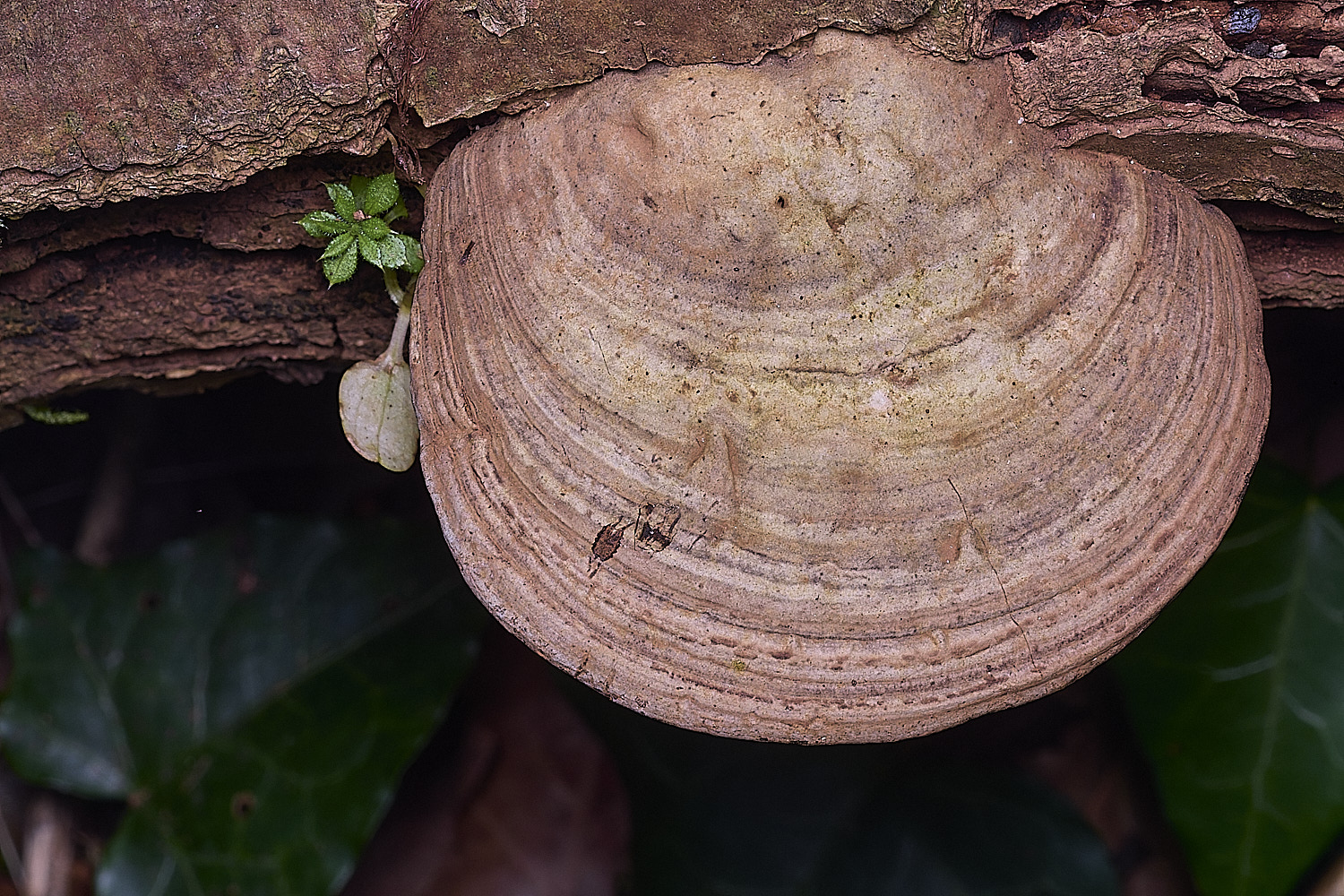
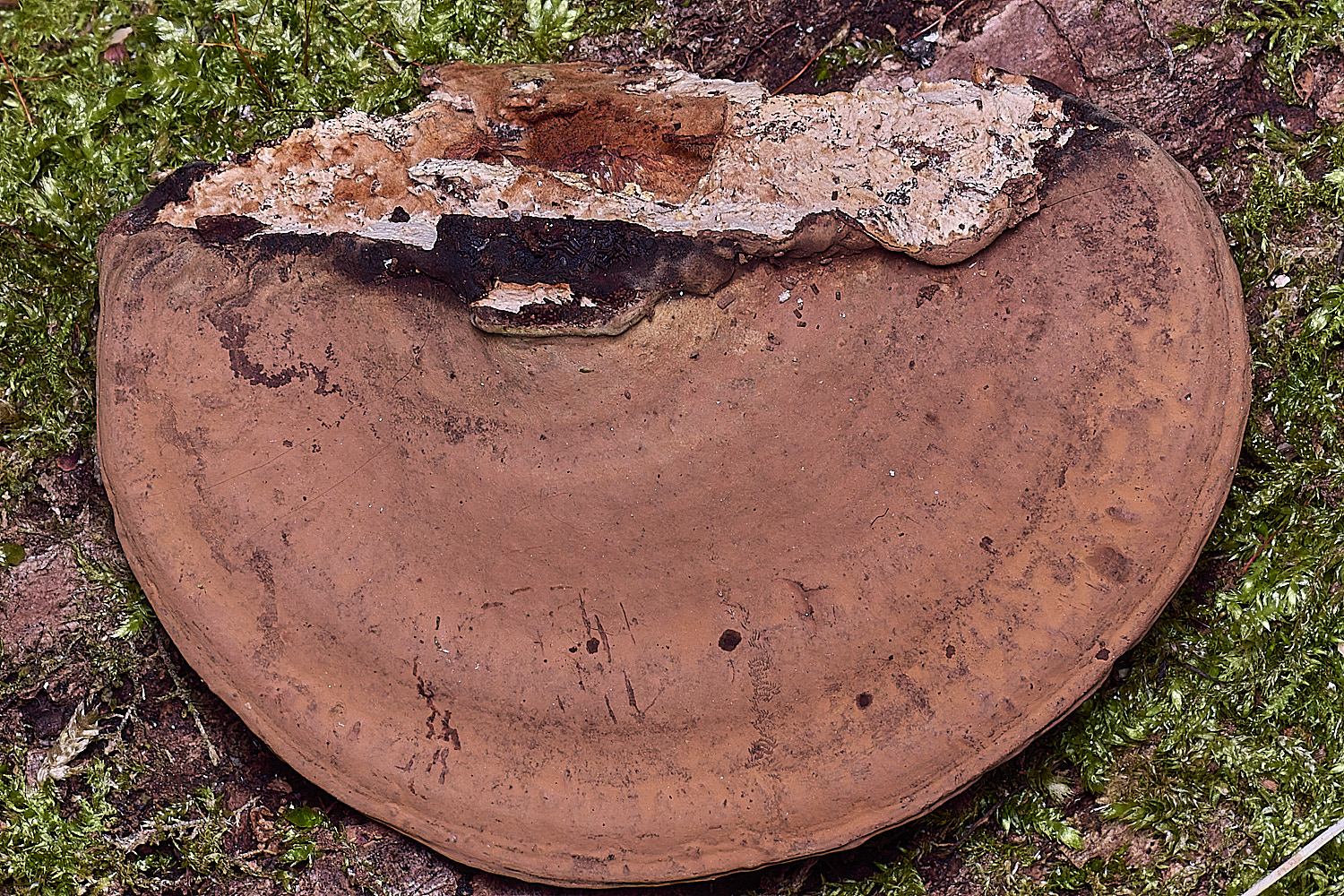
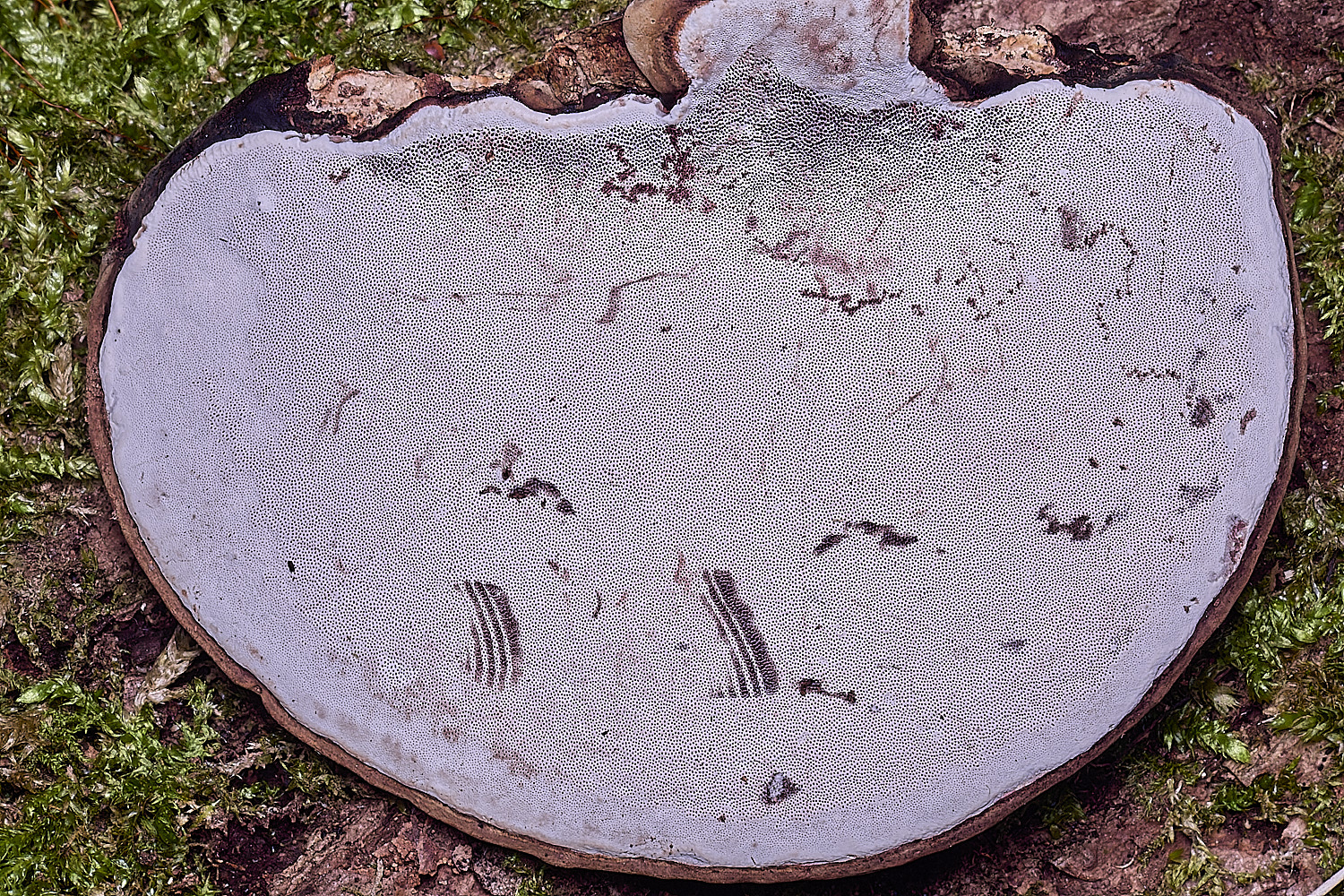
Ganoderma Sp
from AC
with a slighly zoned top - Artist's Bracket (Ganoderma aplanatum)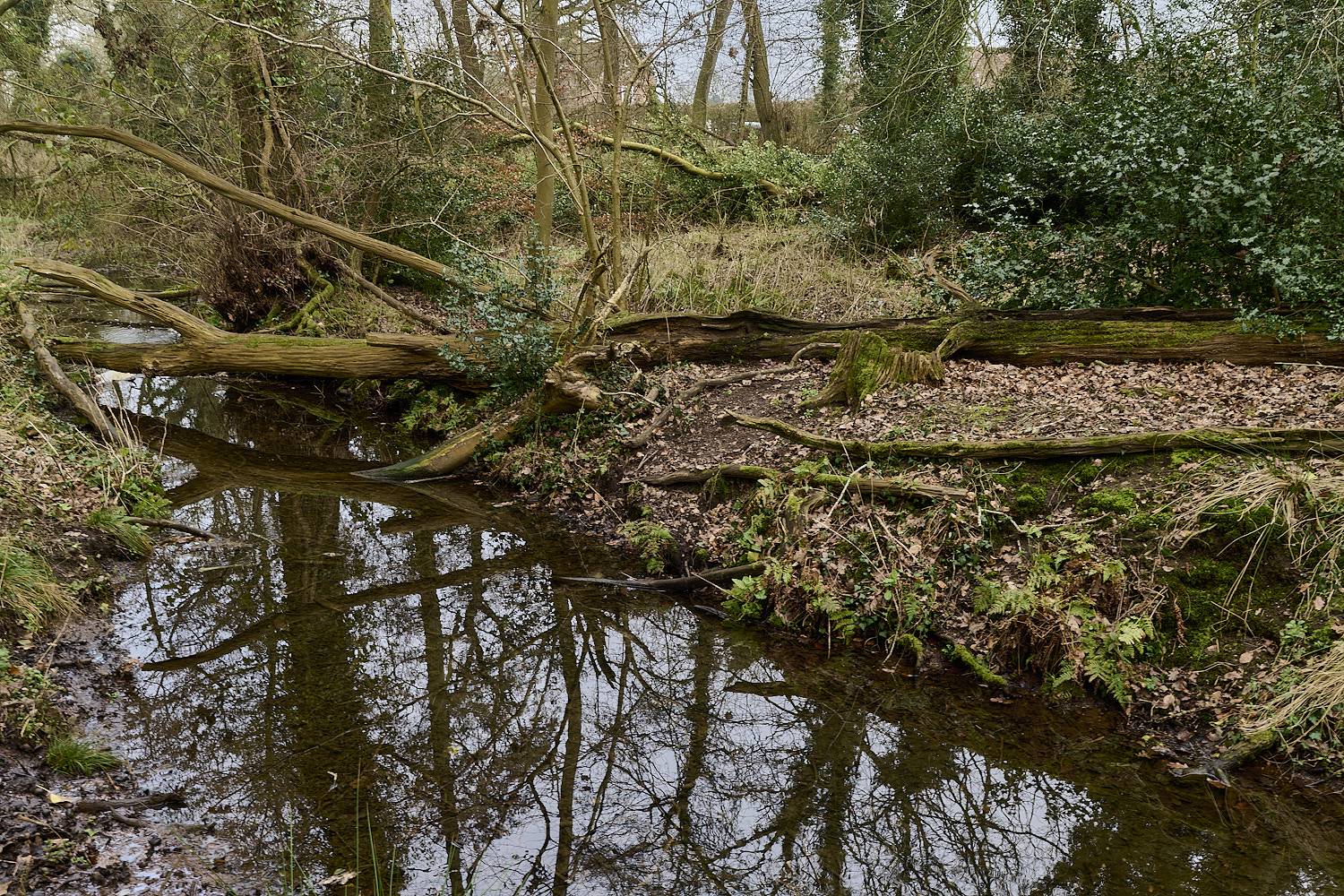
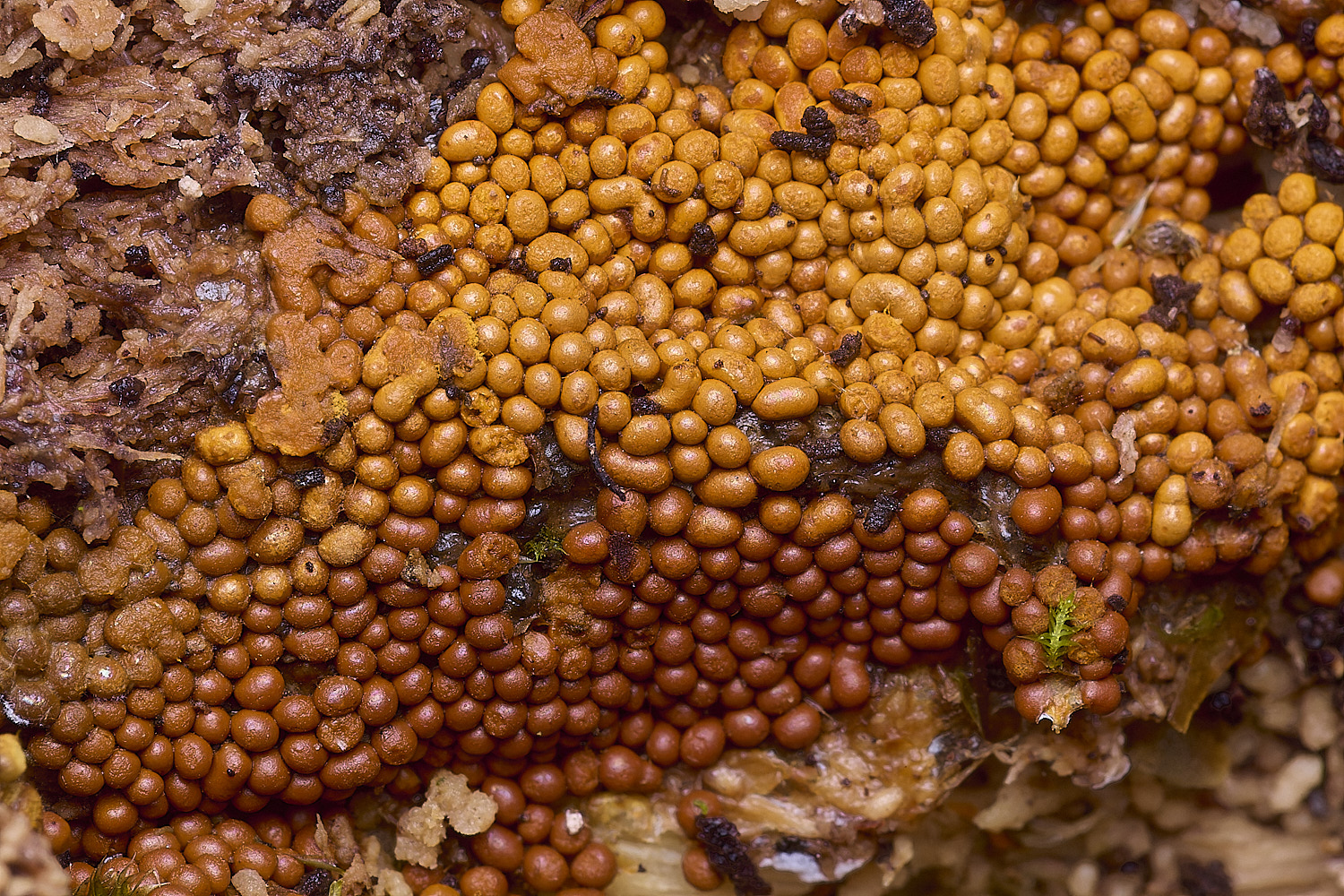
Slime Mold Sp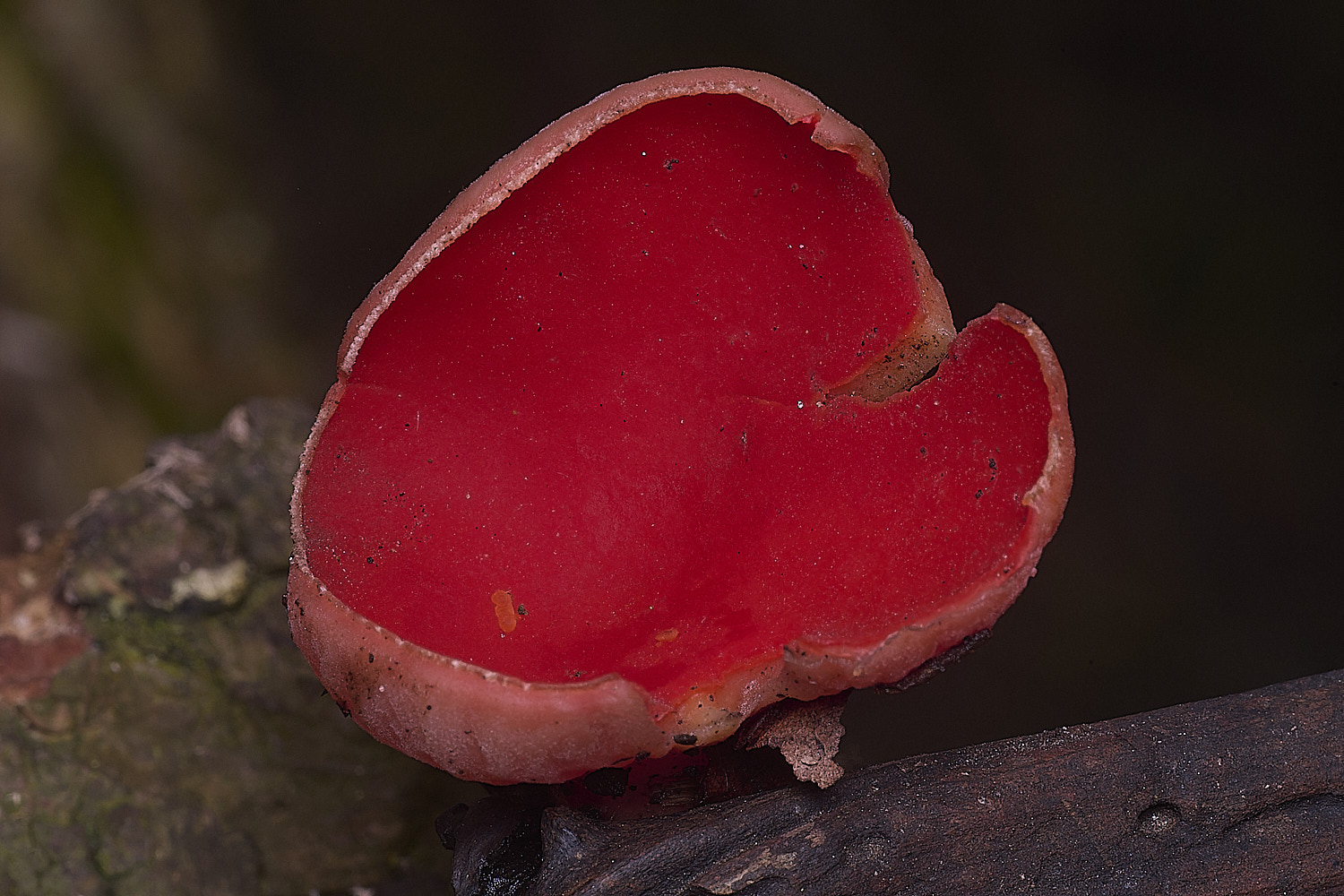
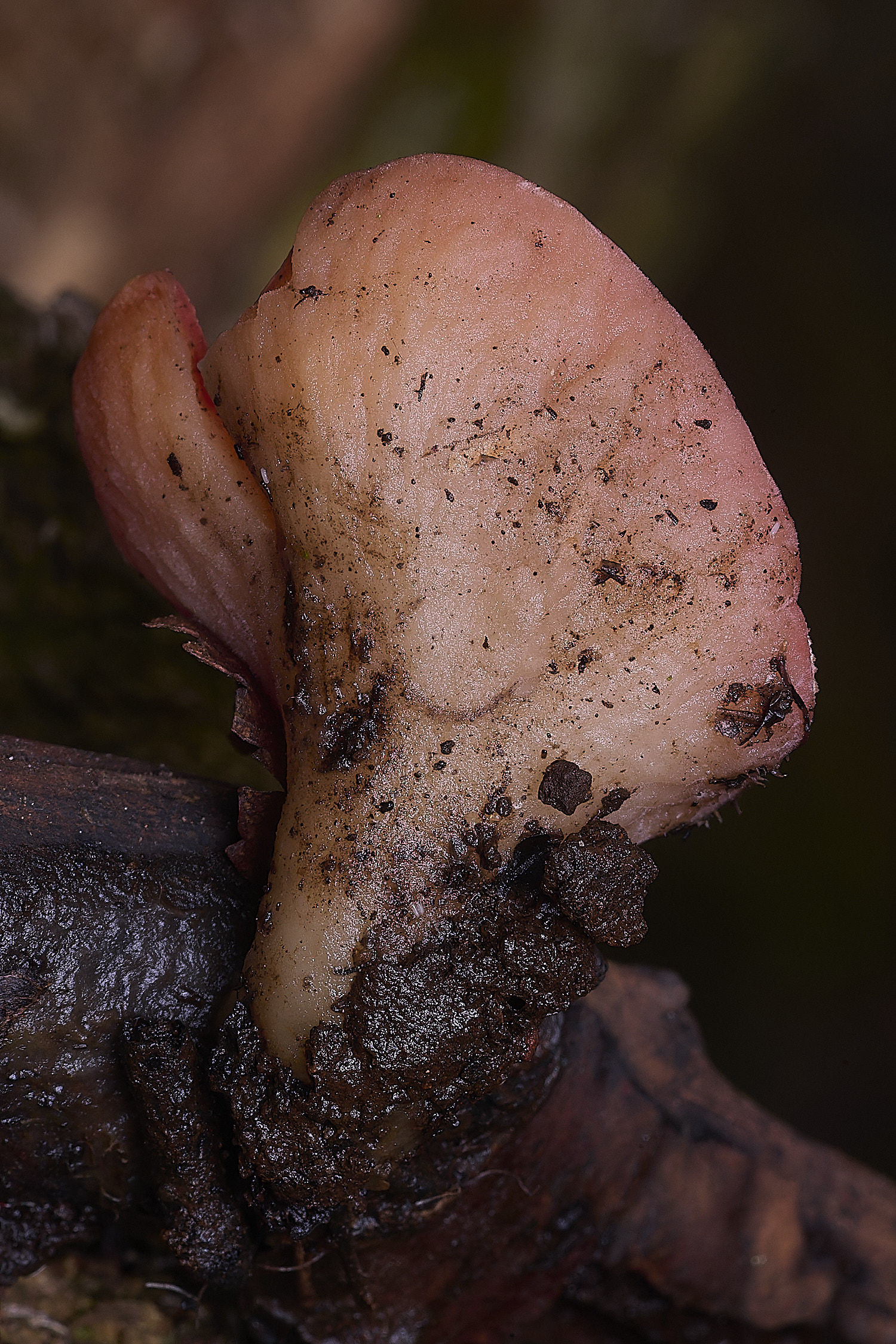
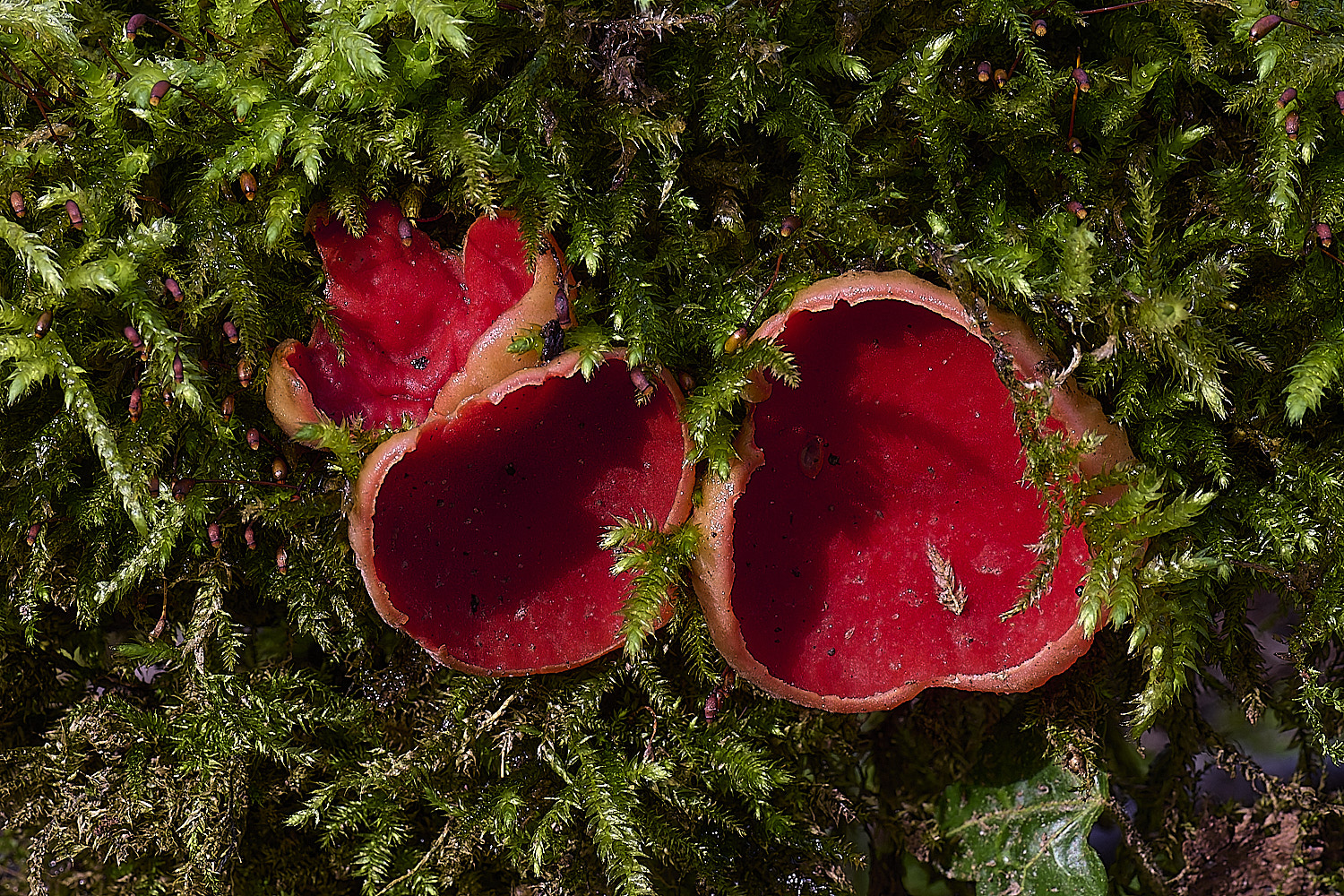
Elfcup Sp (Sarcoscypha Sp)
From TL
On balance: esp width of spores
Scarlet Elfcup (Sacroscypha austriaca)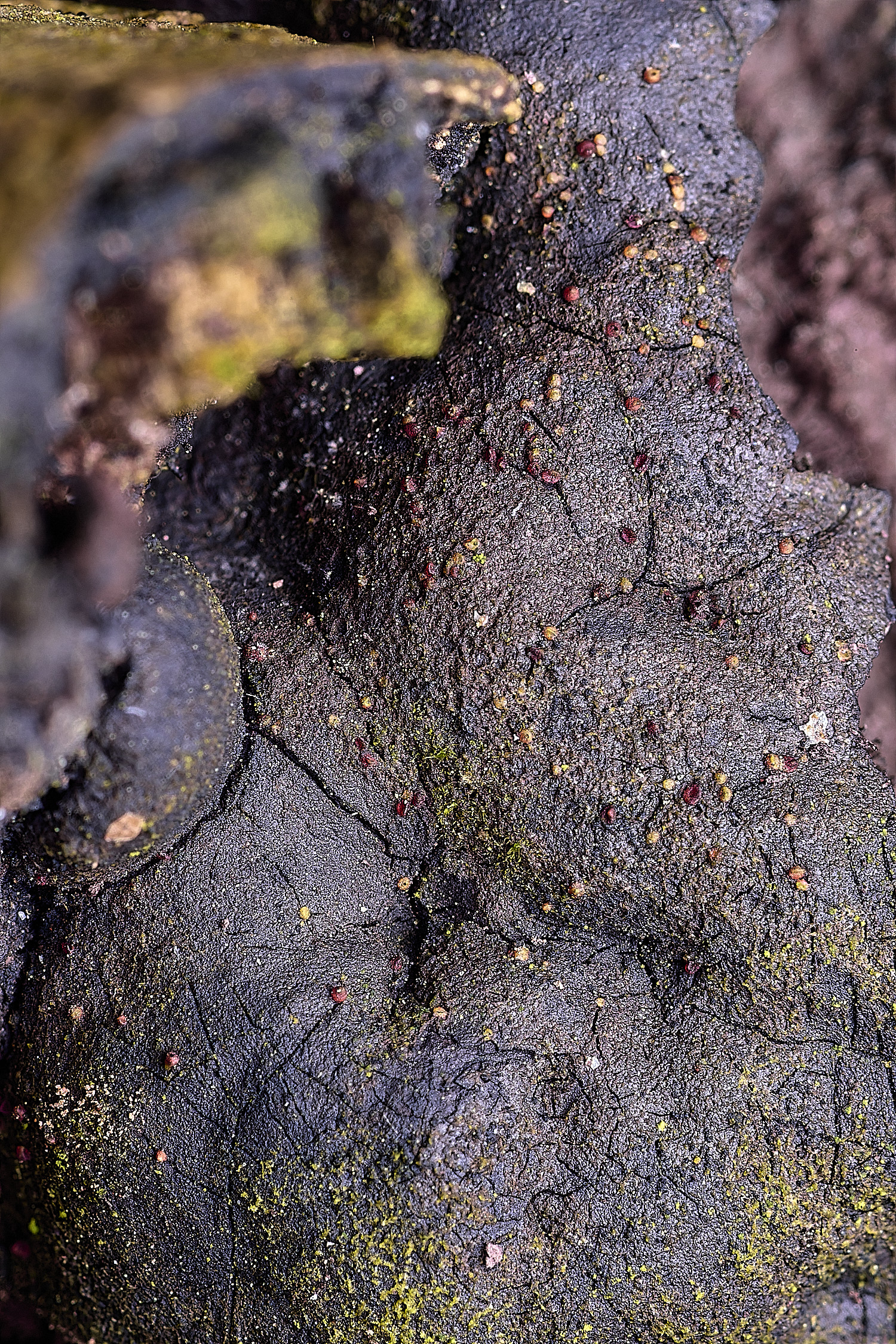
Nectria Sp on King Alfred's Cakes (Daldinia)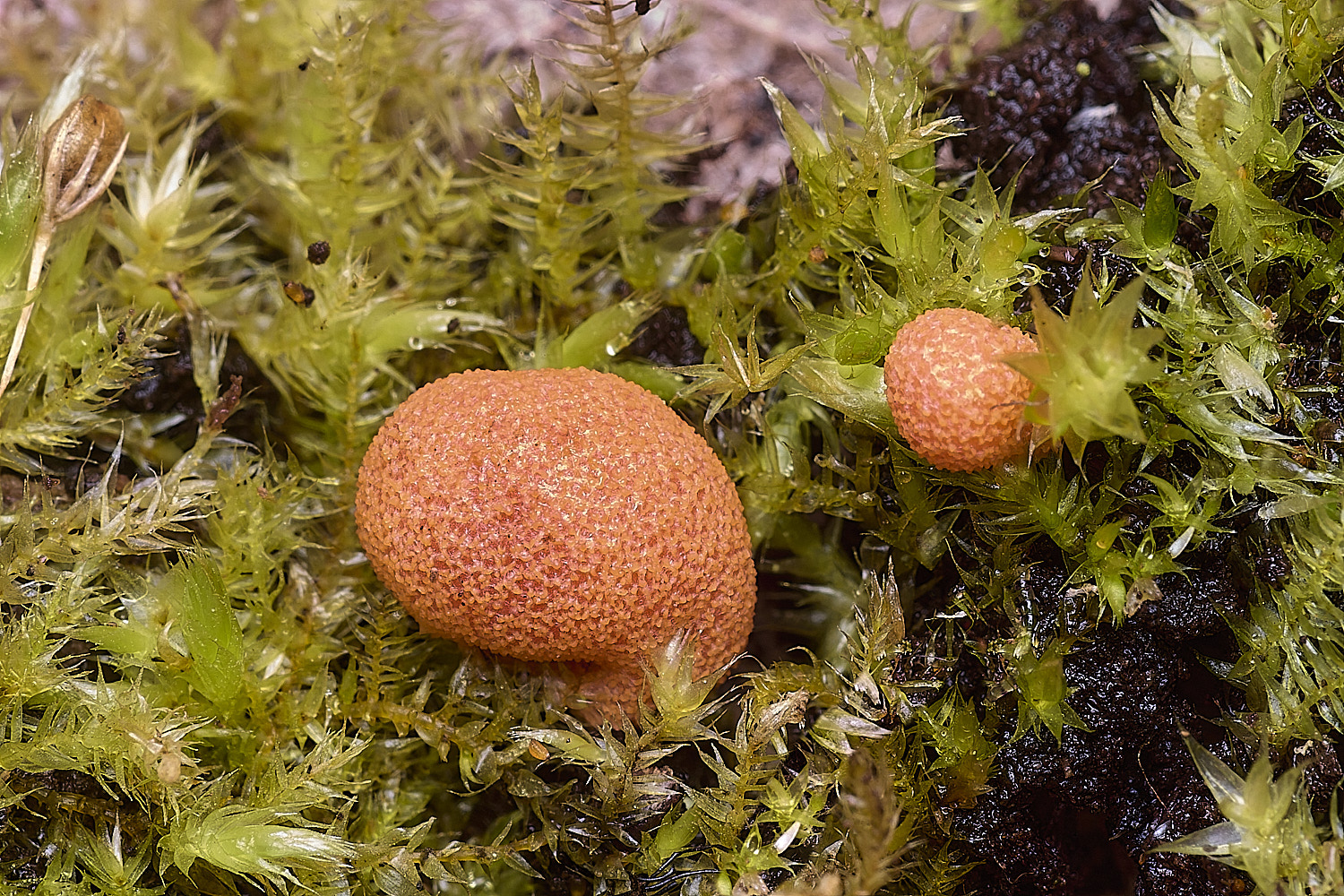
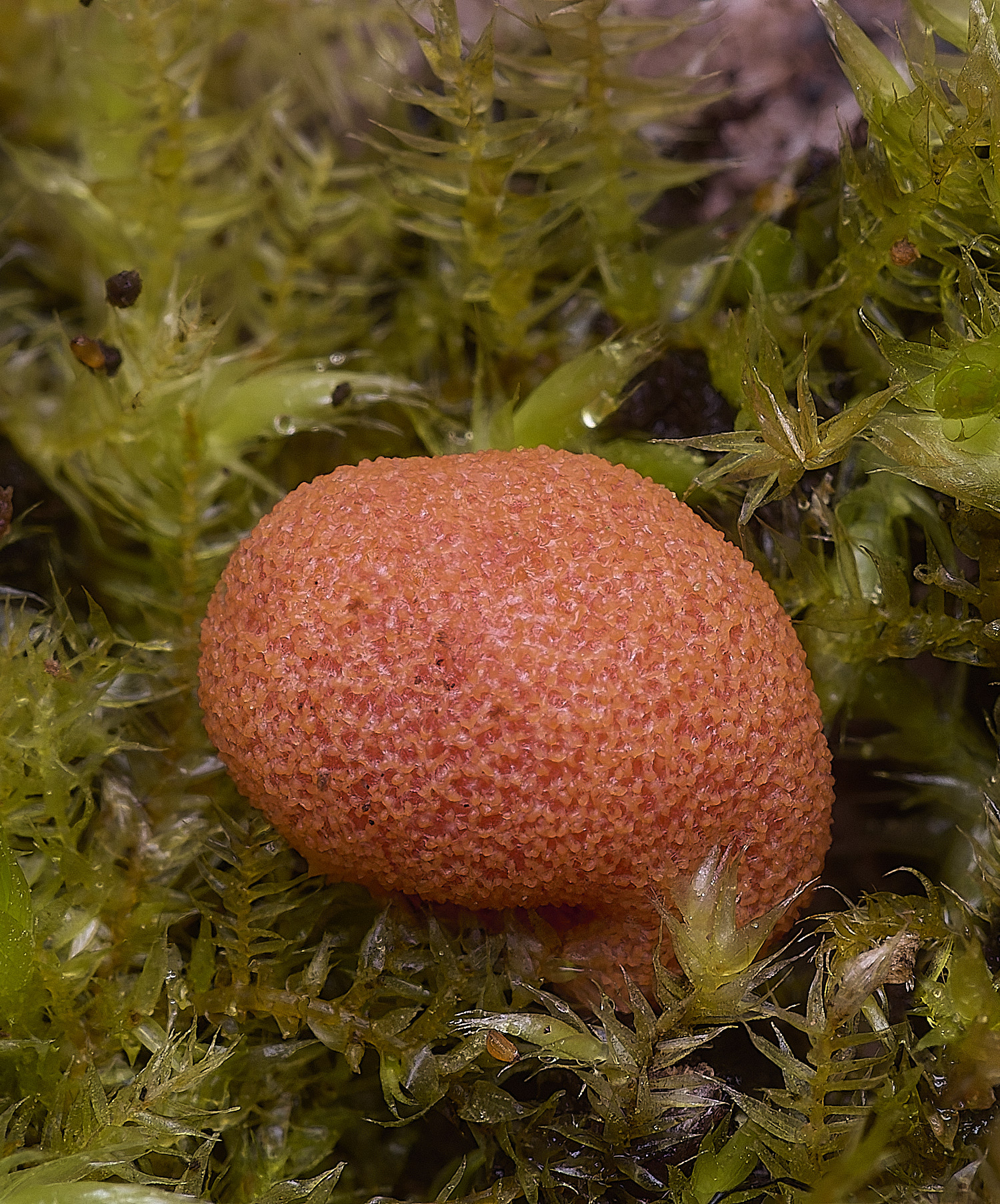
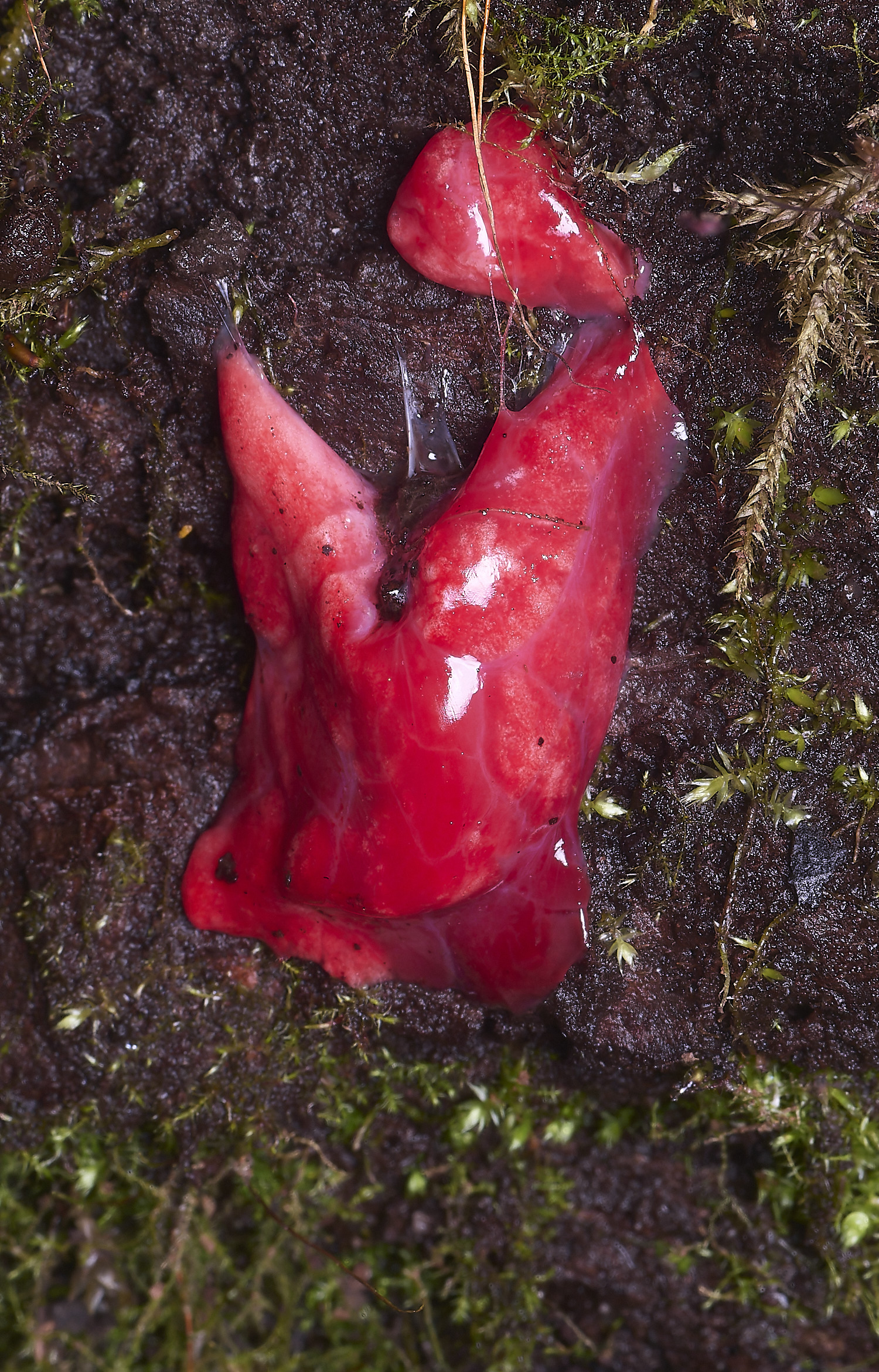
Wolf's Milk (Lycogala Sp)
From TL
Lycogala terrestre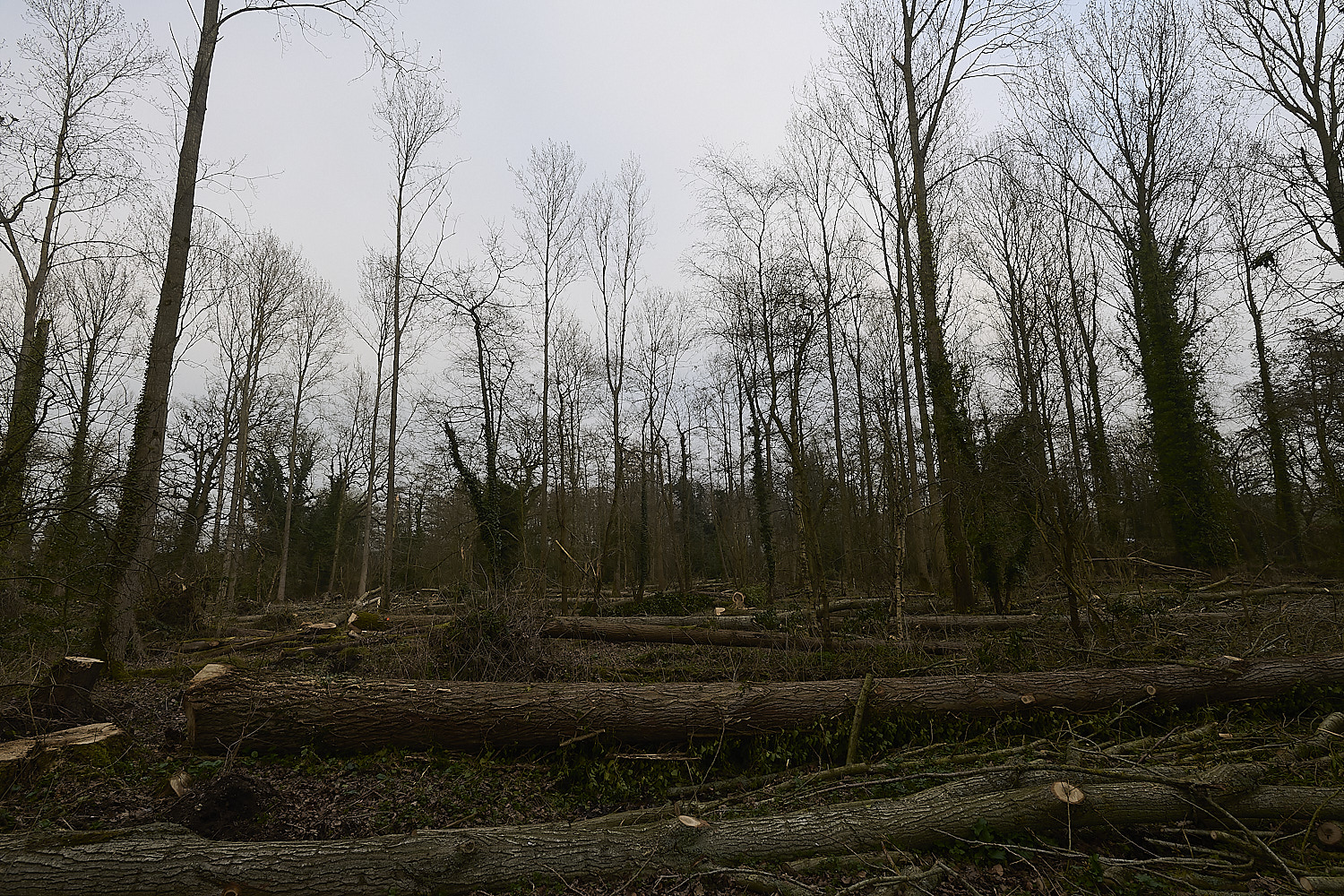
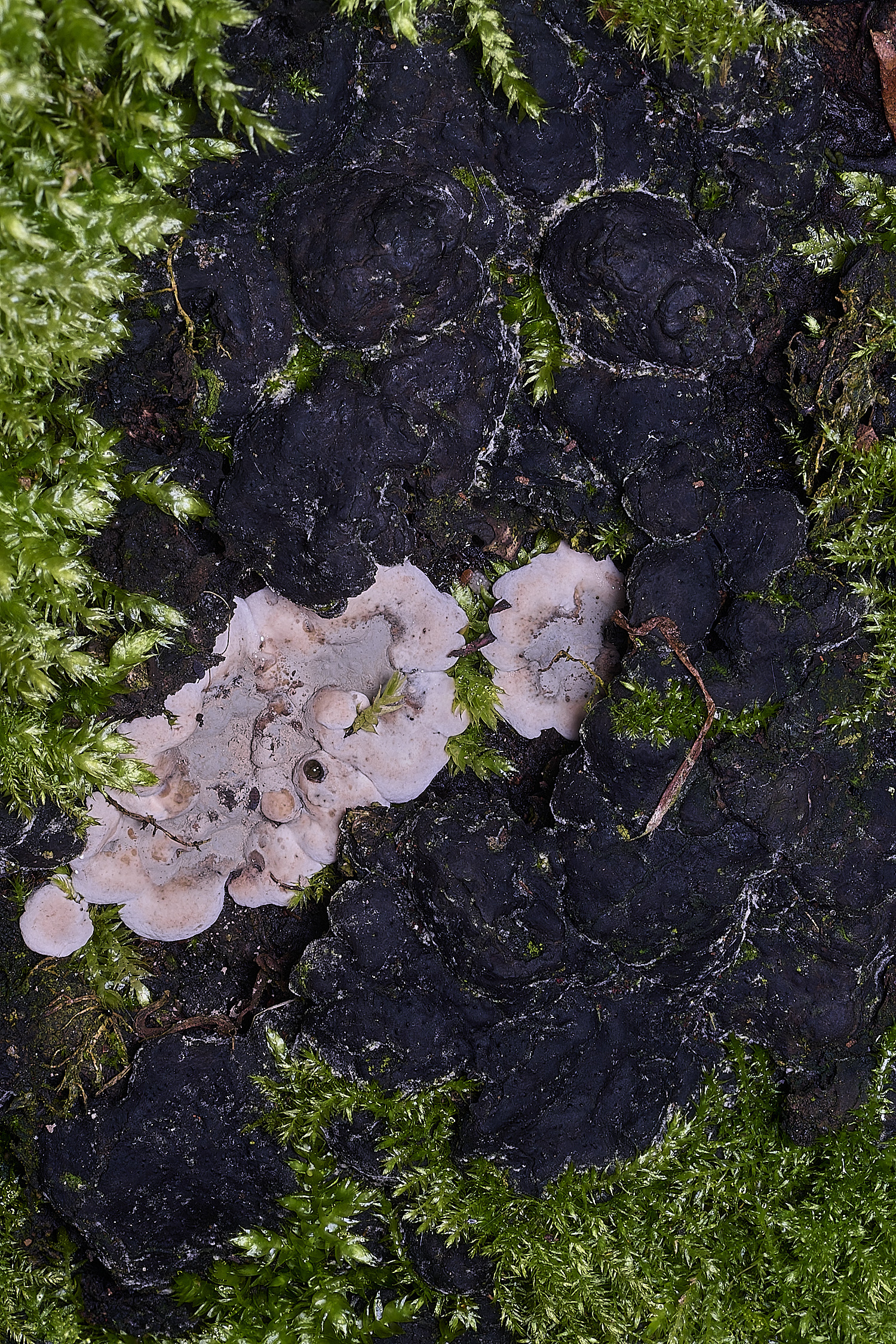
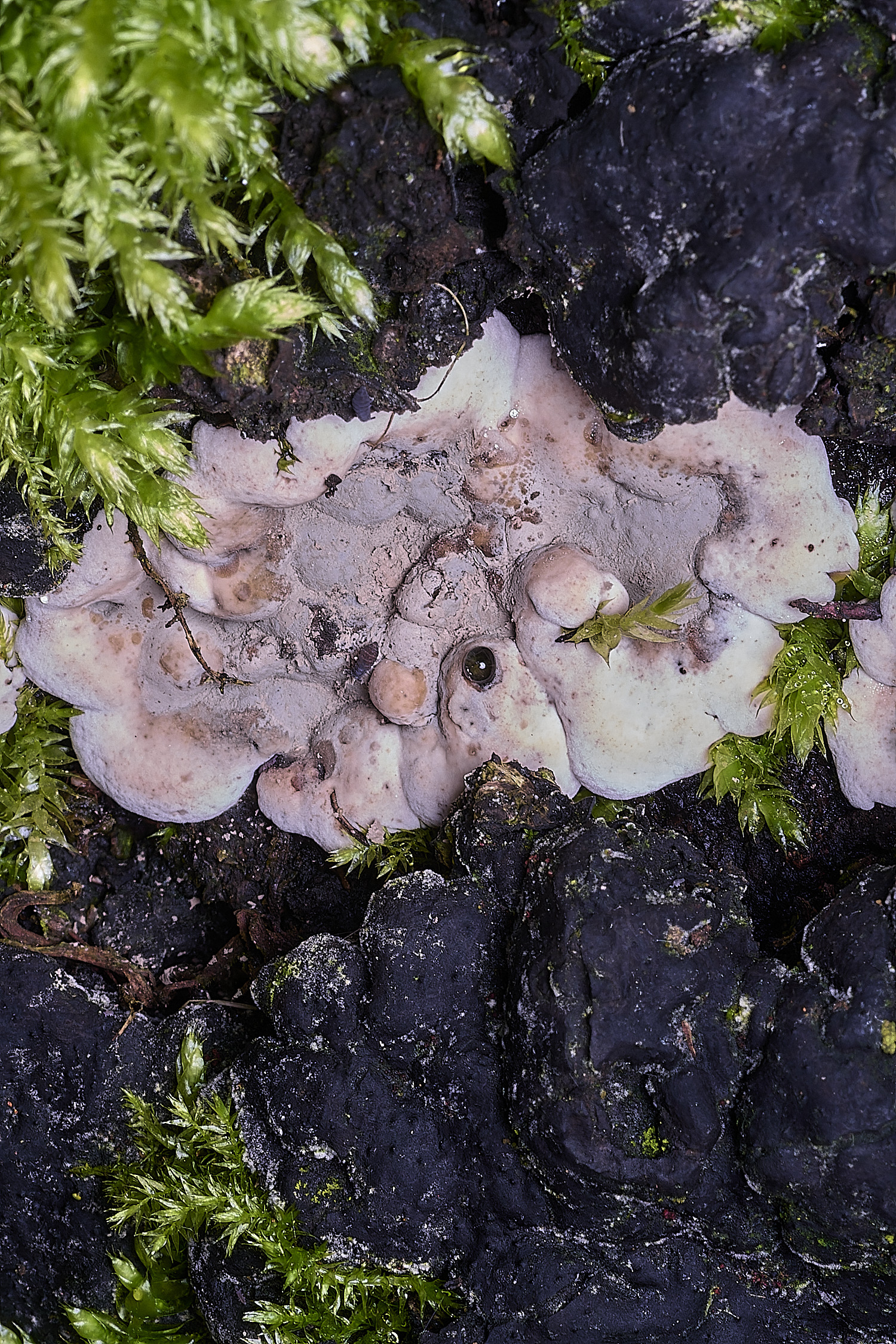
The small red fungi in the bottom right of this image are Cosmospora uceline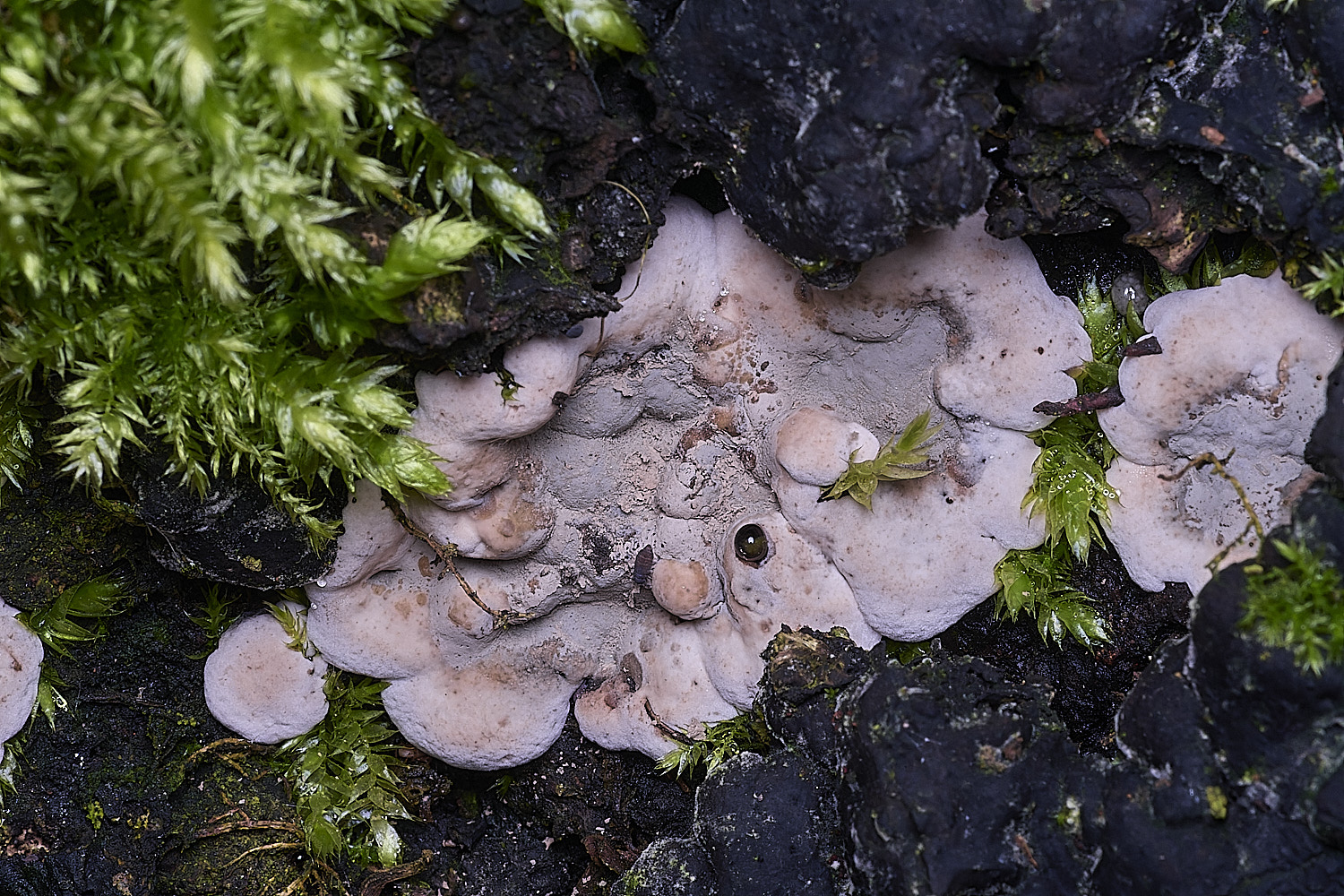
Brittle Cinder (Kretzchmaria deusta)
Brittle Cinder Fungus
Bartlett Tree Experts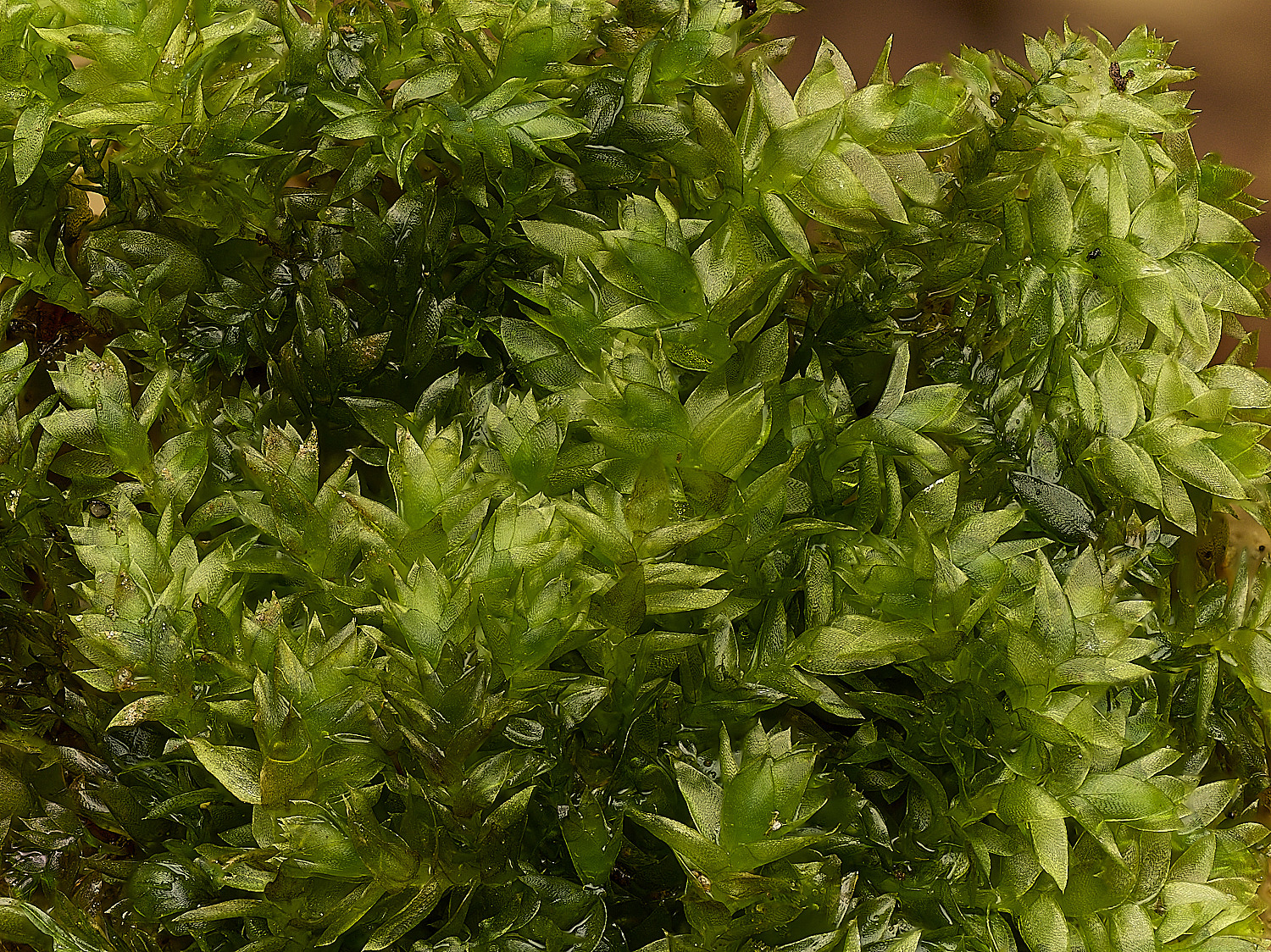
X 40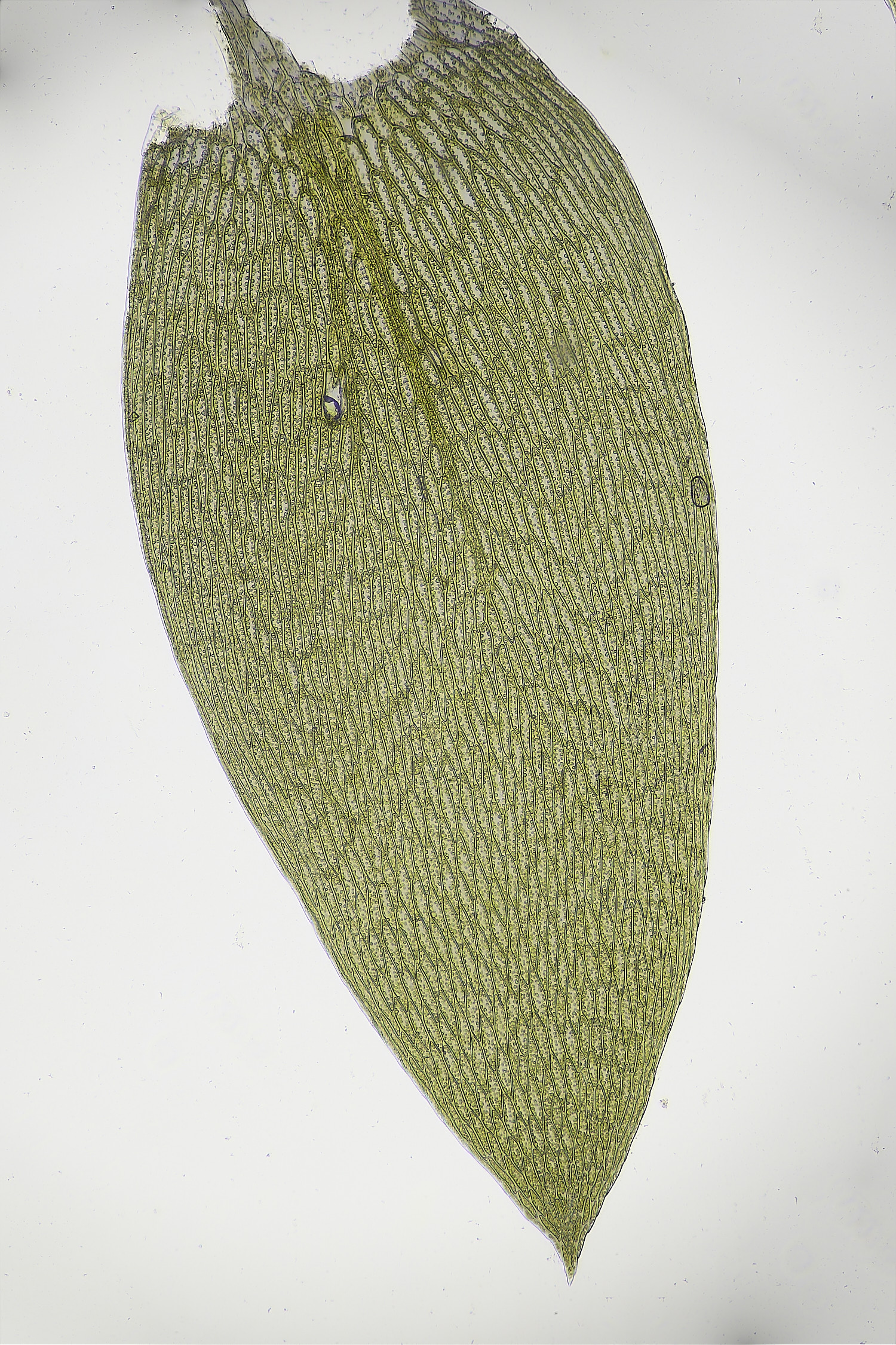
X 100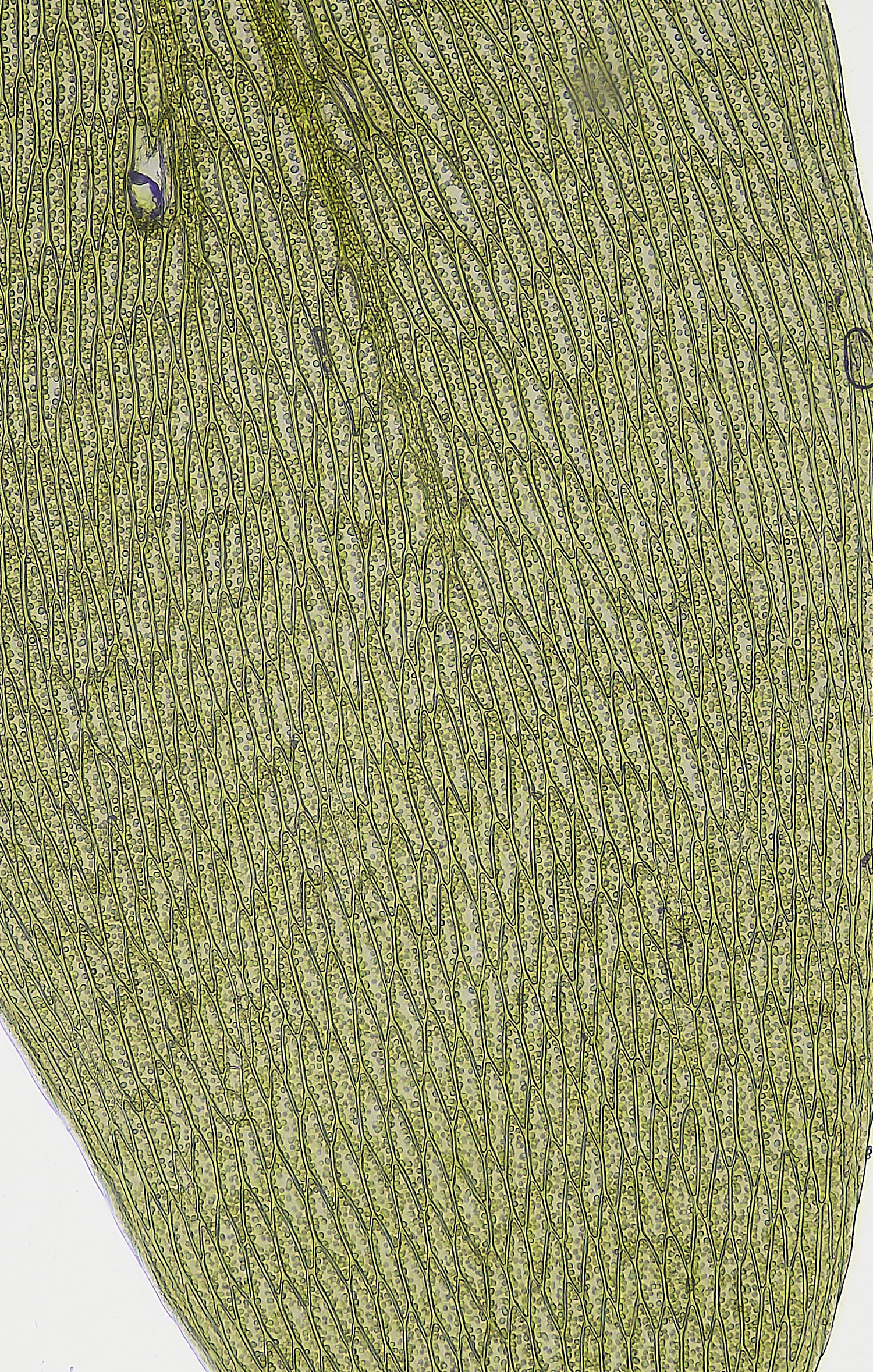
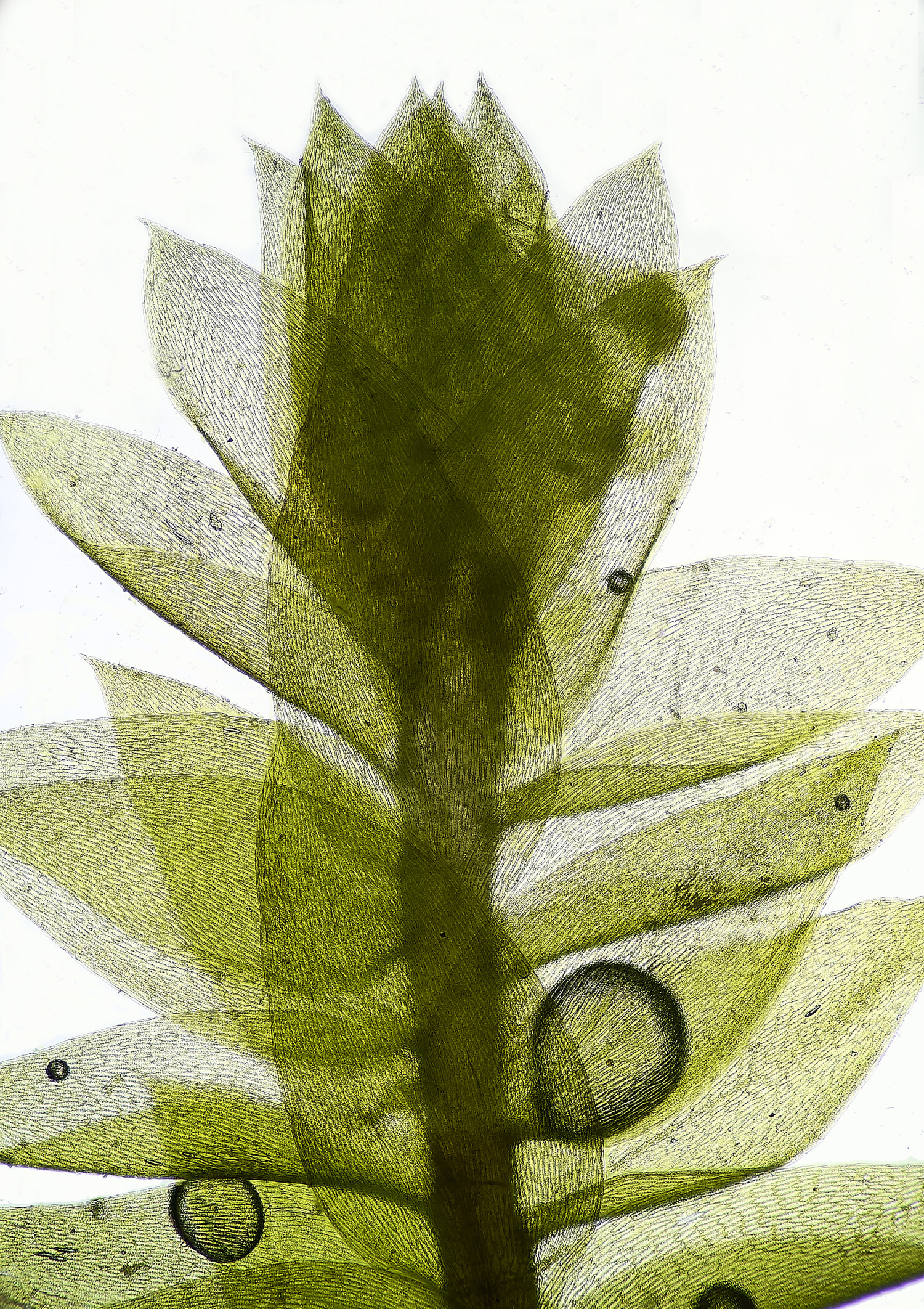
Enlarged to show how the mid-leaf scales scarcely overlap.
Thus
Woodsy Silk-moss (Plagiothecium nemorale)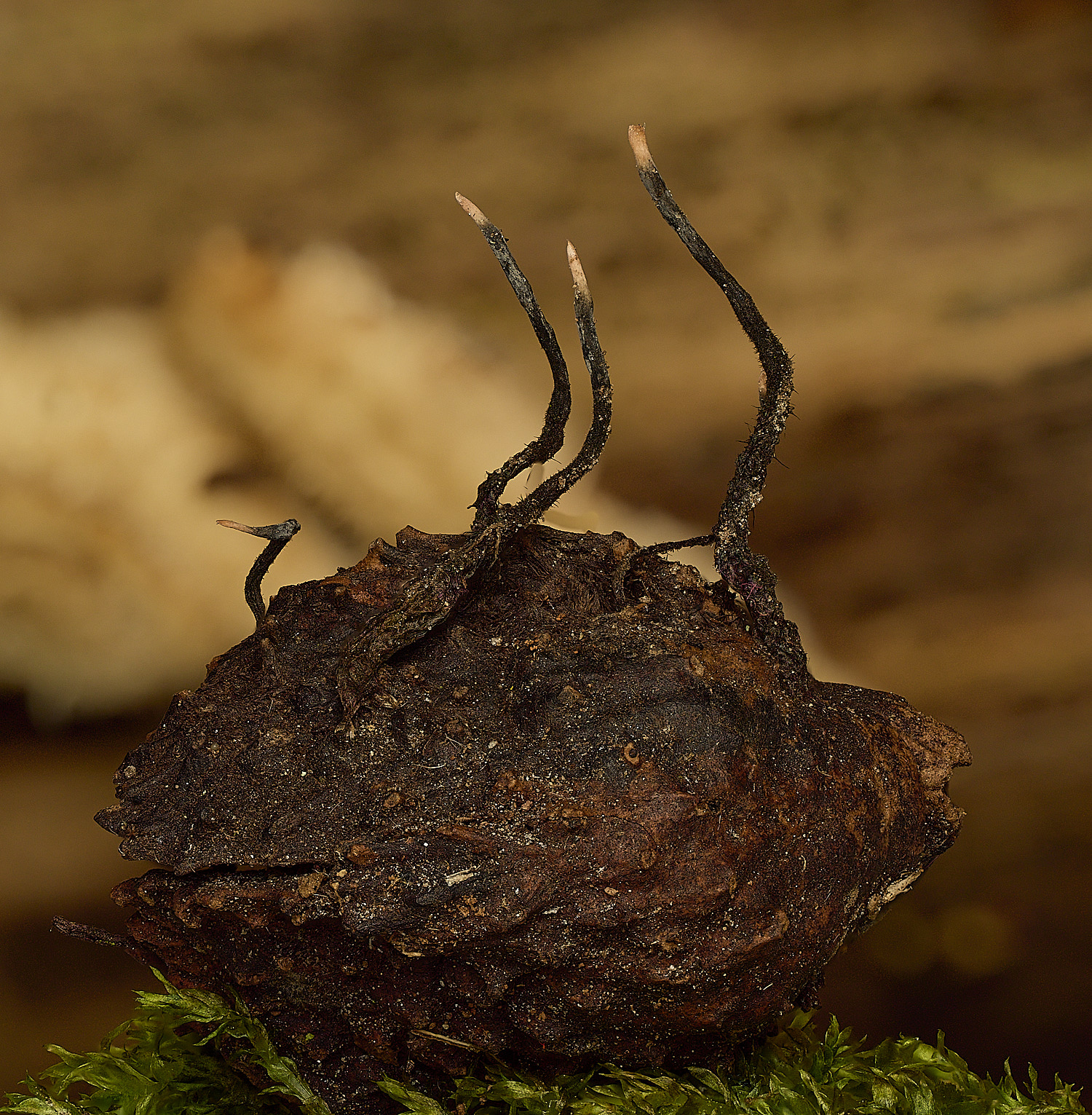
Beech Mast Fungus (Xylaria carpophila)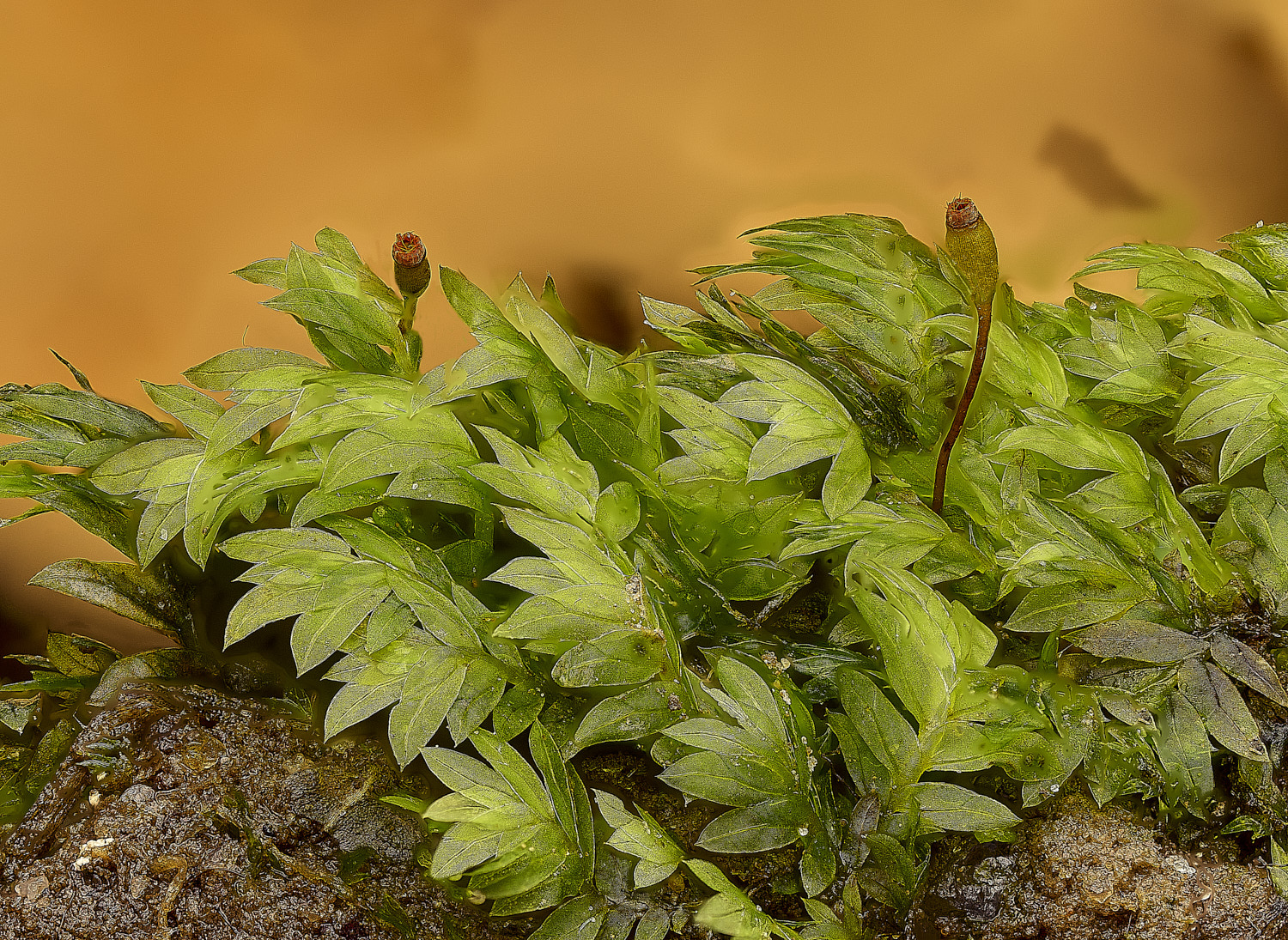
Lesser Pocket-moss (Fissidens bryoides)
You can see the line of border cells to the edge of the leaf, which is characteristic of this species.
The other common species does not have this feature and is often much larger.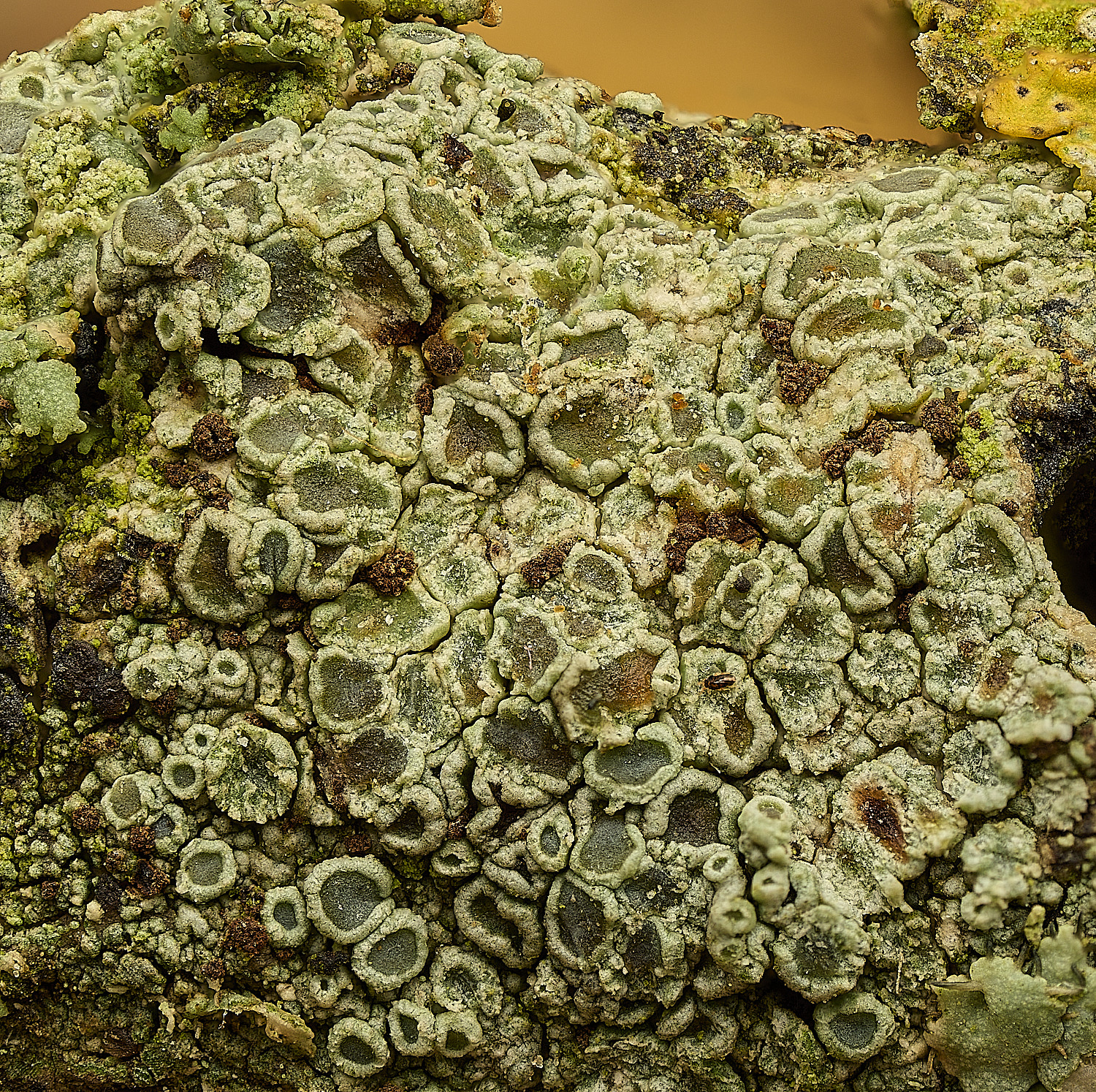
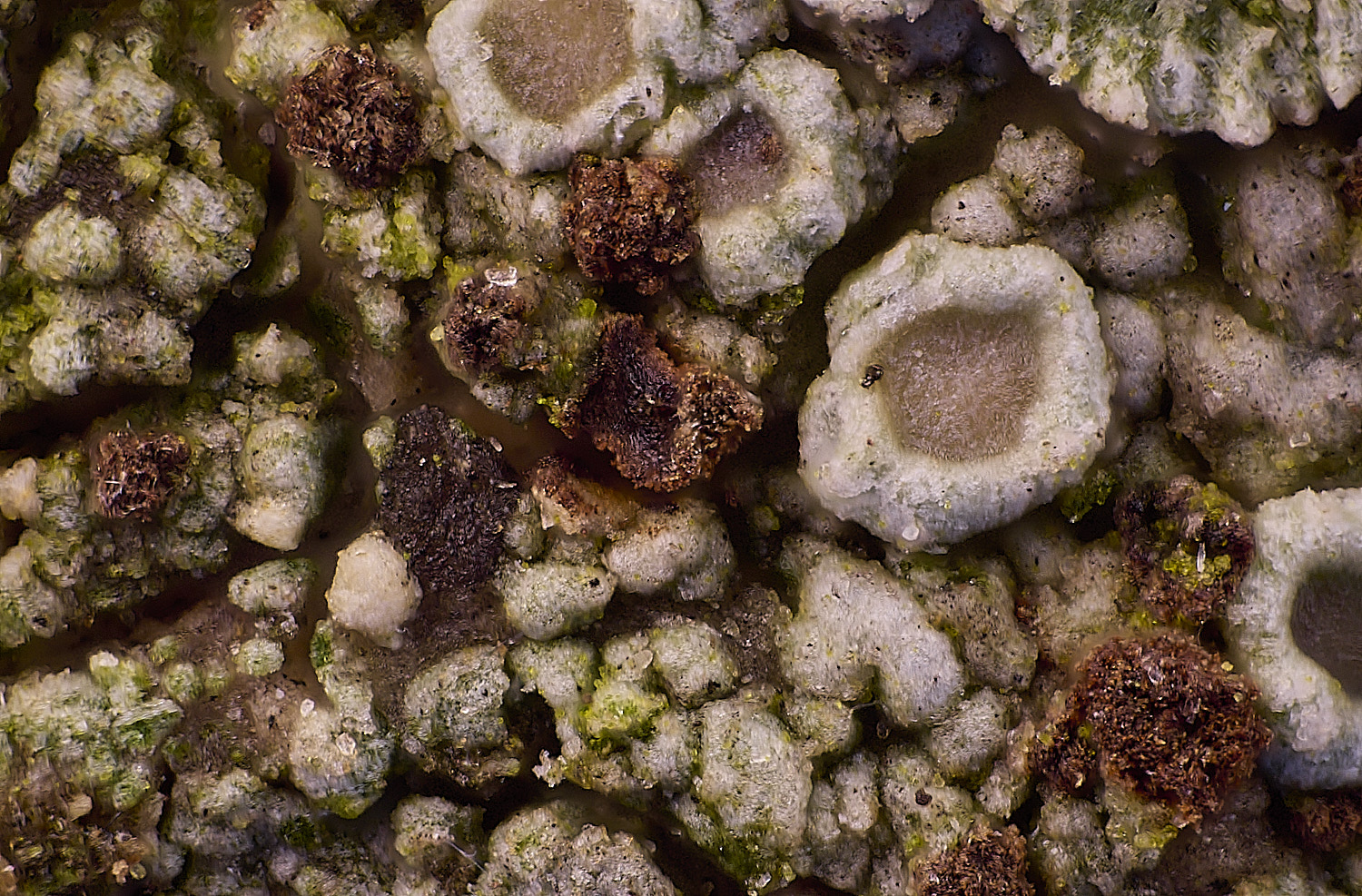
Lichenicolous Fungi Unguiculariopsis thallophila on Lecanora hybocarpa.
From
Dorset Nature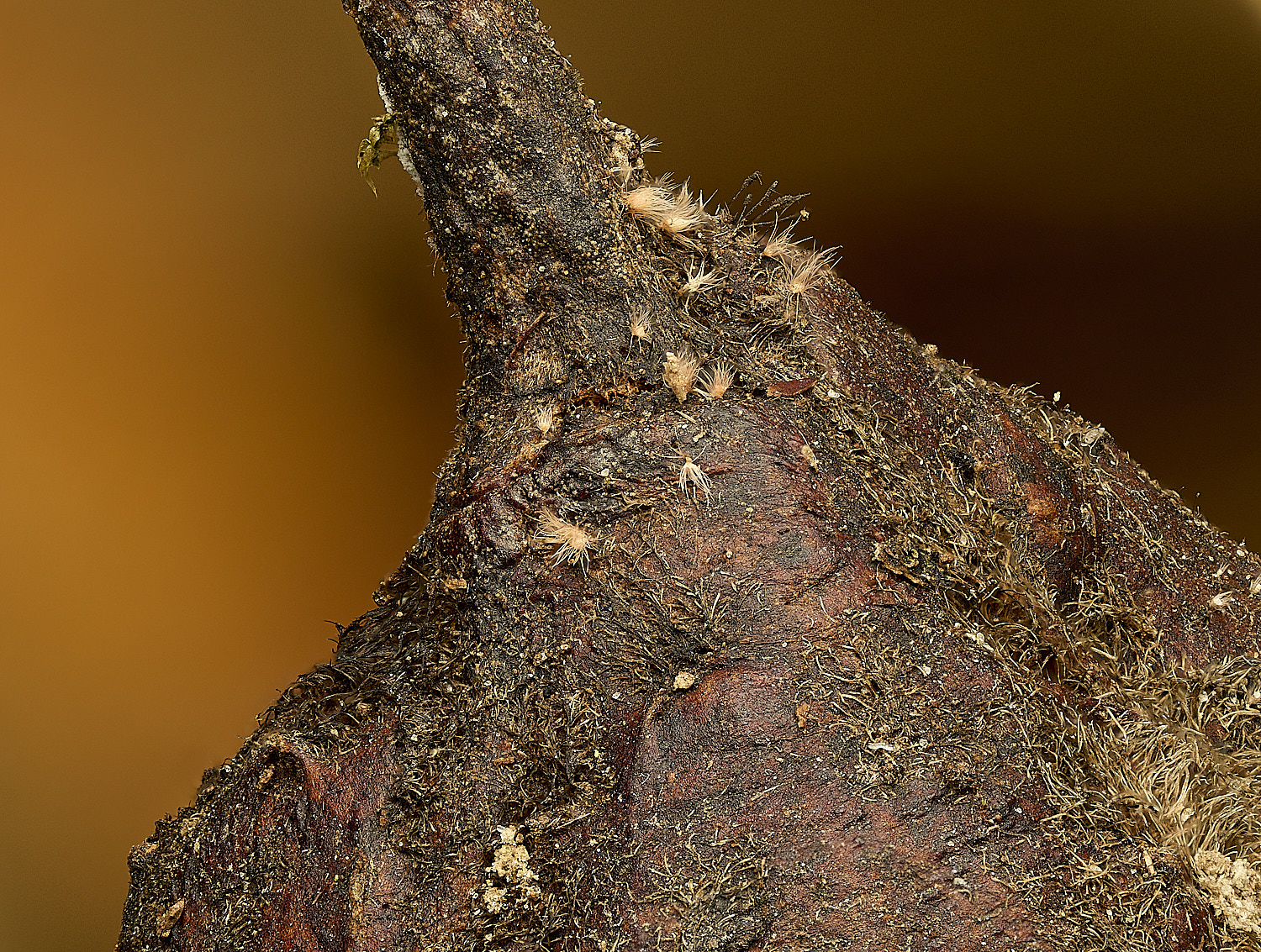
Small feathery fungus (Volutella ciliata) on Beech mast (Fagus sylvatica)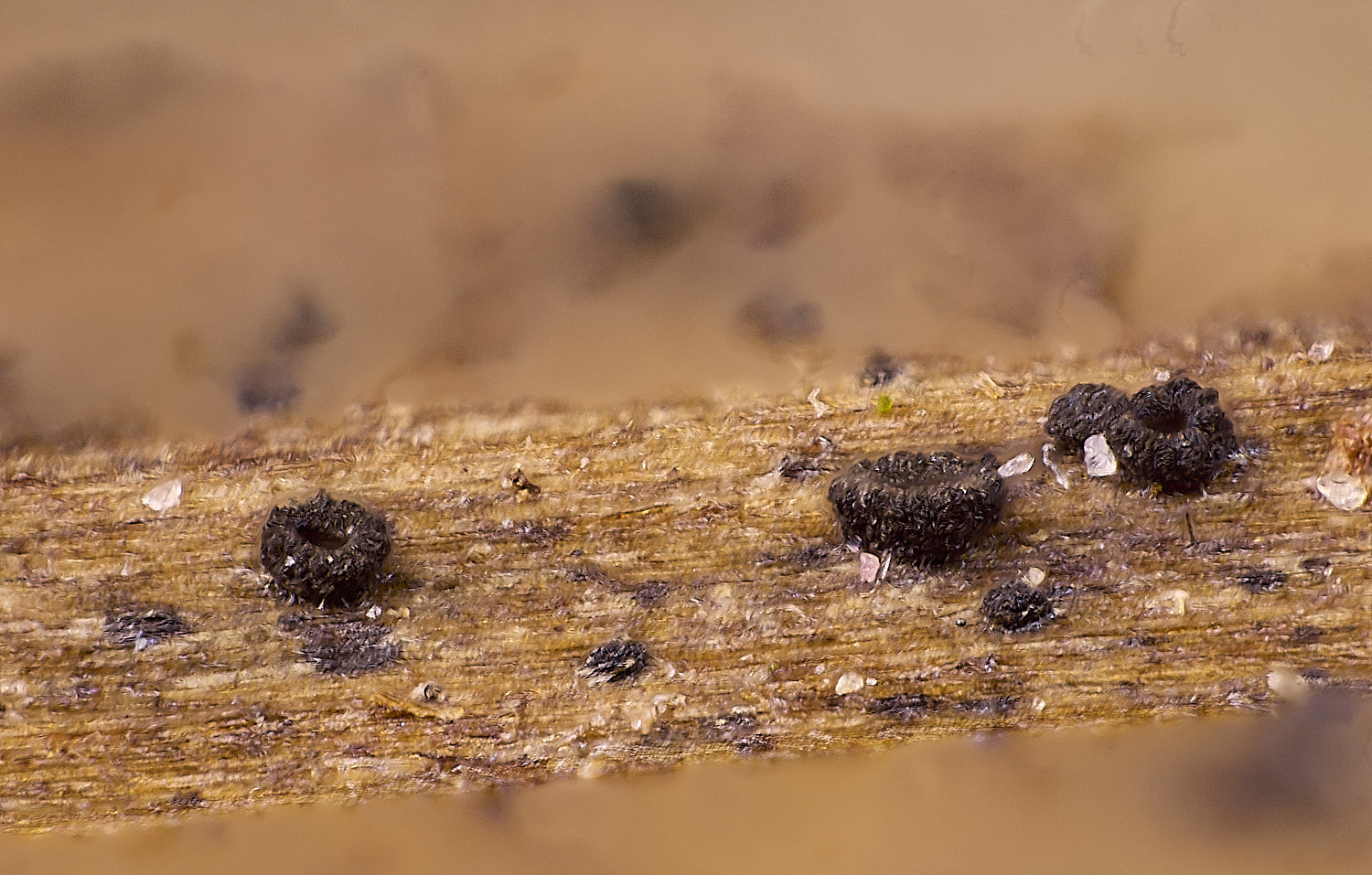
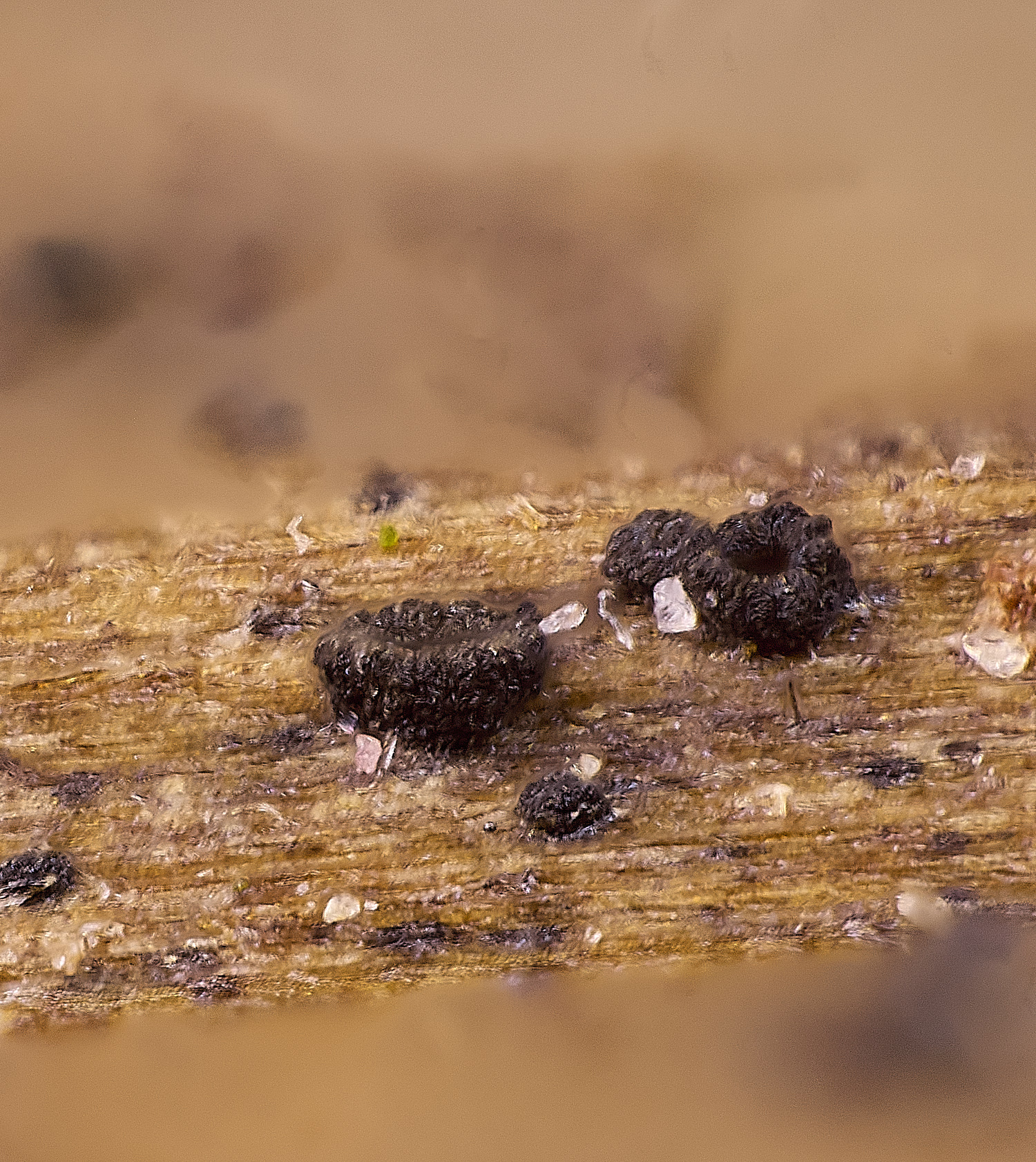
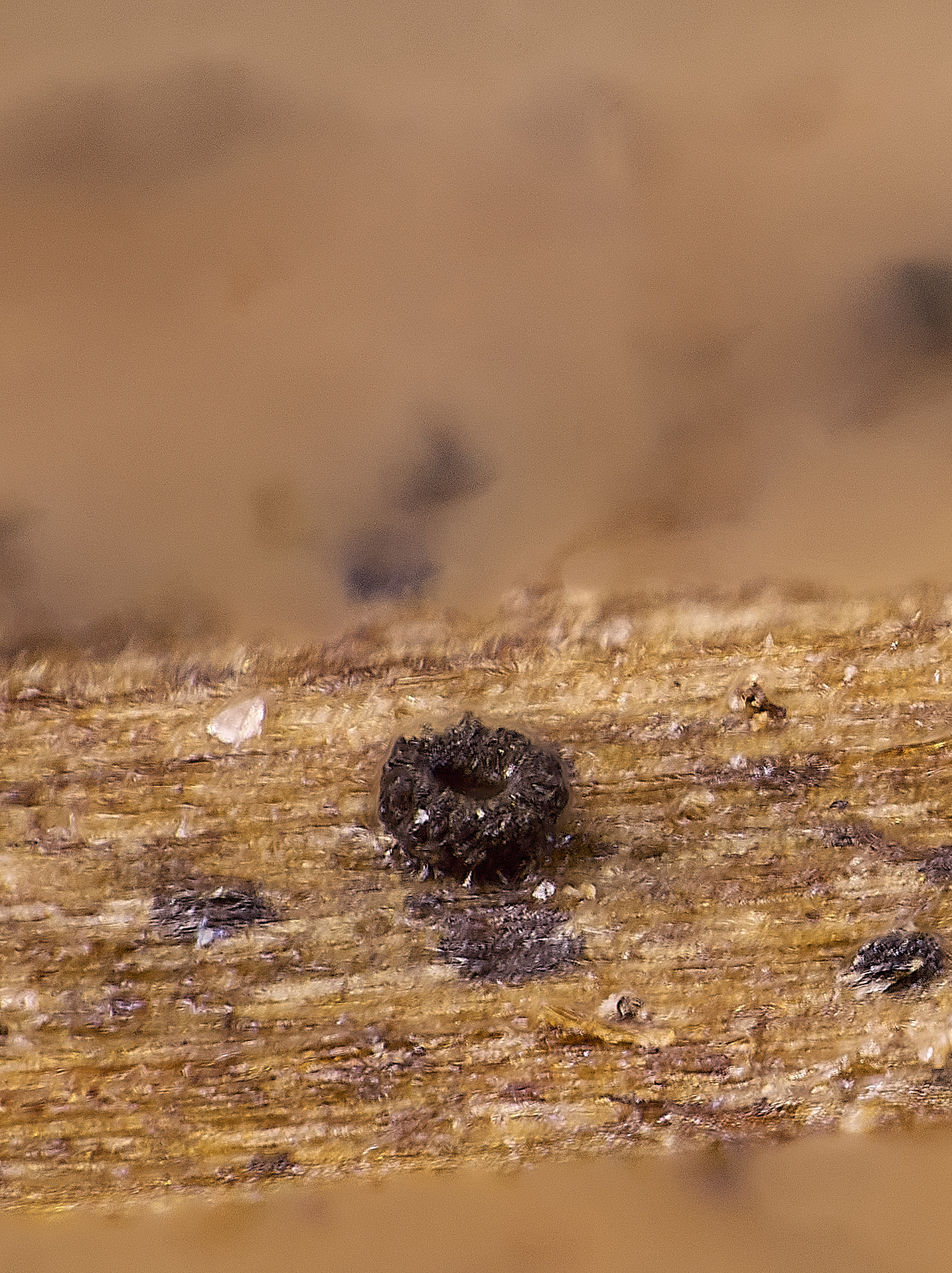
Pyrenopeziza digitalina on Foxglove (Digitalis purpurea) stem
Wolterton
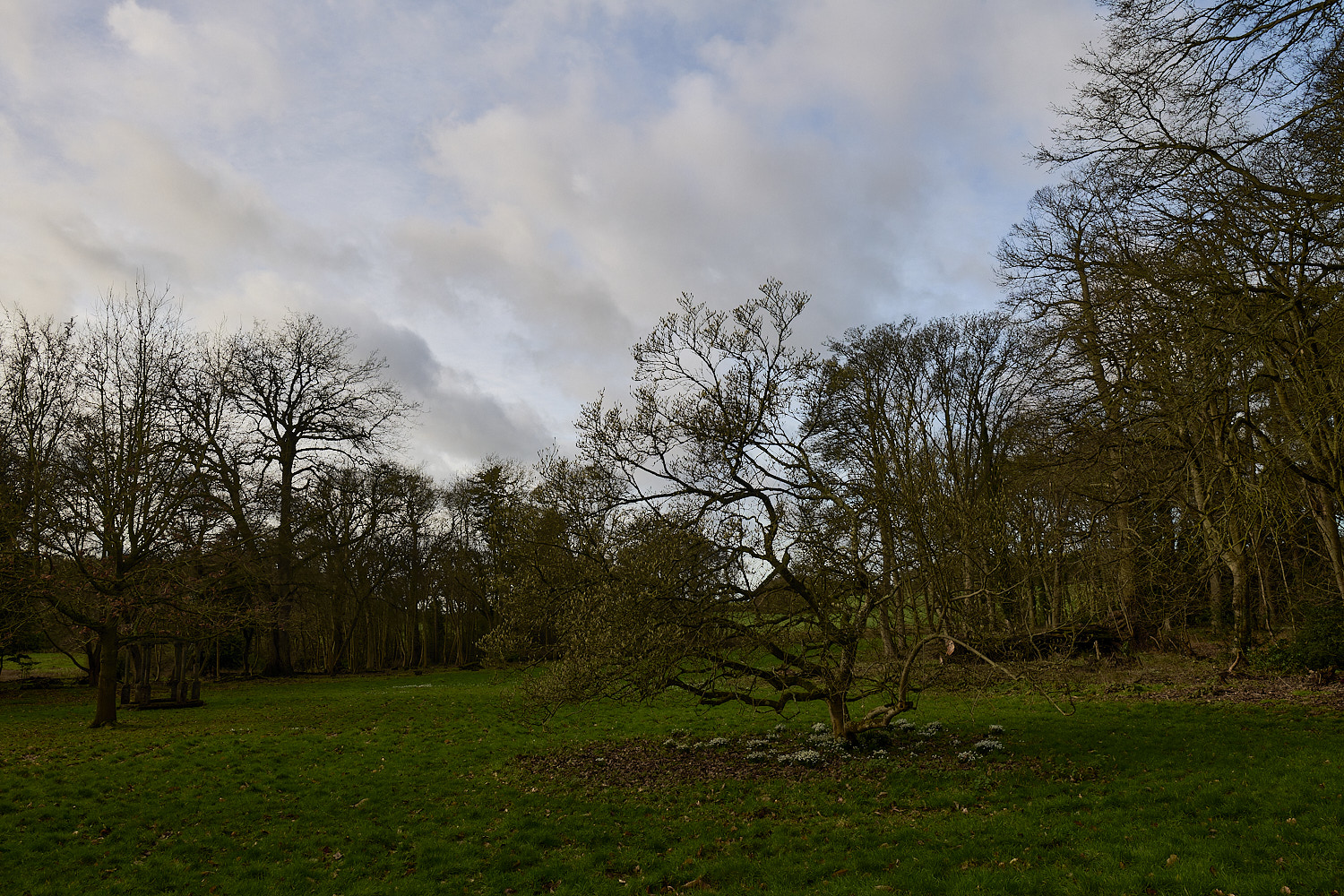
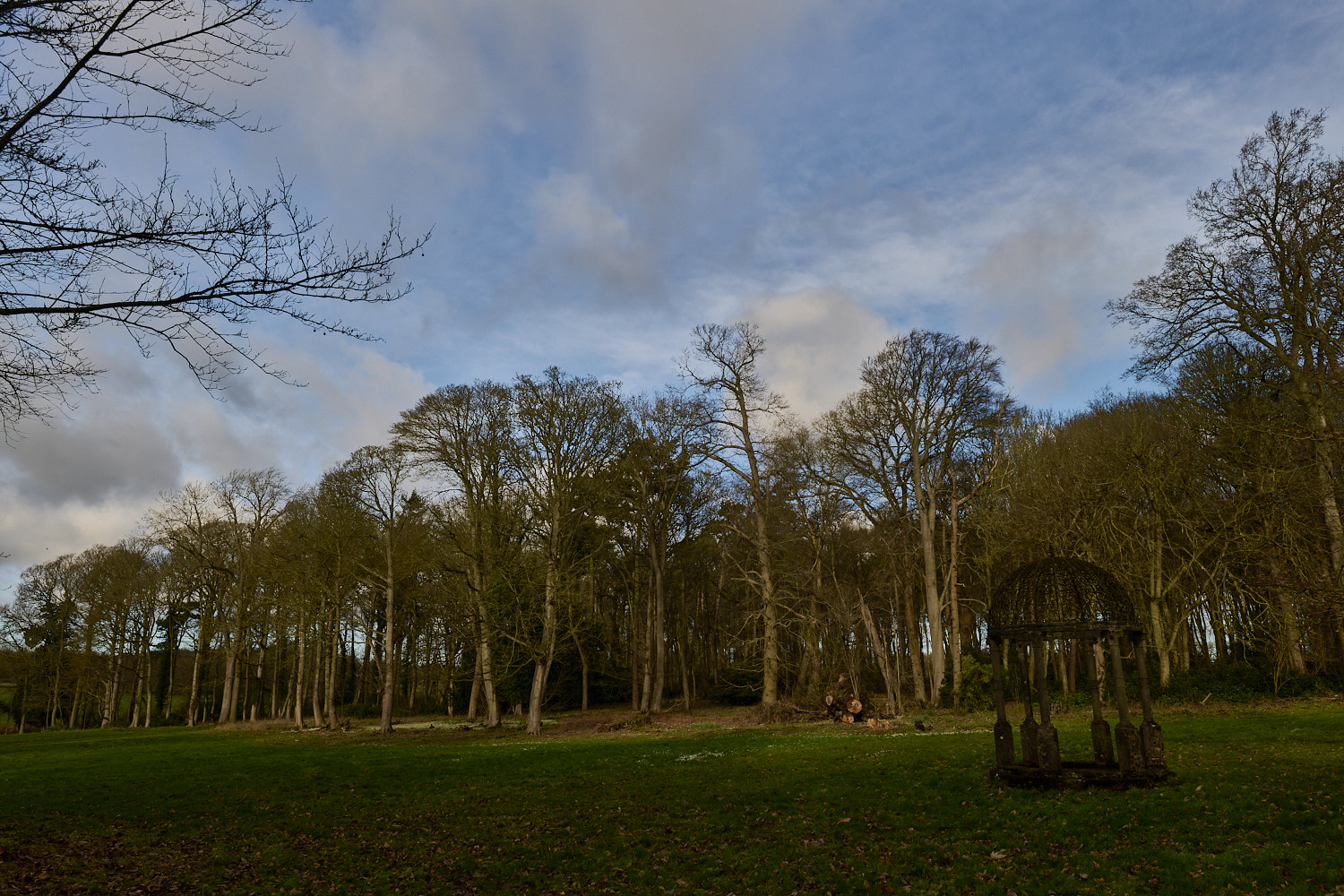
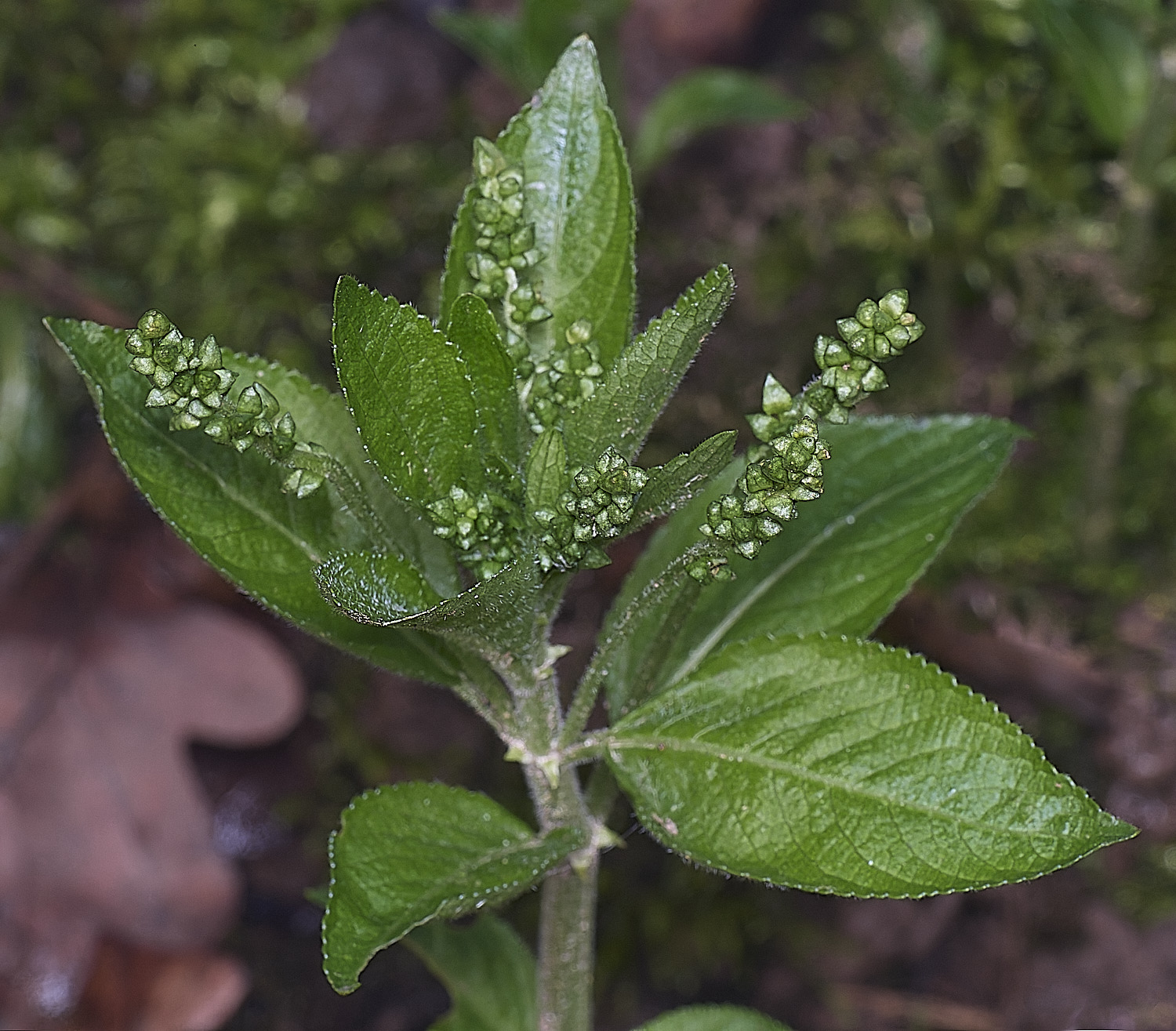
Dog's Mercury (Mercurialis perennis)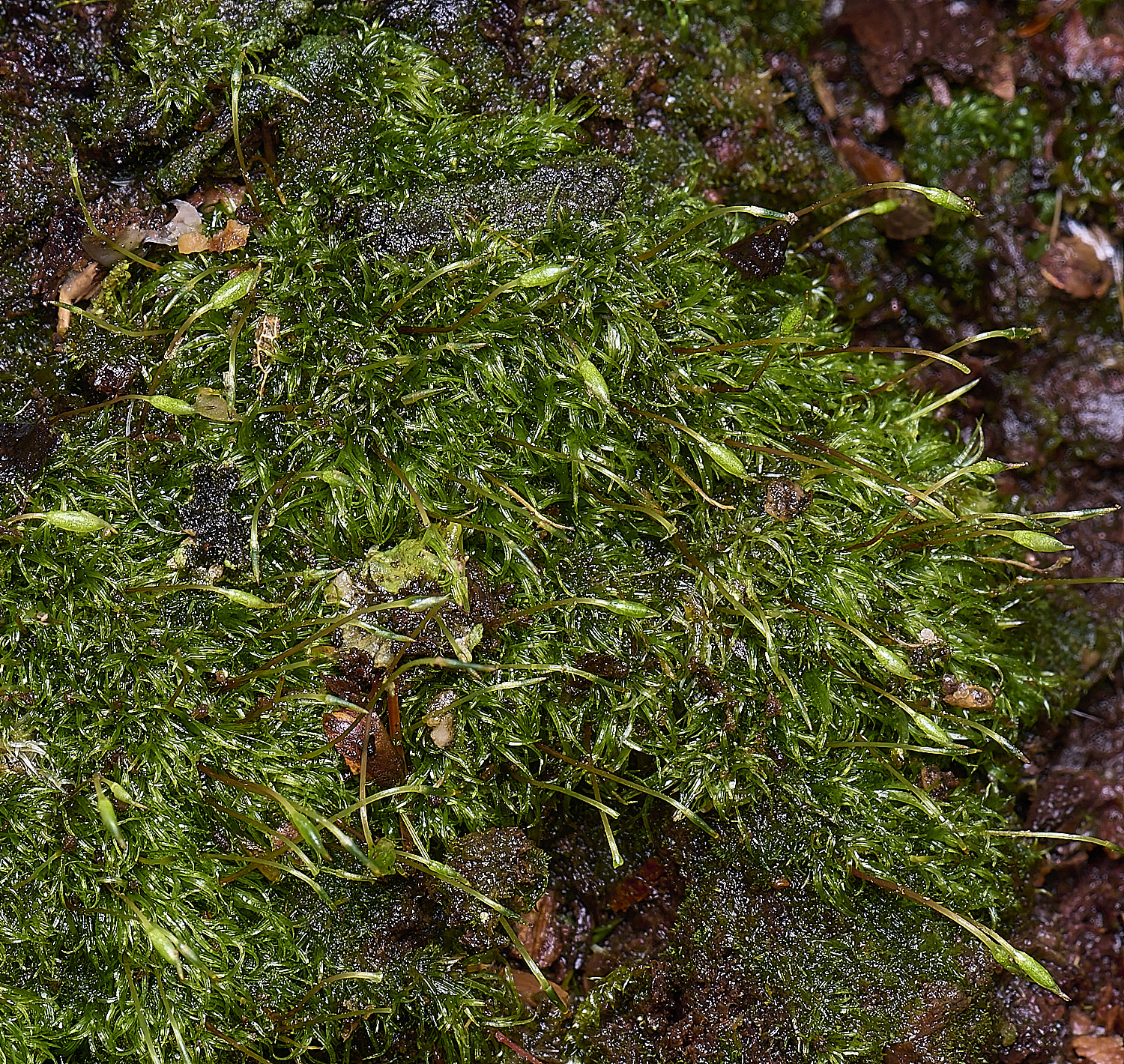
Cape Thread-moss (Orhtodontium lineare)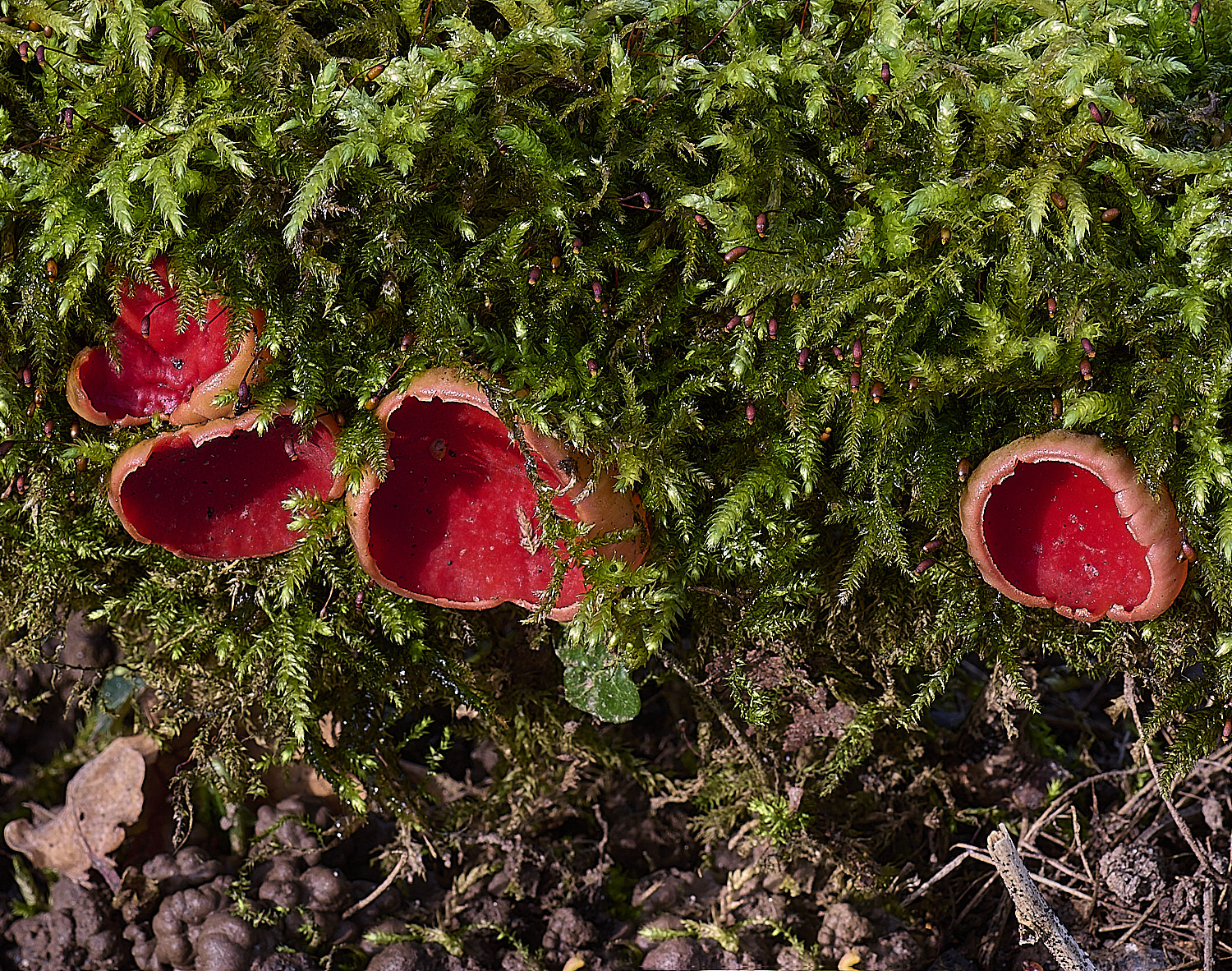
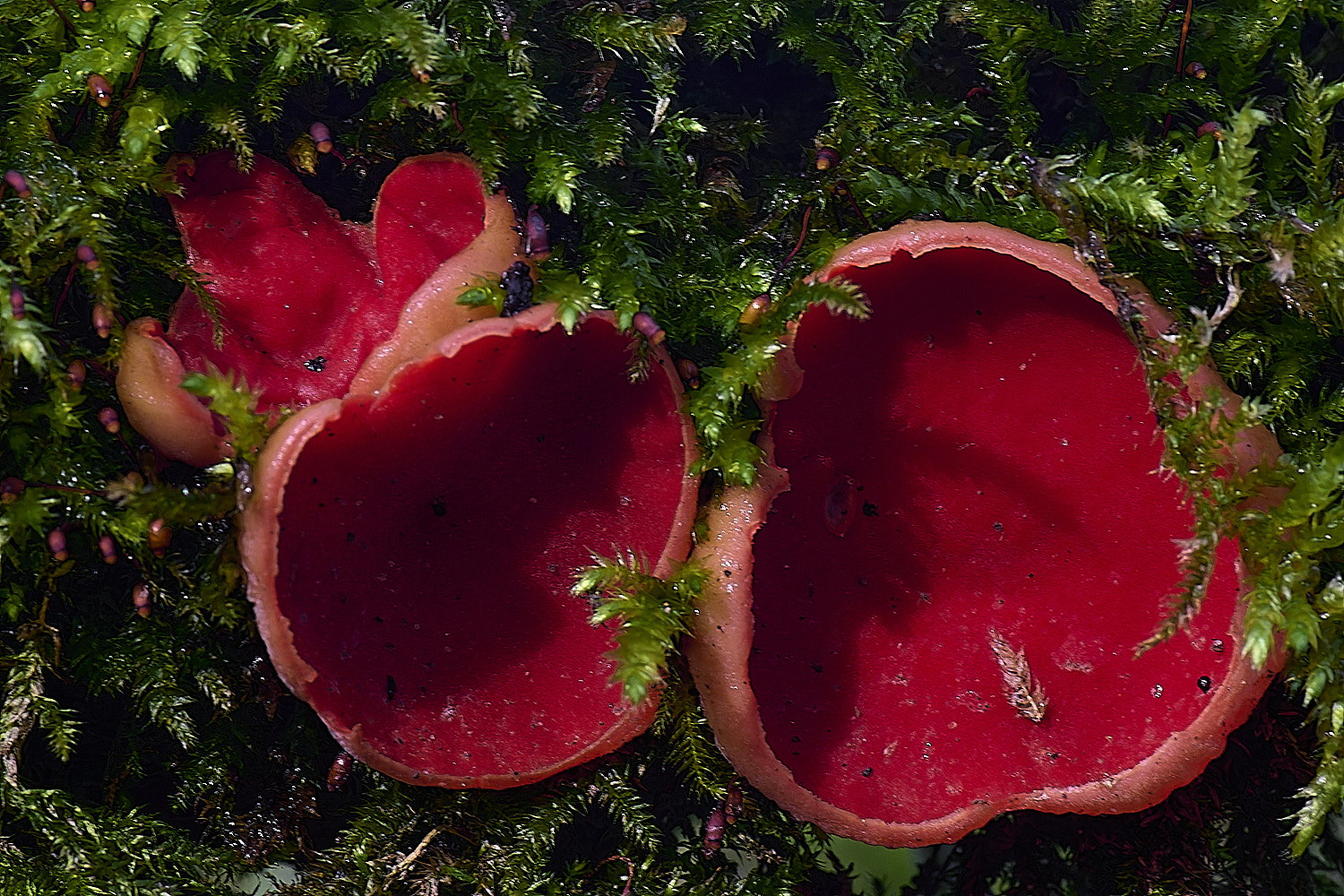
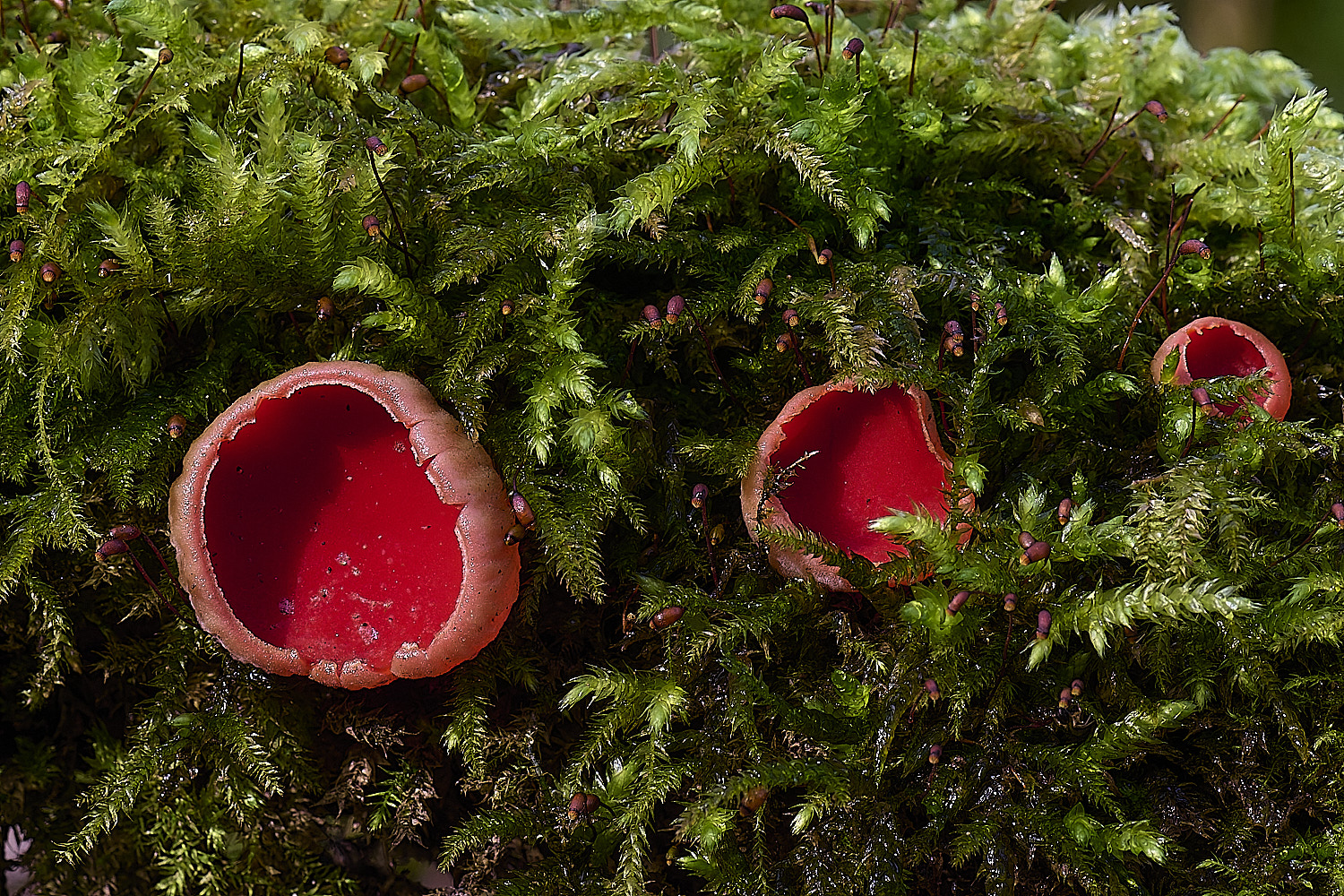
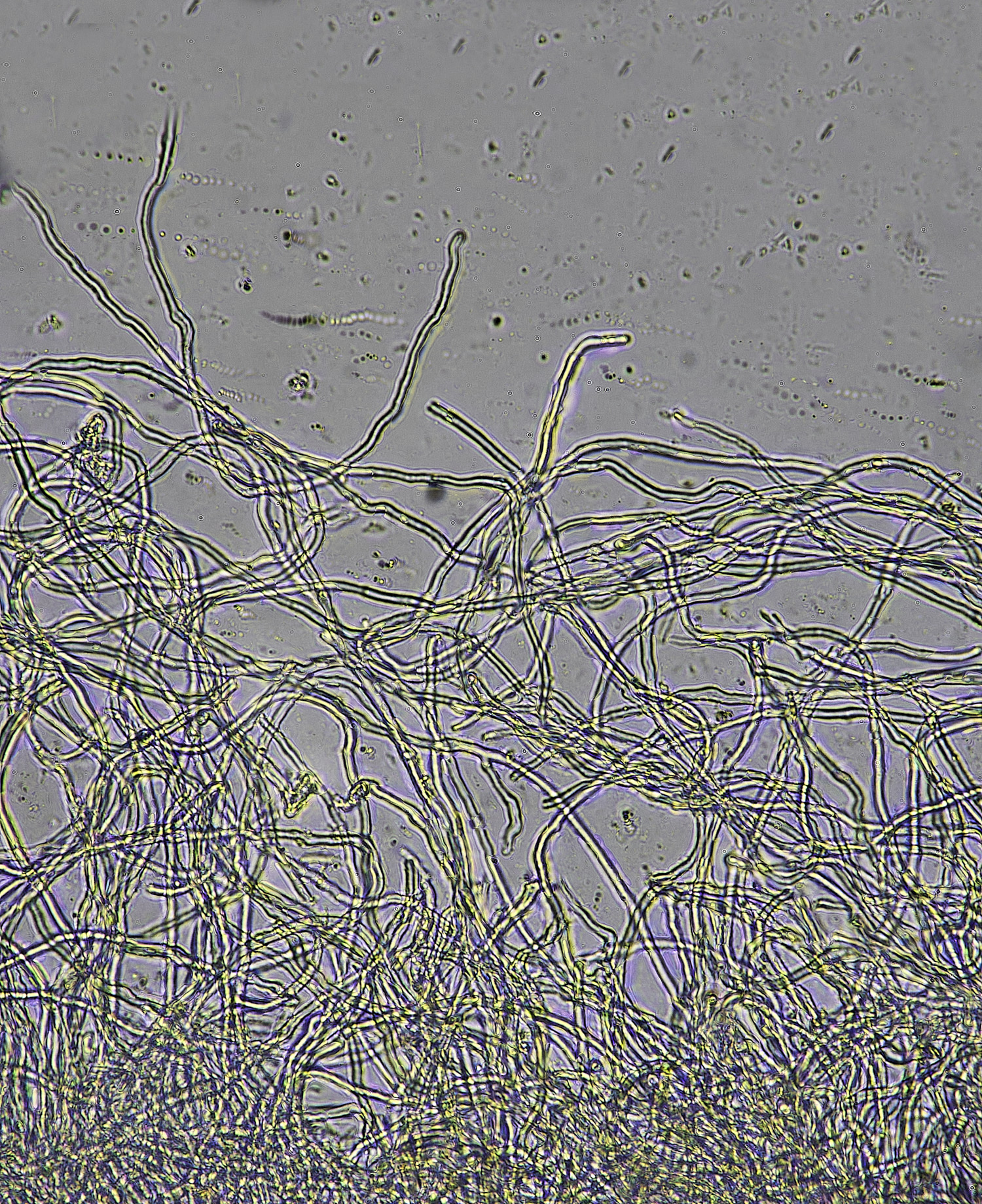
The hairs on the surface of the Elfcup are matted but not coiled
Thus
But not a foolproof method.
T
The fact that the hairs are septate contribute to a more confirmed id.
Ruby Elf Cup (Sarcoscypha coccinea)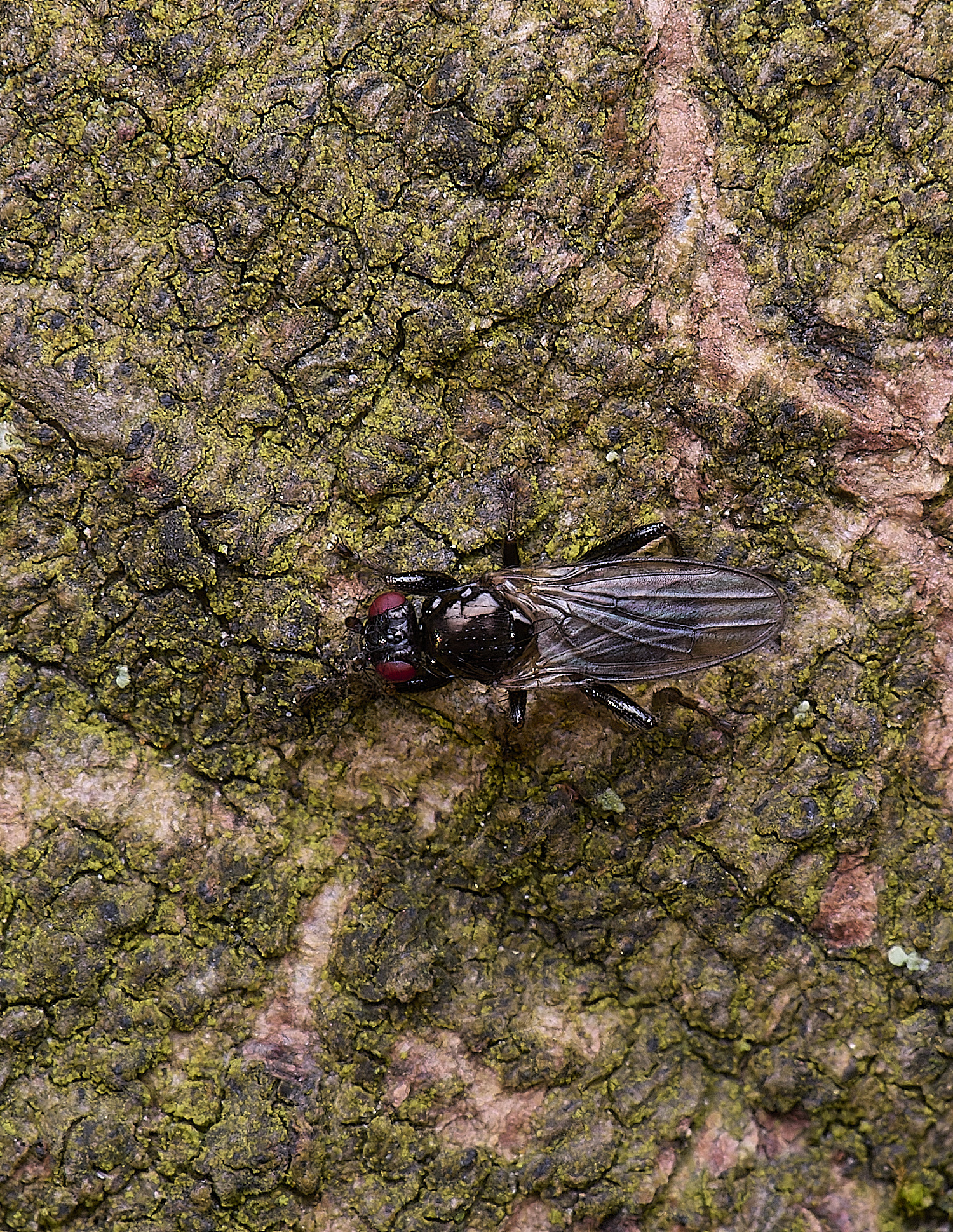
Fly Sp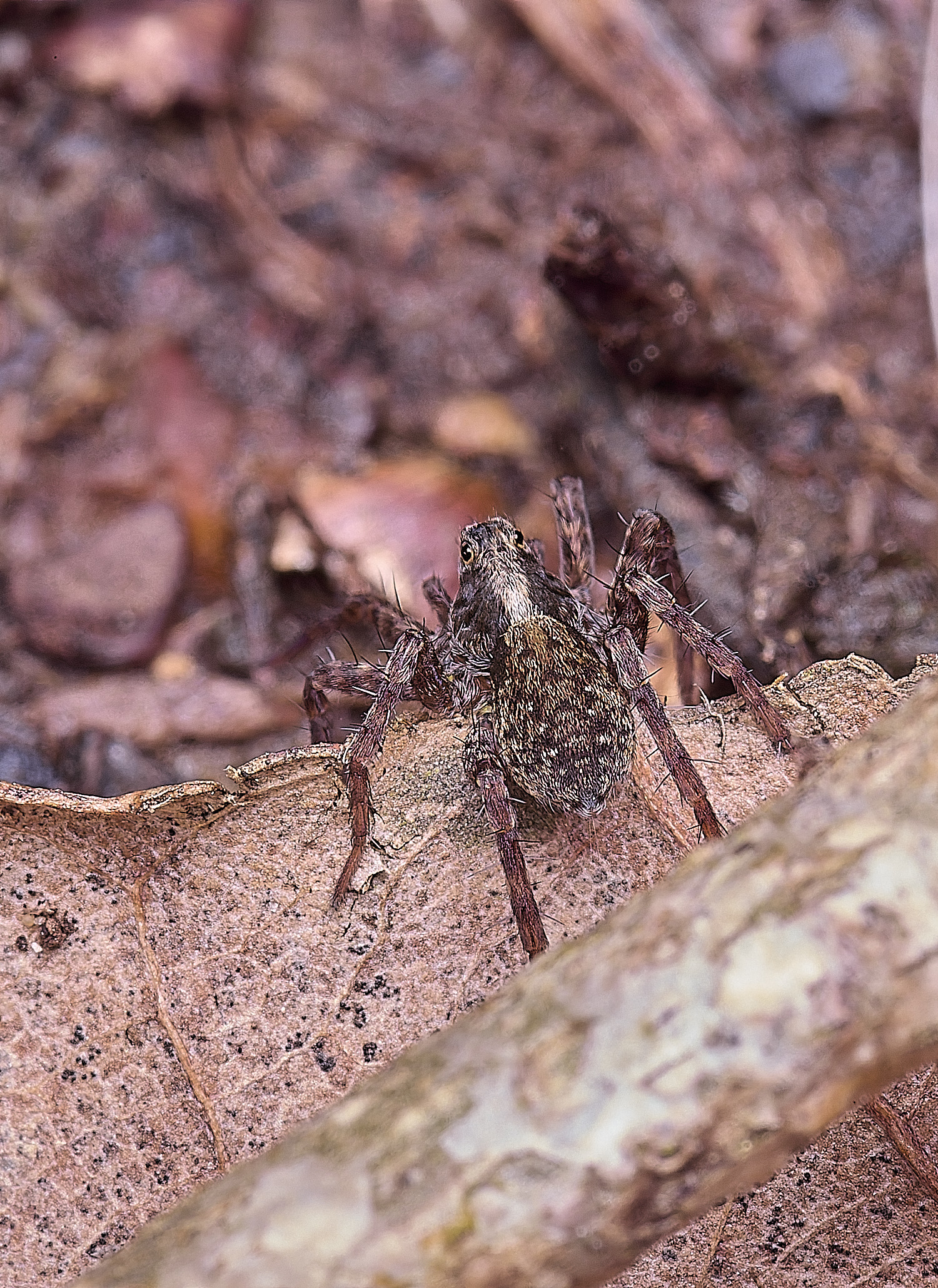
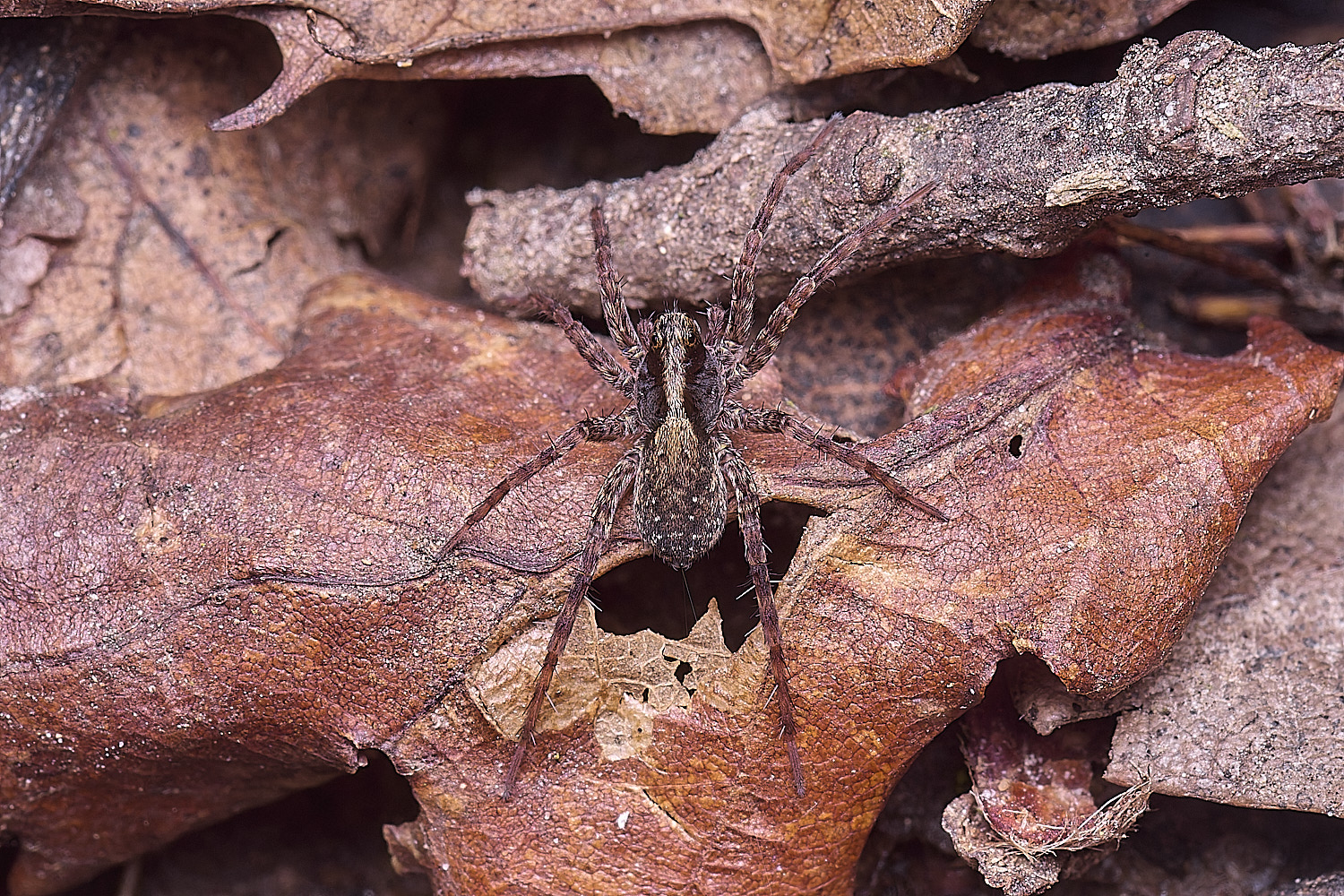
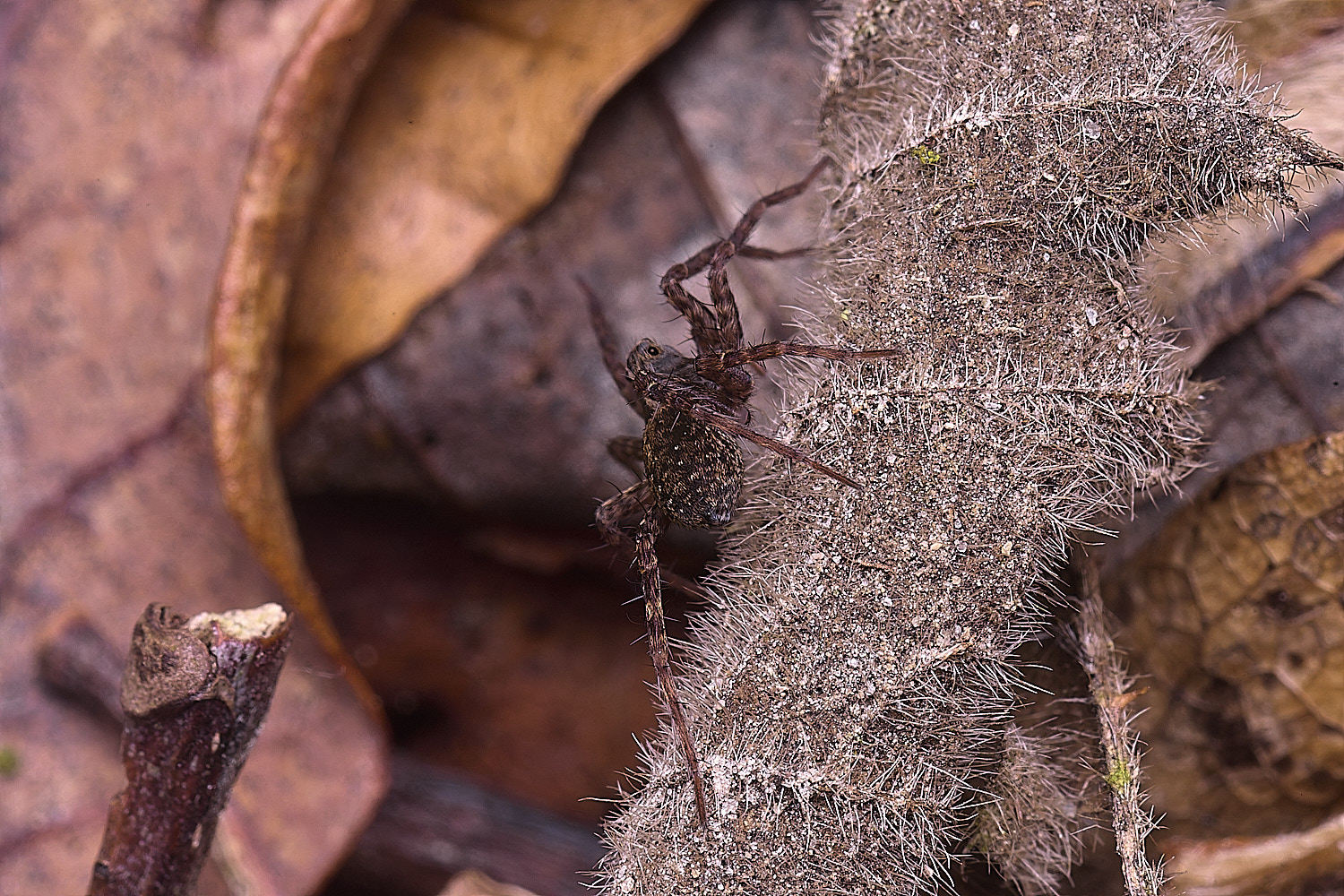
Spider Sp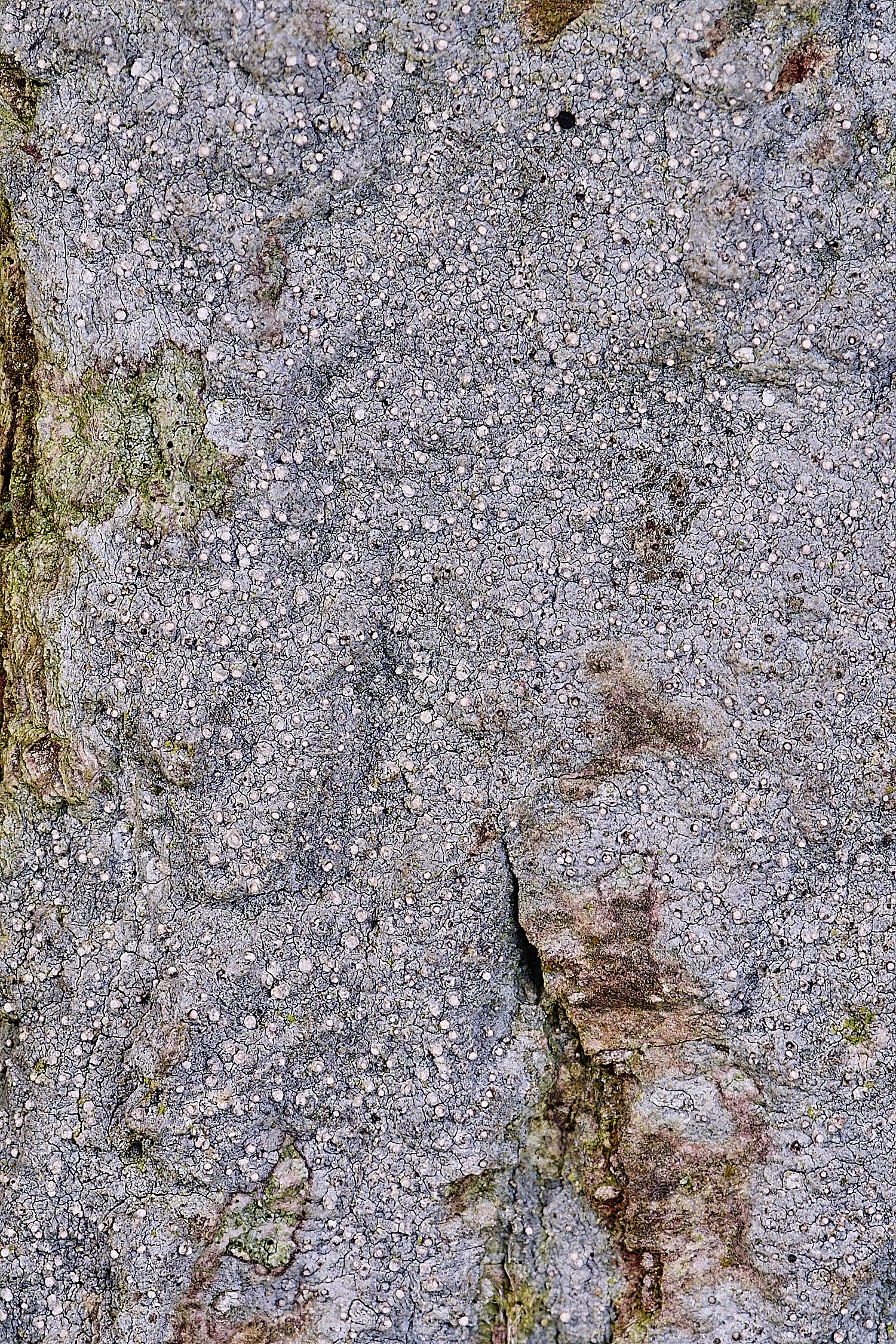
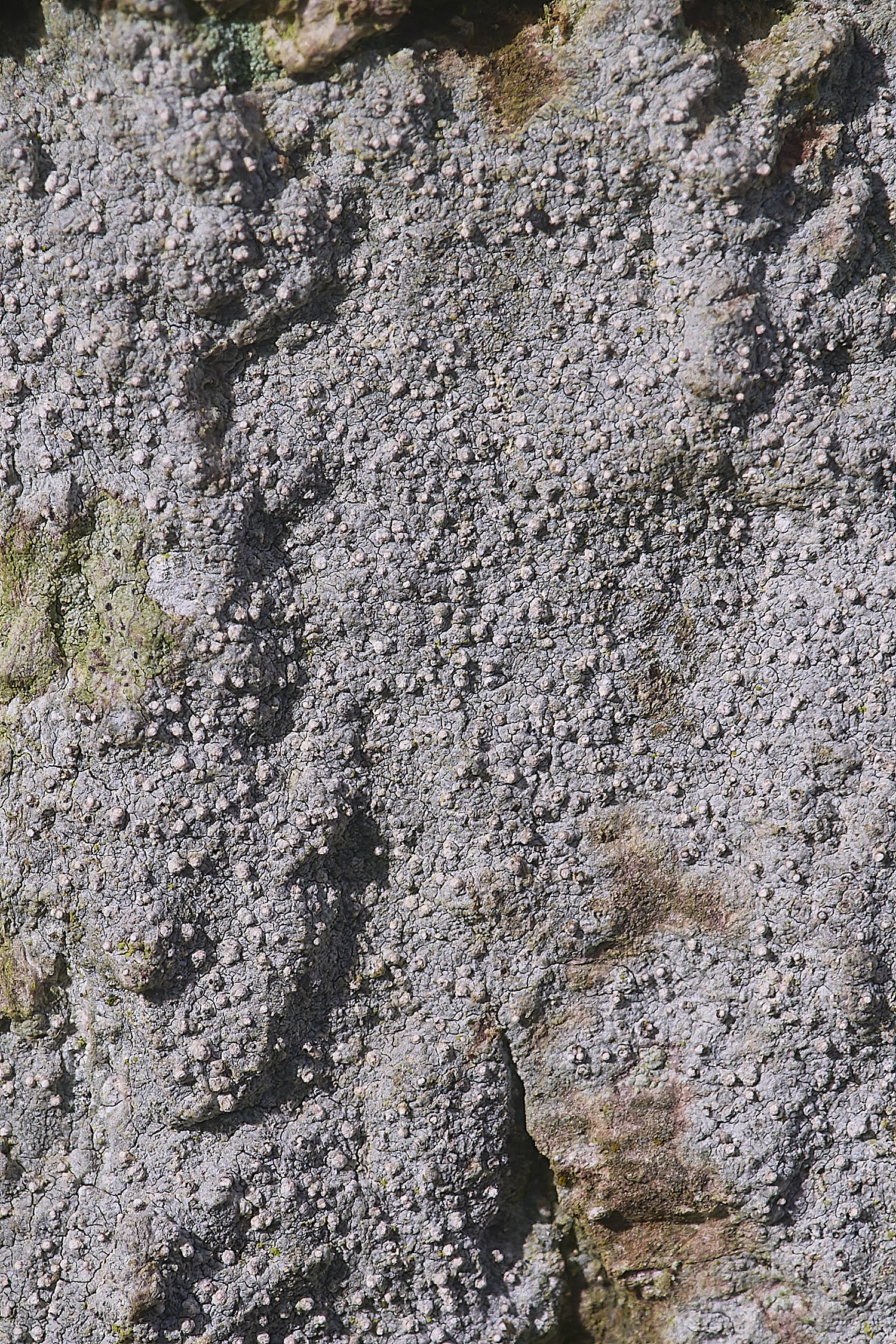
Lecanactis abietina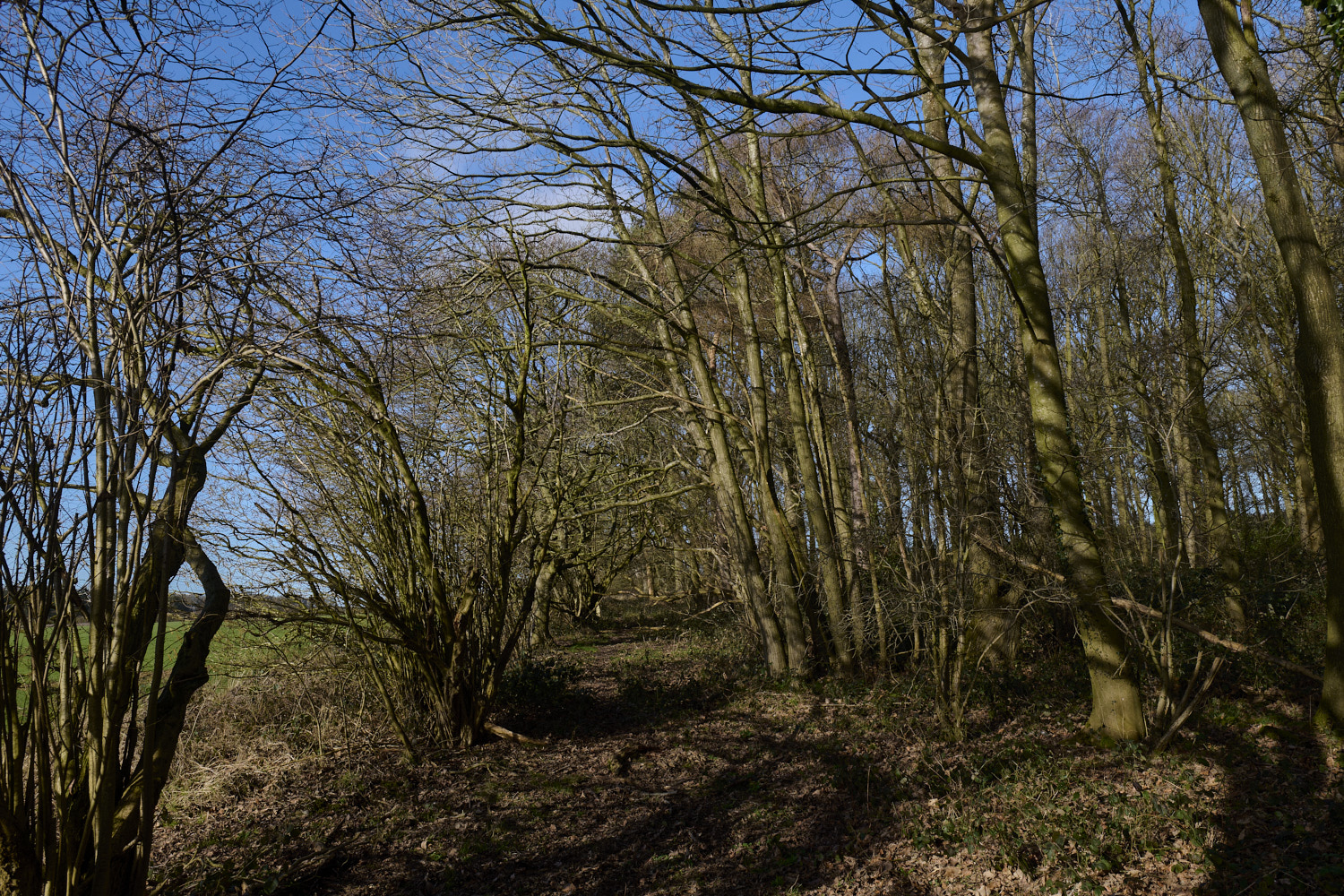
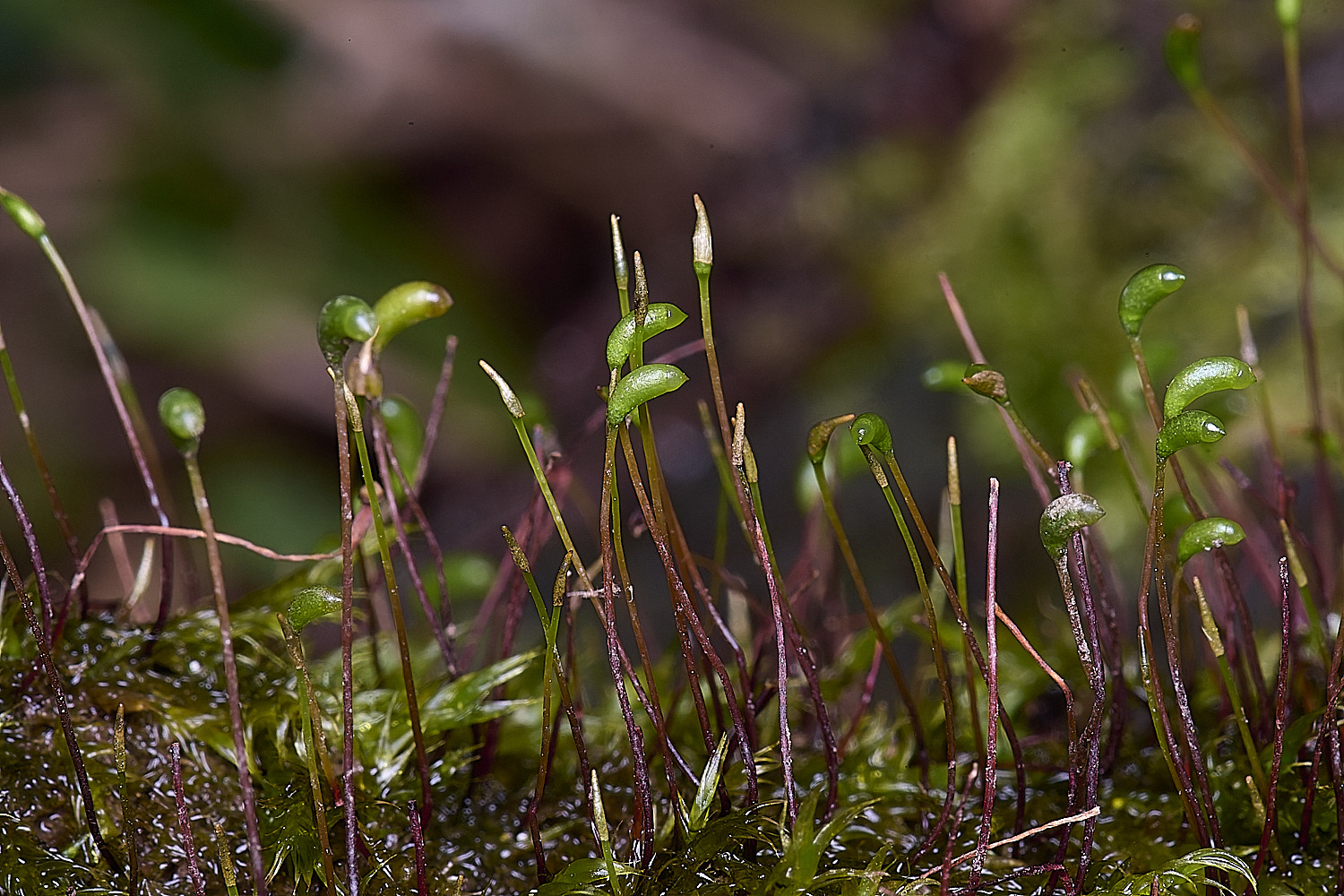
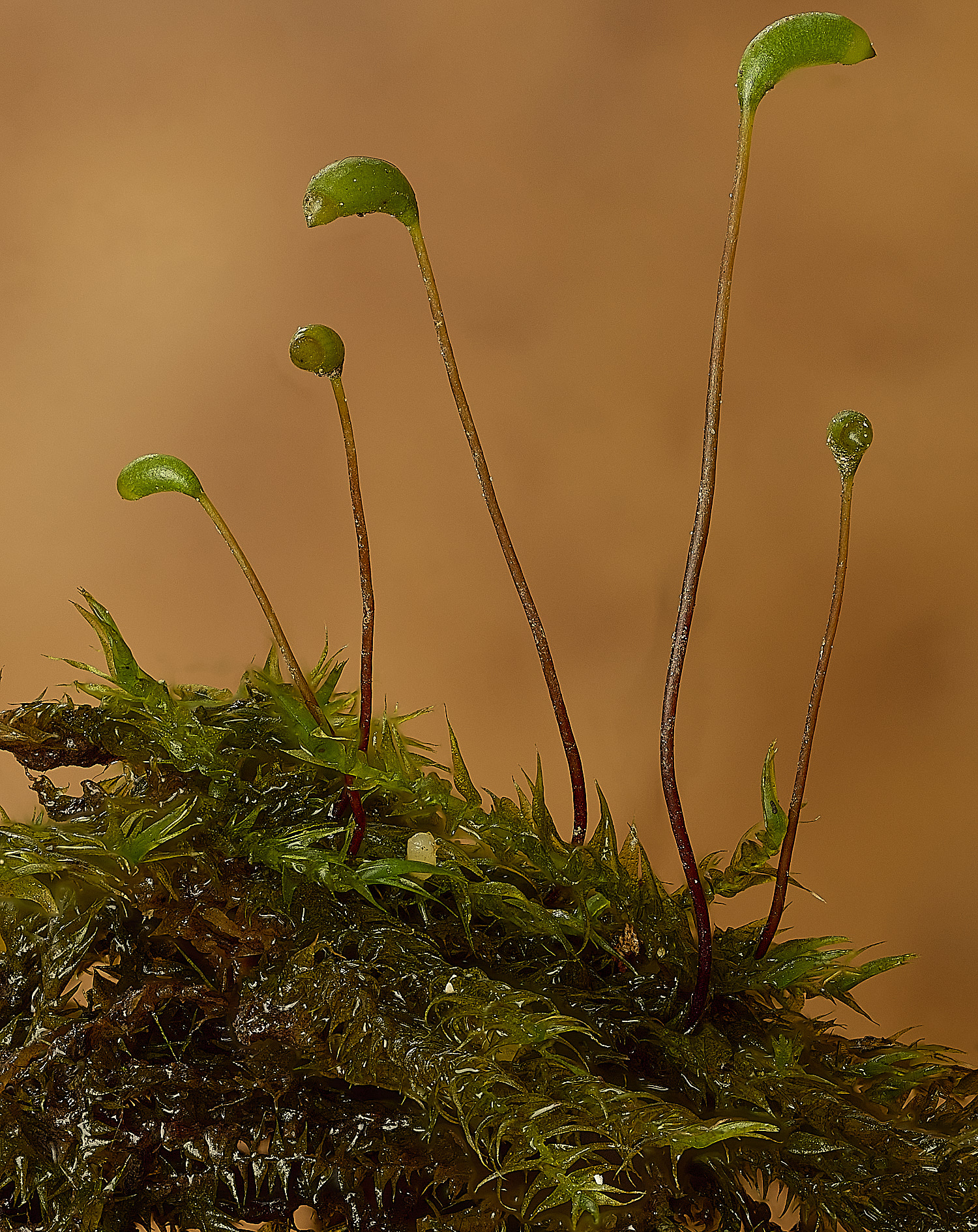
Kneiff's Feather-moss (Leptodictyum riparum)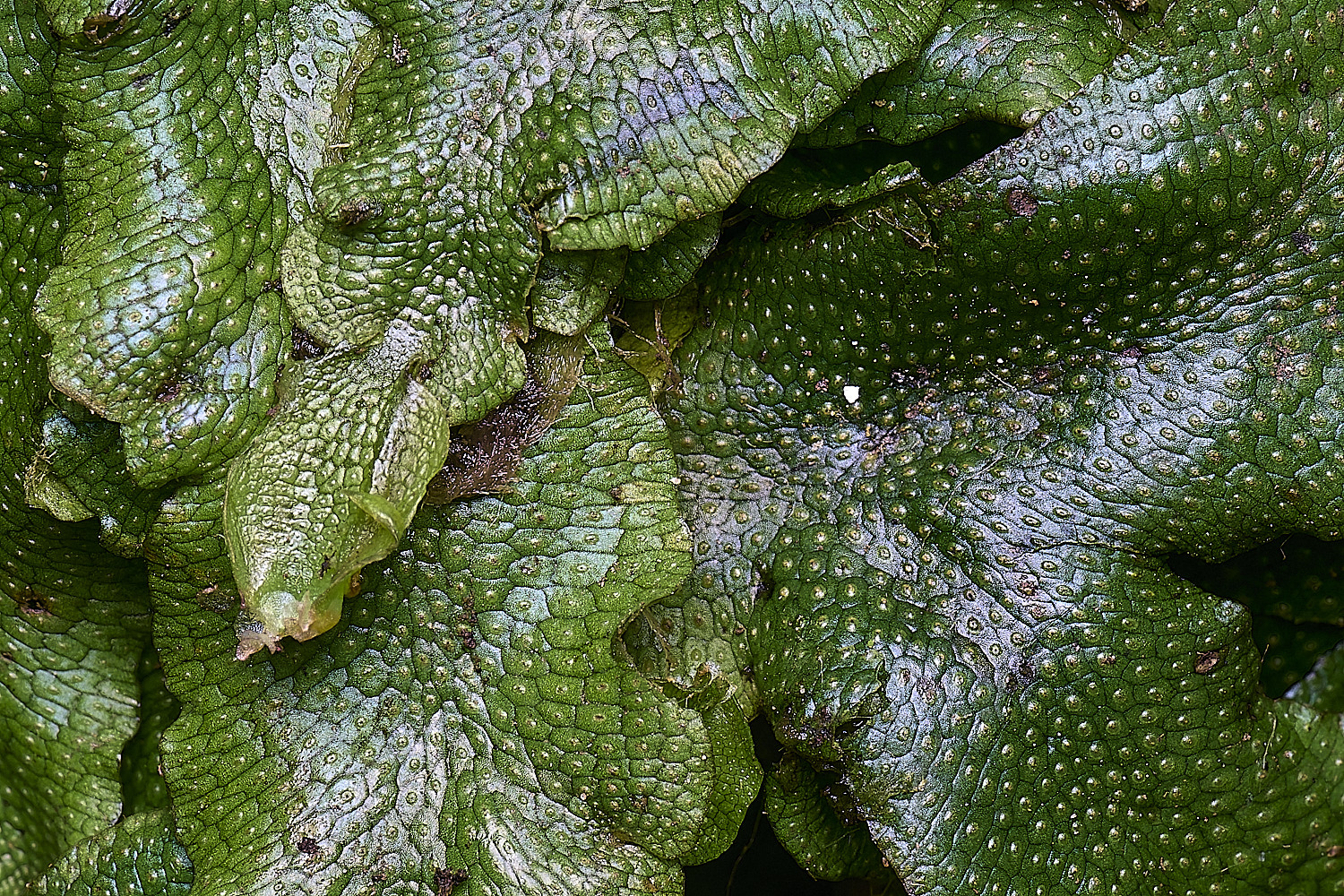
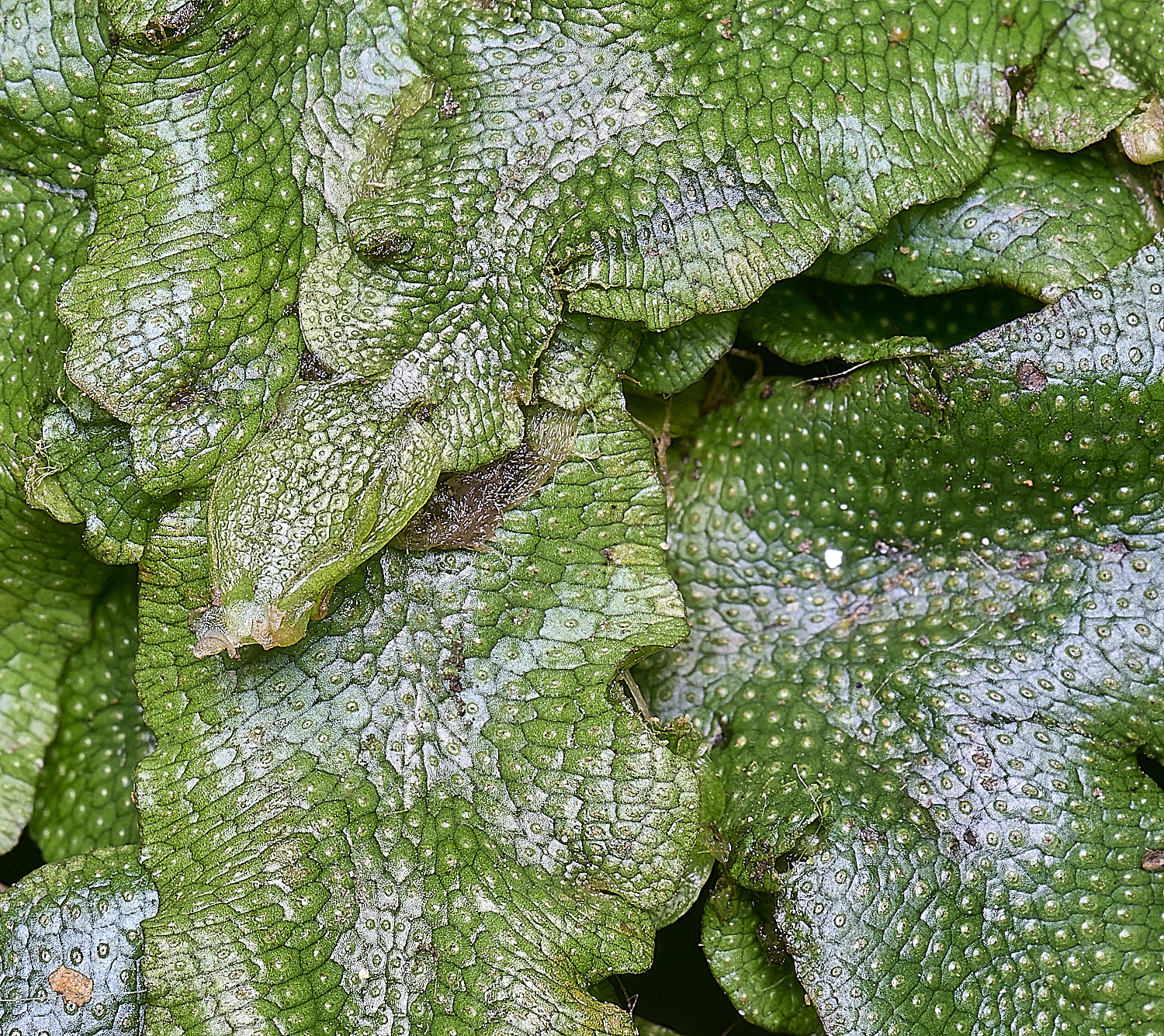
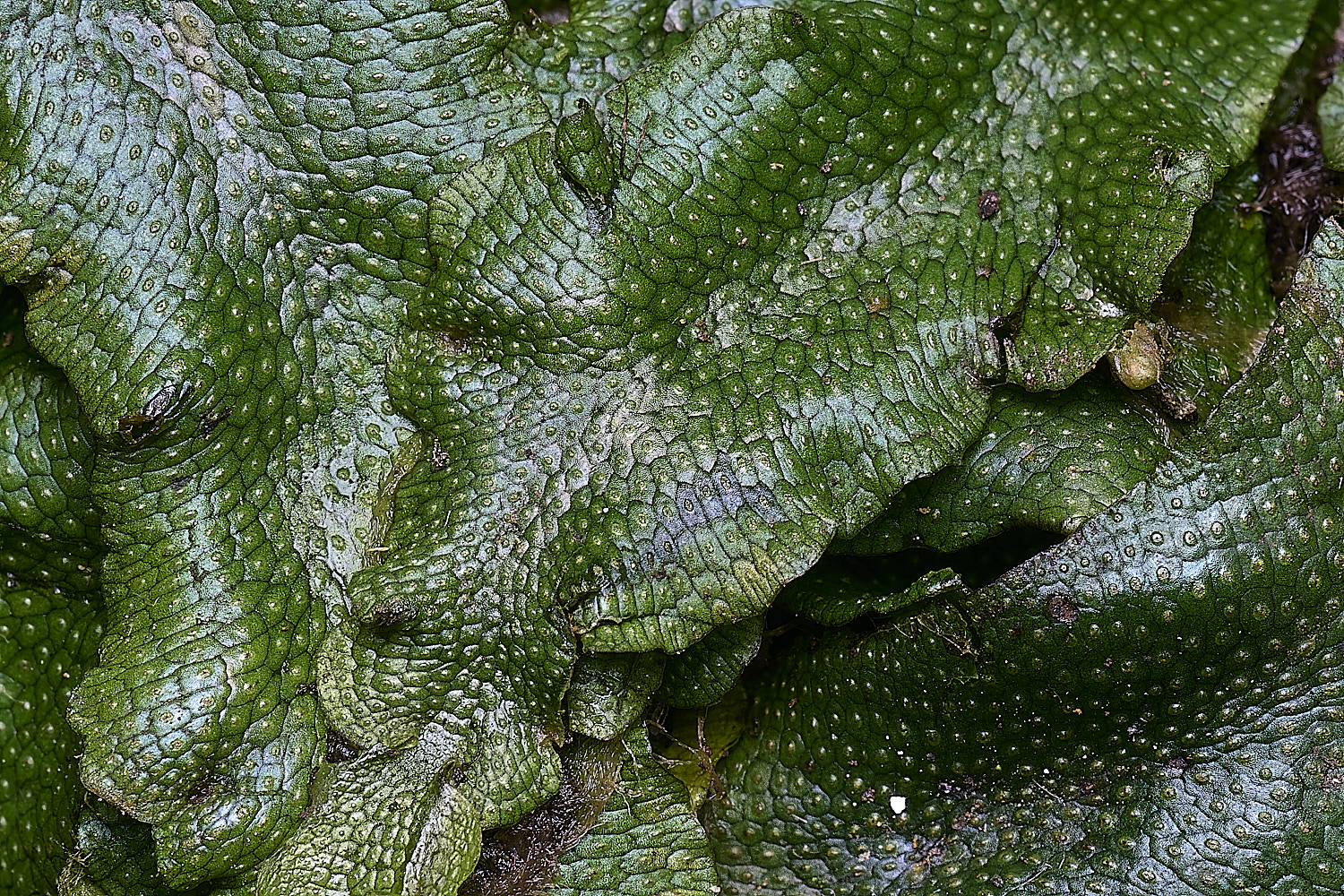
Greet Scented Liverwort (Conocephalum conicum)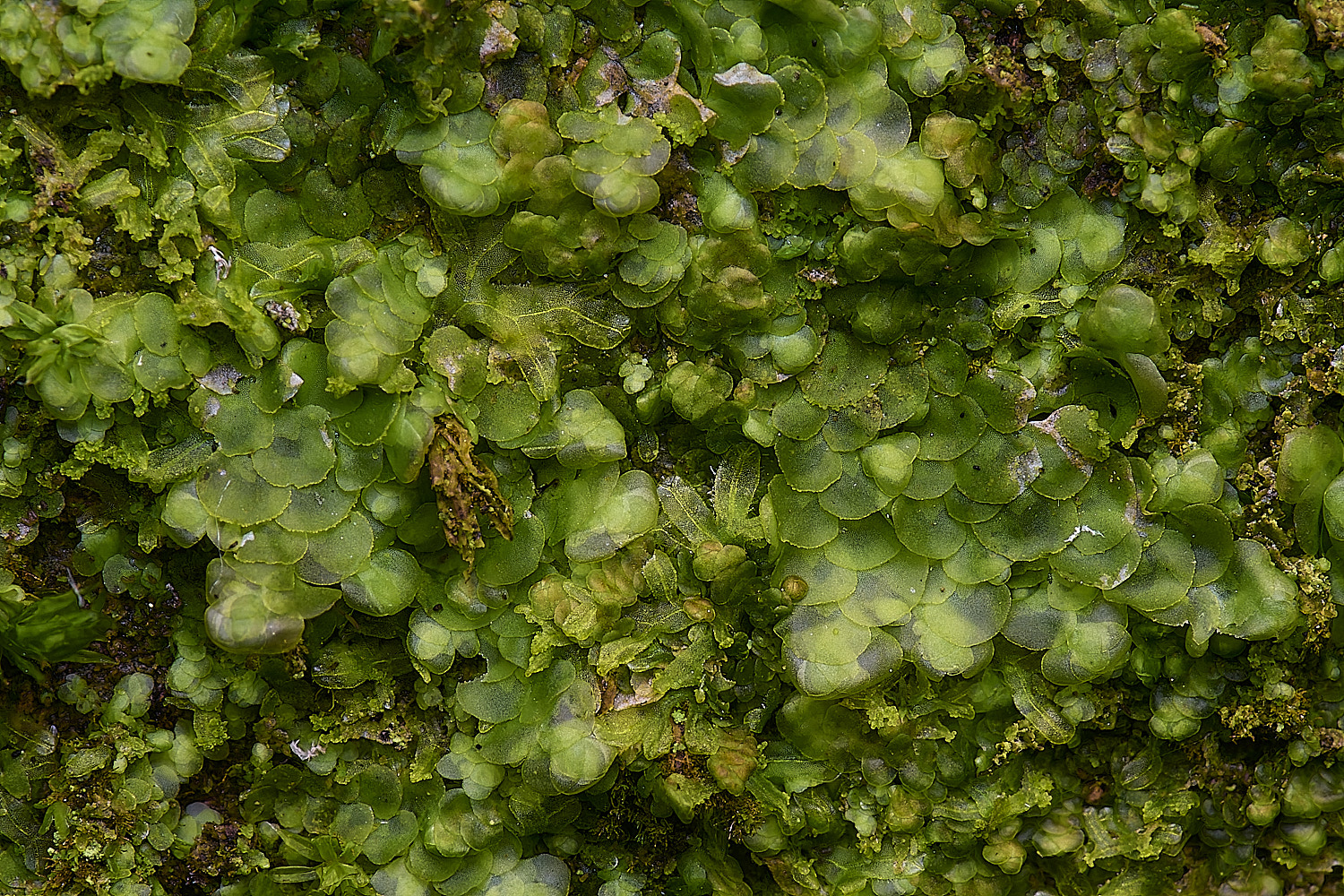
Even Scalewort (Radula complanata) with Metzgeria furcata & Metzgeria violacea & Frullania dilatata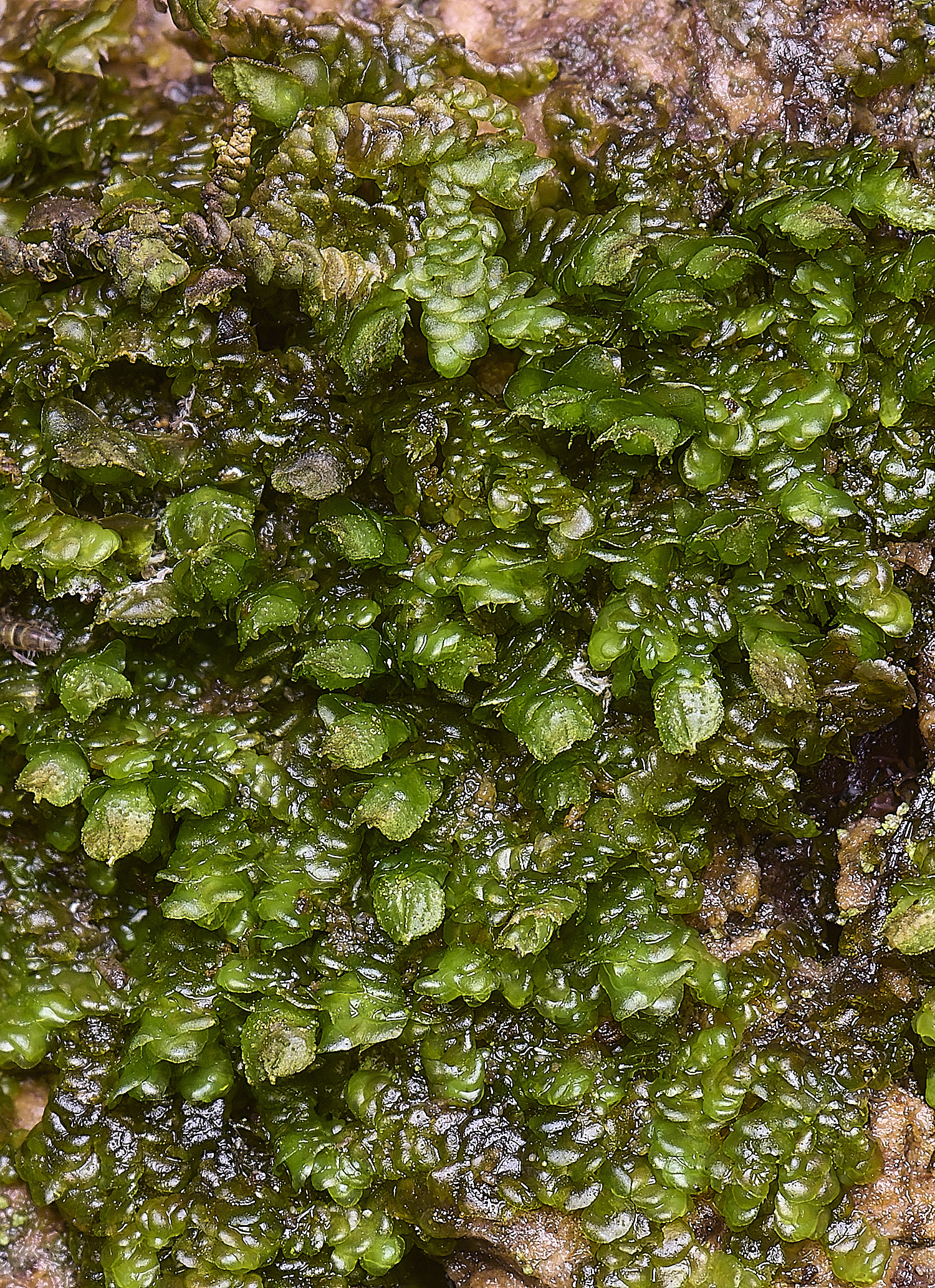
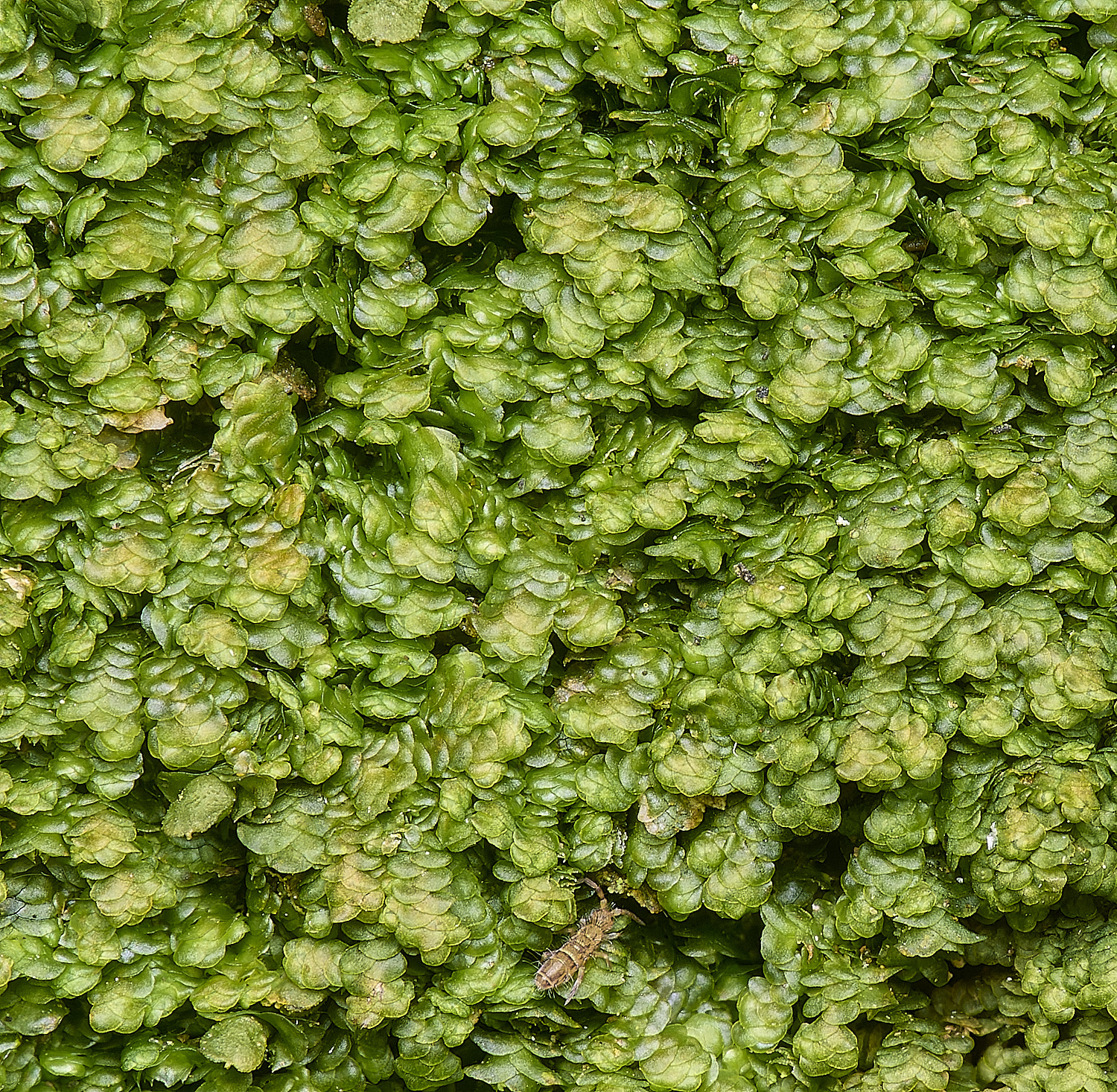
Dilated Scalewort (Frullenia dilatata)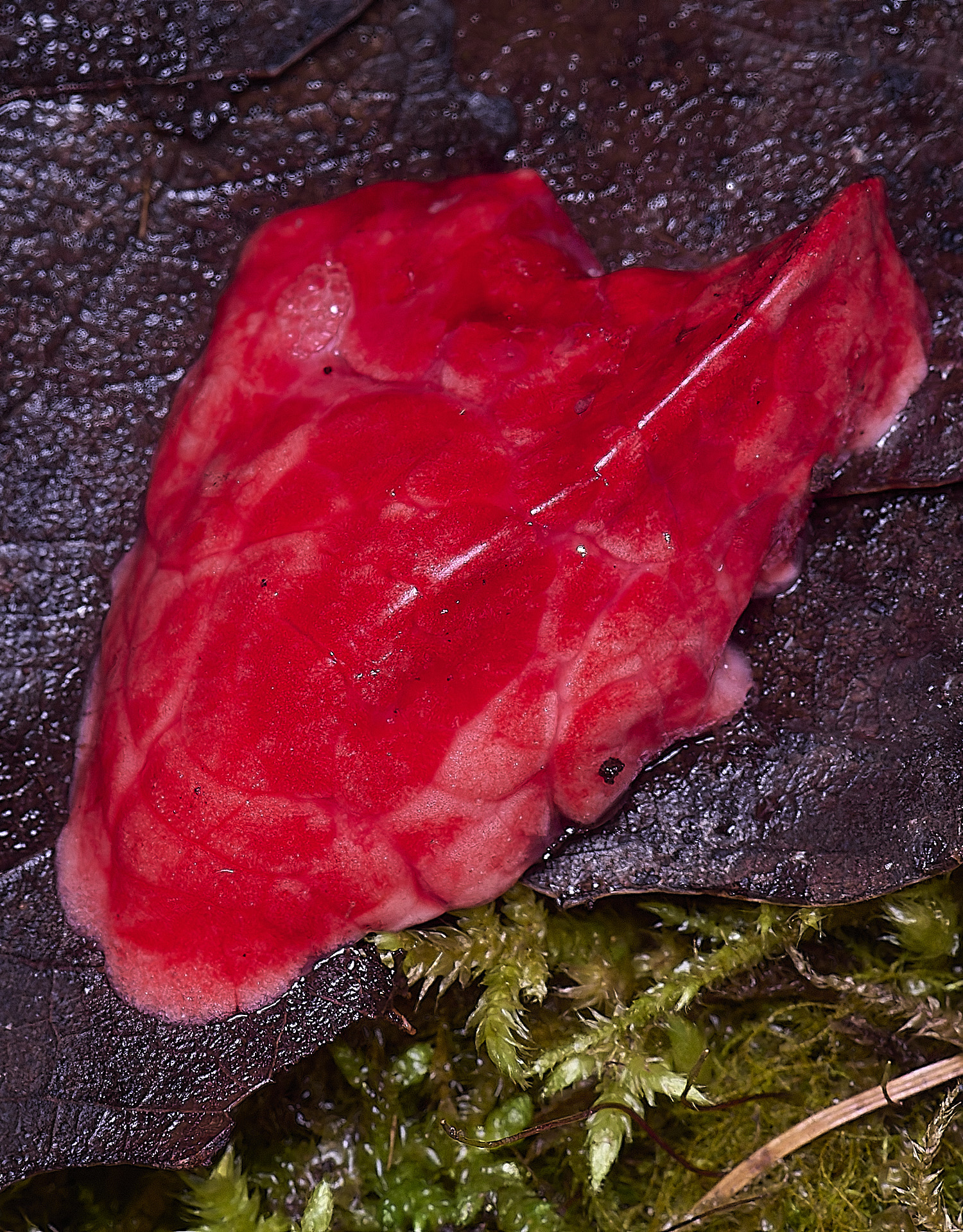
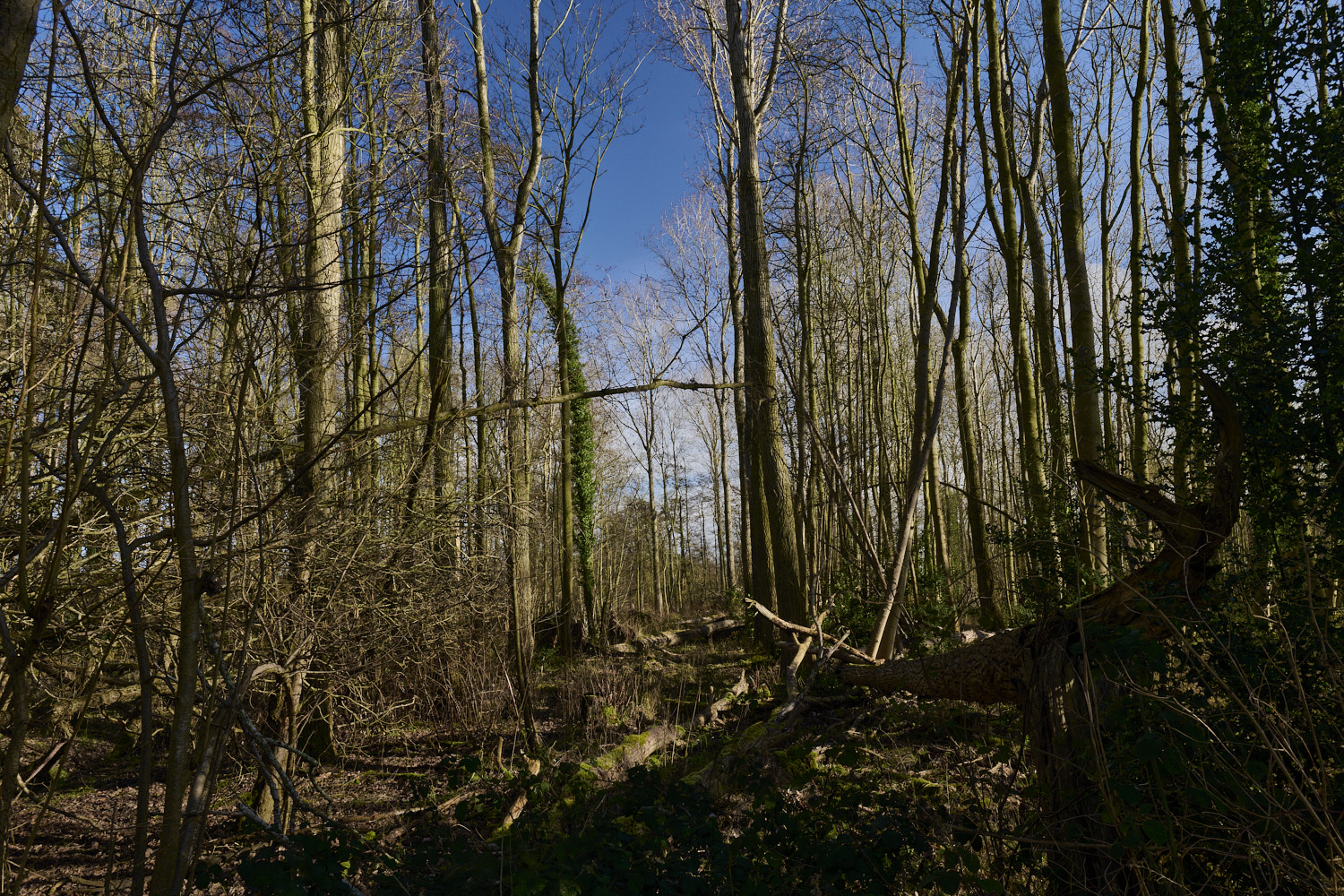
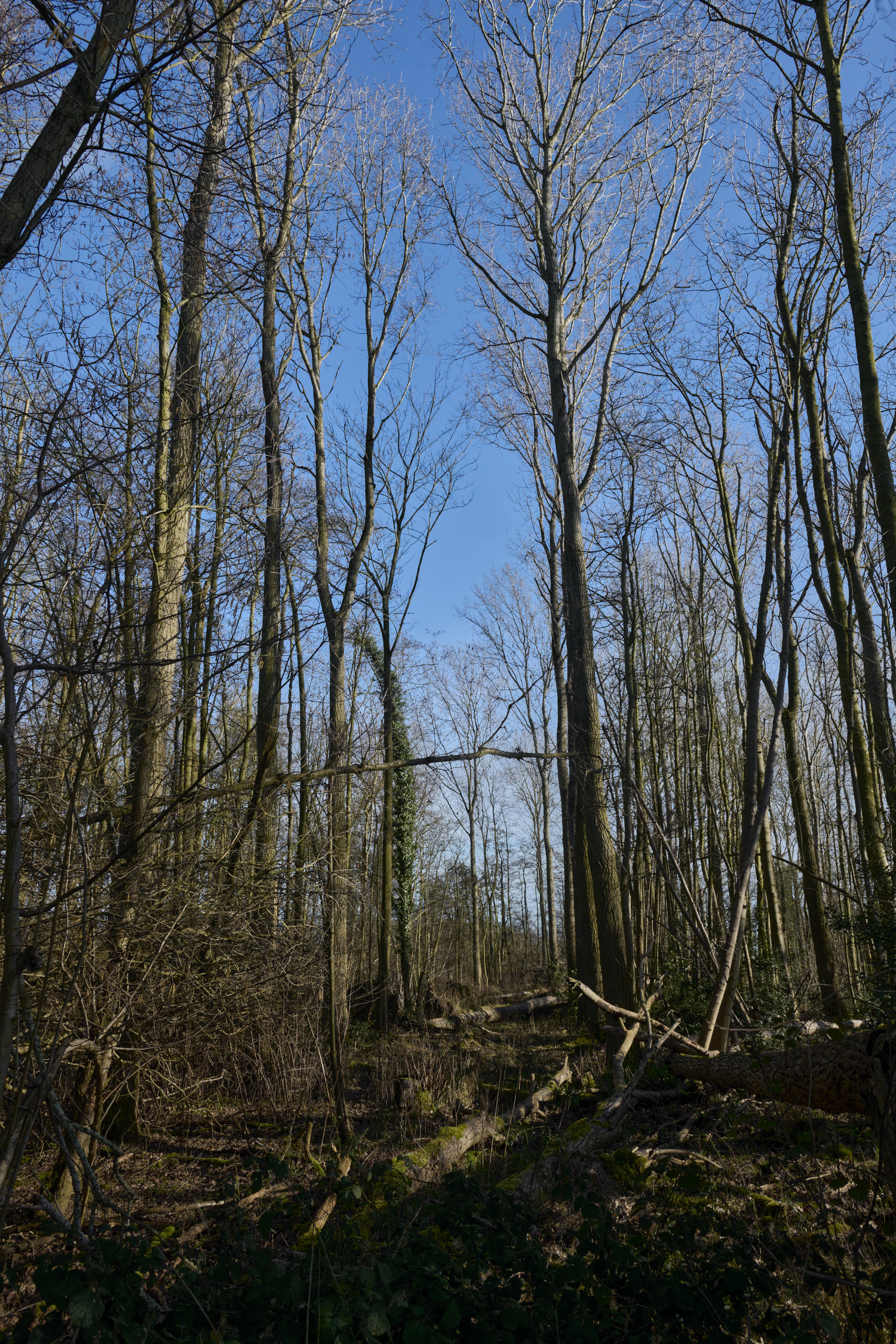
?
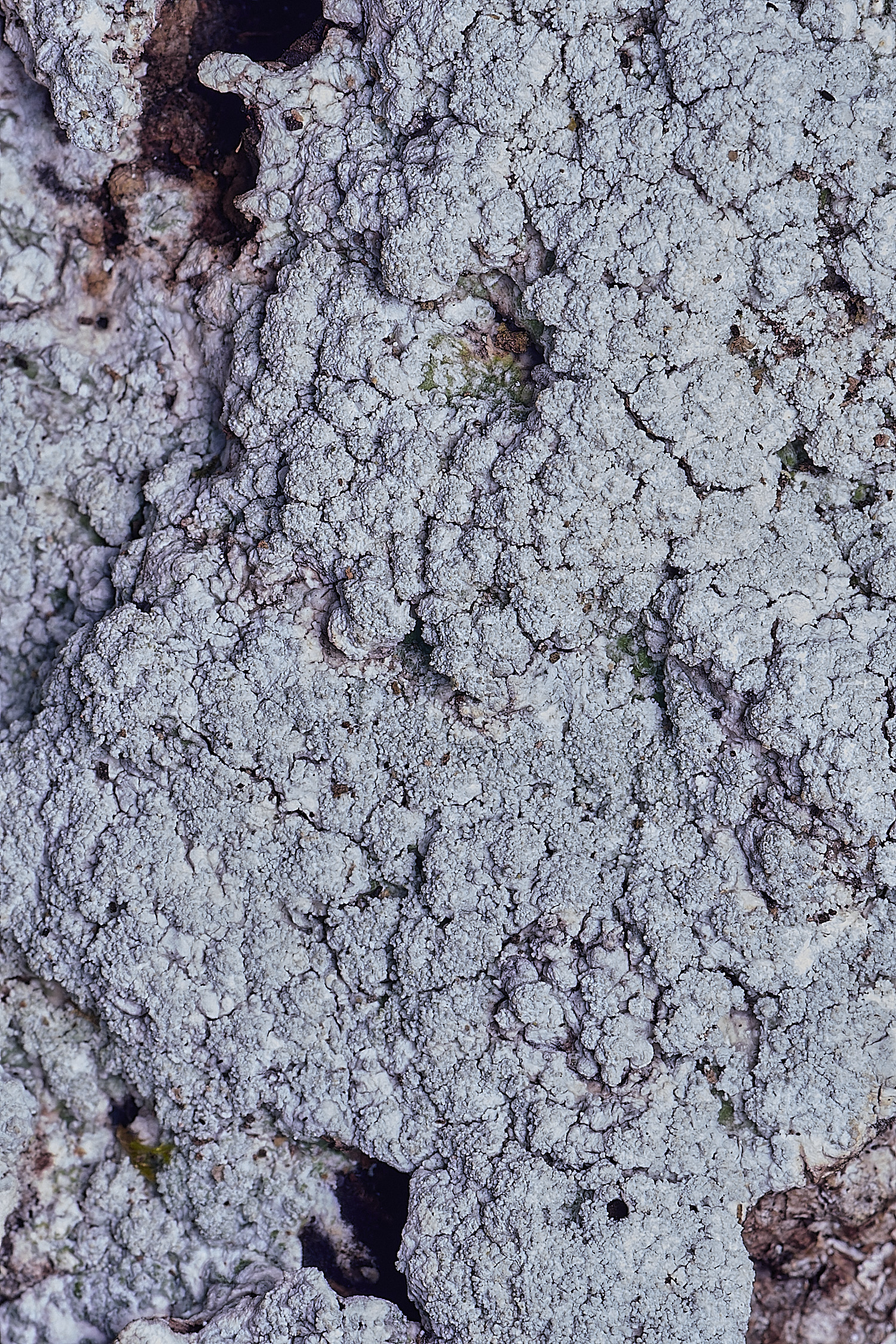
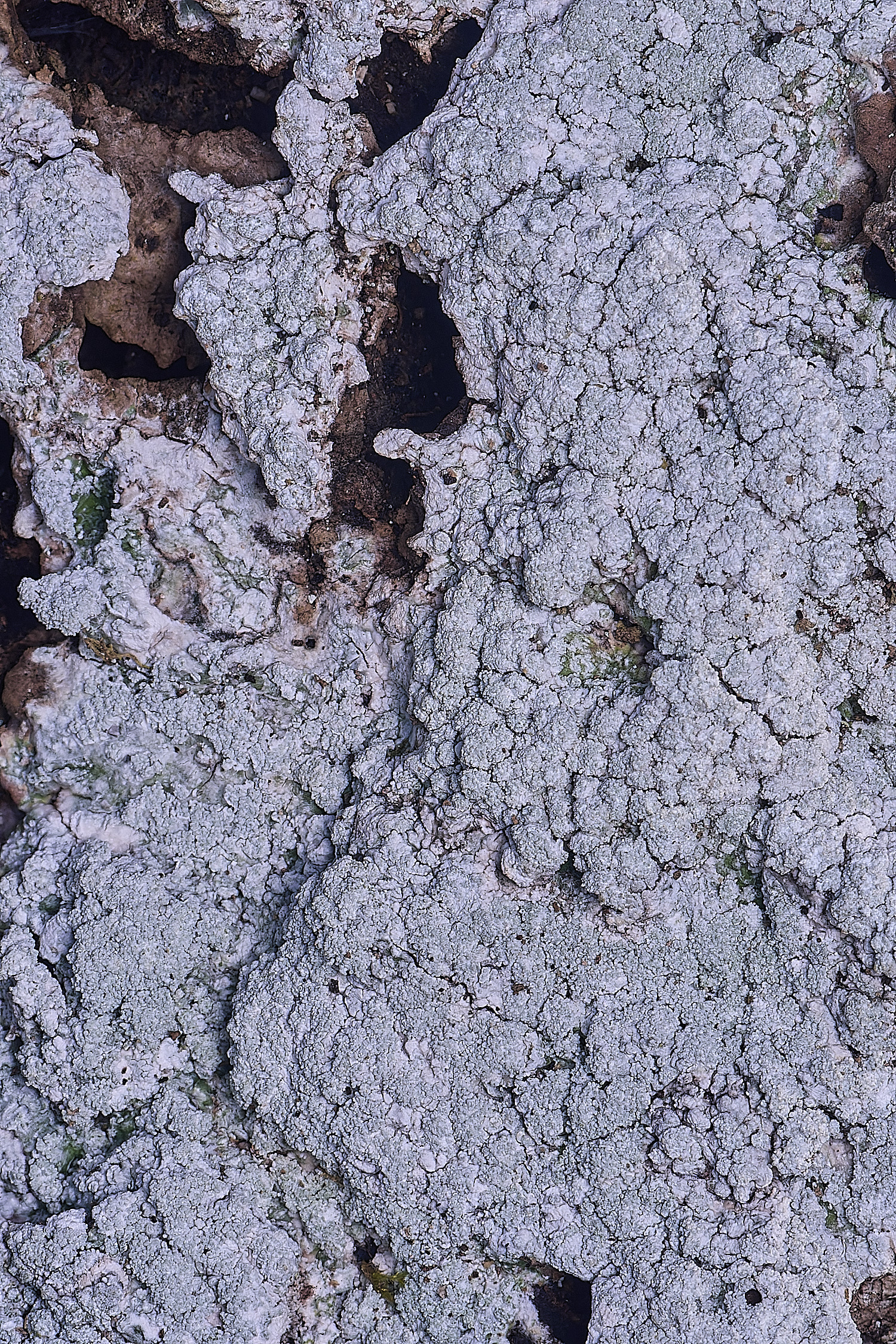
Lichen Sp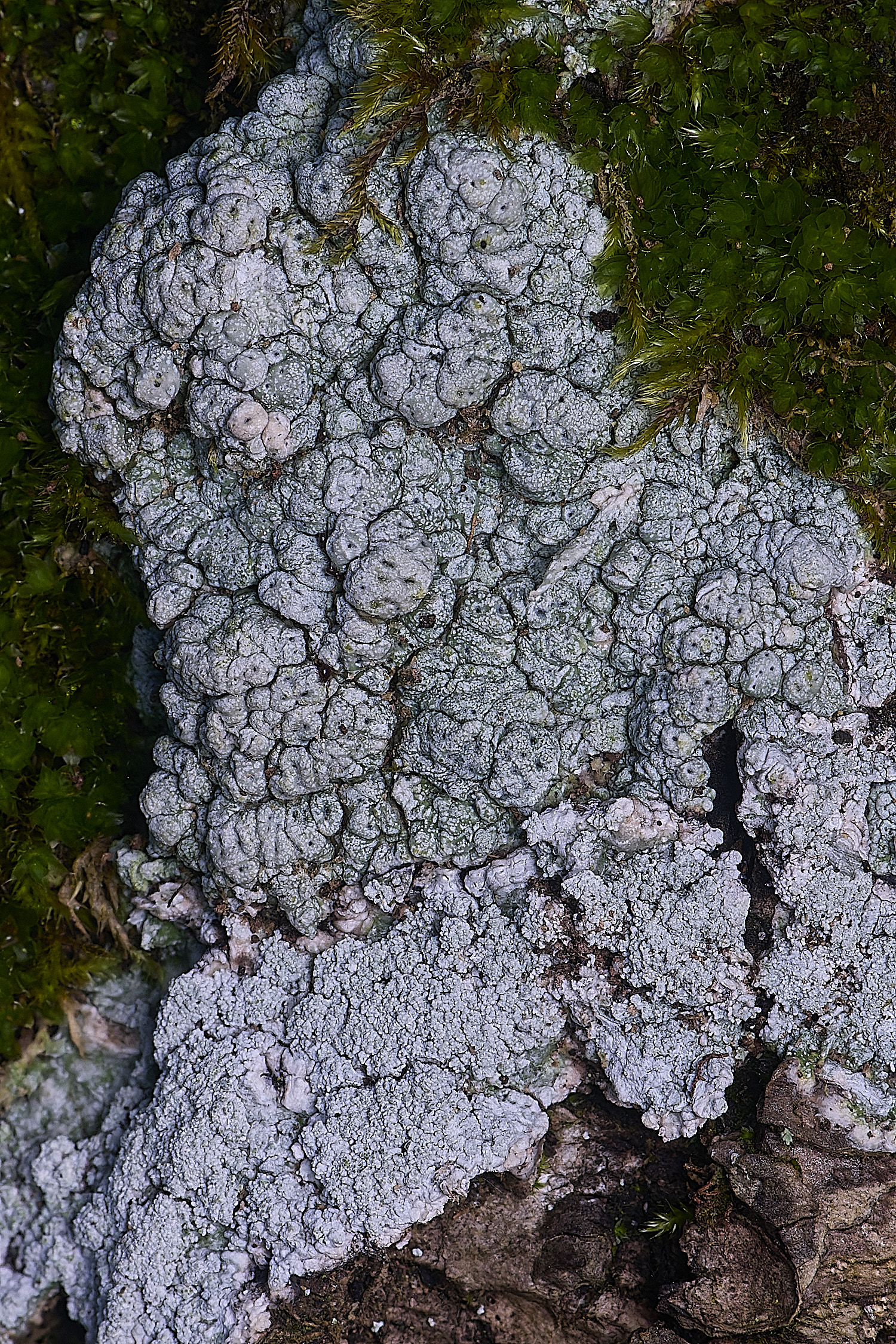
Pertussaria Sp?
Pertussaria pertusa
By there is a pink discolouration on some of the warts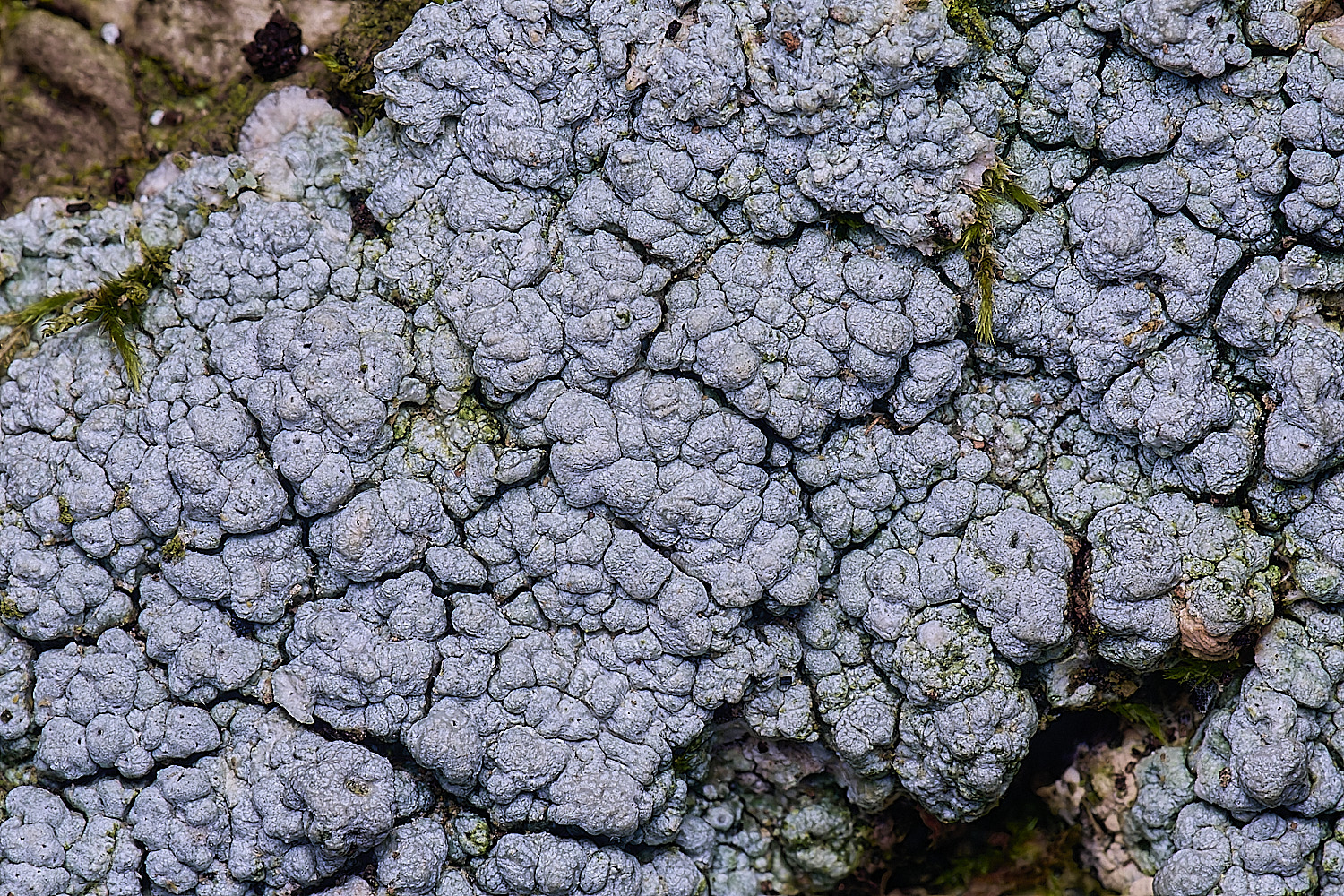
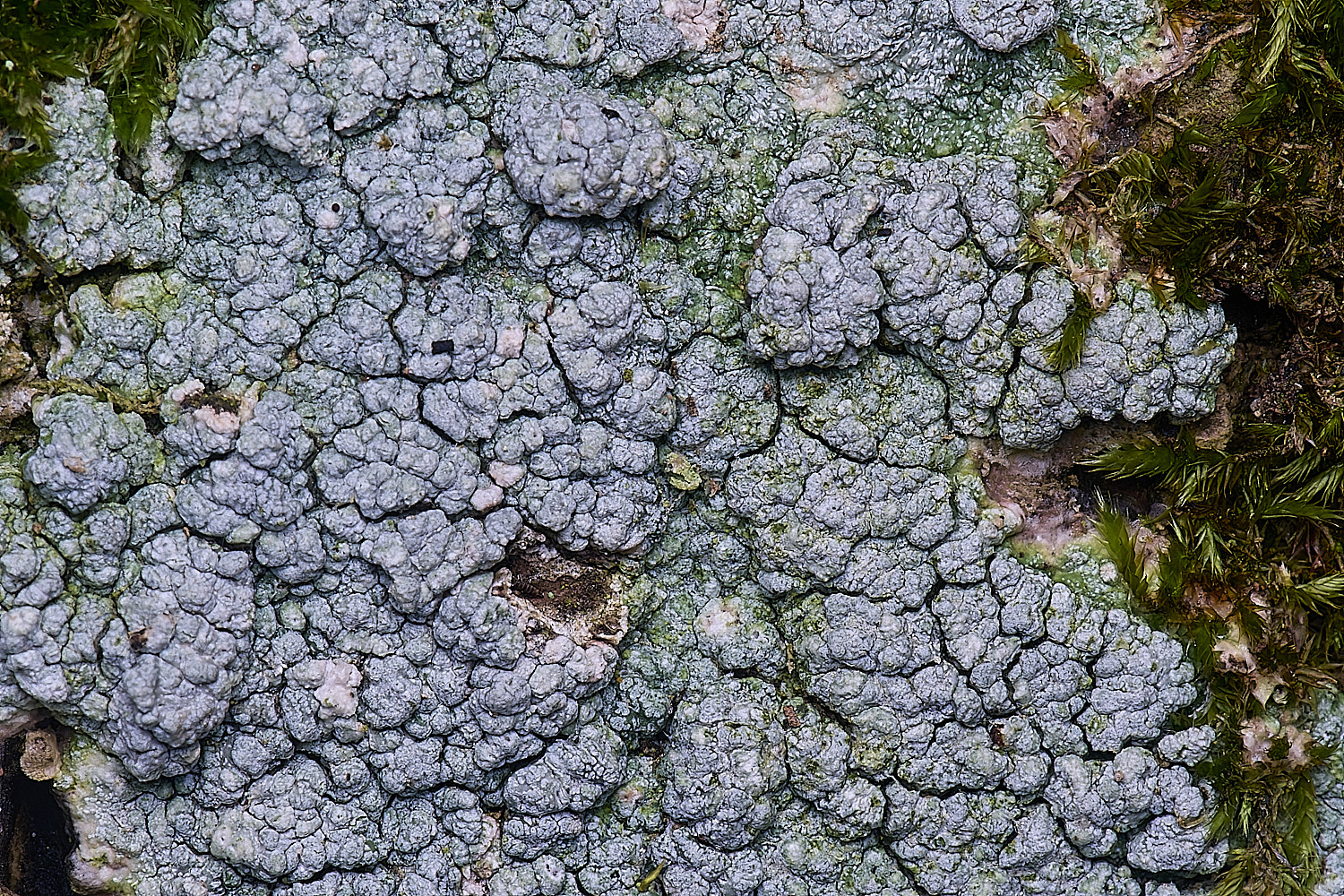
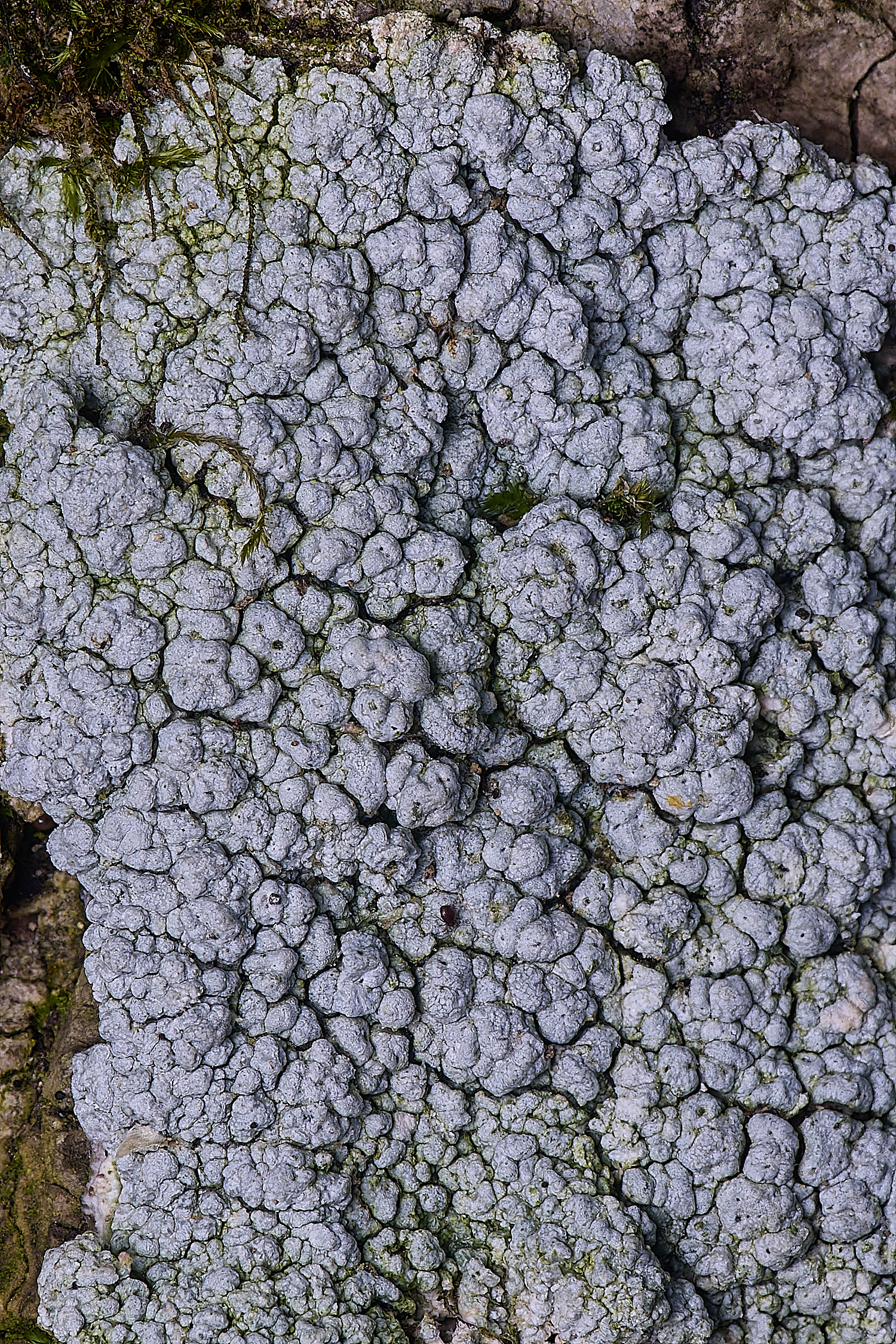
This one doesn't have the same number of black spots on each wart and in many cases no obvious ones at all
Sp??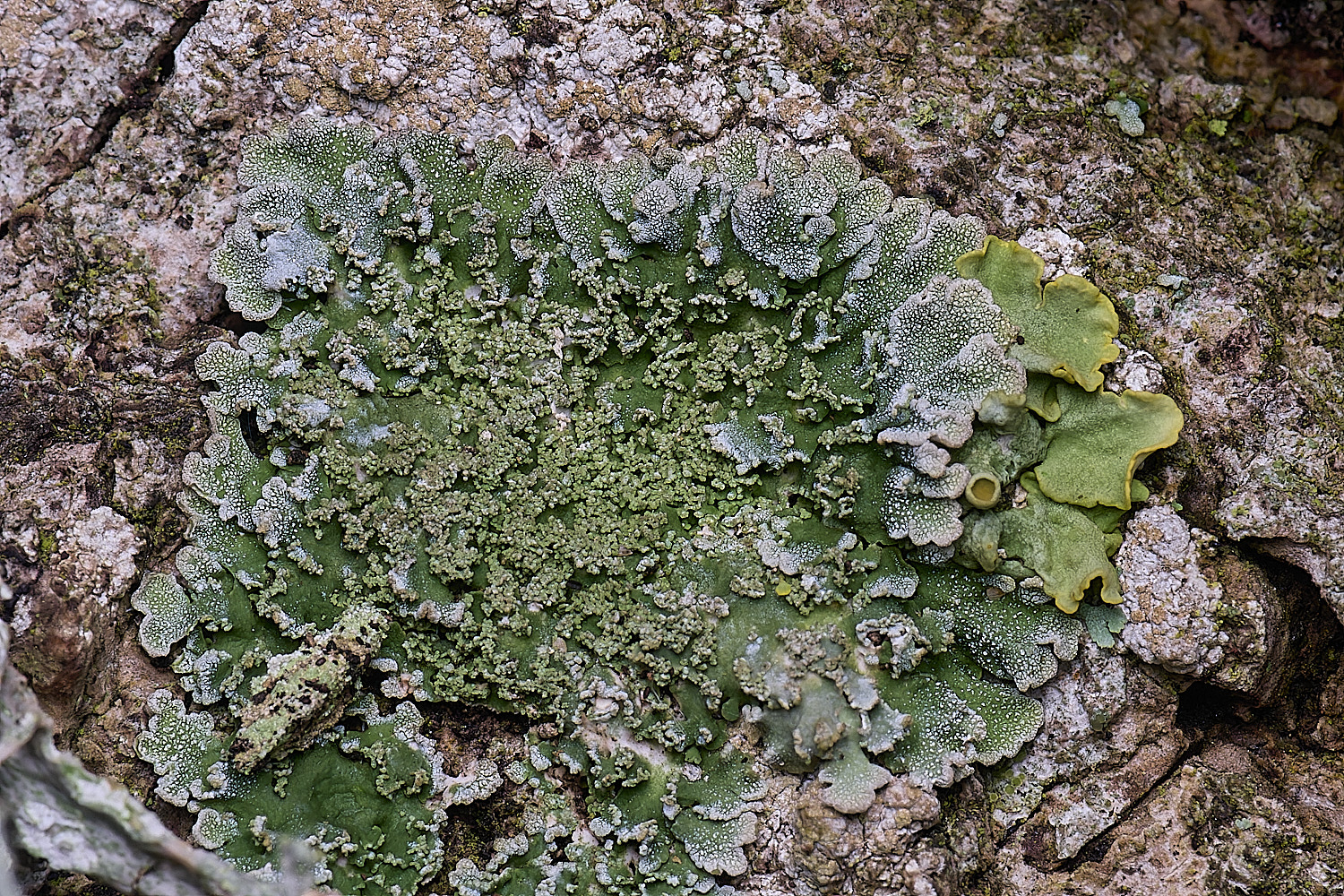
Physconia grisea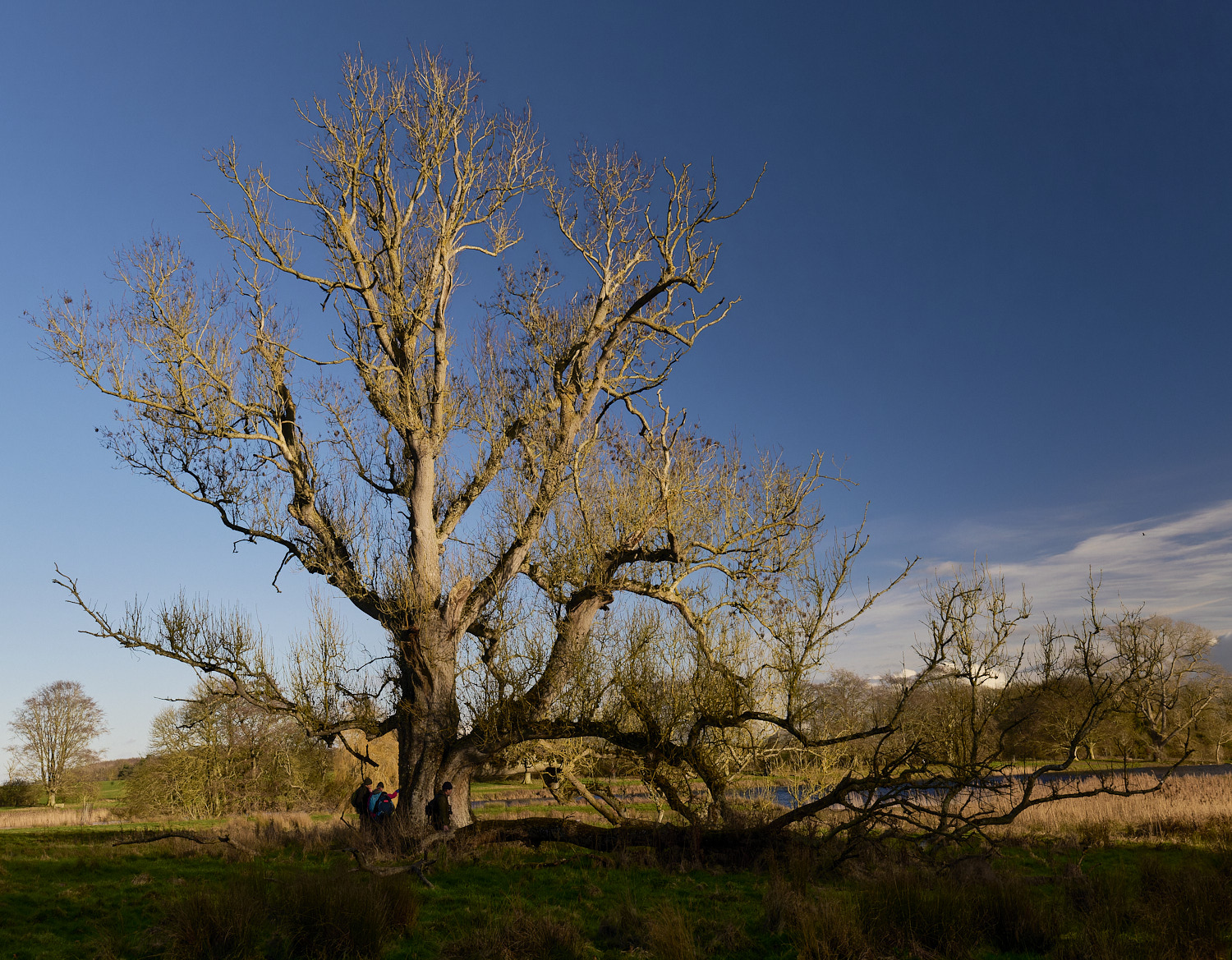
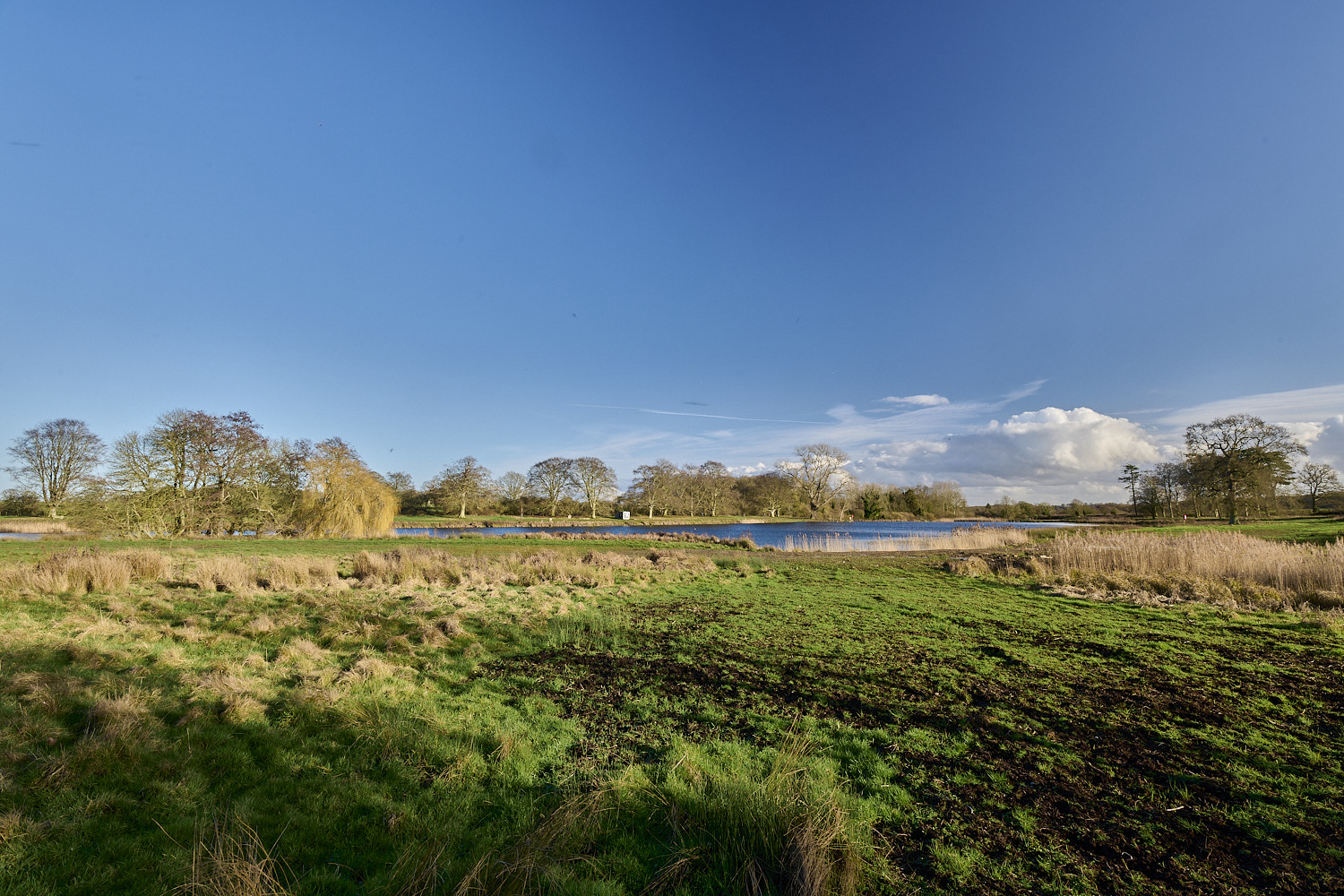
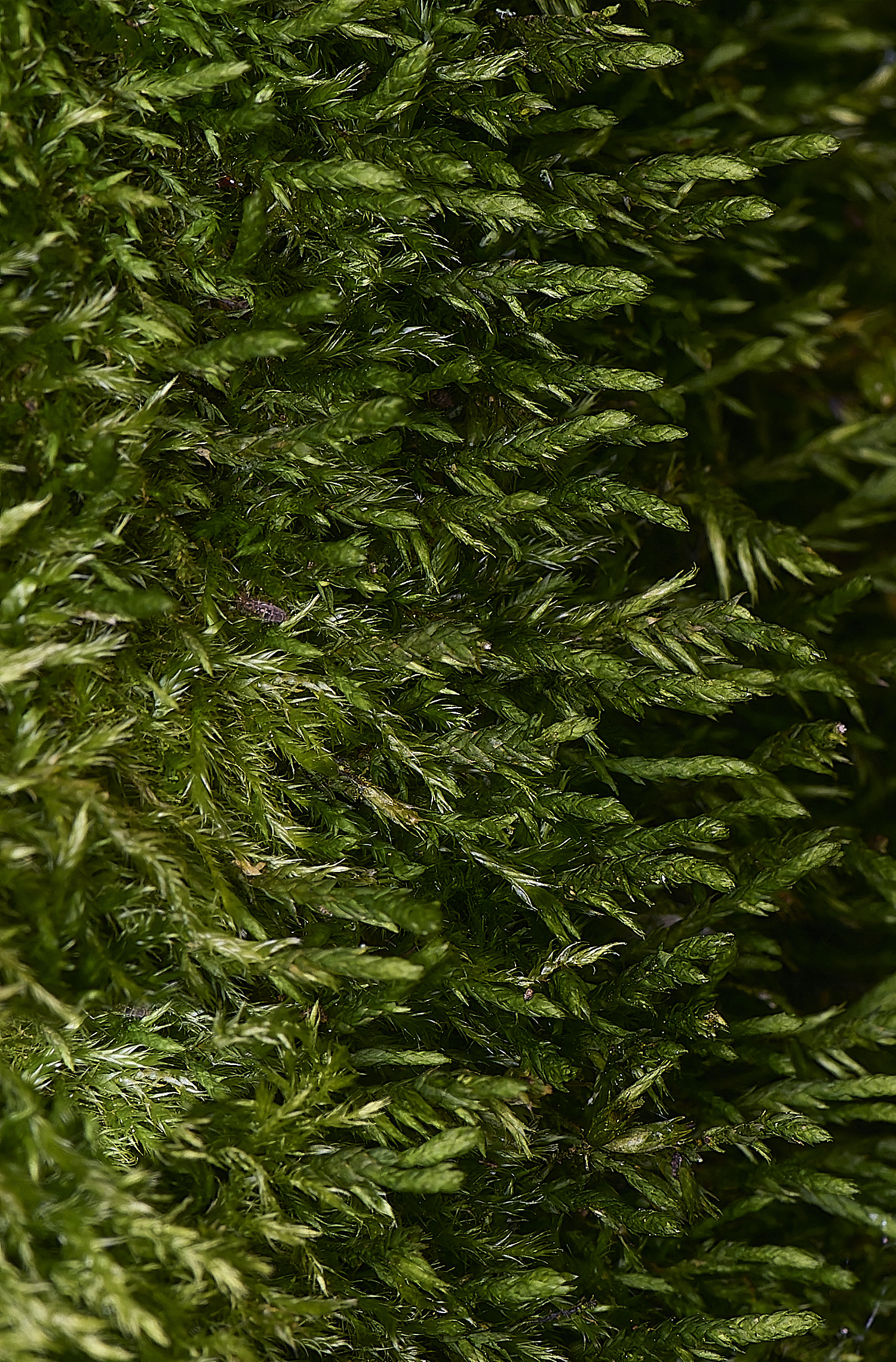
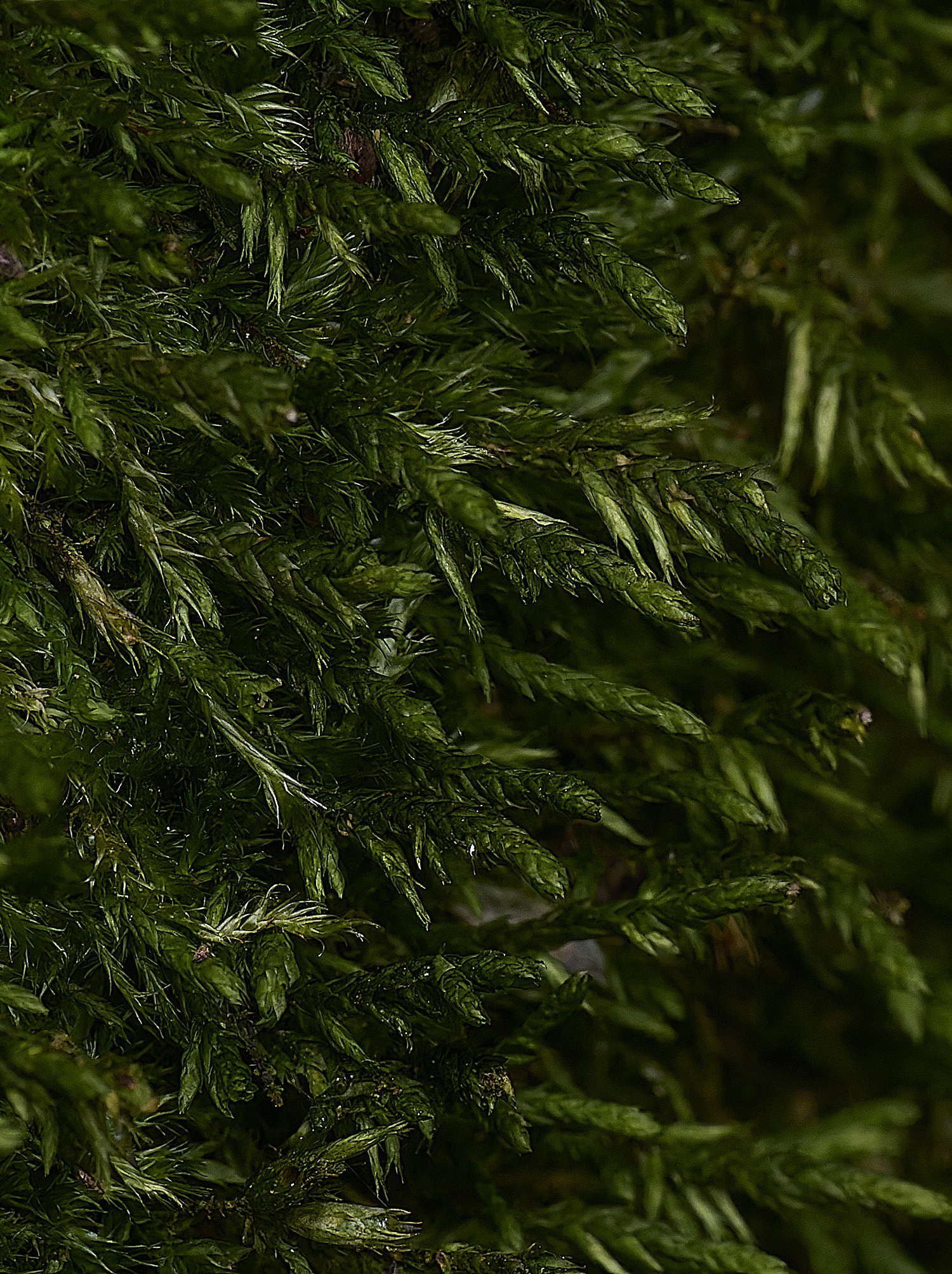
Lateral Cryphaea (Cryphaea heteromalla)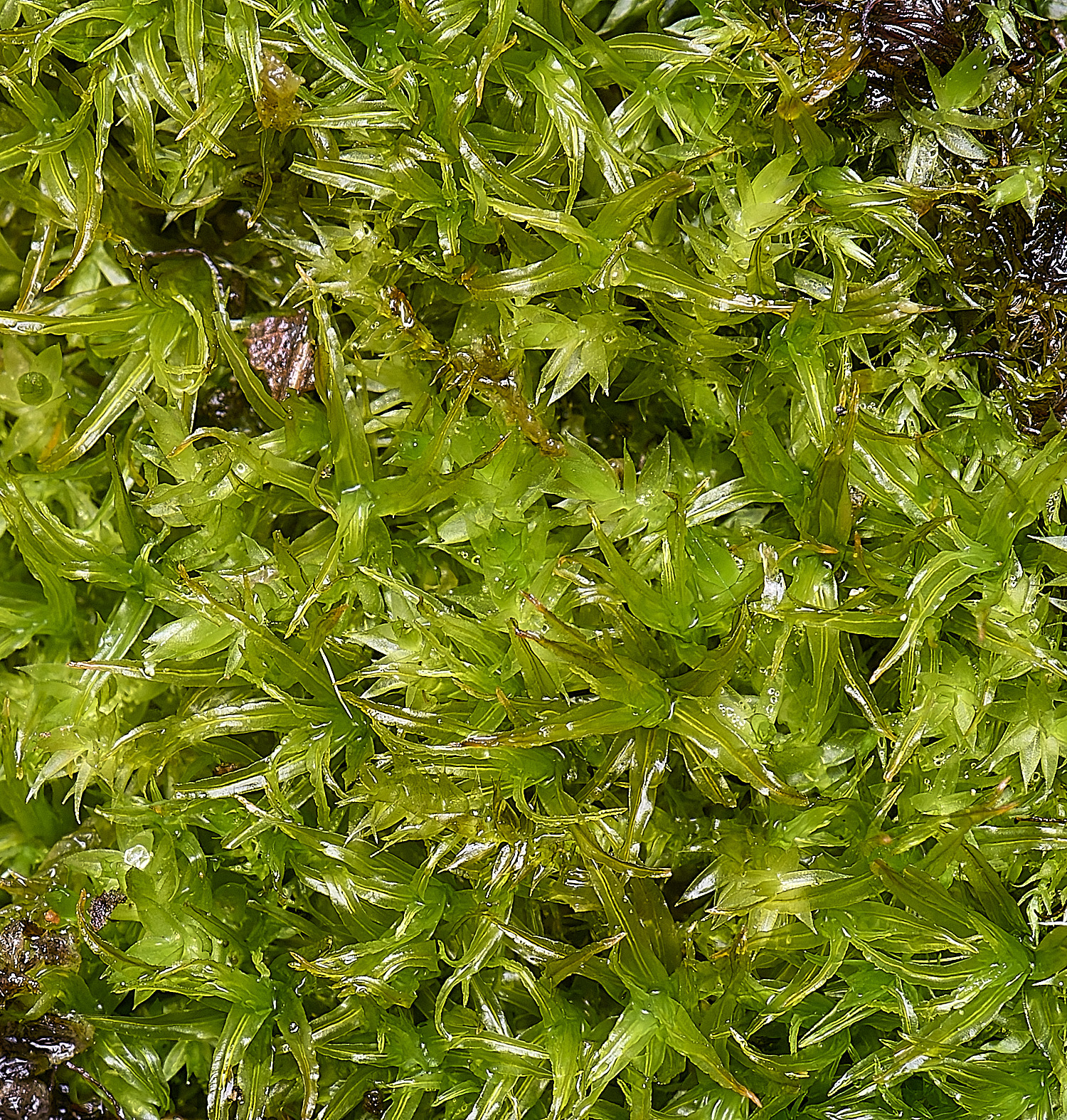
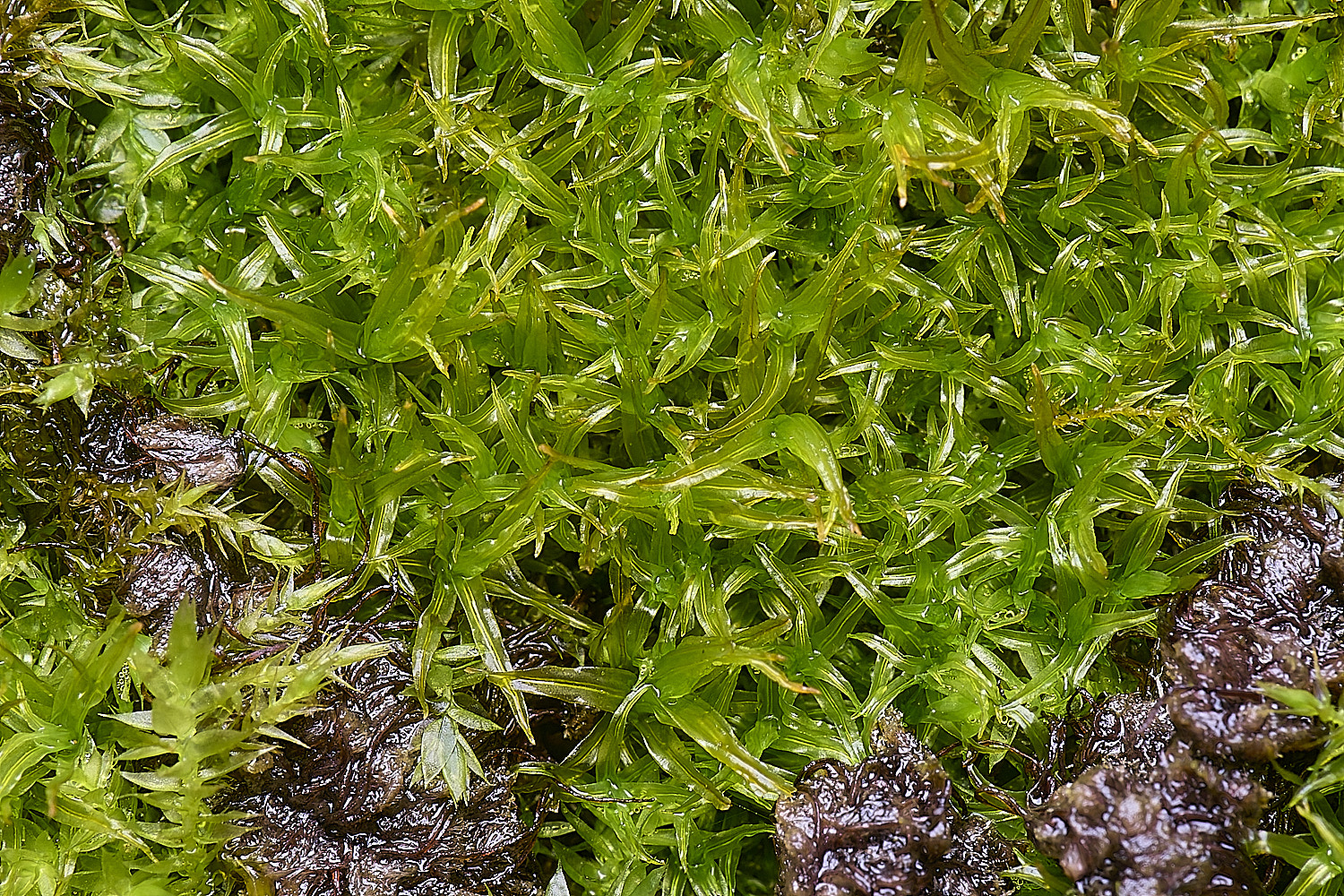
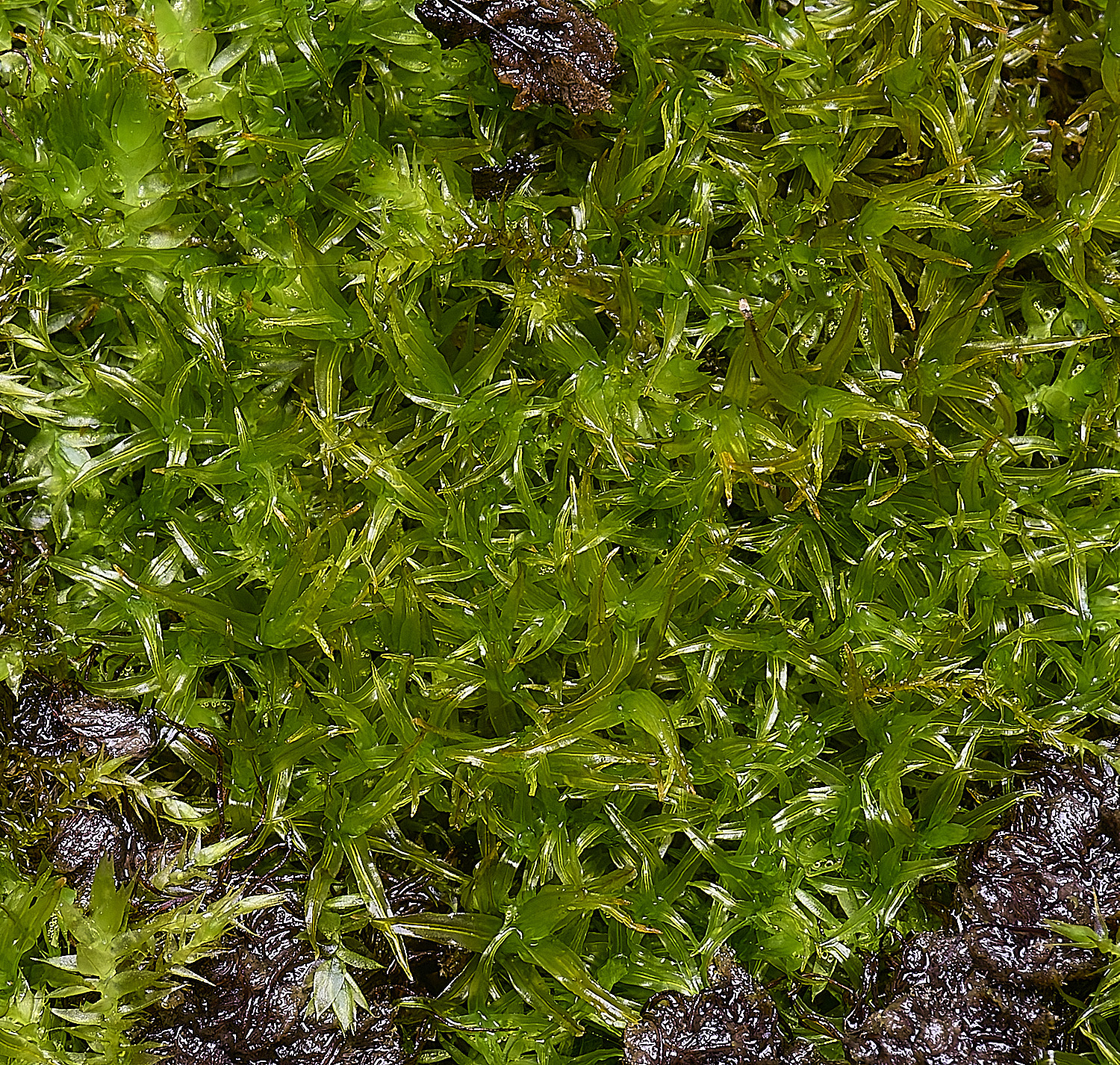
Wavy Beard-moss (Didymodon sinuosus)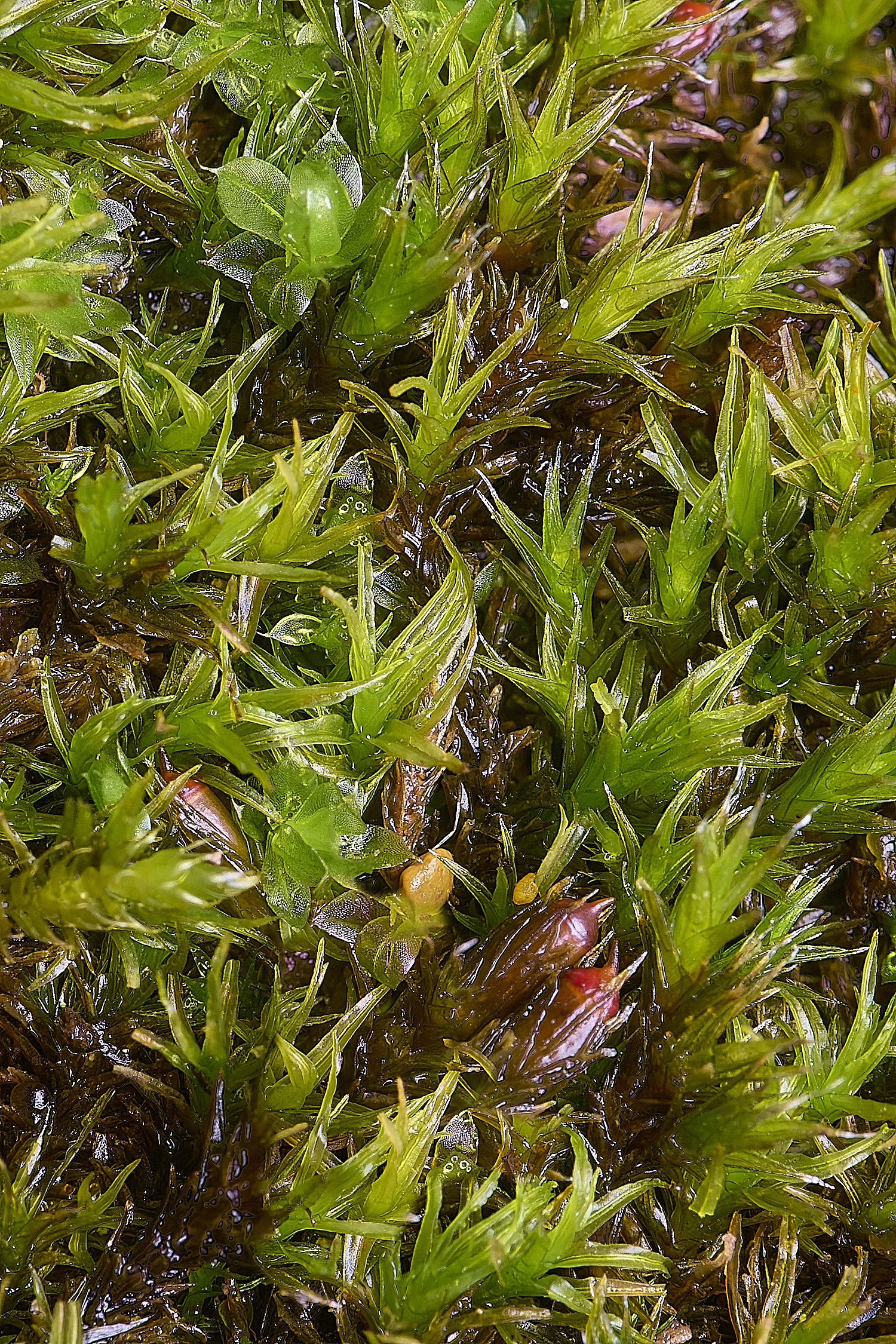
Thickpoint Grimia (Schistidium crassipilum)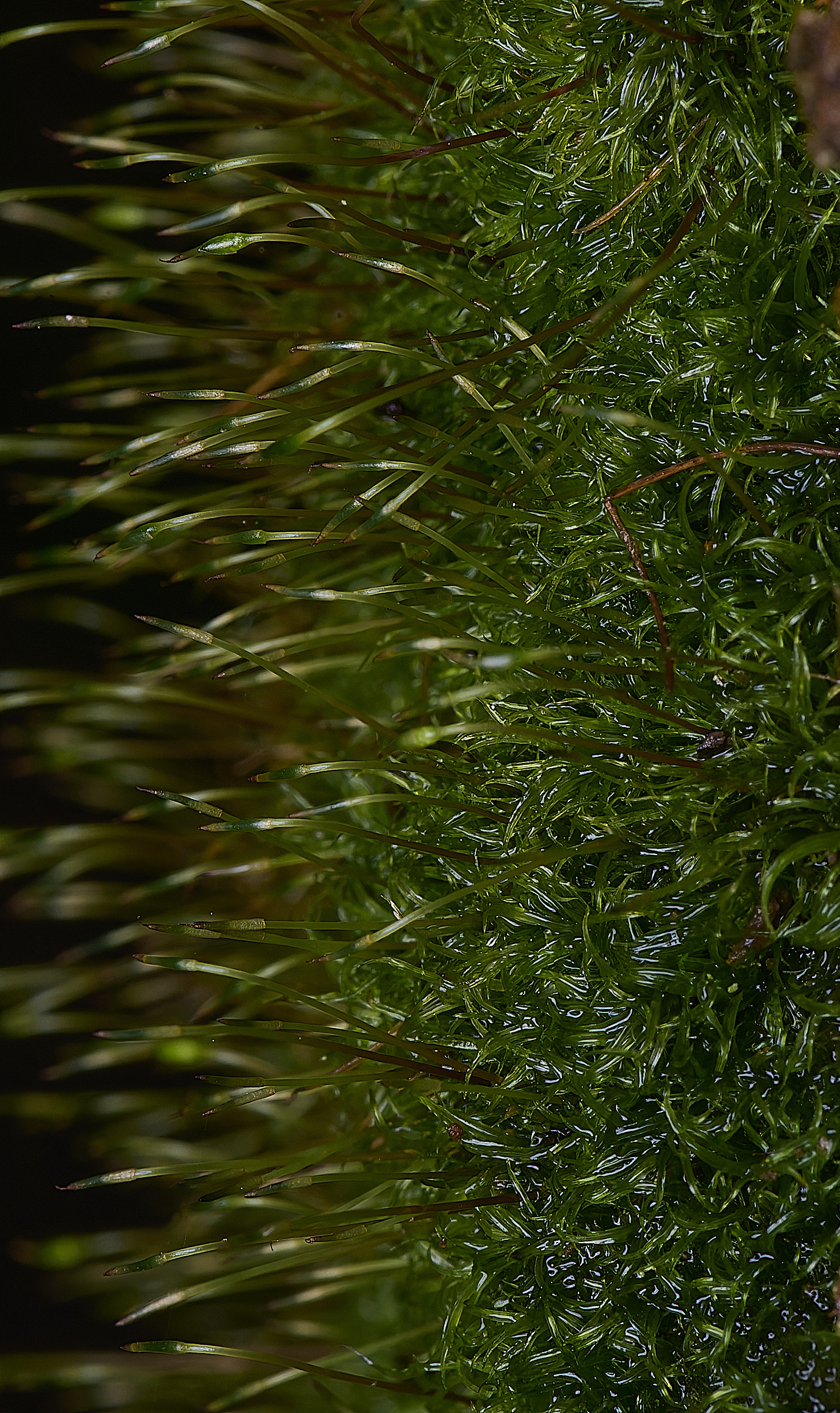
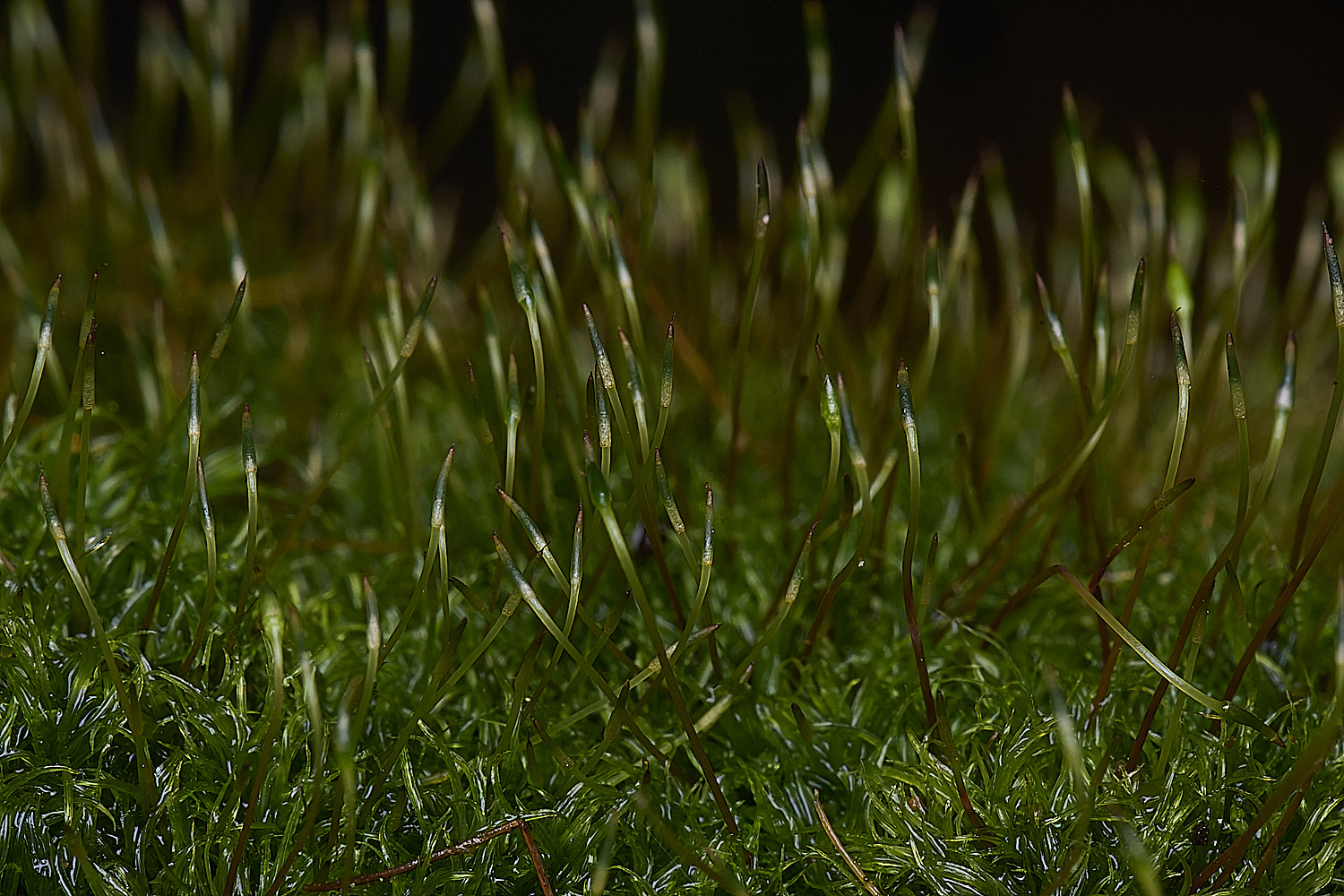
Cape Thread-moss (Orthodontium lineare)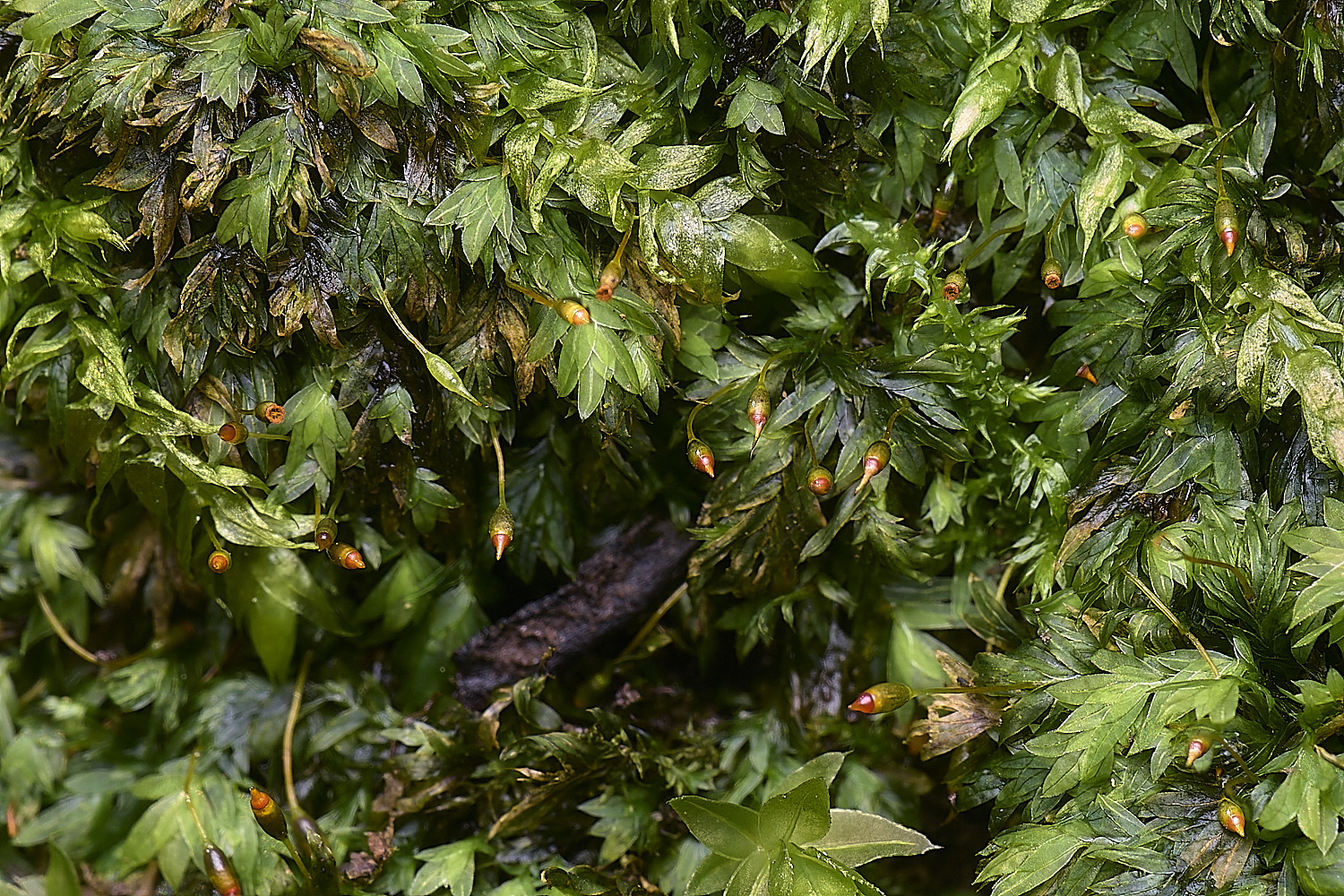
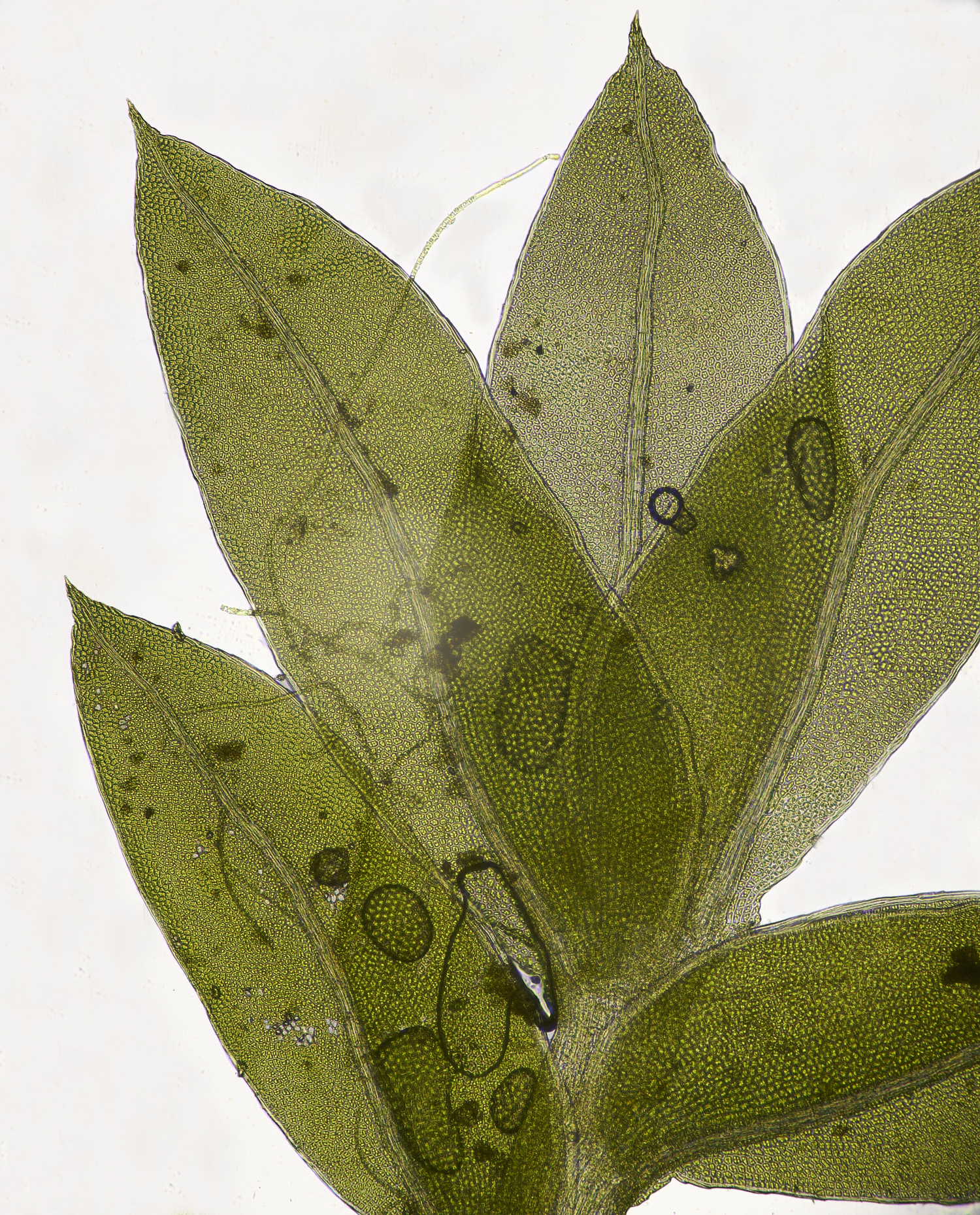
X100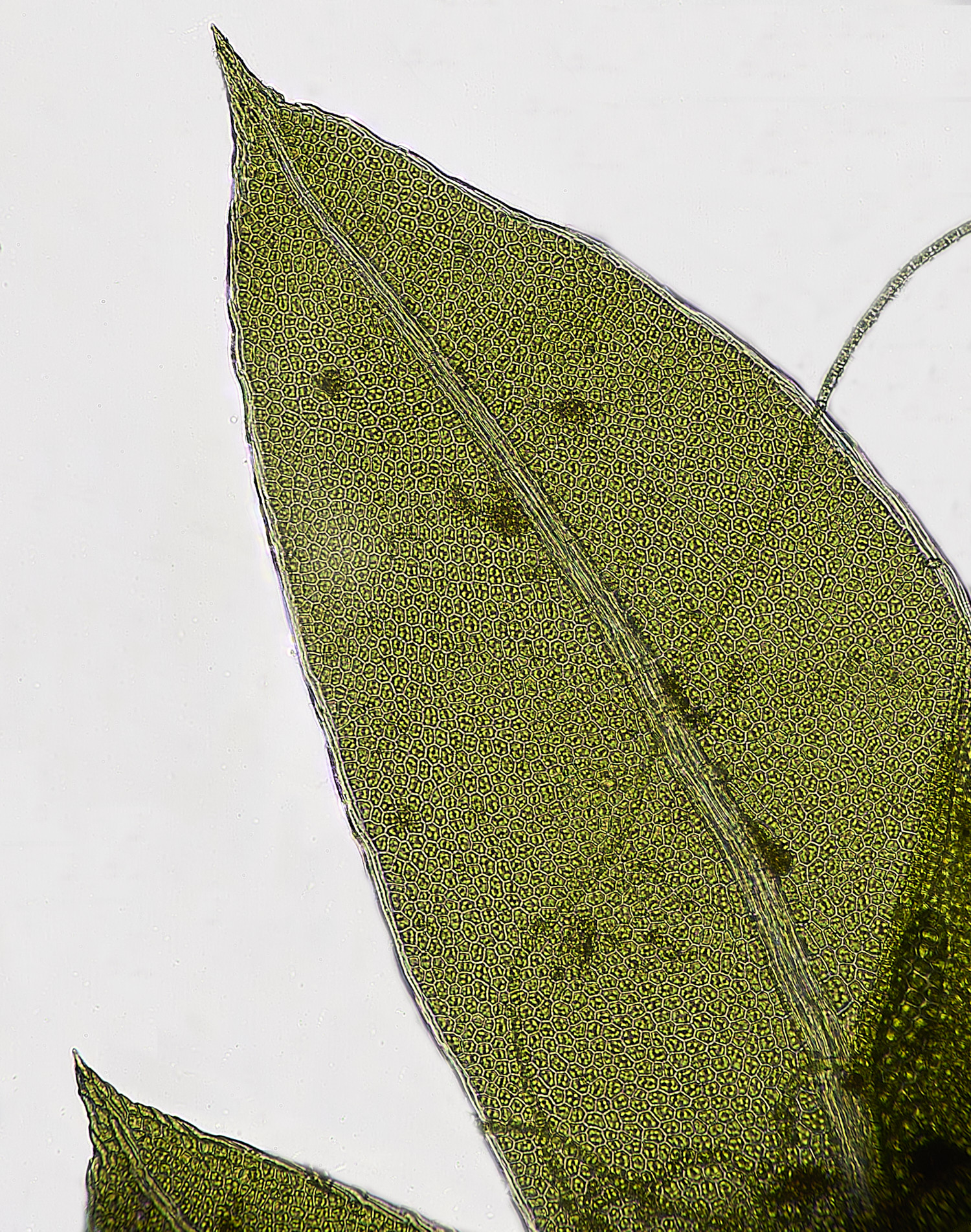
x200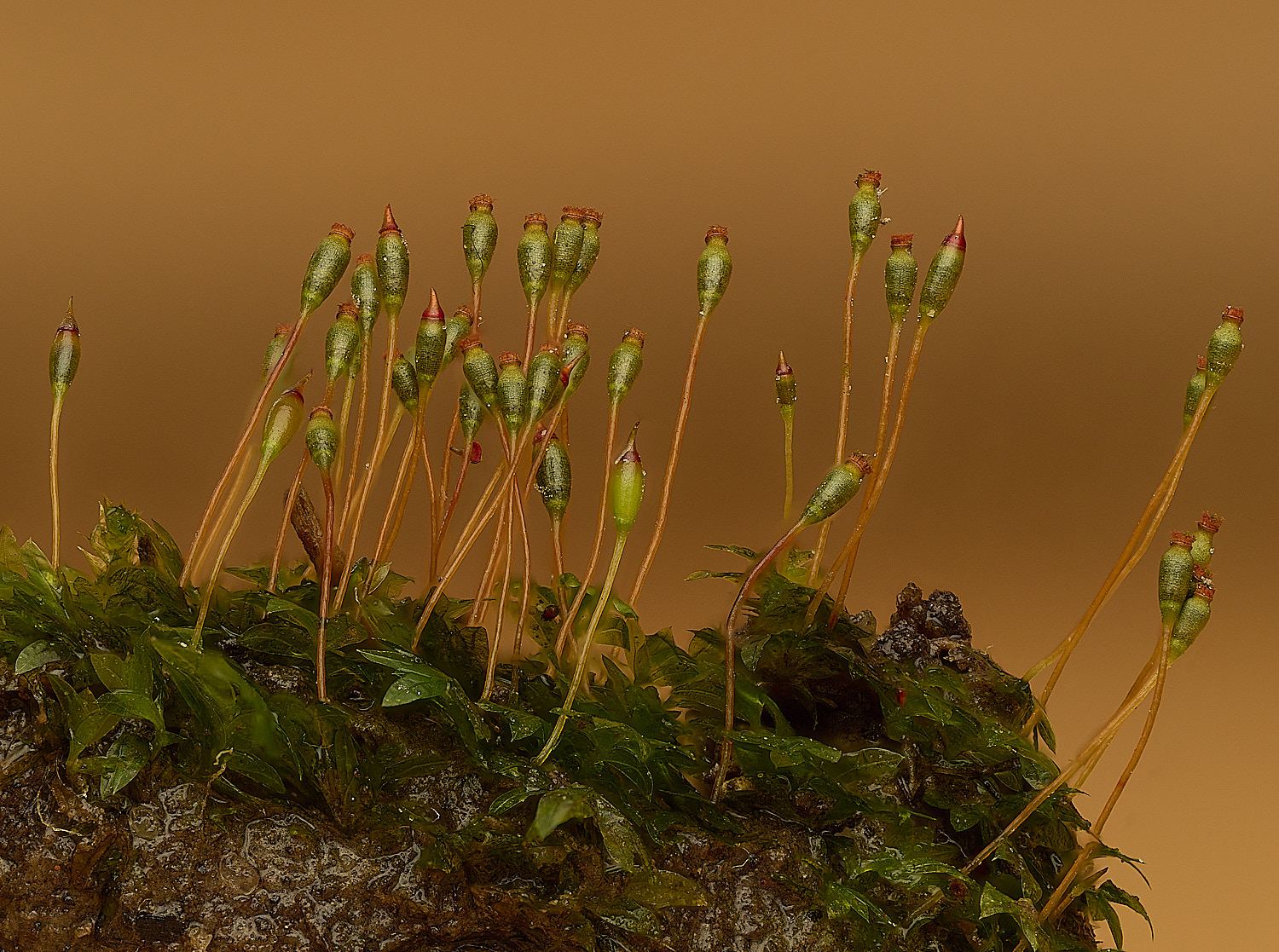
Lesser Pocket-moss (Fissidens bryoides var bryoides)
Bordered leaves about 1mm long.
Capsules held vertically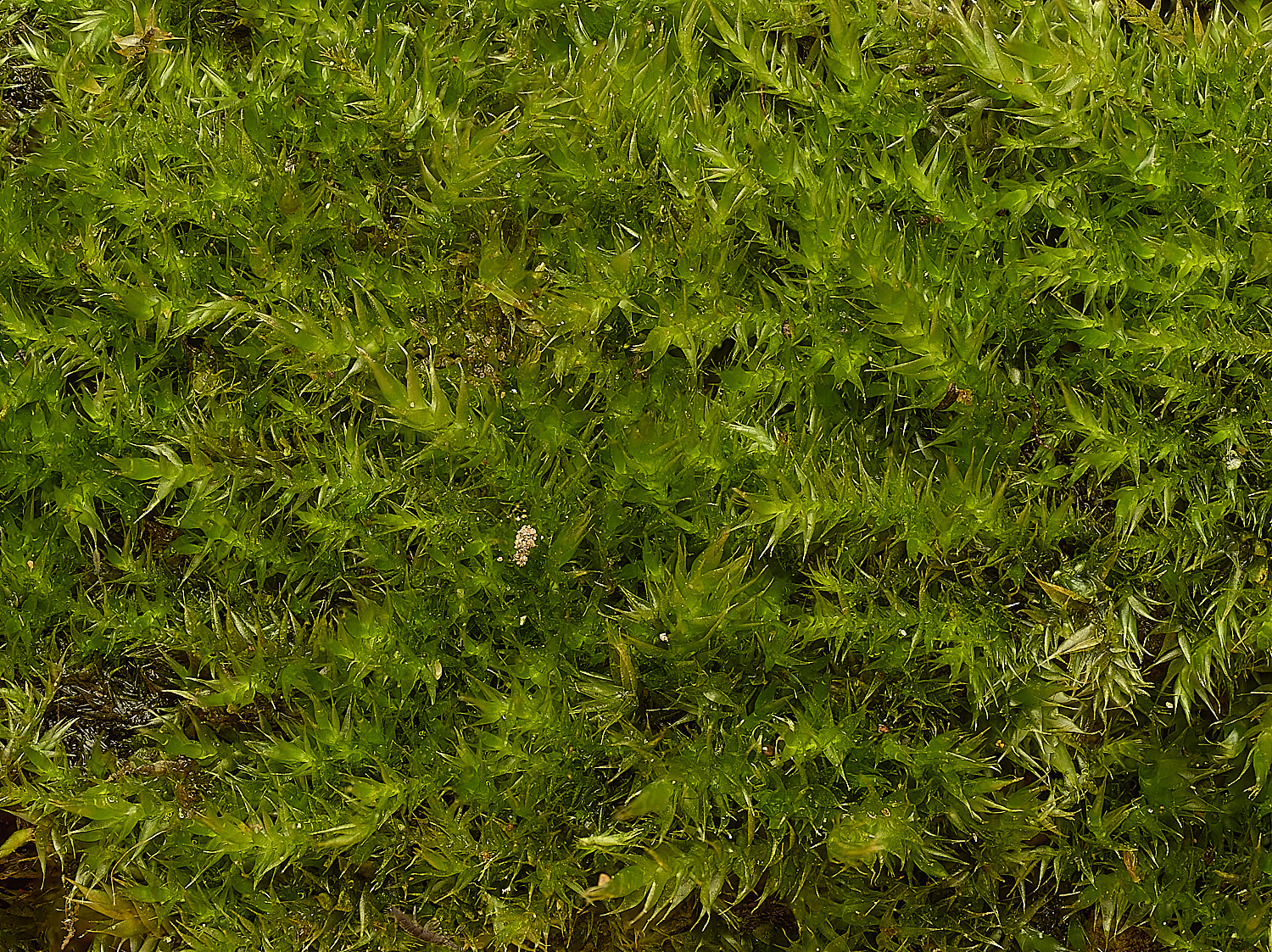
Supine Plait-moss (Hypnum cupressiforme var resupinatum)
Leaves most definitely pointing upwards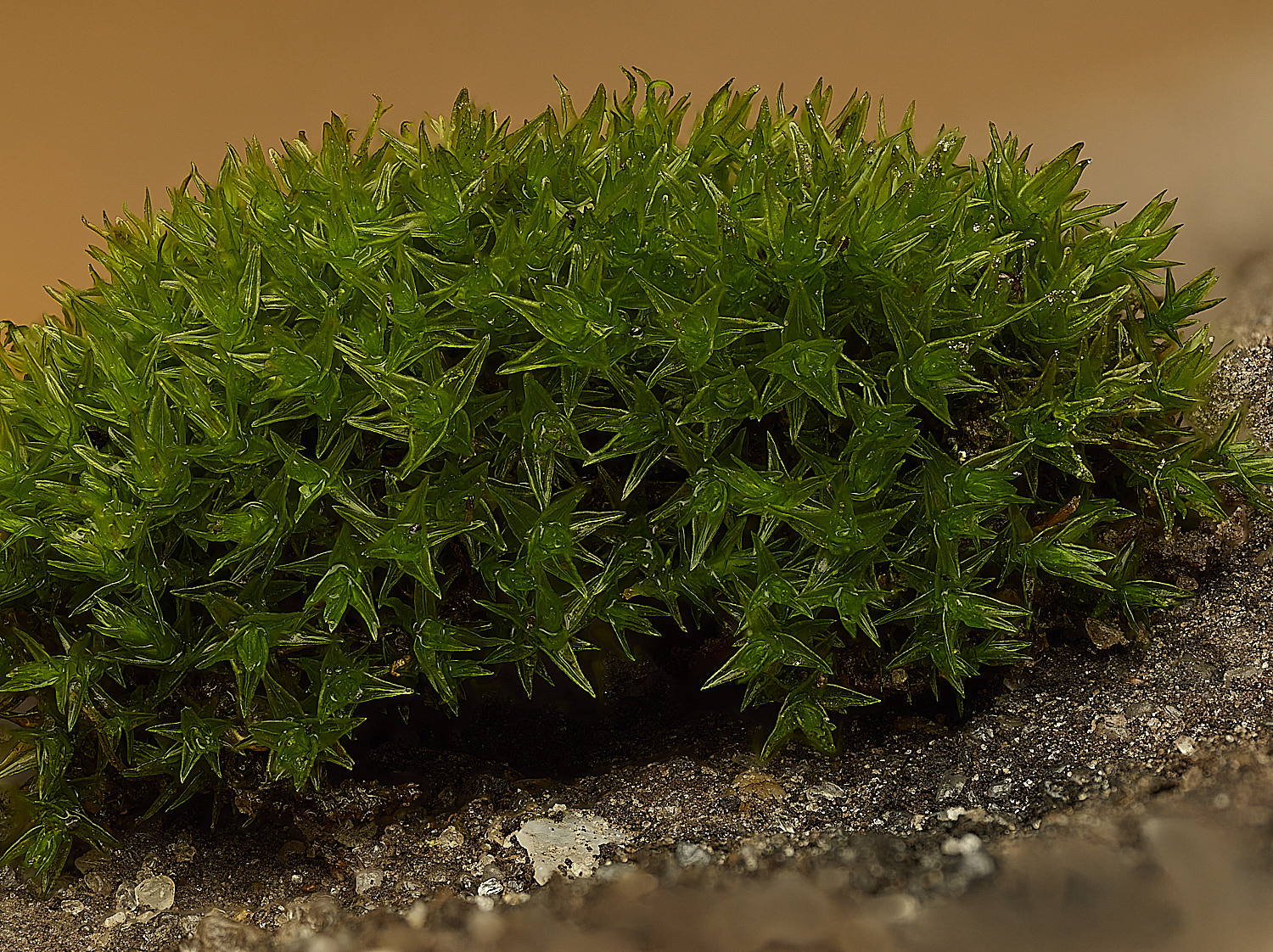
Dusky Beard-moss (Didymodon luridus)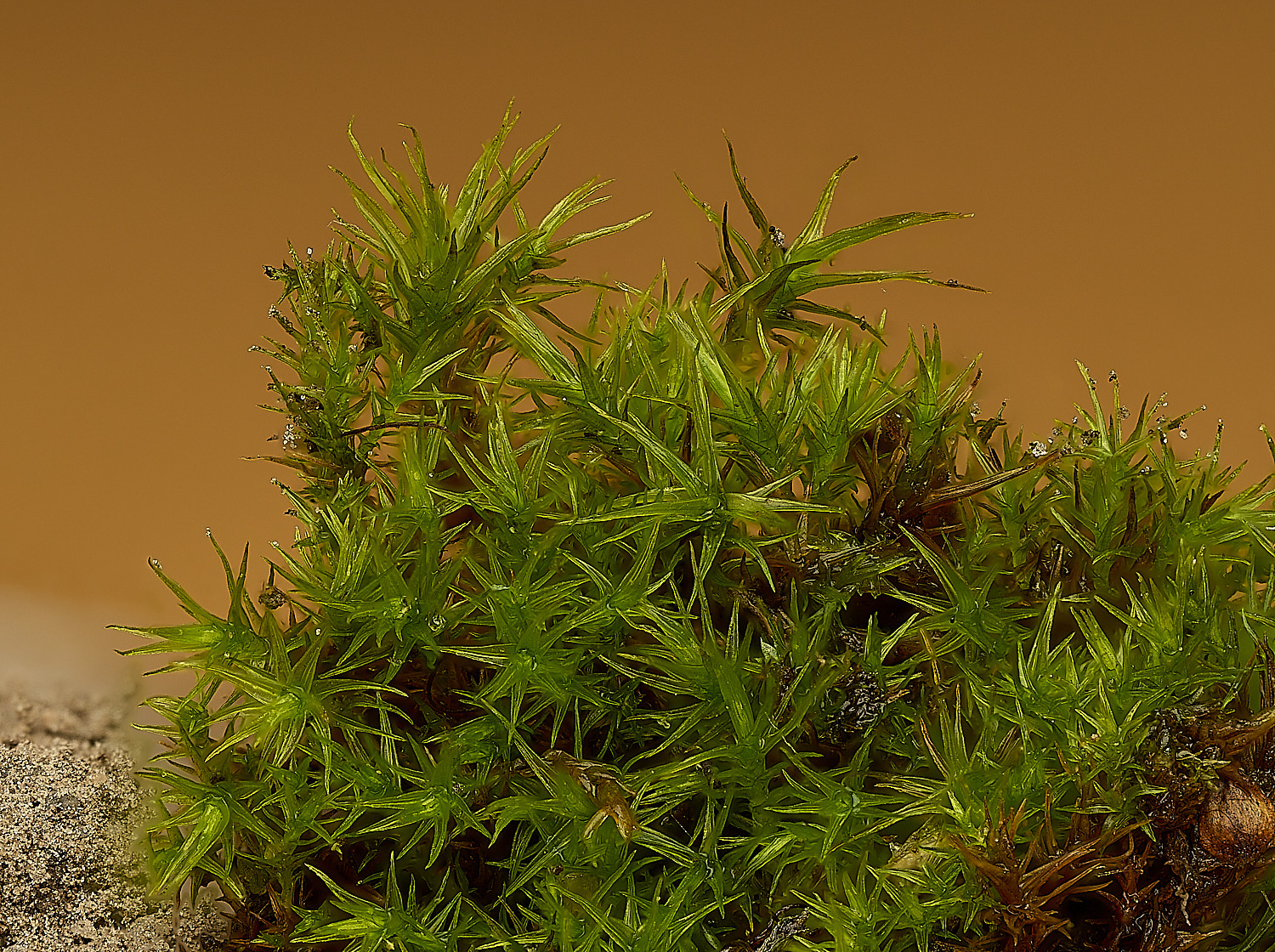
Red Beard-moss (Bryoerythrophyllum recurvirostrum)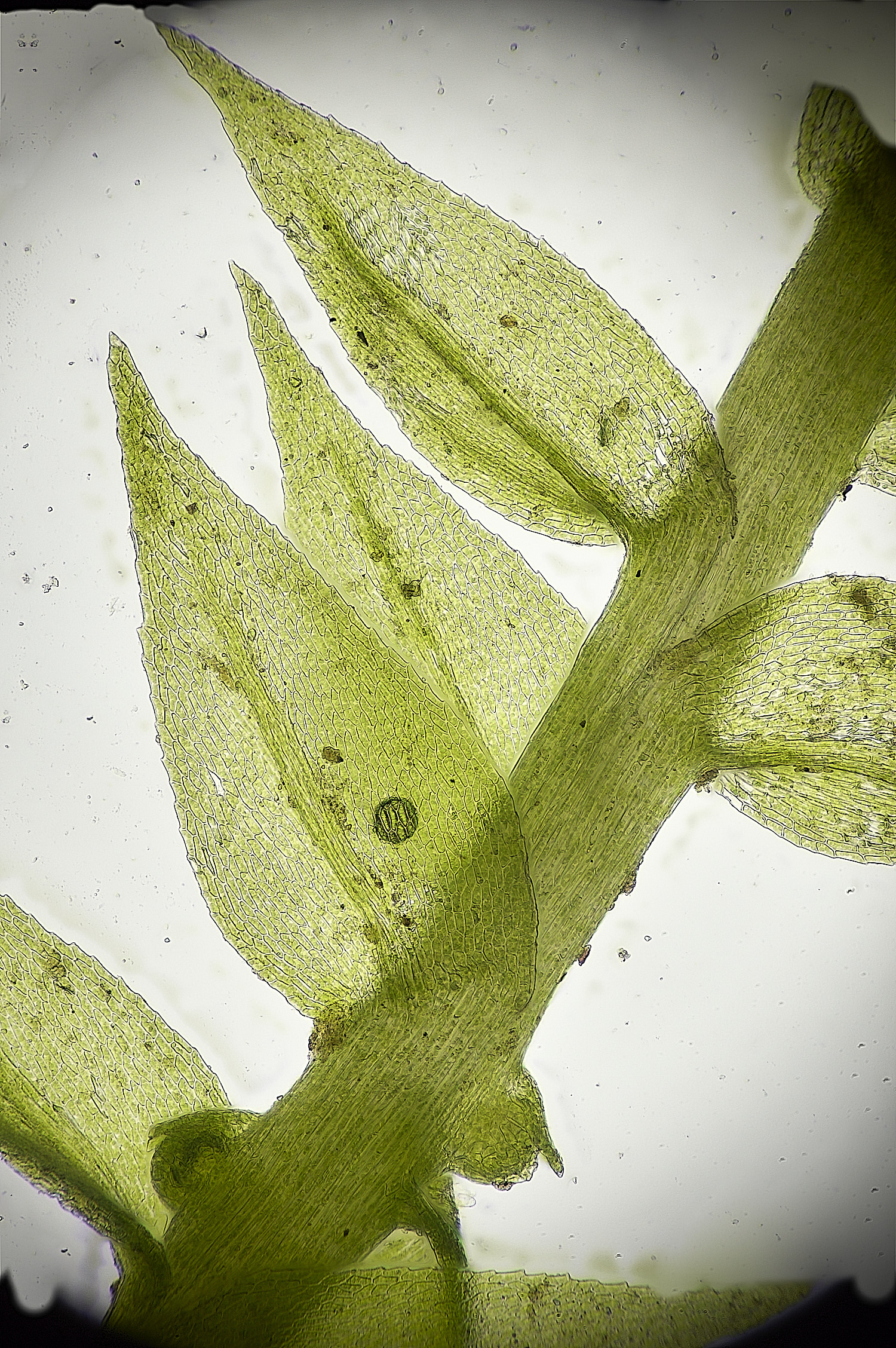
Dwarf feather-moss (Microeurhyncium pumilum)